citationbrandsbrand
Understanding AI Citation: How E-Commerce Brands Become Trusted Sources for Generative Search Engines
While 58% of consumers now use AI to discover products, most e-commerce brands still lack a strategy to be recommended by these systems. This guide breaks down AI citation—the new frontier of visibility that's already reshaping product discovery—and shows exactly how to compete for it.
12 min read

# Understanding AI Citation: How E-Commerce Brands Become Trusted Sources for Generative Search Engines

*While 58% of consumers now use AI to discover products, most e-commerce brands still lack a strategy to be recommended by these systems. This guide breaks down AI citation—the new frontier of visibility that's already reshaping product discovery—and shows exactly how to compete for it.*

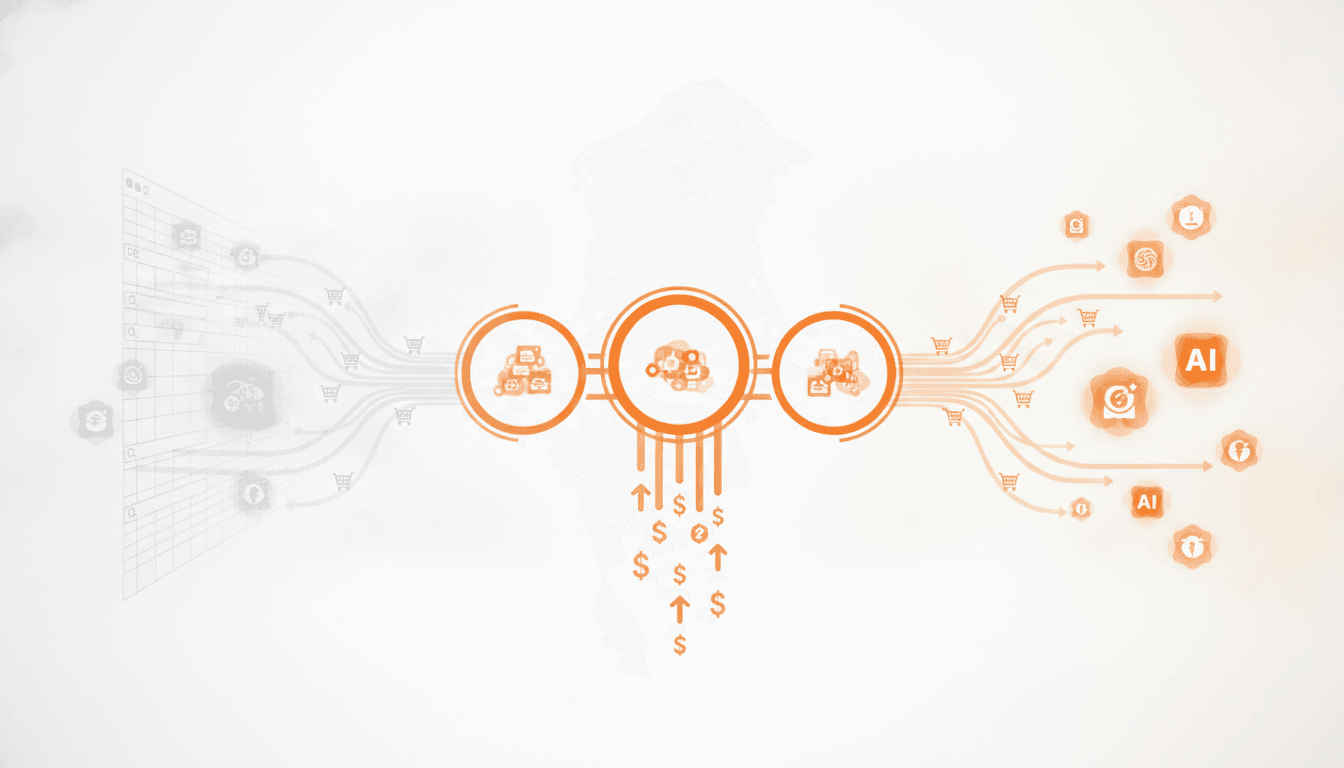
[IMG: Hero image showing a split-screen comparison of traditional Google search results vs. an AI-generated product recommendation response, with brand logos being cited in the AI panel]


---


## The Invisible Discovery Channel Most Brands Are Missing

E-commerce brands are invisible to the fastest-growing discovery channel in retail. While [58% of U.S. consumers](https://www.emarketer.com) now use AI assistants and generative search tools to research and discover products—up from 35% in 2023—most brands are optimizing for the wrong visibility metric. Traditional SEO rankings matter less when ChatGPT, Perplexity, and Google's AI Overviews decide which brands to recommend.

Here's how the difference emerges: **AI citation**—a trust mechanism that operates by fundamentally different rules than Google's PageRank algorithm. Brands that master AI citation see 30% more recommendations from AI assistants. Those that ignore it are competing in a shrinking pool of visibility as generative search absorbs more of the product discovery journey.

The stakes are higher than they appear. As AI-driven discovery accelerates, the brands that build citation authority now will compound that advantage for years to come.


---


## What Is AI Citation and Why It's Different From Traditional SEO

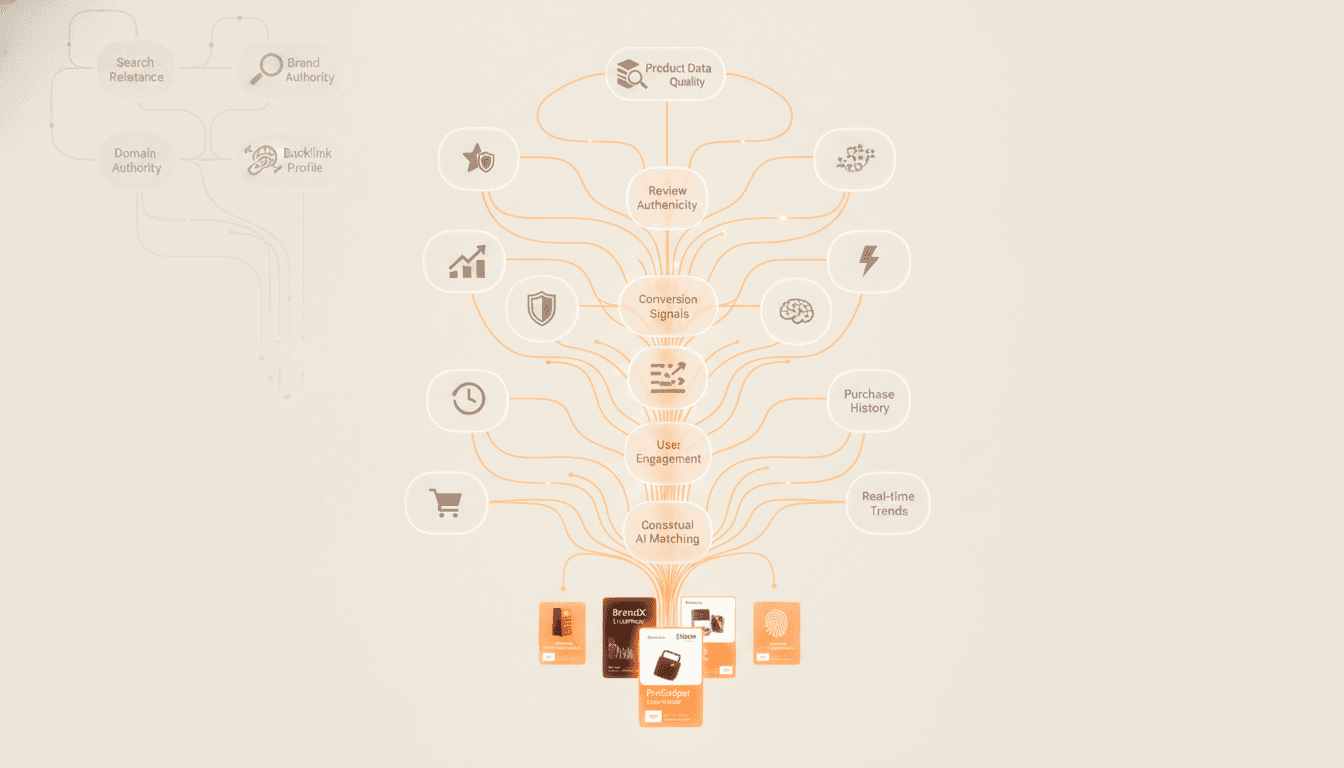
AI citation is the mechanism by which generative AI search engines identify, reference, and recommend brands based on the quality, consistency, and authority of their digital signals. Unlike traditional SEO—which rewards pages that accumulate backlinks and keyword relevance—AI citation reflects a model's learned associations between a brand and trustworthiness across the entire web.

The shift is fundamental: from *ranking for keywords* to *being recommended as a trusted source*. This distinction shapes every optimization priority that follows.

The scale of this shift is already mainstream. [Nearly 49% of all Google searches](https://sparktoro.com) now trigger some form of AI-generated content in the results page, including AI Overviews. Generative AI engines like Perplexity, ChatGPT with browsing, and Google AI Overviews don't simply rank pages—they synthesize information from multiple trusted sources and cite the brands they deem most authoritative and relevant.

Yet the execution gap is striking. [72% of e-commerce marketers](https://contentmarketinginstitute.com) identified "being recommended by AI assistants" as a top-three priority for 2025, yet only 19% reported having a defined strategy for AI citation optimization. That gap represents a significant competitive opportunity for brands willing to act now.


---


## The Trust Framework: How AI Search Engines Evaluate Brand Credibility

[IMG: Diagram illustrating the AI trust evaluation framework with four pillars: E-E-A-T signals, Entity clarity, Third-party corroboration, and Structured data completeness]

Generative AI search engines evaluate brand credibility using signals analogous to Google's **E-E-A-T framework**—Experience, Expertise, Authoritativeness, and Trustworthiness. Brands that demonstrate real-world expertise and transparent business practices are consistently favored in AI-generated recommendations. This framework is the primary lens through which AI models assess whether a brand deserves citation.

Entity clarity is equally foundational. Brands must be clearly defined as distinct, verifiable entities across Google's Knowledge Graph, Wikidata, and major industry databases. [Entity optimization](https://searchengineland.com) is emerging as a primary strategy for securing consistent AI citations—without it, AI models struggle to confidently associate a brand with a specific category or product set.

Third-party corroboration is where most brands fall short. Analysis of top-ranked AI shopping results across ChatGPT, Perplexity, and Google AI Overviews reveals that **75% of featured brands include strong citation signals from at least three authoritative external sources**—including review sites, industry publications, and news media. Structured data markup via [Schema.org](https://schema.org) completes the technical layer, enabling AI engines to correctly parse and attribute product information, pricing, and brand identity.

According to Lily Ray, VP of SEO Strategy & Research at Amsive: "Brands are entering an era where presence in AI-generated answers is more valuable than a first-page ranking. If ChatGPT or Perplexity recommends a product, that's an implicit endorsement from a trusted advisor—not just a blue link. E-commerce teams need to think about how they earn that endorsement at the entity level, not just the keyword level."


---


## The Citation Frequency Advantage: Why Being Recommended Matters More Than Ranking

The competitive advantage of AI citation compounds over time. E-commerce brands that demonstrate strong AI citation signals—authoritative third-party mentions, complete structured data, and consistent entity information—experience an average **30% increase in brand recommendation frequency** across generative AI search platforms compared to brands with weak citation profiles.

The traffic quality advantage is equally significant. AI-referred traffic arrives with higher purchase intent than traditional organic search visitors. When users ask an AI assistant for a product recommendation, they're typically further along in the decision process. Brands with strong citation profiles reduce their dependency on paid search as AI assistants absorb more of the product discovery journey—lowering customer acquisition costs in the process.

Rand Fishkin, Co-Founder & CEO of SparkToro, frames the underlying dynamic: "Large language models don't just retrieve information—they make trust judgments. A brand consistently mentioned in positive contexts across authoritative publications, review platforms, and community forums will be weighted more favorably than one that has only optimized its own website. This is the new frontier of digital brand building."


---


## Technical Foundations: The Prerequisites for AI Citation Eligibility

[IMG: Technical checklist graphic showing Schema.org implementation, Google Merchant Center feed, Knowledge Graph presence, NAP consistency, and review schema as interconnected prerequisites]

Before any content or PR strategy can take effect, the technical foundation must be in place. **Schema.org Product, Review, and Organization schemas** are the baseline requirement—structured data markup significantly improves the likelihood that an AI search engine can correctly parse and attribute product information and brand identity. Without it, AI citation optimization is effectively impossible.

Here's how the technical prerequisites stack up:

- **Schema.org markup**: Implement Product, Review, Organization, and BreadcrumbList schemas across all relevant pages
- **Google Merchant Center**: Submit accurate, complete product feeds to improve structured data footprint across AI shopping summaries
- **Knowledge Graph & Wikidata**: Claim and optimize brand entity entries to establish verifiable identity
- **NAP consistency**: Ensure Name, Address, and Phone data is identical across every web property—inconsistencies reduce AI citation confidence
- **Review schema**: Implement review aggregation markup to surface sentiment signals in a machine-readable format

[AI citation frequency correlates directly](https://moz.com) with the consistency and accuracy of entity information across the web. Brands that proactively submit product feeds to Google Merchant Center and emerging AI shopping aggregators measurably improve their probability of inclusion in AI-generated shopping summaries.


---


## The Content Strategy Imperative: Earning AI Citations Through Original Research and Authority

Content is the primary organic driver of AI citation growth—but only the right kind. [E-commerce brands that publish long-form, expert-authored content](https://semrush.com) covering product categories in depth are cited by AI search engines at a rate approximately **three times higher** than brands that rely solely on product listing pages and short-form content.

The implication is clear: content must be reference-worthy to earn AI citations. Original research and data-backed content earns third-party citations naturally. When a brand publishes a proprietary study, industry report, or original dataset, authoritative publishers reference it—and those references become the citation signals that AI models draw from.

Expert authorship amplifies this effect significantly. Expert-authored content signals to AI evaluation systems that the content reflects genuine domain expertise. For example, a comprehensive category guide that answers every meaningful question a buyer might have will consistently outperform ten thin product description pages in AI citation frequency.

[E-commerce brands that publish original research](https://hubspot.com) are significantly more likely to be cited by AI assistants because language models prioritize content that other authoritative sources have referenced or quoted. The publishing strategy should prioritize depth and originality over volume.


---


## The Off-Site Authority Gap: Why External Signals Matter More Than Ever

[IMG: Visual map showing the ecosystem of off-site authority signals: media placements, Reddit mentions, review platforms, industry publications, and community forums feeding into AI citation probability]

On-site optimization is necessary but insufficient. The 75% of top AI shopping results that include strong external citation signals make clear that **earned media carries more weight in AI evaluation than owned channels**. Digital PR and strategic media placements are now core visibility components, not optional amplification tactics.

Community engagement is an underestimated lever. [AI models are trained on corpora](https://www.technologyreview.mit.edu) that heavily weight content from Wikipedia, Reddit, major news outlets, industry publications, and verified review platforms. Brands with authentic, positive presence on these platforms are significantly more likely to surface in conversational AI shopping recommendations.

[Perplexity AI, which processes over 100 million queries per month](https://www.perplexity.ai/blog), cites sources directly in its responses—making brand presence on authoritative publisher sites a critical factor. The off-site authority building strategy should address multiple channels simultaneously.

The priority channels for off-site authority include:

- **Digital PR**: Secure placements in industry publications, trade media, and general news outlets that AI models are trained to trust
- **Review generation**: Build volume and sentiment on Trustpilot, Google Reviews, and Amazon—[user-generated content on these platforms](https://brightlocal.com) has become a critical retrieval signal for AI models
- **Community engagement**: Participate authentically in Reddit, niche forums, and industry communities where AI training data is heavily sourced
- **Multi-channel distribution**: AI assistants tend to cite brands mentioned across at least three to five distinct authoritative domains


---


## The Citation Audit Framework: Mapping AI Visibility Gaps

A citation audit is the strategic starting point for any AI visibility initiative. It maps where and how a brand appears across the web—identifying which authoritative sources mention the brand, which don't, and where the highest-impact opportunities exist. Without this baseline, outreach and content efforts lack focus.

Here's how to structure a citation audit:

- **Map current mentions**: Identify every authoritative domain that references the brand, including review sites, publications, and community platforms
- **Benchmark competitors**: Analyze which sources cite top competitors but not the brand—these are priority outreach targets
- **Score citation quality**: Not all citations are equal; prioritize domains that AI models are most likely to draw from (Wikipedia, major publications, verified review platforms)
- **Identify entity consistency gaps**: Check NAP data and Knowledge Graph entries for inconsistencies that reduce AI citation confidence
- **Build an outreach roadmap**: Prioritize gaps by potential citation impact and feasibility of earning coverage

The audit findings should directly inform both content strategy and PR targeting. Ongoing monitoring of citation frequency and sentiment over time transforms the audit from a one-time exercise into a continuous competitive intelligence function.


---


## From Visibility to Revenue: How AI Citation Drives Business Outcomes

[IMG: Funnel diagram showing how AI citations drive brand discovery at the top of funnel, convert at higher rates mid-funnel, and reduce paid search dependency at the bottom, with measurable CAC reduction]

AI citation optimization is ultimately a revenue strategy. Increased citation frequency drives higher-funnel brand discovery among consumers who may never have encountered the brand through traditional search. When those consumers arrive via AI recommendation, they convert at higher rates because the AI has already performed the research and trust-building function on the brand's behalf.

The paid search dependency reduction is measurable and strategically significant. As AI assistants absorb more of the product discovery journey, brands with strong citation profiles reduce their reliance on paid search spend—lowering customer acquisition costs while building a sustainable competitive moat.

Amanda Natividad, VP of Marketing at SparkToro, identifies the core strategic question: "If an AI model were asked to recommend the best product in a category, what evidence exists across the internet to support citing a brand? If the answer is 'mostly just the brand's own website,' that's a serious strategic vulnerability going into 2025 and beyond."


---


## Implementation Roadmap: Getting Started Today

The implementation roadmap breaks into four phases, each building on the last. Looking ahead, brands that execute this roadmap now will establish a competitive advantage as generative search adoption accelerates.

**Immediate (Days 1–14): Technical Prerequisites**
- Audit and implement complete Schema.org markup (Product, Review, Organization)
- Verify and correct NAP consistency across all web properties
- Submit or update Google Merchant Center product feeds
- Claim and optimize Knowledge Graph and Wikidata entries

**Short-Term (30–60 Days): Citation Audit and Outreach**
- Conduct a full citation audit to map current brand mentions across authoritative sources
- Benchmark citation profile against top three competitors
- Identify and prioritize high-impact outreach targets
- Begin digital PR outreach to priority publications and review platforms

**Medium-Term (60–180 Days): Content Authority Building**
- Commission original research or data study relevant to the product category
- Publish long-form, expert-authored category guides targeting high-intent queries
- Launch a review generation campaign to build volume and sentiment on key platforms
- Establish community engagement presence on Reddit and niche industry forums

**Ongoing: Measurement and Optimization**
- Track citation frequency across AI platforms using brand monitoring tools
- Monitor AI recommendation mentions and sentiment
- Measure conversion rates from AI-referred traffic vs. organic baseline
- Align AI citation strategy with overall SEO and content marketing roadmap

Aleyda Solis, International SEO Consultant and Founder of Orainti, captures the long-term dynamic: "The brands that will win in AI search are not necessarily those with the best SEO today—they are the ones that have built genuine authority through consistent, trustworthy signals across the entire web. AI models are essentially doing what a very well-read expert researcher would do: they cite the sources they trust most, and trust is earned through consistency, expertise, and corroboration."


---


**Ready to build an AI citation strategy but unsure where to start?** The landscape is moving fast, and most e-commerce brands are 6–12 months behind. A professional audit can identify citation gaps and map a concrete roadmap to increase AI recommendation frequency.

[**Schedule a 30-minute strategy session with AI citation specialists**](https://calendly.com/ramon-joinhexagon/30min)—they'll identify citation gaps and show exactly how to compete for AI-driven discovery.
H
Hexagon Team
Published July 8, 2026