citationbrandbrands
AI Citations Explained: How Generative Engines Choose Which Brands to Reference (And Why It Matters)
As AI assistants become the new product research layer for millions of consumers, the brands that understand citation mechanics will capture disproportionate market share. Here's what every e-commerce marketer needs to know.
16 min read

---


# AI Citations Explained: How Generative Engines Choose Which Brands to Reference (And Why It Matters)

*As AI assistants become the new product research layer for millions of consumers, the brands that understand citation mechanics will capture disproportionate market share. This guide explains what every e-commerce marketer needs to know.*

[IMG: Split-screen visualization showing a consumer using an AI assistant on one side and a brand visibility dashboard on the other, with citation frequency metrics prominently displayed]

Consumer behavior has fundamentally shifted in the past 18 months—and most brands haven't noticed. Today, [58% of shoppers use AI assistants](https://www.salesforce.com/resources/articles/customer-expectations/) like ChatGPT, Perplexity, and Claude to research products before making a purchase—more than double the rate from 2022. Yet while brands obsess over traditional search rankings, a completely different citation mechanism now determines whether they get recommended to these AI-assisted buyers.

The question isn't whether a brand appears in AI results. It's why some brands get cited repeatedly while others remain invisible—and how that citation frequency directly correlates with revenue growth. Understanding these mechanics has become essential for competitive positioning in 2025.


---


## The AI Citation Paradox: Why Brand Visibility Strategy Is Incomplete

Most e-commerce marketing teams have perfected traditional channels: documented SEO strategies, paid media playbooks, and social content calendars. What they lack is a plan for the AI-assisted discovery phase that now sits at the top of the consumer journey. According to [Forrester Research](https://www.forrester.com/), only **14% of e-commerce brands have a documented strategy for optimizing AI citations and generative search visibility**—a striking gap given how rapidly AI-assisted shopping has grown.

The mechanics of AI citations are fundamentally different from traditional search rankings. Google rewards on-page optimization, backlinks, and technical SEO signals. Generative engines, by contrast, synthesize information from their training data and live retrieval systems to construct responses. The brands they mention are determined by entity recognition, source authority, and trust signals—not keyword density.

Optimizing for one without addressing the other leaves a growing segment of high-intent consumers completely unaddressed. The revenue implications are measurable and severe. Brands in the top quartile of AI citation frequency generate **34% more revenue from new customer acquisition** than brands in the bottom quartile, controlling for ad spend, according to [Hexagon's AI Citation Pattern Analysis](https://joinhexagon.com).

A 27% lift in branded search volume within 30 days of a significant AI citation event further demonstrates that AI recommendations don't just drive direct traffic—they prime consumers to actively seek brands through traditional channels. The citation gap is, at its core, a revenue gap that compounds over time.


---


## How Generative Engines Actually Choose Which Brands to Cite

Not all AI platforms surface brands the same way. Understanding the distinct mechanisms behind each platform is the foundation of any effective citation strategy.

**ChatGPT's base model** relies on training data with a 6-18 month lag. Brands that earned authoritative third-party coverage a year ago are more likely to appear in responses today than brands that launched a PR campaign last week. This creates a delayed-impact dynamic where reputation and coverage decisions made months earlier influence current citations.

**Perplexity AI** operates differently. It uses real-time retrieval-augmented generation (RAG) architecture—actively pulling from live web sources at query time. Well-structured, crawlable content published today can influence Perplexity citations within days. This real-time mechanism creates immediate citation opportunities that brands can actively engineer.

**Claude and Gemini** employ hybrid approaches with variable latency, weighting trust signals and entity authority in ways that differ from both ChatGPT and Perplexity. There is no one-size-fits-all approach to AI visibility. Each platform requires distinct strategic thinking.

As [Lily Ray, Senior Director of SEO & Head of Organic Research at Amsive Digital](https://amsive.com), explains: *"We're seeing a new kind of search engine optimization emerge—one where the 'algorithm' is a large language model that has absorbed billions of documents and learned implicit associations between brands and quality signals. The brands that show up consistently in authoritative third-party contexts are the ones the model has learned to trust, and trust translates directly into citation frequency."*

Platform-specific strategy is not optional. It's essential for competitive positioning in the AI-assisted search landscape.


---


## The Digital Entity Footprint: Why AI Treats Brands as Entities, Not Keywords

[IMG: Diagram showing a brand's digital entity footprint radiating outward from a central node, connecting to Wikipedia, review platforms, news databases, forums, and comparison sites]

Traditional SEO thinks in keywords. AI systems think in entities. A generative engine doesn't search for the string "best running shoes"—it recognizes "Nike," "Brooks," and "On Running" as structured entities with known attributes, associations, and authority signals. A brand's **digital entity footprint**—its presence across Wikipedia, review platforms, news databases, and third-party mentions—is the primary input determining whether an AI system confidently identifies and cites that brand.

The data on Wikipedia is particularly striking. According to a [Search Engine Land AI Entity Study](https://searchengineland.com), brands with Wikipedia pages are **3.7x more likely to be cited by AI assistants** than comparable brands without one, even when controlling for company size and marketing spend. Why? Wikipedia functions as a neutral, authoritative entity anchor.

Its structured content helps AI models confidently identify a brand as a legitimate, established entity rather than an ambiguous keyword match. Entity establishment, not keyword optimization, is the first priority in any AI visibility strategy.

[Hexagon's analysis of 50,000 AI-generated citations](https://joinhexagon.com) across ChatGPT, Perplexity, Claude, and Gemini revealed a clear pattern: **73% of brand citations originated from just five source types**—industry review sites, major news publications, Reddit and community forums, brand Wikipedia pages, and authoritative comparison articles. Breadth of presence across these sources matters more than depth in any single one.

Brands appearing as recognized entities across multiple authoritative databases—Crunchbase, LinkedIn Company Pages, industry association directories—are systematically favored by AI citation systems. This diversified approach creates stronger entity recognition across all major platforms.


---


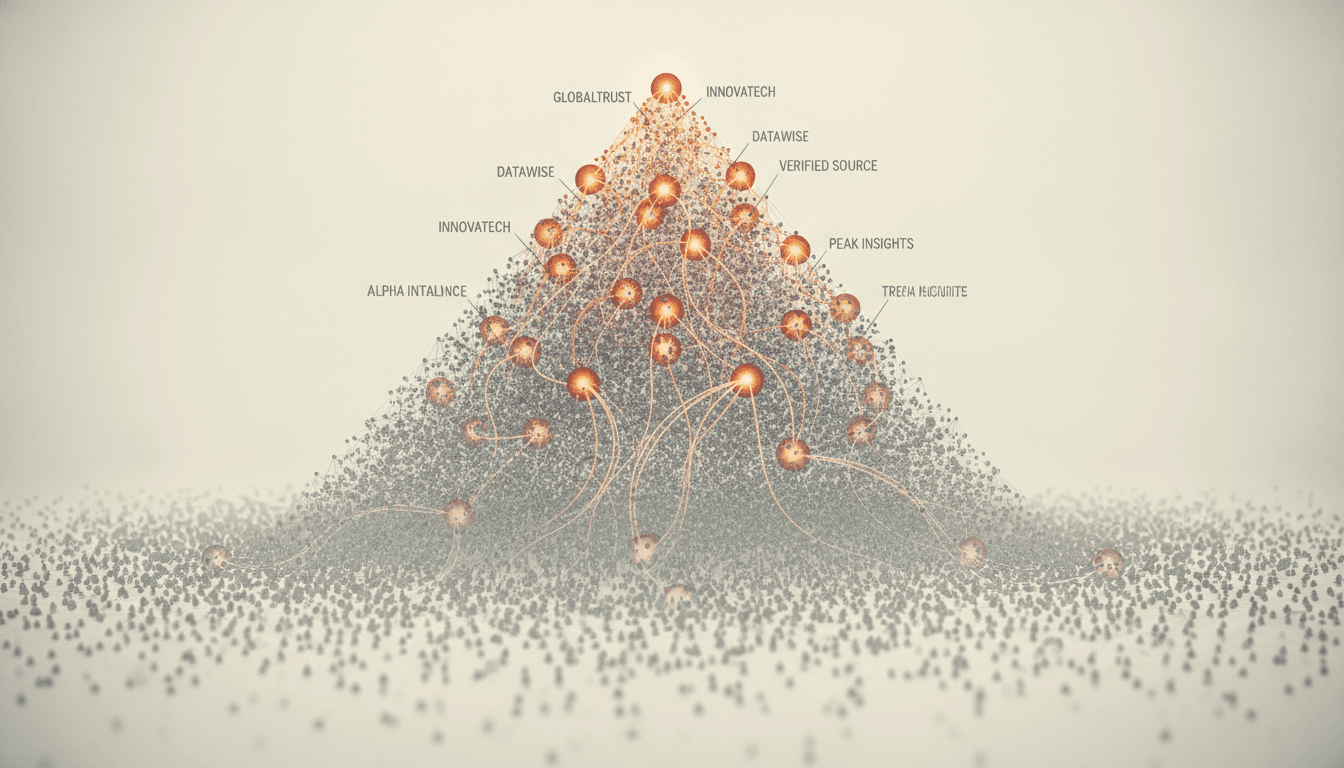
## The Power-Law Problem: Why the Top 10% of Brands Capture 65% of Citations

AI citation frequency doesn't distribute evenly across competitors. It concentrates dramatically. According to the [Gartner Digital Markets AI Visibility Report](https://www.gartner.com), **the top 10% of brands in any given product category receive approximately 65% of all AI mentions**—a power-law distribution far more extreme than traditional organic search rankings. For mid-market brands, this dynamic presents both a warning and an opportunity.

Early movers in AI citation building create compounding advantages. A brand that earns Wikipedia presence, review platform authority, and editorial coverage today will have those signals embedded in training data updates 6-18 months from now—building a citation moat that later entrants will struggle to overcome. Brands outside the top 10% face a citation accumulation challenge requiring systematic, sustained strategy rather than one-off content pushes.

But the opportunity exists in underserved niches. [Perplexity AI processes over 100 million queries per month](https://techcrunch.com), with an estimated 35% involving product discovery or brand comparisons. In many specialized categories, the citation landscape remains wide open. A mid-market brand in sustainable outdoor gear, for example, may face far less citation competition than a brand in consumer electronics.

Identifying and dominating a specific citation niche is a more achievable path to the top 10% than competing head-on in saturated categories. Looking ahead, brands should assess their competitive positioning within their specific niche before pursuing broader market strategies.


---


## The Citation-to-Revenue Pipeline: Measuring Business Impact

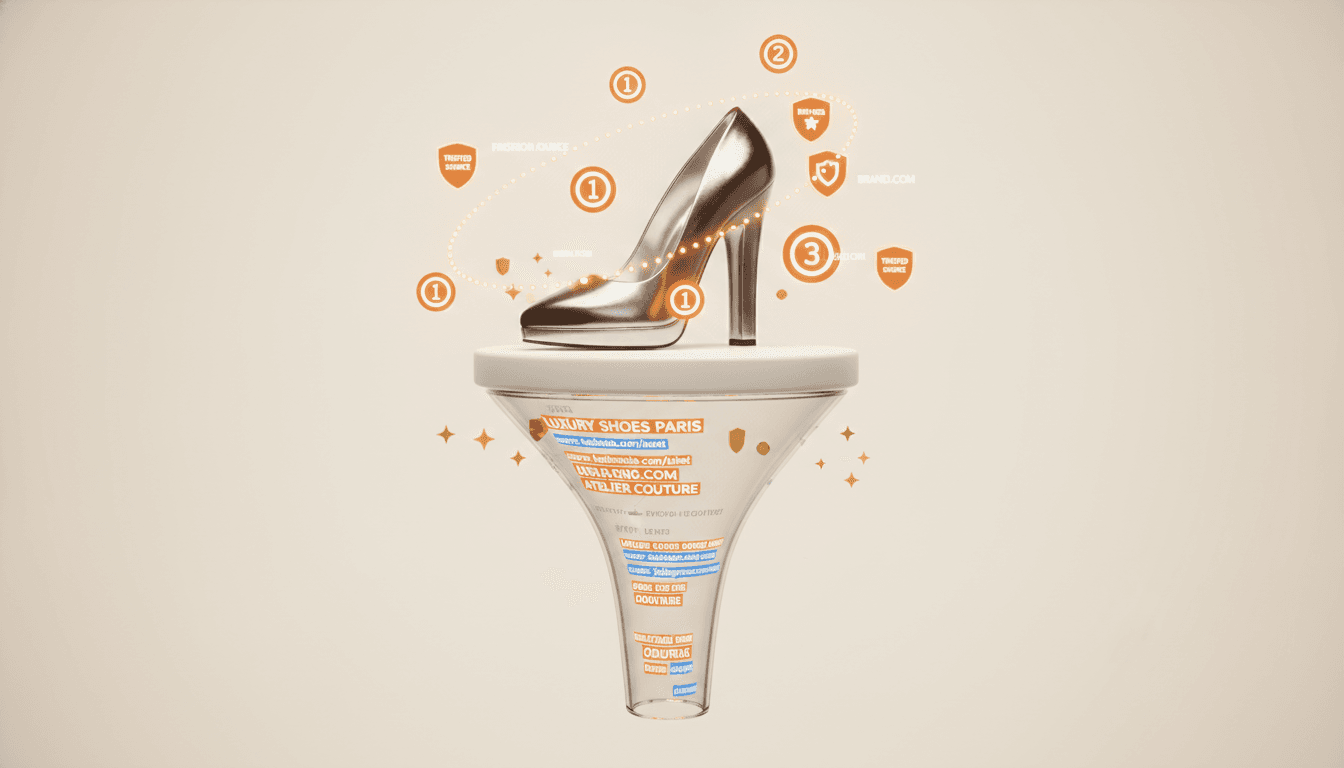
[IMG: Funnel graphic illustrating the citation-to-revenue pipeline: AI Citation → Brand Search Lift → Trust Premium → New Customer Acquisition]

The business case for AI citation investment is no longer theoretical. The **27% lift in branded search volume within 30 days** of a significant AI citation event demonstrates a clear halo effect: consumers who encounter a brand through an AI recommendation actively seek that brand through traditional search channels, amplifying revenue impact beyond direct AI referral traffic. Citations prime the entire purchase funnel.

Consumer trust further amplifies this signal. Studies from the [Edelman Trust Barometer Special Report on AI and Commerce](https://www.edelman.com) show that when an AI assistant recommends a brand unprompted, consumers rate that brand **2.3x more trustworthy** than if they encountered the same brand through a sponsored search result. This trust premium translates into higher conversion rates, lower acquisition costs, and stronger customer lifetime value.

Paid placements interrupt; AI citations endorse. As [Greg Shuey, CEO of Stryde](https://www.stryde.com), puts it: *"The data is unambiguous: there is a strong positive correlation between how often a brand is cited by AI assistants and how that brand performs on new customer acquisition metrics. Every e-commerce CMO should be treating AI citation optimization as a first-tier priority in 2025."*

The 34% new customer acquisition revenue advantage for top-quartile AI-cited brands compounds over time, creating structural competitive advantages that are difficult to overcome.


---


## Source Hierarchy in AI Citations: The Five Sources That Matter Most

Knowing which sources drive AI citations allows brands to allocate effort strategically. Here's how the five dominant source types break down:

- **Review platforms** (G2, Trustpilot, industry-specific sites) establish credibility signals that AI systems interpret as social proof and quality authority
- **Major news publications** provide legitimacy signals to AI training data, with editorial mentions carrying significantly more weight than press release syndication
- **Community forums** (Reddit, niche discussion boards) provide authentic, contextual use cases that AI systems draw on when constructing product recommendations
- **Wikipedia** serves as the entity anchor and citation gateway—its presence is a prerequisite for confident entity recognition across all major AI platforms
- **Comparison articles and roundups** ("Best X for Y" content on high-authority domains) aggregate brand mentions with evaluative context that AI systems find highly citable

Source diversity matters more than source depth. A brand with moderate presence across all five source types will consistently outperform a brand with dominant presence in only one. According to [Hexagon's citation analysis](https://joinhexagon.com), brands featured in long-form comparison content on sites with Domain Authority above 60 were **4.1x more likely to appear in AI responses** than brands with equivalent product quality but no such editorial coverage.

The implication is clear: earning coverage across multiple authoritative source types is the most efficient path to citation frequency. For example, a brand might prioritize Wikipedia establishment first, then pursue review platform presence, while simultaneously building editorial relationships.


---


## RAG vs. Training Data: Why Timing Matters for Your Citation Strategy

The distinction between RAG-based and training-data-based citation mechanisms has direct implications for content timing strategy. [Perplexity's RAG architecture](https://www.perplexity.ai) can surface new content within 48-72 hours of publication—meaning a well-placed news mention or forum post can generate citations almost immediately.

This creates real-time citation opportunities that brands can actively engineer through timely PR and community engagement. ChatGPT's base model operates on a fundamentally different timeline. Training data refresh cycles run on 6-18 month intervals, meaning the content influencing ChatGPT citations today was largely published 6-18 months ago.

Claude and Gemini employ hybrid approaches with variable latency, blending real-time retrieval with base model knowledge. Understanding these platform mechanics allows brands to sequence their outreach for maximum impact across the entire AI ecosystem. Here's how to think about the timing split: RAG-first platforms (Perplexity, browsing-enabled ChatGPT) reward current, crawlable, well-structured content published consistently over time.

Base model platforms (ChatGPT without browsing, foundational Claude) reward sustained, long-term accumulation of authoritative third-party mentions. A complete AI citation strategy must account for both immediate and delayed citation mechanisms—neither alone is sufficient.


---


## Reputation's Hidden Role: How Negative Sentiment Suppresses AI Citations

[IMG: Graph showing inverse correlation between complaint volume and AI citation frequency across product categories]

Brand reputation has always mattered for customer trust. In the AI era, it now directly determines whether a brand gets cited at all. AI models trained with RLHF (Reinforcement Learning from Human Feedback) learn to avoid recommending brands associated with high complaint volumes, product recalls, or reputational controversies—as documented in [MIT Technology Review's analysis of how AI models handle brand reputation](https://www.technologyreview.com). Negative sentiment doesn't just hurt brand perception; it actively suppresses citation frequency.

The insidious dimension of this dynamic is that citation suppression can occur even when traditional search rankings remain strong. A brand might rank on page one of Google while being systematically avoided by AI assistants—creating a visibility gap that traditional analytics won't detect. Reputation management is no longer purely a PR concern.

It's an AI visibility issue with direct revenue consequences. Citation recovery after a reputation event requires a two-track approach: proactive reputation repair (responding to complaints, resolving product issues, building positive review volume) combined with entity re-establishment (refreshing third-party coverage, earning new authoritative mentions, reinforcing trust signals across the five key source types). The earlier a brand addresses reputation signals, the shorter the citation suppression window.


---


## The Practical Framework: 8 Steps to Increase Brand AI Citations

A systematic approach to AI citation building combines entity establishment, content strategy, and targeted outreach. Here's how to execute each step:

**Step 1: Establish core entity presence.** Secure a Wikipedia page and Wikidata entry, and ensure consistent presence in Crunchbase, Google Knowledge Graph, and industry association directories. Entity establishment is the prerequisite for everything that follows.

**Step 2: Implement structured data markup.** Deploy Schema.org brand entity markup across the website and ensure NAP (Name, Address, Phone) data is consistent across all web properties. Inconsistent entity data reduces AI confidence in brand identification.

**Step 3: Secure review platform presence.** Build verified profiles on G2, Trustpilot, and industry-specific review platforms. Actively solicit reviews and respond to existing feedback to demonstrate engagement and build review volume.

**Step 4: Build news and editorial mentions.** Invest in PR, thought leadership, and industry coverage that places the brand in major news publications and authoritative editorial outlets. These mentions carry the highest training data weight.

**Step 5: Develop community presence.** Participate authentically in Reddit communities, niche forums, and discussion boards relevant to the product category. Community mentions provide the contextual use cases AI systems draw on for recommendations.

**Step 6: Create comparison-friendly content.** Develop and pitch "Best X for Y" articles, buying guides, and versus content to high-authority publishers. Pursue inclusion in existing roundups through direct outreach to editors and content managers.

**Step 7: Monitor and optimize citation performance.** Track AI mentions across platforms using citation monitoring tools. Analyze which sources are driving citations and reallocate effort toward the highest-performing channels.

**Step 8: Manage reputation actively.** Respond to all reviews and complaints, address product or service issues publicly, and build a consistent stream of positive trust signals. Reputation health is a direct input into citation frequency.

The eight-step framework outlined above is not a future-state aspiration—it's an executable roadmap that brands can begin implementing today. Each step builds on the previous one, creating compounding effects over time.

**Ready to build an AI citation strategy?** The landscape is shifting faster than most brands realize, and early movers are capturing disproportionate share of AI-assisted customer acquisition. Book a 30-minute strategy session with Hexagon's AI visibility experts to audit current digital entity footprint, identify highest-impact citation opportunities, and get a custom roadmap for brand AI visibility. [Book Your Free Strategy Session](https://calendly.com/ramon-joinhexagon/30min)


---


## Implementation Timeline: What to Expect and When

Looking ahead, realistic timelines prevent premature strategy abandonment. Here's what to expect across the implementation arc:

- **Days 1-14:** Entity establishment and structured data implementation—the foundational layer that all subsequent steps build on
- **Days 15-30:** Review platform optimization and community presence building, generating early trust signals
- **Days 30-60:** First RAG system citations begin appearing in Perplexity and browsing-enabled ChatGPT as new content gets indexed
- **Days 60-90:** Editorial and news mentions compound authority, strengthening entity confidence across platforms
- **Days 90+:** Accumulated entity strength begins influencing base model behavior as training data reflects new signals
- **6-18 months:** Full impact of training data refresh cycles, with sustained citation frequency reflecting the complete entity footprint built in earlier phases

Accelerating results is possible with focused prioritization. Hexagon's AI visibility team can compress this timeline by prioritizing the highest-impact actions for specific category and competitive landscape. [Book Your Free Strategy Session](https://calendly.com/ramon-joinhexagon/30min)


---


## Common Mistakes That Suppress AI Citations

The most common mistake is treating AI citation optimization like traditional SEO. Keyword-focused strategies miss the entity-first nature of AI citation entirely. A brand can rank for every relevant keyword and still be invisible to generative engines if its entity footprint is thin.

As [Rand Fishkin, Co-founder and CEO of SparkToro](https://sparktoro.com), observes: *"AI systems are essentially doing a trust audit of your brand every time a user asks a relevant question, and the audit results determine whether you get mentioned or ignored."*

Inconsistent business information across databases is a frequently overlooked suppressor. When a brand's name, address, and category appear differently across Crunchbase, LinkedIn, Google Business Profile, and industry directories, AI systems lose confidence in entity identification—reducing citation likelihood even when the brand has strong third-party coverage. Consistency is not a minor detail; it's a citation signal.

Other high-impact mistakes include:

- **Neglecting Wikipedia presence**, missing the 3.7x citation likelihood advantage that entity anchoring provides
- **Ignoring negative reviews and complaints**, allowing RLHF-trained avoidance patterns to suppress citations while traditional rankings remain unaffected
- **Applying a one-size-fits-all approach** across Perplexity, ChatGPT, and Claude—each platform has distinct citation mechanics requiring tailored strategy
- **Concentrating presence in a single source type** rather than building the source diversity that drives 73% of all AI brand citations


---


## Conclusion: The Window for First-Mover Advantage Is Open—But Not Indefinitely

The AI citation landscape today resembles early-stage SEO: the rules are becoming clear, the competitive advantages are measurable, and the brands that move systematically will build moats difficult for later entrants to overcome. As [Amanda Whalen, VP of Digital Marketing Strategy at Gartner](https://www.gartner.com), frames it: *"Citation in a generative AI response is the new first-page ranking. If the AI doesn't know you exist, or knows you but doesn't trust you, you're completely invisible to a growing segment of high-intent consumers."*

The eight-step framework outlined above is not aspirational. It's an executable roadmap that brands can begin implementing today. Entity establishment, structured data, review platform presence, editorial coverage, community engagement, comparison content, citation monitoring, and reputation management are all within reach for any e-commerce brand with a focused team and a clear strategy.

The question is not whether to pursue AI citation optimization. It's how quickly to begin. The brands capturing 65% of AI citations in their categories aren't waiting for perfect conditions or complete understanding. They're building their citation strategies now—before their competitors do.

**Start today.** Build an AI citation strategy before competitors do. [Book Your Free Strategy Session with Hexagon's AI Visibility Experts](https://calendly.com/ramon-joinhexagon/30min) and get a custom roadmap for brand generative search visibility.
H
Hexagon Team
Published June 28, 2026