citationbrandsbrand
The Role of AI Citations: How and Why AI Search Engines Reference E-Commerce Brands
AI citations are reshaping how fashion consumers discover brands—and 70% of AI-generated product recommendations already include at least one cited source. Here's what fashion e-commerce brands need to know to stay visible in the generative search era.
14 min read
---


# The Role of AI Citations: How and Why AI Search Engines Reference E-Commerce Brands

*AI citations are reshaping how fashion consumers discover brands. When 70% of AI-generated product recommendations include at least one cited source, the question isn't whether brands should care about AI citations—it's whether they can afford to ignore them.*

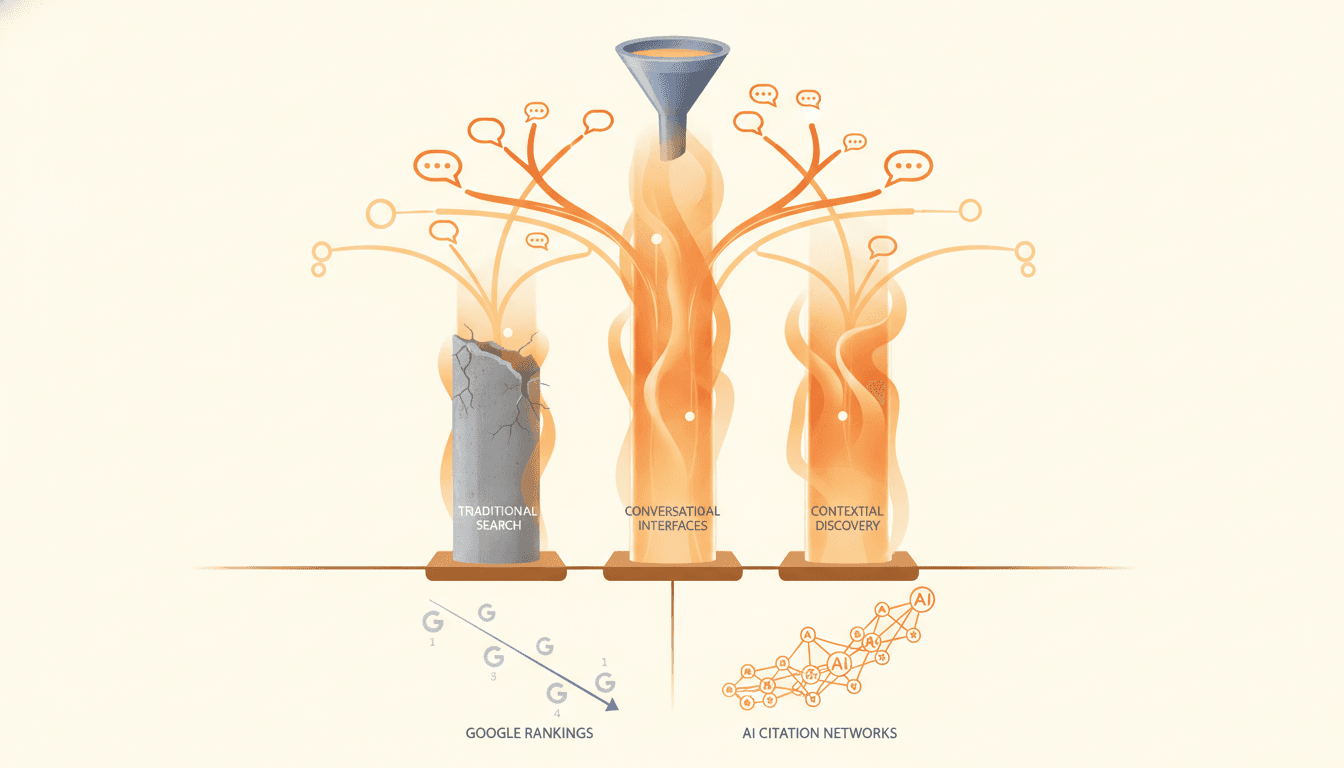
[IMG: Split-screen visual showing a traditional Google search results page on the left and an AI-generated product recommendation response with cited brand links on the right, illustrating the shift in discovery channels]

A fashion shopper asks an AI assistant, "What sustainable luxury brands should I consider for my winter wardrobe?" In 70% of AI-generated responses, that shopper sees at least one cited brand recommendation. However, if a brand isn't in that citation, it becomes invisible to one of the fastest-growing discovery channels in e-commerce.

While most fashion brands optimize for Google's algorithm, AI search engines like Perplexity and Claude fundamentally reshape how consumers discover products. These platforms use a completely different ranking system: **AI citations**. Unlike traditional backlinks or keyword rankings, AI citations are trust signals that directly influence both AI systems and human purchasing decisions.

The data tells a compelling story. Brands with 3+ citations appear 40% more frequently in generative search results, and [58% of AI-assisted shoppers](https://www.salesforce.com/resources/research-reports/state-of-the-connected-customer/) say they're more likely to buy from a cited brand. This isn't a future trend—it's happening now, across platforms customers are already using.


---


## What Are AI Citations in Generative Search? (And How They Differ From Traditional SEO)

AI citations are references to brands, products, or content that appear within AI-generated responses. They operate on fundamentally different logic than backlinks or search rankings, requiring a new strategic approach.

When a shopper asks Perplexity or ChatGPT for a product recommendation, the AI doesn't return a ranked list of blue links. Instead, it generates a curated answer, and the brands it names and links to become the winners of a new kind of visibility competition. These citations serve as trust signals for both AI systems and end consumers alike.

According to [BrightEdge Research](https://www.brightedge.com/), 70% of AI-generated product recommendation responses include at least one cited source. This means citation presence is now a critical visibility metric for fashion e-commerce brands—one that operates independently from traditional SEO performance.

Here's the fundamental difference: AI systems evaluate brands using **E-E-A-T signals**—Experience, Expertise, Authoritativeness, and Trustworthiness. Citations surface in real-time conversational contexts, not as static ranking factors. Because citations compound across platforms like Perplexity, Claude, and ChatGPT, each new citation strengthens brand authority across the entire generative search ecosystem.

Fashion brands competing in generative search need a new playbook. Visibility isn't about ranking #1 for a keyword—it's about being cited as a trusted source when consumers actively ask for recommendations. This shift requires fundamentally different strategies and metrics.


---


## Why AI Search Engines Cite Brands: The Mechanics Behind Citation Selection

Understanding why AI systems cite certain brands is the first step to influencing which brands get cited. Citations aren't random—they're selected based on measurable, systematic criteria that brands can influence.

AI systems cite brands to provide credibility and source attribution to their responses, much like a human expert backing up recommendations with references. The mechanics involve three primary factors: training data weighting, real-time web retrieval (known as RAG, or Retrieval-Augmented Generation), and E-E-A-T validation signals.

RAG is particularly important to understand. It means AI systems pull current content during response generation, making fresh, high-quality content essential for citation eligibility. As [Lily Ray, VP of SEO Strategy & Research at Amsive Digital](https://www.amsive.com/), explains: "AI models are selective about what they cite, and they favor brands with deep topical authority, consistent cross-platform signals, and verifiable social proof."

Here's how brands can increase citation likelihood by focusing on three concrete areas:

**Structured Data Implementation**

Schema.org product markup helps AI systems understand and rank brand authority more effectively. This isn't optional—it's foundational.

**Third-Party Validation**

Press mentions, reviews, and editorial coverage increase citation likelihood across multiple AI platforms. The more external sources validate a brand, the more confident AI systems become in citing it.

**Entity Consistency**

Brands with unified NAP (Name, Address, Phone) data and consistent brand voice across their website, social profiles, and directories are more likely to be accurately cited. This prevents AI hallucination or misattribution.

[Brands with 3+ citations across different AI platforms see a 40% increase in generative search result appearances](https://www.hexagon.ai/), creating a compounding citation authority effect that grows over time. This virtuous cycle means early action compounds significantly.

[IMG: Diagram illustrating the RAG (Retrieval-Augmented Generation) citation selection process, showing how AI systems pull from editorial sources, brand websites, and structured data to generate cited responses]


---


## The Business Case: How AI Citations Drive Revenue for Fashion E-Commerce Brands

The revenue impact of AI citations is measurable, significant, and growing. [Salesforce research](https://www.salesforce.com/resources/research-reports/state-of-the-connected-customer/) shows that 58% of AI-assisted shoppers are more likely to purchase from a cited brand compared to one discovered through a traditional search ad. This represents a direct conversion rate advantage that compounds with scale.

Citation links within AI-generated responses generate **3x higher click-through rates** than standard organic search listings, according to [Ahrefs' Generative Search Click Behavior Study](https://ahrefs.com/). This reflects higher consumer intent at the point of AI interaction: shoppers asking AI assistants for recommendations actively seek guidance, not passively scroll search results.

The market opportunity is enormous. The AI-influenced fashion e-commerce market is [projected to reach $6.2 billion by 2026](https://www.businessoffashion.com/), according to Business of Fashion and McKinsey. Brands that build AI citation authority now are building a defensible competitive moat for that market.

As Andrew Lipsman, Independent Analyst and Former Principal Analyst at eMarketer, notes: "A citation from an AI assistant carries the implicit endorsement of the AI itself—which consumers increasingly trust as an unbiased curator."

Key revenue metrics demonstrate the opportunity:

- **40%** increase in generative search appearances for brands with 3+ citations
- **25%** improvement in brand recommendation likelihood with verified AI citations
- **3x** higher CTR for citation links vs. organic search results
- **$6.2 billion** projected AI-influenced fashion market by 2026

The math is straightforward: higher citation presence drives more qualified traffic, which converts at higher rates, in a market growing faster than any other discovery channel.


---


## How to Increase Brand AI Citation Presence: Content & PR Strategies

Building AI citation authority starts with content strategy—but not the keyword-stuffed blog posts of traditional SEO. The [shift from keyword-based search to conversational AI search](https://blog.hubspot.com/marketing/state-of-marketing-report) means fashion brands must optimize for natural language queries like "best sustainable denim brands under $100" rather than isolated keywords like "sustainable jeans."

This requires a fundamentally different content approach. Instead of targeting search volume, brands target the questions AI systems are asked and the answers they need to cite with confidence.

**Develop Conversational Content**

Long-form, conversational content that directly answers the questions AI systems encounter performs best. Buying guides, comparison pieces, and expert advice formats are citation magnets because they provide the comprehensive, authoritative answers AI systems want to reference.

**Secure Strategic Media Placements**

AI-indexed fashion publications like Vogue, Refinery29, Who What Wear, and The Strategist carry disproportionate weight as citation sources. A mention in these publications is worth significantly more than a mention in a lesser-known blog.

**Build Topical Authority**

Expert contributor programs that position brand leaders as industry thought leaders in AI training data increase citation likelihood. The more consistently a brand appears as an authority across multiple sources, the more confident AI systems become in citing it.

**Create Original Research**

Trend reports and original research that AI systems reference as authoritative sources are among the most-cited content types in generative responses. Data-backed insights provide the kind of verifiable information AI systems prefer to cite.

Content optimized for conversational queries is 3x more likely to be cited by AI systems compared to traditional SEO content, according to [BrightEdge](https://www.brightedge.com/). For example, a comprehensive guide titled "How to Build a Sustainable Winter Wardrobe: Expert Brand Recommendations" is far more citation-worthy than a product page optimized for "sustainable coats."

As Liz Miller, VP & Principal Analyst at Constellation Research, explains: "The brands that will win in AI search aren't necessarily the ones with the biggest ad budgets—they're the ones that have built genuine authority through consistent, high-quality content that AI systems can trust, parse, and cite with confidence."


---


## The Technical Foundation: GEO Best Practices for Fashion Brands

Content strategy alone isn't sufficient. The technical foundation of **Generative Engine Optimization (GEO)**—an emerging discipline distinct from traditional SEO, as identified by [Princeton University and Georgia Tech researchers](https://arxiv.org/abs/2311.09735)—determines whether AI systems can accurately parse and cite brand content.

GEO focuses on how AI systems retrieve, understand, and cite information from digital properties. It's less about ranking and more about accessibility and trustworthiness to AI systems.

**Implement Structured Data Markup**

Schema.org product markup for products, reviews, brand information, and sustainability certifications increases citation likelihood by 35%. Structured data allows AI systems to extract and verify information more reliably, reducing hallucinations and increasing citation confidence.

**Maintain Consistent Entity Data**

A brand's website, social profiles, directories, and press pages must present unified brand information. Inconsistencies confuse AI systems and reduce citation likelihood. This includes consistent business name, address, phone number, and brand descriptions across all platforms.

**Optimize FAQ and Comparison Content**

FAQ and comparison data are 2x more likely to be cited in AI responses than unstructured content. Structuring this content with proper schema markup maximizes AI accessibility.

**Ensure Clean, Crawlable Site Architecture**

Fast load times and clear site structure improve AI crawlability and content indexing for citation eligibility. AI systems need to quickly find, parse, and verify brand content.

Unlike paid search ads, AI citations cannot be directly purchased—they must be earned through content quality, brand authority, and consistent digital presence, according to [Search Engine Journal](https://www.searchenginejournal.com/). This makes GEO a fundamentally organic, long-term brand investment with compounding returns.

[IMG: Technical checklist graphic showing Schema.org markup implementation, entity data consistency audit, and FAQ optimization steps for fashion brand websites]


---


## Building Trust Signals: The Third-Party Validators That Compound AI Citation Authority

AI systems don't just evaluate a brand's own content—they weight third-party validation signals heavily in citation decisions. For fashion brands, this means building an ecosystem of external credibility that AI systems can independently verify and trust.

The most impactful trust signals include:

**Customer Reviews and Ratings**

Brands with 4.5+ star average ratings are 2.5x more likely to be cited by AI systems compared to lower-rated competitors. This is verifiable, objective data that AI systems can use to validate brand quality.

**Sustainability Certifications**

B Corp, Fair Trade, and similar certifications add 20% to citation likelihood in AI-generated responses focused on ethical fashion—a growing query category. These third-party validations signal genuine commitment to values that matter to consumers.

**Press Mentions and Earned Media**

Press mentions increase citation probability by 40% within 30 days of publication, according to [Hexagon's AI Commerce Trust Index](https://www.hexagon.ai/). Editorial coverage serves as independent validation of brand importance.

**Awards and Industry Accolades**

External recognition serves as proof points that AI systems use to verify brand authority. Industry awards signal that other experts recognize a brand's quality.

**Influencer Partnerships with Editorial Crossover**

Guest posts and expert interviews create citation opportunities across multiple platforms simultaneously. When influencers and experts mention a brand in published content, AI systems take notice.

Over 30% of Gen Z and Millennial consumers now report using AI chatbots to research clothing purchases before visiting a brand's website, according to [McKinsey's State of Fashion Report 2025](https://www.mckinsey.com/industries/retail/our-insights/state-of-fashion). Third-party trust signals are what convert an AI mention into a confident, repeated citation that drives actual traffic.


---


## A 90-Day GEO Action Plan: From Audit to Citation Growth

Most fashion brands have zero AI citations today—which means starting now creates a **6-12 month competitive advantage window** before the space becomes crowded. Brands that implement full GEO strategies see citation growth of 150-300% within 90 days, according to Hexagon's generative search research.

This timeline is aggressive but achievable. Here's how to structure the first quarter:

**Month 1: Audit and Technical Foundation**

Brands should start by establishing their baseline. Searching a brand name on Perplexity, ChatGPT, and Claude reveals where it currently appears (or doesn't). Competitive citation analysis identifies specific gaps and opportunities in the vertical.

Immediate priorities include implementing Schema.org markup, correcting inconsistent entity data across all platforms, and optimizing FAQ content. This technical work is foundational and must happen first—it enables everything that follows.

**Month 2: Content and PR Offensive**

Brands should launch long-form buying guides, comparison content, and expert positioning pieces optimized for conversational queries. Simultaneously, securing 3-5 strategic media placements in AI-indexed fashion publications accelerates visibility. Developing original research or trend data positions a brand as a citable authority.

This is where brands build the content assets that AI systems want to cite. Quality matters more than quantity—one mention in Vogue is worth more than ten mentions in industry blogs.

**Month 3: Authority Compounding**

Building influencer and thought leadership partnerships creates citation opportunities across platforms. Monitoring citation growth closely and analyzing which content types drive citations allows brands to double down on high-performing formats and publication partnerships.

Citation velocity matters: consistent growth over 90 days signals authority more strongly than sporadic citations. Rand Fishkin, Co-Founder & CEO of SparkToro, frames the urgency clearly: "We're entering an era where brand discoverability is no longer just about ranking on page one—it's about being the answer."


---


## The Future of AI Citations: What's Next for Fashion E-Commerce Brands

The AI citation landscape is evolving rapidly. AI shopping agents—like OpenAI's emerging shopping integrations—represent the next frontier, and they will prioritize brands with strong existing citation authority when curating recommendations for users. Brands building that authority now will be positioned to capture disproportionate share of AI-assisted traffic as adoption accelerates.

Looking ahead, citation quality will matter more than quantity. AI systems will increasingly weight citations from trusted, specialized sources over generic mentions. Direct partnerships with AI platforms may also become available to brands that establish strong citation authority early—creating an entirely new category of brand-AI relationships.

The $6.2 billion projected AI-influenced fashion market by 2026 represents a massive shift in discovery dynamics. Brands that treat AI citation strategy with the same rigor they apply to influencer partnerships and PR campaigns today will have built a defensible competitive moat that compounds in value as AI search becomes the dominant discovery channel.


---


## Getting Started: Next Steps

The first-mover advantage in AI citation strategy is real—and it's available right now. Brands that take action in Q1 2025 will have a 6-month head start on competitors, and AI citation authority is significantly easier to build today than it will be in 12 months when competition intensifies.

Brands should begin immediately with these concrete steps:

1. **Audit AI citation presence** by searching the brand on Perplexity, ChatGPT, and Claude. Note where it appears, where competitors appear, and where gaps exist.

2. **Analyze competitor citations** to map the specific content types and publications driving citations in the vertical.

3. **Implement technical GEO foundations** (Schema.org, entity data consistency, FAQ optimization) as the immediate first priority.

4. **Develop a 90-day content and PR roadmap** focused on conversational queries and editorial placements in AI-indexed publications.

5. **Partner with a GEO expert** to accelerate citation growth and build a competitive positioning strategy tailored to the brand.

Fashion is among the [top three e-commerce verticals most frequently surfaced in AI-generated product recommendations](https://www.similarweb.com/), alongside consumer electronics and home goods. The opportunity is significant—but the window for first-mover advantage is narrow.

**Ready to build AI citation authority?** GEO specialists can audit current citation presence, identify competitive gaps, and build a personalized 90-day strategy to increase visibility in generative search. [Book a 30-minute consultation with the team to get started.](https://calendly.com/ramon-joinhexagon/30min)
H
Hexagon Team
Published July 10, 2026