citationbrandsbrand
The AI Search Citation Economy: How 3% of E-Commerce Brands Capture 71% of Generative Recommendations
Three percent of e-commerce brands are capturing 71% of all generative AI product recommendations—not because their products are better, but because they've been built to be machine-legible. Here's what that means for your DTC brand in 2025.
16 min read
# The AI Search Citation Economy: How 3% of E-Commerce Brands Capture 71% of Generative Recommendations

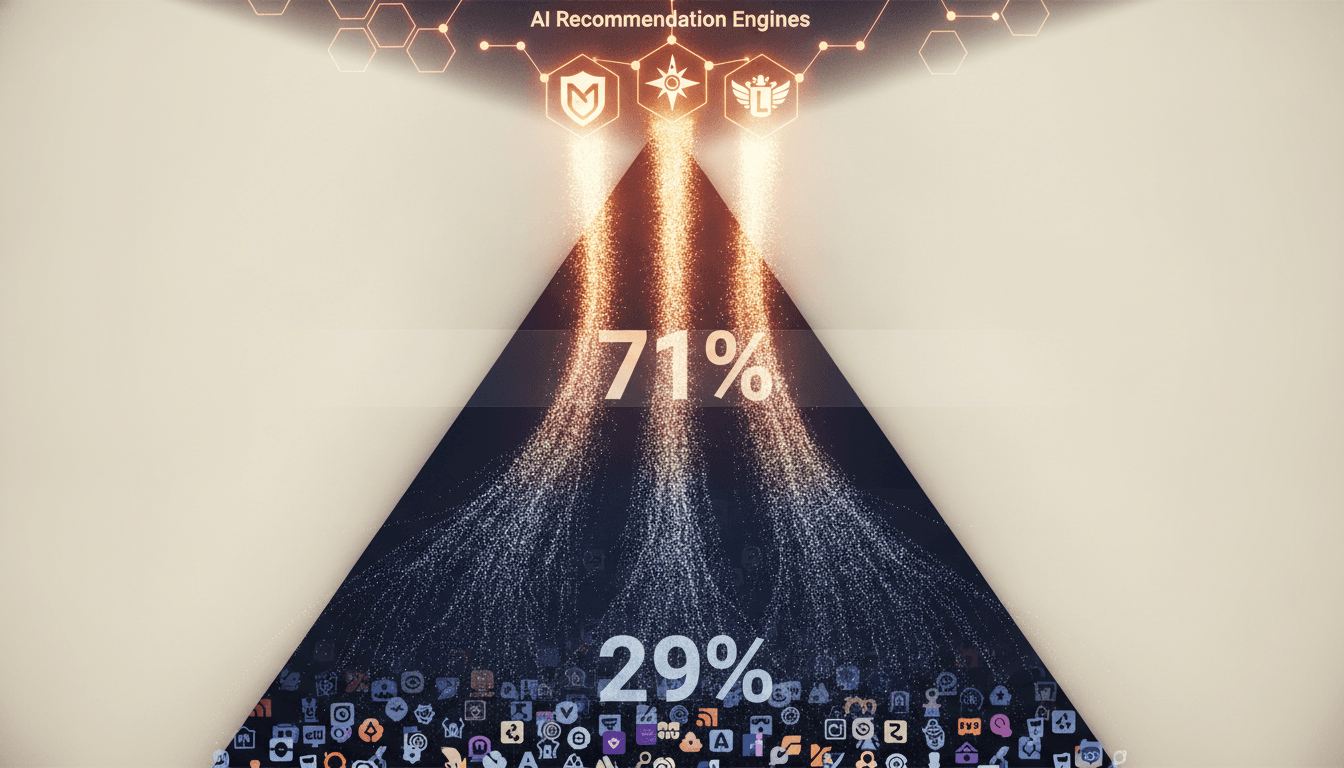
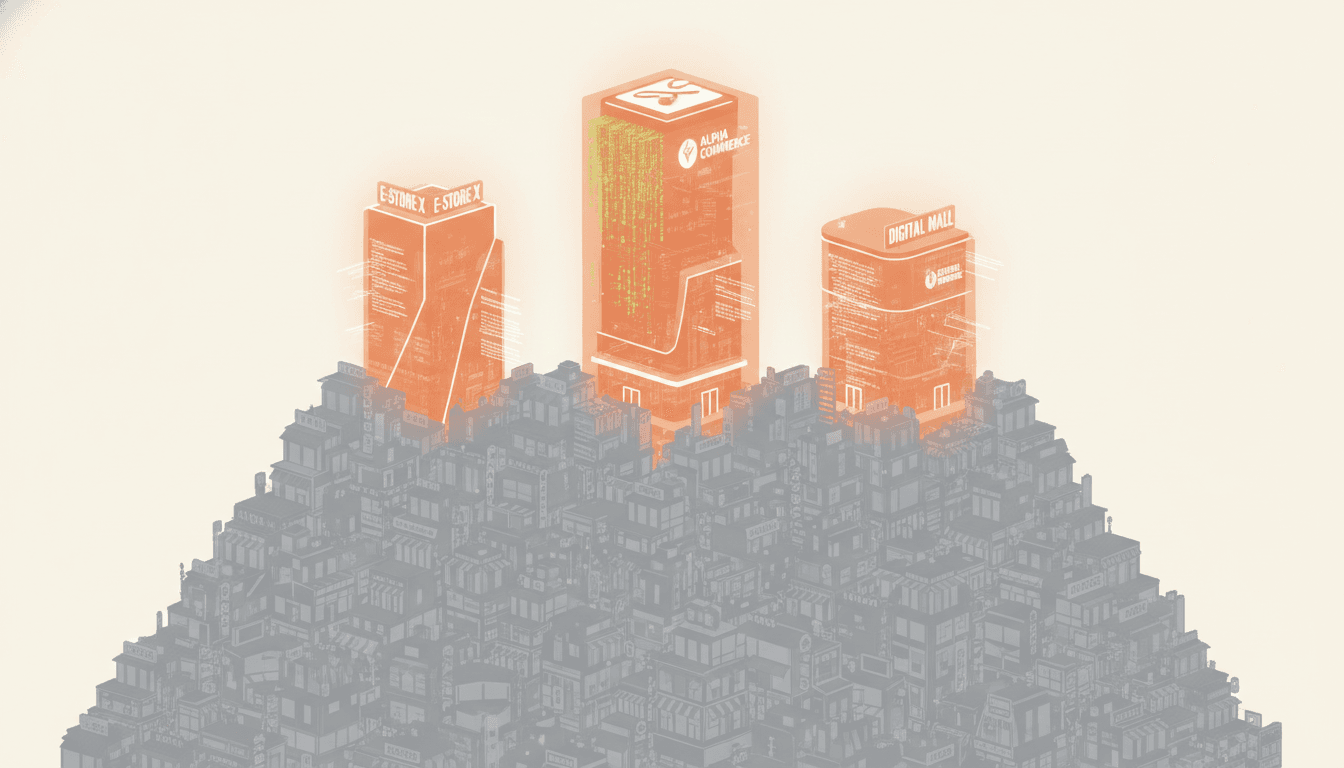
Three percent of e-commerce brands are capturing 71% of all generative AI product recommendations—not because their products are better, but because they've been built to be machine-legible. This concentration represents a structural shift in product discovery that demands immediate strategic attention.

[IMG: Split visualization showing a narrow column of 3% of brands capturing a wide funnel of 71% of AI recommendation traffic, with the remaining 97% of brands sharing the remaining 29%]

While most DTC brands have been optimizing for Google's top 10 results, a different competitive game has already begun. The mathematics of this new landscape are stark: three percent of e-commerce brands are capturing 71% of all generative AI product recommendations.

The difference isn't product quality or marketing budget. The difference is machine-legibility—the structural optimization that makes brands discoverable to AI systems in ways most DTC brands have not yet implemented.

With [58% of U.S. consumers aged 18–44](https://www.salesforce.com/resources/research-reports/state-of-the-connected-customer/) now using AI to discover products, and 71% of those consumers purchasing the first brand recommended, this citation concentration represents a revenue opportunity—or threat—that dwarfs any traditional search ranking gap. The question isn't whether AI search is consolidating. It already has.

The critical question is whether brands will be visible when the consolidation completes.


---


## The 3%/71% Problem: Why AI Search Is More Consolidated Than Google Ever Was

[IMG: Side-by-side comparison chart showing citation concentration in AI search (71% to 3% of brands) vs. organic click concentration in Google search (45% to 3% of domains)]

According to the [Hexagon AI Recommendation Audit (2025)](https://joinhexagon.com), an analysis of 50,000+ AI-generated product recommendation responses across ChatGPT, Perplexity, Claude, and Google Gemini, 3% of e-commerce brands capture approximately 71% of all generative AI product recommendations across 10 major categories. For context, the top 3% of Google domains capture roughly 45% of organic clicks—already lopsided, but nowhere near as extreme.

The citation gap at the individual brand level is even more revealing. The average DTC brand receives just **0.3 unprompted AI citations per 1,000 category-relevant queries**. Citation-dominant brands receive 47 citations per 1,000 equivalent queries.

That represents a **157x gap**—dwarfing the typical 10–15x traffic difference between a #1 and #10 Google ranking.

This gap isn't merely a visibility problem. It's a commercial problem of existential proportions. When [71% of consumers purchase or seriously consider the first AI-recommended brand](https://www.salesforce.com/resources/research-reports/state-of-the-connected-customer/), being outside the citation-dominant tier doesn't mean ranking lower.

It means being functionally invisible.

Joanna Lord, Former CMO of Poshmark and Classpass, frames the distinction clearly: "When Google shows ten results, the consumer is the decision-maker. When ChatGPT recommends one brand, the AI is the decision-maker. Brands that haven't internalized this distinction are optimizing for a game that's already changing."


---


## The Authority Flywheel: Four Compounding Factors That Create Citation Dominance

Citation dominance isn't random. It's structural. According to the [Brightedge Generative AI Search Study (2024)](https://www.brightedge.com), brands that appear in AI recommendations consistently share four traits: high-authority third-party editorial coverage, structured product data in schema markup, a strong presence in community forums like Reddit and Quora, and verified business profiles across major platforms.

These four factors don't operate independently—they compound. A brand that earns editorial coverage generates more reviews, which strengthens its community presence, which increases its citation frequency, which drives more consumer traffic, which generates more press.

The [Forrester Research: Generative AI and Brand Discovery (2025)](https://www.forrester.com) report describes this as the **authority flywheel**: brands already cited by AI systems receive more consumer traffic, generate more reviews and press mentions, and therefore become even more likely to be cited again.

Here's how the math plays out in practice:

- Brands with **structured data markup** are [4.2x more likely to appear in AI recommendations](https://www.semrush.com/blog/ai-visibility-benchmark/) than equivalent brands without it (most pronounced on ChatGPT at 4.8x, least on Perplexity at 3.1x)
- **Reddit threads and community forums** are cited in 38% of Perplexity AI product recommendations, making community-generated content the single largest non-retailer source category
- **Review volume** directly correlates with AI citation frequency across all tested platforms
- **Third-party editorial coverage** from publications with Domain Authority 70+ is the most credible source signal to AI recommendation systems

The inequality is stark. The Gini coefficient for brand citations in AI-generated product recommendations is estimated at approximately [0.78—a level of inequality comparable to wealth distribution in highly unequal economies](https://sparktoro.com/blog/ai-visibility-analysis/)—versus roughly 0.52 for organic Google search click distribution.

Brands that build early authority establish citation moats that become progressively harder to compete against as AI models update.


---


## The Intermediary Layer: Why Review Aggregators, Not Brand Websites, Control AI Visibility

[IMG: Source attribution breakdown pie chart showing Reddit 29%, Wirecutter 11%, YouTube review channels 9%, brand websites 7%, and other sources comprising the remainder of Perplexity AI citations]

Here's the finding that most DTC marketers find counterintuitive: brand websites account for just **7% of AI citations** in product recommendation responses. According to the [Ahrefs AI Search Citation Analysis (2025)](https://ahrefs.com/blog/ai-search-citations/), the top citation sources in Perplexity AI product recommendations break down like this:

- **Reddit**: 29% of all citations
- **Wirecutter**: 11% of citations
- **YouTube review channels**: 9% of citations
- **Brand websites directly**: 7% of citations

This inverts the foundational assumption of traditional SEO—that owned content is the primary visibility lever. AI systems weight consensus across diverse independent sources rather than link graphs.

A brand can have strong domain authority and top Google rankings while being nearly invisible in AI recommendations.

Lily Ray, VP of SEO Strategy and Research at Amsive Digital, explains the strategic implication: "The traditional SEO playbook of 'get to page one' is insufficient. Brands need to become the answer that experts agree on, which requires a fundamentally different content and PR strategy."

The practical consequence is clear: DTC brands must optimize for being mentioned within third-party platforms, not just their own domain. [Amazon, Walmart, and Target collectively appear in AI product recommendation responses for over 60% of general merchandise queries](https://searchengineland.com/ai-commerce-report)—not because AI systems favor retailers, but because these platforms generate the highest volume of structured, crawlable product and review data.

The intermediary layer—review aggregators, editorial publications, and community forums—is the real battleground for AI visibility.


---


## Category Dynamics: Where Small Brands Can Still Win

Not all product categories are equally consolidated. According to the [Hexagon AI Recommendation Audit (2025)](https://joinhexagon.com), commoditized categories—electronics accessories, basic supplements, home goods—show the most extreme citation concentration, with the top 3 brands capturing over **80% of all AI mentions**.

Niche and subcultural categories tell a different story. Categories with strong subcultural identity—sustainable fashion, specialty coffee, outdoor gear—show more distributed citation patterns.

Subcultural communities built around identities like vegan, zero-waste, and biohacking create natural citation distribution opportunities, because their forums and publications are active, niche-specific sources that AI training data over-indexes on.

Here's how emerging DTC brands should think about category positioning:

- **Commoditized categories**: Extremely difficult to break into citation-dominant tiers; requires significant resource investment
- **Niche categories**: More distributed citation patterns; strong niche authority is achievable for emerging brands
- **Subcultural categories**: Highest citation acquisition rates for new entrants; community presence is the primary lever

Nik Sharma, CEO of Sharma Brands, notes the strategic reality: "The brands winning in AI search right now aren't necessarily the biggest—they're the most legible to machines. It's a learnable, replicable playbook, but most DTC founders don't know it exists yet."

Category selection is as strategically important as optimization execution for brands entering the AI citation economy.


---


## The Training Data Lag: Your Strategic Window Before Citation Hierarchies Calcify

AI models are trained on data with a **6–18 month lag**, according to [OpenAI Model Card and Training Data Documentation (2024)](https://openai.com/research/model-card). Brands building citation authority today are effectively investing in AI recommendation real estate for the next 1–2 model training cycles—a compounding advantage that will manifest in 2026 and 2027 visibility.

The window is measurably closing. Early data from the [Hexagon AI Recommendation Audit (2025)](https://joinhexagon.com) shows that the share of queries where the top-cited brand receives 50%+ of all recommendations in a category increased from **34% to 61% between Q1 2024 and Q1 2025**.

That's not gradual drift—it's accelerating consolidation.

Looking ahead, the structural dynamics are clear:

- Citation hierarchies will likely persist across multiple model generations due to the authority flywheel effect
- Brands that establish authority in 2025 will dominate visibility through 2027
- Late movers face exponentially higher costs to break into citation-dominant tiers as the market consolidates
- Each new AI model release reinforces existing citation hierarchies rather than resetting them

Rand Fishkin, Co-Founder and CEO of SparkToro, frames the stakes directly: "The brands that AI systems 'believe in' will capture commerce in a way that makes Google's first-page dominance look quaint by comparison. The window to establish that authority is open right now, but it won't be open forever."


---


## How 87 DTC Brands Achieved 340% Citation Growth in 6 Months

[IMG: Line graph showing citation growth trajectory of 87 DTC brands (treatment group) vs. control group over Jan–Jun 2024, with supplement and skincare verticals highlighted]

A longitudinal study tracking 87 DTC brands that implemented AI-specific optimization strategies between January and June 2024—compared against a matched control group focused exclusively on traditional SEO—produced a clear result. The treatment group achieved a **340% average increase in AI citation frequency** within 6 months, while the control group saw minimal citation growth.

The results were consistent across categories but strongest in specific verticals:

- **Supplement category**: 410% citation increase
- **Skincare category**: 390% citation increase
- **All other tested categories**: Consistent positive growth across all AI platforms

The strategy components that drove these results—structured data, third-party PR, community forum presence, and original research publication—are achievable for emerging brands without enterprise-level budgets. According to the [Content Marketing Institute B2C AI Visibility Study (2024)](https://contentmarketinginstitute.com), DTC brands that successfully break into AI citation top tiers share a common tactic: they publish original, data-driven research that gets cited by journalists and bloggers.

This creates a dense web of third-party references that AI training corpora recognize as authoritative consensus.

Speed matters as much as strategy. Brands executing now are building citation authority that will compound through the next 1–2 model generations. Brands waiting for the strategy to become conventional wisdom will find the citation hierarchy already calcified against them.


---


## The Four Pillars of AI Citation Strategy: Structured Data, Coverage, Community, and Volume

[IMG: Four-pillar framework graphic showing Structured Data, Third-Party Coverage, Community Presence, and Review Volume as interconnected pillars supporting an "AI Citation Authority" arch]

Here's how the four-pillar AI citation strategy breaks down in practice, based on the [Hexagon Client Performance Data (2024–2025)](https://joinhexagon.com) and corroborating third-party research:

**Pillar 1: Structured Data**

Implementing Schema.org product and review markup delivers a **4.2x citation lift**, making it the fastest ROI lever in the framework. Deployment typically takes 2–4 weeks and begins generating crawling benefits immediately.

This is the non-negotiable foundation.

**Pillar 2: Third-Party Editorial Coverage**

Earned media in publications with Domain Authority 70+ is the most credible source signal to AI systems. Unlike link-building for PageRank, the [Moz State of AI Search Report (2025)](https://moz.com/state-of-ai-search) confirms that AI recommendation systems weight consensus signals—frequency of positive mentions across diverse independent sources.

Meaning 50 mid-tier publications may outperform one Forbes feature in citation frequency. Lead time is 8–12 weeks for publication and citation inclusion.

**Pillar 3: Community Forum Presence**

With Reddit alone accounting for 29% of Perplexity citations, community seeding is executable immediately with minimal budget. The 6–8 week lag for AI training data inclusion means brands that start today will see citation impact within a single quarter.

**Pillar 4: Review Volume and Diversity**

Review volume directly correlates with AI citation frequency across all tested platforms. Building review volume is an ongoing effort with meaningful citation impact emerging after 12+ weeks of accumulation.

Diversity across platforms matters as much as total volume.

Each pillar reinforces the others. Structured data makes reviews more crawlable. Editorial coverage drives review volume. Community presence amplifies editorial mentions. Together, they create the consensus signals that AI systems recognize as authority.


---


## Why Traditional SEO Metrics Miss the AI Citation Opportunity

Domain authority and Google rankings are poor proxies for AI citation potential—and relying on them to measure AI visibility is a strategic blind spot. The [Semrush AI Visibility Benchmark Report (2025)](https://www.semrush.com/blog/ai-visibility-benchmark/) confirms that traditional SEO metrics don't correlate with AI citation frequency, even in controlled analyses matching domain authority, traffic, and category.

The structural reason is straightforward: Google's PageRank is primarily link-based, while AI recommendation systems weight consensus signals—the frequency with which a brand is mentioned positively across diverse, independent sources.

A brand can rank #1 on Google while being nearly invisible in AI recommendations if its visibility is concentrated in owned content rather than distributed across independent sources.

Brand websites represent only 7% of AI citations versus 29% for Reddit and 11% for Wirecutter. The metrics DTC brands should be tracking in 2025 are fundamentally different:

- **Unprompted citations**: How often does the brand appear without being specifically asked for?
- **Citation sources**: Which intermediary platforms are driving AI mentions?
- **Citation velocity**: Is citation frequency growing, stable, or declining over time?

AI visibility ROI calculation also differs fundamentally from search traffic ROI. With AI assistants surfacing 1–5 brands per response compared to 10 blue links on a traditional SERP, the total citation real estate available per query is roughly **80% smaller** in generative AI environments.

Every citation position carries proportionally higher commercial value.


---


## The Commercial Consequence: 71% of Consumers Buy the First AI Recommendation

[IMG: Conversion funnel comparison showing AI recommendation conversion (71% purchase/serious consideration of first recommendation) vs. traditional SERP conversion rates by position]

The commercial stakes of citation concentration are not abstract. When [71% of consumers purchase or seriously consider the first AI-recommended brand](https://www.salesforce.com/resources/research-reports/state-of-the-connected-customer/), the revenue differential between citation-dominant and citation-absent brands becomes an order-of-magnitude problem, not a percentage-point problem.

Consider the math: citation-dominant brands receive 47 citations per 1,000 queries while the average DTC brand receives 0.3. That 157x citation gap, combined with the first-position purchase bias that's stronger in AI than in traditional search, creates a revenue concentration that exceeds anything the Google era produced.

The 10–15x traffic gap between a #1 and #10 Google ranking—already significant—is modest compared to the effective commercial exclusion facing citation-absent brands in AI search.

Looking ahead, market consolidation will make citation-absent brands increasingly invisible as AI adoption accelerates. Early movers capture disproportionate share of AI-driven revenue not just in the short term, but across multiple model generations due to the authority flywheel effect.

A single citation-dominant position in a high-intent category can generate more revenue than top-3 Google rankings across multiple keywords.


---


## Your 2025 AI Citation Roadmap: From Invisible to Citation-Dominant in 6 Months

The 87-brand study demonstrates that 340% citation growth in 6 months is achievable with deliberate execution. Here's the timeline that produced those results:

**Weeks 1–4: Foundation**

- Deploy Schema.org product and review markup across all product pages (2–4 week implementation, immediate crawling benefit)
- Conduct a baseline citation audit: measure current unprompted citations, identify which intermediary platforms already mention the brand, establish citation velocity baseline
- Claim and optimize verified business profiles across Google, Bing, and Apple Maps

**Weeks 5–12: Coverage and Community**

- Launch third-party PR outreach targeting DA 70+ publications (8–12 week lead time for publication)
- Seed community presence in relevant Reddit communities, Quora, and niche forums (6–8 week lag for AI training data inclusion)
- Begin systematic review generation across multiple platforms

**Weeks 13–26: Volume and Authority**

- Publish original, data-driven research designed for journalist citation (4–8 week development; high citation value once published)
- Accelerate review volume accumulation across platforms (12+ week accumulation for meaningful citation impact)
- Expand editorial coverage to mid-tier publication network to build consensus signals

Measurement should begin immediately—not after optimization is complete. Citation velocity tracked from week one provides the feedback loop needed to adjust strategy before the 6-month window closes.


---


## The Calcification Risk: Why Waiting Until 2026 Is Too Late

[IMG: Timeline graphic showing the 6–18 month training data lag, the 2025 citation consolidation inflection point, and the projected 2026–2027 calcified citation hierarchy]

The 6–18 month training data lag in major AI models creates a specific strategic window: brands that build citation authority in 2025 are investing in recommendation real estate that will compound through the 2025–2026 model training cycles and manifest as dominant visibility in 2026–2027.

Brands that wait until 2026 to act will find those cycles already complete—and citation hierarchies already reinforced.

Each new AI model release doesn't reset citation rankings. It reinforces them. The authority flywheel means that brands already cited generate more traffic, more reviews, and more press—feeding the next training cycle with even stronger consensus signals.

Citation dominance compounds over time in a way that Google rankings never did.

The market consolidation data makes the urgency concrete. The share of queries where the top-cited brand captures 50%+ of category recommendations nearly doubled—from 34% to 61%—in a single year. At that rate of consolidation, the cost to acquire citations and break into citation-dominant tiers will increase exponentially for every quarter a brand delays.

The brands that act in 2025 will dominate through 2027. The brands that wait will face citation-dominant competitors with compounding authority moats and the structural reinforcement of multiple model generations behind them.

The window is open. It is closing.


---


## The Path Forward

The 3%/71% split isn't a temporary anomaly—it's the new structural reality of product discovery. The brands capturing those recommendations aren't winning on product quality or budget. They're winning on machine-legibility: structured data, distributed third-party consensus, community presence, and review volume.

That's a learnable, replicable playbook—but only for brands that execute before the citation hierarchy calcifies.

The strategic opportunity is measurable and time-bound. Brands that establish citation authority in 2025 will dominate AI-driven discovery through 2027. The cost of entry increases exponentially with each quarter of delay.

The competitive window remains open, but the calcification of citation hierarchies is accelerating. For DTC brands seeking to capture their share of AI-driven commerce, the time to act is now.
H
Hexagon Team
Published July 8, 2026