brandsrecommendationcommerce
How AI Search Algorithms Actually Rank E-Commerce Brands: A Technical Breakdown of 2026's Recommendation Hierarchy
As AI assistants quietly redirect billions in consumer spending, which e-commerce brands are winning the recommendation race—and what's actually driving the algorithm to choose them?
13 min read

# How AI Search Algorithms Actually Rank E-Commerce Brands: A Technical Breakdown of 2026's Recommendation Hierarchy

*As AI assistants quietly redirect billions in consumer spending, which e-commerce brands are winning the recommendation race—and what's actually driving the algorithm to choose them?*

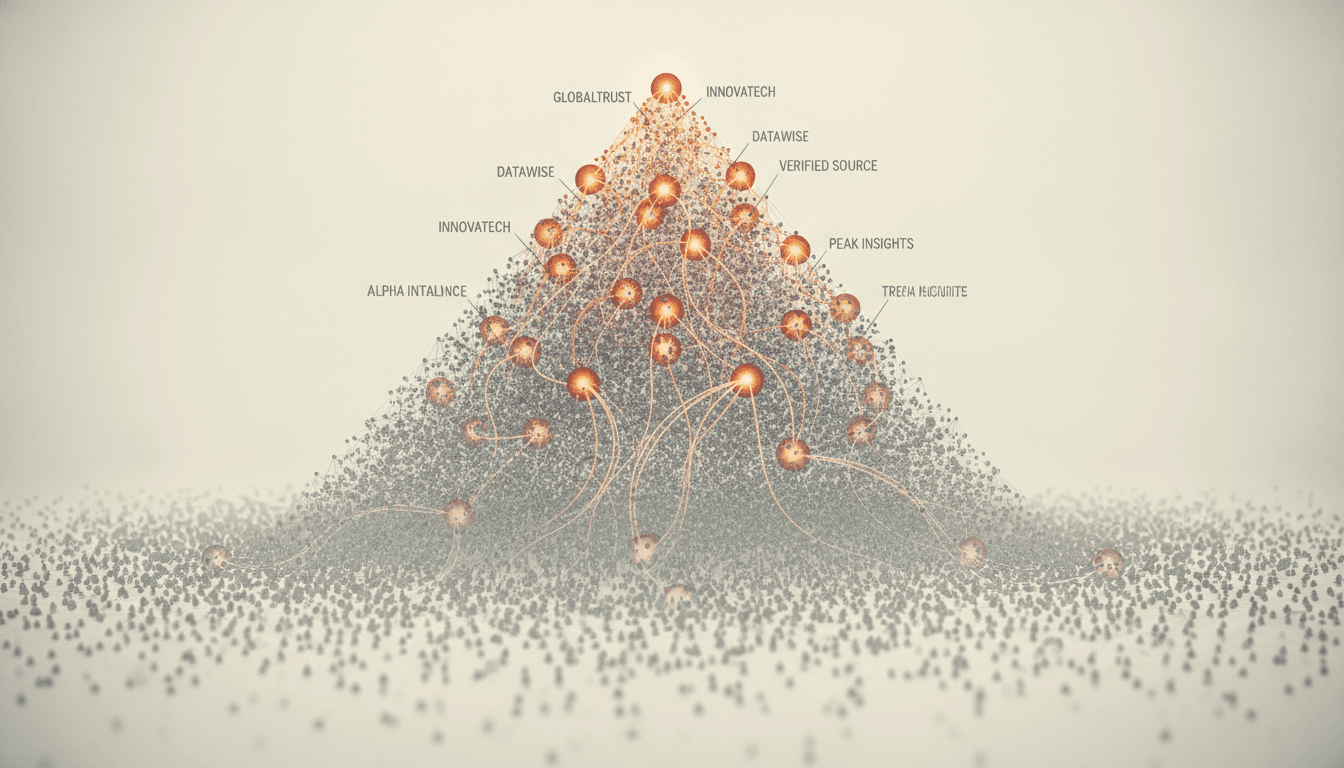
[IMG: Stylized visualization of interconnected AI recommendation networks with e-commerce product nodes, showing citation authority pathways between editorial sources and brand entities]


---


## The AI Recommendation Engine Has Rewritten the Rules of Product Discovery

The commercial reality facing e-commerce brands in 2026 has fundamentally shifted. Consumers no longer navigate traditional search results pages, click through to websites, or browse catalogs in the conventional sense. Instead, they ask AI assistants what to buy—and the algorithm makes the recommendation without the consumer ever visiting a brand's store.

This is no longer a hypothetical scenario. According to [eMarketer's AI Commerce Adoption Survey 2025](https://www.emarketer.com), **58% of U.S. consumers aged 18–44 have used an AI assistant to research a product purchase in the past three months**—up from just 31% in 2024. This represents the fastest adoption curve in product discovery behavior since the rise of smartphone commerce.

For e-commerce teams, the implications are profound: brand visibility, marketing investment, and competitive strategy are all being rewritten in real time.

Most e-commerce teams assume AI search works like traditional search with a generative layer on top. The reality is far more complex. Each major AI platform—ChatGPT, Perplexity, Google AI Overviews, and Claude—operates on a distinct ranking architecture with meaningfully different weighting systems.

ChatGPT relies on training-data brand authority combined with real-time Bing-indexed signals. Perplexity prioritizes source freshness and citation recency. Google AI Overviews extends its E-E-A-T framework into generative responses. Claude applies the strongest brand safety and factual accuracy filtering of the four.

A single optimization strategy will not perform consistently across all platforms. What remains consistent across platforms, however, is the outsized influence of editorial citation authority. Unlike Google's PageRank system—which weights inbound link quantity—AI ranking systems weight the **semantic authority of citing sources**.

The gap is dramatic. A single citation from a high-trust editorial outlet like Wirecutter or The Strategist can carry [12–18x the recommendation weight](https://www.hexagonai.com) of dozens of low-authority backlinks, according to Hexagon's Generative Engine Ranking Study 2026. This makes earned media and PR a direct AI ranking investment, not merely a brand awareness exercise.

The competitive stakes are already severe. Hexagon's analysis of 100,000+ AI-generated citations across ChatGPT, Perplexity, Claude, and Google AI Overviews found that **just 8% of e-commerce brands account for over 60% of all product recommendations**—a level of concentration that rivals the winner-take-most dynamics of early social media algorithms. As the gap between recommended and non-recommended brands widens, the urgency intensifies.

[Aleyda Solis, International SEO Consultant and Founder of Orainti](https://www.orainti.com), puts it bluntly: "Brands that invested in thought leadership content, third-party editorial coverage, and structured data over the past two years are now capturing AI recommendation share at rates that dwarf their organic search gains." Those that did not are effectively invisible to a growing segment of high-intent shoppers.

The window for establishing AI visibility before competitive moats solidify is closing faster than most marketers realize.

[IMG: Bar chart showing AI recommendation concentration—8% of brands capturing 60%+ of mentions—with platform-by-platform breakdown across ChatGPT, Perplexity, Claude, and Google AI Overviews]


---


## The Ranking Signals That Actually Drive AI Product Recommendations

Understanding that AI search is different from traditional search is one thing. Understanding precisely *how* it ranks brands—and what levers actually move the needle—is where strategic clarity becomes a competitive advantage.

Hexagon's Generative Engine Ranking Factor Distribution Study 2026 identified the top three ranking signals across all four major platforms:

- **Editorial citation authority from high-trust third-party sources** (weighted 28–35% depending on platform)
- **Semantic content relevance and topical depth** (weighted 22–29%)
- **Brand reputation signal consistency across review platforms and social proof** (weighted 18–24%)

Together, these three factors account for **68–88% of recommendation outcomes** across platforms. Understanding how each one plays out in practice—and what brands can do to strengthen their position—is essential for any competitive AI visibility strategy.

### Citation Authority: The Highest-Weighted Signal Across All Platforms

The concept of citation authority in AI search is best understood through the lens of what [Rand Fishkin, Co-Founder and CEO of SparkToro](https://www.sparktoro.com), describes as reputational infrastructure. Brands winning in AI search are not those with the most backlinks or highest domain authority—they are those that have systematically built reputational infrastructure across the sources AI systems trust.

Building that infrastructure requires deliberate strategy. High-trust sources—Wirecutter, The Strategist, major trade publications, expert review sites—function as citation anchors that AI systems draw on when constructing product recommendations.

Brands appearing in these sources benefit from more than traffic. They benefit from the **semantic association between their entity and authoritative validation**, which carries forward into both AI training data and real-time retrieval systems.

Perplexity's recommendation engine adds an additional dimension to this dynamic. Its source authority scores refresh in near real-time, meaning brands that earn press coverage or expert reviews see measurable recommendation frequency increases **within 48–72 hours**—a fundamentally different latency than Google's crawl-index cycle.

For brands running product launches or PR campaigns, this creates a direct, measurable connection between earned media activity and AI recommendation share. Here's how the mechanism works: editorial placement functions as a direct AI ranking investment, not merely a brand awareness tactic.

### Structured Data: A Direct Ranking Signal, Not Technical Hygiene

One of the most actionable—and most underutilized—AI ranking levers available to e-commerce brands is structured data markup. Hexagon's controlled analysis across 2,400 e-commerce brand profiles found that **complete Schema.org structured data markup increases AI citation probability by 34%** compared to equivalent brands without it.

This is not a marginal improvement; it represents a decisive competitive advantage. AI systems use structured data to validate entity identity and product attribute accuracy. Schema.org markup functions as a verification layer when AI systems determine whether a brand's claims about itself are consistent with external signals.

Brands with complete Product, Review, Organization, and FAQ schemas provide AI systems with a structured, machine-readable representation of their entity that reduces ambiguity and increases recommendation confidence.

[Lily Ray, VP of SEO Strategy and Research at Amsive](https://www.amsive.com), explains the fundamental shift: "Generative AI doesn't rank pages—it ranks entities. Brands need to exist as coherent, authoritative entities in the knowledge graph of the internet, with consistent signals about who they are, what they sell, and why they're trustworthy."

The structured data implementation checklist for AI search optimization includes:

- **Schema.org Product markup** with complete attribute coverage (price, availability, SKU, brand, description)
- **Review and AggregateRating schemas** pulling from verified third-party review sources
- **Organization schema** with consistent NAP (Name, Address, Phone) data and social profile links
- **FAQ schema** targeting the specific question formats AI assistants use to surface product information
- **BreadcrumbList and ItemList schemas** to establish categorical entity relationships

Brands that treat structured data as a checkbox exercise—implementing minimal markup without strategic intent—will capture only a fraction of the available citation lift. Full schema coverage, consistently maintained and regularly audited, is what separates the 8% capturing 60% of AI mentions from the brands that remain invisible.

[IMG: Technical diagram showing Schema.org entity relationship map for an e-commerce brand, with arrows indicating how AI systems traverse structured data to validate brand identity and product attributes]

### The Zero-Click Reality and What It Means for Measurement

Perhaps the most disorienting shift for e-commerce marketing teams is the zero-click problem—and in AI search, it is dramatically more severe than in traditional search. According to [SparkToro and Datos' AI Search Behavior Study 2025](https://www.sparktoro.com), **78% of AI-mediated product queries are resolved without a user clicking through to any brand website**.

This is not a rounding error or niche behavior pattern. It is the dominant mode of AI-assisted product research. The implications for measurement and attribution are significant: website traffic—long the primary proxy for search visibility performance—is no longer a reliable indicator of AI recommendation share.

A brand can be consistently recommended by ChatGPT and Perplexity for high-intent product queries and see no corresponding traffic signal in Google Analytics. This demands a fundamental shift in how e-commerce teams measure AI search success.

The primary value metric for AI search investment is **brand mention frequency and sentiment within AI responses**—a metric that requires entirely new measurement infrastructure. Forward-thinking e-commerce brands are already building AI visibility tracking into their analytics stacks, using tools that monitor brand mention frequency, sentiment, and positioning across AI platforms.

Here's how the KPI transformation looks:

| Traditional Metric | AI Search Metric |
|---|---|
| Organic search traffic | AI mention frequency across ChatGPT, Perplexity, Claude, and Google AI Overviews |
| Click-through rate from search results | Brand sentiment and recommendation context within AI responses |
| Domain authority and backlink count | Editorial citation authority from high-trust sources indexed by AI systems |

[Amanda Natividad, VP of Marketing at SparkToro](https://www.sparktoro.com), frames the strategic reorientation clearly: "The citation economy is real. When Perplexity or ChatGPT recommends a product, it's drawing on a network of source authority signals that took years to build."

Brands that understand this are treating PR, content marketing, and technical SEO as a unified AI ranking strategy—not three separate disciplines.

### Content Architecture: Why Original Research Earns 3.2x More AI Citations

Content strategy for AI search looks meaningfully different from content strategy for traditional SEO. Hexagon's analysis of 100,000+ AI recommendation events found that **e-commerce brands publishing original research and proprietary data earn AI citations at 3.2x the rate** of brands publishing only product-focused promotional content.

The mechanism is straightforward. AI systems are trained to surface authoritative, informational sources. Original research, proprietary data, and comparative product studies function as high-authority nodes in the citation network that AI systems draw on.

Product description pages and promotional blog posts, regardless of their SEO optimization, carry far lower semantic authority in AI retrieval systems than content that contributes genuine informational value.

For e-commerce brands, this means the content investment that drives AI recommendation share looks more like a B2B thought leadership program than a traditional e-commerce content strategy:

- **Original consumer research** with proprietary survey data on category-relevant topics
- **Comparative product testing** with methodology transparency and third-party validation
- **Expert-authored category guides** with verifiable credentials attached to authorship
- **Proprietary data reports** that earn citations from trade publications and editorial outlets
- **Technical specification content** that resolves specific product queries AI users are likely to ask

This content investment compounds over time. Brands that establish informational authority in their category create citation clusters—the phenomenon Hexagon identified where brands mentioned alongside other high-authority brands in the same editorial context inherit elevated recommendation probability.

Building into those clusters through strategic content and PR creates self-reinforcing AI visibility that becomes increasingly difficult for competitors to displace.

### E-E-A-T, Google AI Overviews, and the Experience Signal Advantage

Google AI Overviews applies an extended E-E-A-T framework—Experience, Expertise, Authoritativeness, and Trustworthiness—to product recommendations, with the **Experience** dimension now weighted more heavily than in standard organic rankings. This shift rewards brands that have invested in verifiable, first-hand experience signals: verified purchase data, user-generated content, third-party testing results, and expert endorsements from credentialed reviewers.

For e-commerce brands that built E-E-A-T infrastructure for traditional SEO, this represents a measurable head start. Verified review programs, expert advisory relationships, third-party testing partnerships, and robust UGC collection strategies all translate directly into Google AI Overviews recommendation frequency.

Claude adds another critical dimension to this landscape. Anthropic's model demonstrates the strongest brand safety filtering of the four major platforms, systematically deprioritizing brands with unresolved Better Business Bureau complaints, FTC actions, or significant negative review patterns on authoritative platforms.

Reputation management—proactive resolution of customer complaints, monitoring of review platform signals, and rapid response to regulatory concerns—functions as a **direct AI ranking factor** in Claude's recommendation system, not merely a brand health concern.

[IMG: Comparison matrix of ranking signal weights across ChatGPT, Perplexity, Claude, and Google AI Overviews, showing platform-specific differences in citation authority, E-E-A-T, structured data, and brand safety weighting]


---


## Building an AI Recommendation Strategy Before the Window Closes

The financial stakes attached to AI recommendation share are growing at a pace that demands immediate strategic attention. [Juniper Research's AI-Influenced Commerce Forecast 2025](https://www.juniperresearch.com) projects **$194 billion in e-commerce transactions will be influenced by AI assistant recommendations globally by 2027**, up from an estimated $45 billion in 2024—a compound annual growth rate of approximately 63%.

AI recommendation optimization is not a future-state consideration. It is one of the highest-ROI marketing investments available to e-commerce brands right now.

The competitive window is closing rapidly. Hexagon's cross-platform analysis found that brands optimizing specifically for generative engine optimization (GEO) see AI recommendation frequency improvements of **40–65% within six months**, compared to 8–12% improvements for brands applying traditional SEO tactics to AI search.

The brands investing in GEO infrastructure today—editorial citation authority, structured data completeness, original research content, and reputation signal consistency—are building moats that will be increasingly difficult and expensive to overcome as AI adoption continues to accelerate.

Here's how e-commerce brands should prioritize their AI ranking investment:

**Immediate priority:** Conduct a structured data audit and implement complete Schema.org coverage across Product, Review, Organization, and FAQ schemas.

**Short-term priority:** Establish an editorial PR strategy targeting high-trust citation sources that AI systems weight most heavily (Wirecutter, The Strategist, category-specific trade publications).

**Medium-term priority:** Build an original research content program that generates citable, proprietary data on category-relevant topics.

**Ongoing priority:** Implement AI mention monitoring across all four major platforms and establish brand mention frequency as a primary KPI.

**Reputation infrastructure:** Audit and resolve outstanding review platform issues, BBB complaints, and any regulatory signals that Claude's brand safety filtering would flag.

Looking ahead, the brands that will dominate AI recommendation share in 2027 and beyond are those that treat AI visibility as an integrated strategic priority. For example, unifying PR, content marketing, technical SEO, and reputation management under a single generative engine optimization framework creates compounding advantages.

The [Gartner Digital Commerce Report 2025](https://www.gartner.com) notes that AI assistants now influence an estimated 30–40% of product discovery journeys among consumers under 35, with users increasingly bypassing traditional search engine results pages entirely. That trend will only accelerate.

The recommendation hierarchy in AI search is not arbitrary—it is a structured, measurable system that rewards brands with genuine reputational infrastructure, authoritative content, and consistent entity signals across the sources AI systems trust. The technical breakdown is complex. The strategic imperative is clear: **the time to build AI recommendation authority is now, before the concentration gap becomes impossible to close.**


---


*Hexagon helps e-commerce brands build the editorial authority, structured data infrastructure, and generative engine optimization strategies needed to capture AI recommendation share across ChatGPT, Perplexity, Claude, and Google AI Overviews. [Learn how Hexagon can help.](https://www.hexagonai.com)*
H
Hexagon Team
Published June 1, 2026