searchproductengines
The AI Search Revolution: How Generative Engines Are Replacing Traditional Google Search for E-Commerce
67% of consumers who receive an AI product recommendation buy within 24 hours—yet 78% of e-commerce brands are completely invisible to the AI engines driving those purchases. Here's what that means for your business, and what to do about it now.
14 min read

---


# The AI Search Revolution: How Generative Engines Are Replacing Traditional Google Search for E-Commerce

*Two-thirds of consumers who receive an AI product recommendation buy within 24 hours. Yet three-quarters of e-commerce brands remain completely invisible to the AI engines driving those purchases. Here's what that gap means for competitive positioning—and what to do about it before competitors move first.*

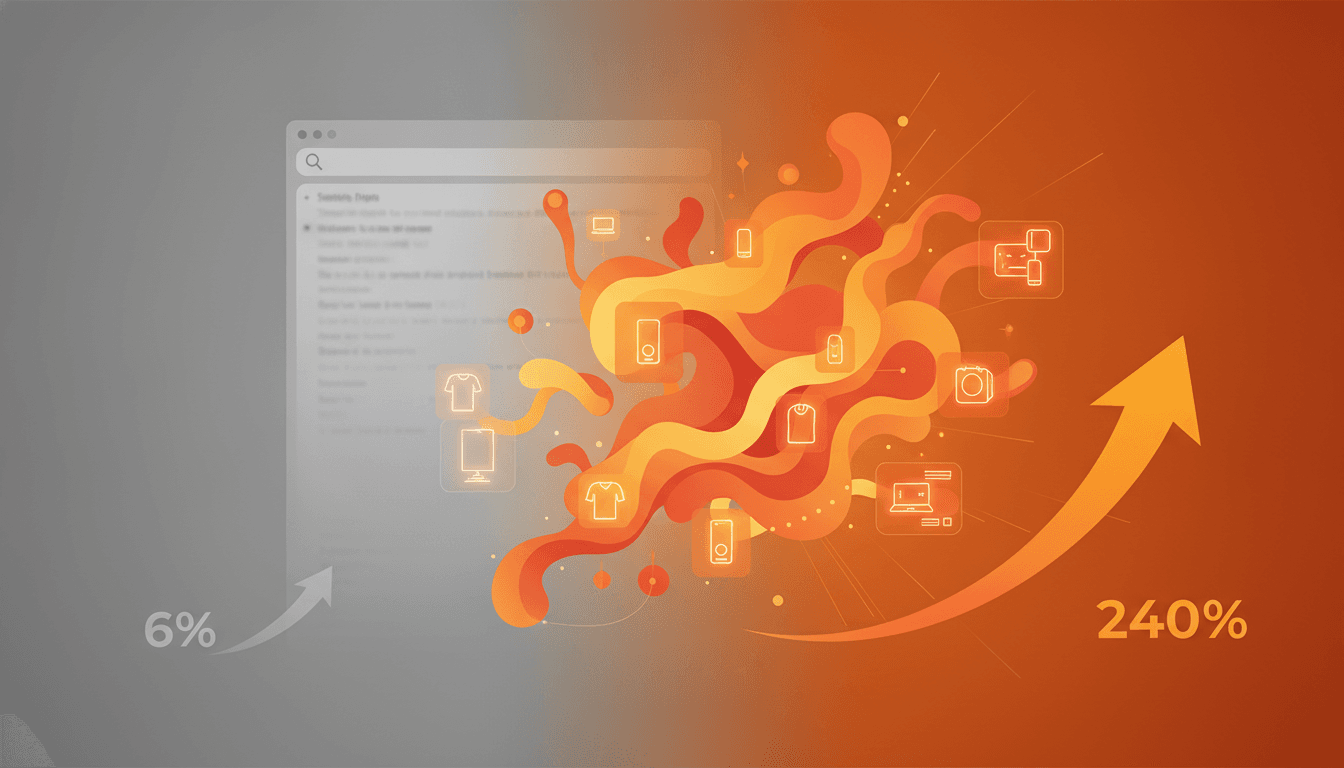
[IMG: Split-screen visual showing a traditional Google search results page on the left versus a conversational AI product recommendation interface on the right, with e-commerce products displayed]


---


## The Seismic Shift: Why AI Search Is Not Just Another Channel

The rules of e-commerce discovery have fundamentally changed. Not gradually. All at once.

Traditional Google search returns a ranked list of links and asks consumers to evaluate options themselves. AI search engines like ChatGPT and Perplexity work differently—they synthesize information from across the web and deliver a single, curated recommendation, compressing the entire discovery-to-decision journey into one conversational exchange.

This compression is not a minor user experience improvement. It is a structural reorganization of how consumers make buying decisions. The classic funnel—discovery, research, comparison, purchase—now collapses into a single prompt.

The brand that gets recommended wins the sale. The brand that doesn't may never enter the consideration set at all.

Adoption is accelerating faster than most e-commerce leaders realize. [ChatGPT's shopping and product recommendation features surpassed 50 million active users in 2024](https://techcrunch.com), with product-related queries among the fastest-growing use cases on the platform. [Perplexity AI reported 300% year-over-year growth in product discovery queries](https://perplexity.ai) during the same period, crossing 100 million monthly active users by late 2024.

Most strikingly, [Gartner predicts traditional search engine volume will fall 25% by 2026](https://gartner.com) as consumers migrate to AI-powered alternatives—and that timeline is not hypothetical. The distinction between "ranking" and "being recommended" matters enormously.

Google ranks pages; AI engines make recommendations. One surfaces options for human evaluation; the other makes a choice on the consumer's behalf. For e-commerce brands, that difference translates directly into visibility versus irrelevance.


---


## How AI Search Engines Work Differently From Google (And Why It Matters)

Understanding why AI search requires a different strategy starts with understanding how these systems actually operate. Google's ranking model is built on keyword matching, backlink authority, domain signals, and user engagement metrics. It rewards brands that have mastered technical SEO, earned high-authority links, and produced content optimized for specific search terms.

AI search engines operate on entirely different logic. Rather than PageRank-style link authority, they prioritize semantic relevance, brand mention frequency across trusted sources, structured product data, and the quality of natural-language content surrounding a product. A product page stuffed with keywords may rank well on Google and be effectively invisible to ChatGPT or Perplexity.

Here's how the recommendation engine actually works: generative AI systems are trained on—and continuously draw from—a vast web of sources including editorial publications, review platforms, Reddit threads, industry blogs, and structured product data. When a consumer asks "what's the best running shoe for flat feet under $150," the AI synthesizes that entire information landscape and surfaces the brands with the strongest, most consistent information footprint across trusted third-party sources.

According to Rand Fishkin, Co-Founder of SparkToro and former CEO of Moz: "The brands winning in AI search aren't necessarily the ones with the biggest ad budgets—they're the ones with the richest, most trustworthy information footprint across the web. AI engines reward depth, consistency, and third-party validation in ways that Google's paid model never did."

This reveals why weak off-site authority is the single biggest factor in AI invisibility. A brand with strong on-site SEO but minimal third-party coverage—few reviews on aggregator platforms, limited editorial mentions, sparse presence in industry publications—will be passed over by AI engines regardless of how well-optimized its product pages are.

[AI search engines draw heavily from review platforms, editorial publications, Reddit, and industry blogs](https://moz.com) when formulating recommendations, making off-site presence a critical ranking factor. The practical implication is clear: traditional SEO optimization does not translate directly to AI visibility.

The mechanics are different, the signals are different, and the optimization strategy must be fundamentally different.


---


## The 78% Problem: Why Most E-Commerce Brands Are Invisible to AI Search

[According to Hexagon AI Visibility Research](https://joinhexagon.com), 78% of e-commerce brands are effectively invisible to AI search engines. That number is not a rounding error—it reflects three specific, addressable gaps that most brands have not yet closed.

**The first gap is structured data deficits.** AI engines need machine-readable product information to surface recommendations accurately. Incomplete or missing schema markup—product attributes, specifications, pricing, availability, reviews—leaves AI systems without the structured signals they need to confidently recommend a product. Most e-commerce brands have partial schema implementation at best, if any.

**The second gap is off-site authority.** As discussed above, AI engines weight third-party signals heavily. Brands with thin review platform presence, minimal editorial coverage, and limited mentions across trusted sources simply do not have the authority footprint AI systems need to recommend them with confidence. This is not a problem traditional SEO fully addresses.

**The third gap is content misalignment.** Product pages written for Google's algorithm—keyword-dense, structured around search terms, optimized for crawlability—are often poorly suited to AI's conversational query format. [The average AI-assisted product query is 3–5x longer and more specific than a traditional Google search](https://brightedge.com), reflecting consumer comfort with natural language prompting. Content written for keyword matching fails to answer the conversational questions AI engines are trained to respond to.

Invisibility compounds over time. As AI search adoption accelerates, brands absent from AI recommendations lose not just individual sales but the compounding brand awareness that comes from repeated recommendation. The gap between AI-visible and AI-invisible brands will widen with every passing quarter.

[IMG: Infographic showing the three visibility gaps—structured data, off-site authority, content misalignment—with percentage breakdowns of how each contributes to AI invisibility]


---


## The Conversion Advantage: Why AI-Recommended Products Convert Faster

The conversion economics of AI search are fundamentally different from traditional search—and dramatically more favorable. [A 2024 McKinsey study found that 67% of consumers who received an AI product recommendation made a purchase within 24 hours](https://mckinsey.com), compared to an estimated 30–35% conversion rate for traditional search-driven product pages.

That gap exists because of purchase intent. Consumers using AI search are not browsing—they are actively problem-solving. When someone asks an AI assistant "what noise-canceling headphones should I buy for working from home," they have already decided to buy.

They are asking for a recommendation, not a list of options to evaluate over the next two weeks. According to Melissa Burdick, President of Pacvue and former Amazon Advertising executive: "Consumers are increasingly using AI chatbots as a trusted advisor, not just a search tool. They ask 'what should I buy?' rather than 'where can I find X?' That shift in intent is profound—it means the brand that gets recommended is the brand that wins, full stop."

The economic implications extend well beyond conversion rate. The [IDC AI Commerce Impact Forecast projects $1.2 trillion in global e-commerce revenue influenced by AI-assisted discovery by 2027](https://idc.com). Brands with strong AI visibility will capture a disproportionate share of that revenue through organic recommendation—without the paid acquisition costs that dominate traditional search channel economics.

That is a structural advantage worth pursuing aggressively.


---


## The New Ranking Factors: What AI Search Engines Actually Reward

For e-commerce leaders accustomed to traditional SEO, the new ranking factors require a strategic reset. Here's what AI engines actually evaluate and weight when making product recommendations:

- **Semantic relevance**: How well product content answers conversational queries in natural language—not keyword density, but genuine topical depth and clarity
- **Brand mention frequency**: Visibility across trusted third-party sources including review platforms, media outlets, industry sites, and community forums like Reddit
- **Review platform presence**: Quantity, recency, and quality of customer reviews on aggregator platforms that AI engines actively draw from
- **Editorial coverage**: Mentions in relevant blogs, publications, and thought leadership content that AI systems treat as authority signals
- **Natural-language product content**: Descriptions written for human understanding and conversational query matching, not algorithmic keyword targeting
- **Structured data quality**: Complete, accurate schema markup that gives AI engines the machine-readable product information they need to recommend confidently

Traditional SEO metrics—domain authority, backlink volume, page speed—remain useful but are secondary in AI search. [AI search engines prioritize semantic relevance, brand mention frequency, structured product data, and natural-language content quality](https://searchenginejournal.com) over the link-based signals that dominate Google's algorithm.

For example, a mid-market outdoor gear brand with strong editorial coverage in hiking publications, consistent five-star reviews on Trustpilot and REI, and product descriptions written in the language consumers actually use will outperform a larger competitor with higher domain authority but thin off-site presence. The smaller brand wins because it has optimized for AI's actual ranking factors.

According to Sridhar Ramaswamy, CEO of Perplexity AI: "We are witnessing the most significant disruption to search-driven commerce since the advent of Google Shopping. AI assistants don't just surface options—they make recommendations. That changes everything about how brands need to think about visibility, trust, and content strategy."

[IMG: Visual diagram comparing Google's ranking factor hierarchy (backlinks, domain authority, keywords) versus AI search's ranking factor hierarchy (semantic relevance, third-party mentions, structured data, review quality)]


---


## The Competitive Opportunity: Why Now Is the Time to Invest in AI Optimization

Unlike Google's increasingly pay-to-play model, AI search currently rewards organic authority and content quality. [Forrester Research confirms that AI search engines recommend products based on perceived authority and relevance](https://forrester.com)—meaning organic AI visibility is achievable for brands of any size that optimize correctly. That dynamic will not last forever.

The first-mover advantage in AI search is real and durable. Brands building AI visibility now are establishing authority footprints—review platform presence, editorial coverage, structured data infrastructure—that compound over time and become increasingly difficult for late adopters to replicate quickly. The window to build that advantage before the channel becomes crowded is measurable in months, not years.

Looking ahead, competitive pressure will intensify rapidly. According to Gartner's Alan Antin, VP Analyst for Digital Commerce: "By 2026, we expect one in four search interactions to be mediated by a generative AI interface rather than a traditional search engine results page. For e-commerce brands, the question isn't whether to adapt—it's whether they'll adapt before their competitors do."

Brands that act now will have a structural advantage over late adopters—not just in visibility, but in the brand trust signals that AI engines reward. Waiting is not a neutral choice; it is a decision to cede ground to competitors who are already optimizing.

**Ready to audit AI visibility and build a competitive advantage before the window closes? Book a 30-minute strategy call with AI search experts to identify visibility gaps and create a roadmap tailored to e-commerce business needs. [Schedule Your Free AI Search Strategy Session](https://calendly.com/ramon-joinhexagon/30min)**


---


## What E-Commerce Leaders Must Do Now: A Practical Roadmap

The path from AI-invisible to AI-prominent is structured and executable. Here's how to approach it systematically:

**Step 1: Audit Current AI Visibility**

Query ChatGPT, Perplexity, and Claude for top product categories and specific products. Document where competitors appear and where the brand does not. Tools like [BrightEdge](https://brightedge.com), [Semrush's AI Toolkit](https://semrush.com), and [Moz's AI Search features](https://moz.com) can help systematize this audit at scale. This baseline is essential for measuring progress.

**Step 2: Build Comprehensive Structured Product Data**

Implement complete schema markup across all product pages—including product name, description, specifications, pricing, availability, brand, and aggregate review data. Structured data is the foundation of AI legibility; without it, AI engines cannot confidently surface products. This is not optional infrastructure; it is foundational.

**Step 3: Cultivate Third-Party Reviews and Mentions**

Actively build presence on review aggregator platforms—Trustpilot, Google Reviews, industry-specific review sites, and retail partner review systems. Quantity, recency, and response rate all signal authority to AI engines. A systematic review generation program is no longer optional; it is a core visibility driver.

**Step 4: Create Conversational Content That Answers AI Queries**

Develop product content—descriptions, FAQs, buying guides—written in the natural language of consumer questions. Instead of "high-performance waterproof hiking boot," write content that answers "what hiking boot should I buy for wet trails?" This is the content format AI engines are trained to reward.

**Step 5: Build Editorial Relationships and Secure Coverage**

Pursue coverage in relevant publications, blogs, and industry media. Contribute thought leadership content. Engage authentically in community forums like Reddit where AI engines actively source information. Editorial mentions from trusted sources are among the highest-weight authority signals in AI recommendation systems.

**Step 6: Monitor AI Visibility Metrics and Iterate**

Establish a regular cadence of AI visibility audits—monthly at minimum. Track which products appear in AI recommendations, which queries trigger competitor recommendations, and how the authority footprint is growing across third-party sources. AI search optimization is an ongoing discipline, not a one-time project.

**Ready to move from awareness to action? AI search experts can accelerate every step of this roadmap. [Schedule Your Free AI Search Strategy Session](https://calendly.com/ramon-joinhexagon/30min)**


---


## The Risk of Inaction: What Happens If Brands Don't Optimize for AI Search

The cost of waiting is not abstract—it is measurable and accelerating. [Google's market share in search has declined from 93% to approximately 88% globally between 2022 and 2024](https://statcounter.com), with AI-native search engines accounting for a meaningful portion of that shift. The trend is directional and irreversible.

As AI search adoption accelerates, brands absent from AI recommendations will experience compounding erosion of organic discovery. The natural response—increasing investment in paid channels like Google Ads and social advertising—carries its own cost. Paid acquisition costs rise as competition for those placements intensifies, while AI search continues to reward organic authority for free.

The long-term cost of playing catch-up is significant. Brands that delay optimization will find themselves building review platform presence, editorial coverage, and structured data infrastructure against competitors who have already established durable authority. The compounding disadvantage of AI invisibility grows with every quarter of inaction.

The specific consequences include:

- **Organic discovery erosion**: Fewer consumers find products through AI-mediated search
- **Paid channel dependence**: Rising ad costs replace lost organic visibility
- **Market share loss**: AI-optimized competitors capture recommendations that should be received
- **Late-mover penalty**: Authority footprints take time to build; starting late means catching up against entrenched competitors


---


## Key Takeaways and Next Steps

The AI search revolution is not a future trend to monitor—it is reshaping e-commerce discovery right now. Here is what matters most:

- **78% of e-commerce brands are invisible to AI engines today**, creating a massive competitive opportunity for brands that act
- **AI search adoption is accelerating**: 50M+ ChatGPT shopping users, 300% YoY growth in Perplexity product queries, and Gartner's projected 25% decline in traditional search by 2026
- **The conversion economics are compelling**: 67% of AI-recommended products convert within 24 hours versus 30–35% for traditional search
- **The $1.2 trillion opportunity** in AI-influenced e-commerce revenue by 2027 will flow disproportionately to brands with strong AI visibility
- **The new ranking factors**—semantic relevance, off-site authority, structured data, review presence—reward organic investment, not ad spend
- **The first-mover window is open but closing**: brands optimizing now build durable advantages that compound over time

The practical roadmap is clear: audit AI visibility, build structured data foundations, cultivate third-party authority, and create content designed for conversational queries. Each step moves brands from invisible to recommended—and recommended means revenue.

[IMG: Summary infographic with key statistics: 78% invisible, 67% convert within 24 hours, $1.2T opportunity, 25% traditional search decline by 2026]

**Get expert guidance on AI search strategy before the competitive window closes. Our team has helped e-commerce brands identify visibility gaps and build AI optimization roadmaps that drive measurable results. [Schedule Your Free AI Search Strategy Session](https://calendly.com/ramon-joinhexagon/30min)**
H
Hexagon Team
Published May 26, 2026