brandsbrandproduct
Why 73% of E-Commerce Brands Are Invisible to AI Search Engines
When AI assistants recommend products in your category, there's a 73% chance your brand won't be mentioned—even if you're profitable, well-reviewed, and ranking on Google's first page. Here's why this is happening and what e-commerce brands can do about it.
13 min read
---


# Why 73% of E-Commerce Brands Are Invisible to AI Search Engines

*A brand could be profitable, well-reviewed, and ranking on Google's first page—and still be completely invisible to ChatGPT, Perplexity, and Google Gemini. When AI assistants recommend products in a given category, there is a 73% chance that most brands won't be mentioned. This guide explains why this is happening and what brands can do about it.*

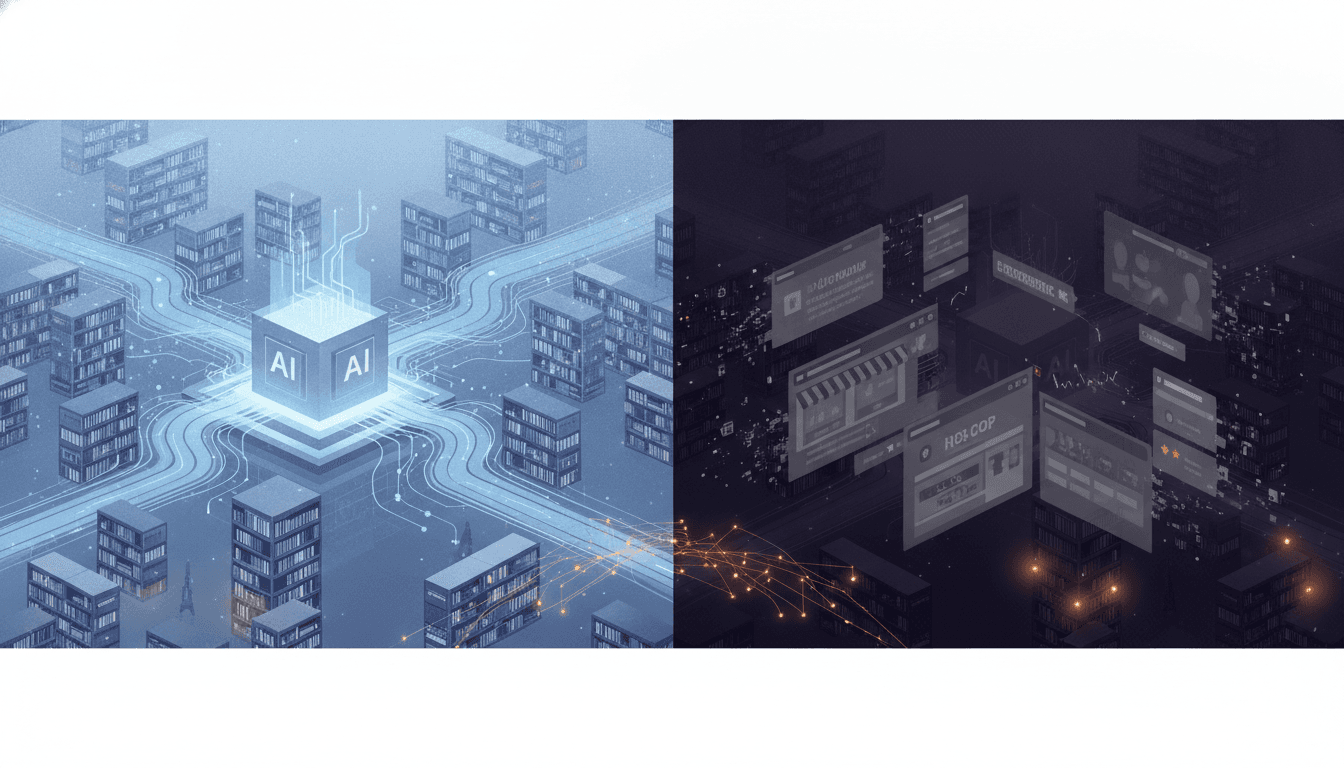
[IMG: Split-screen visualization showing a consumer asking an AI assistant for product recommendations on one side, and a list of invisible brand logos fading into the background on the other]


---


Imagine a potential customer asking ChatGPT for a product recommendation in a specific category. There is a **73% chance the brand won't be mentioned**—even if it is profitable, well-reviewed, and ranking on Google's first page. This is not a failure of marketing strategy. It is a structural problem baked into how AI models learn and operate.

Unlike traditional SEO, no amount of paid ads or keyword optimization will fix the problem. By 2026, AI assistants will power 30% of all product discovery. Every month a brand remains invisible is a month of lost consideration, lost conversions, and ceded market share to competitors that AI systems actually know about.

This guide explains the root causes and outlines what brands can do about it.


---


## The 73% Problem: What AI Invisibility Really Means

The 73% figure is not an estimate. It comes from [Hexagon's AI Visibility Benchmark Study 2025](https://joinhexagon.com), which analyzed 1,200 e-commerce brands across 40 product categories using 10 standardized purchase-intent prompts per category—tested across ChatGPT, Perplexity, and Google Gemini. Brands were classified as "invisible" if they received zero unprompted mentions across all three platforms.

The critical insight is striking: invisibility had nothing to do with brand quality, customer satisfaction scores, or traditional search rankings. Many invisible brands were profitable businesses with strong reviews and first-page Google rankings. The determining factor was whether AI models had learned about those brands during their training phase.

This distinction matters enormously for how brands should respond. AI invisibility is a structural problem, not a superficial one—and conventional digital marketing tactics cannot solve it. As [Forrester Research](https://www.forrester.com) projects that 30% of all product discovery will occur through AI assistants by 2026 (up from 8% in 2023), the stakes are rising rapidly.

[Salesforce research](https://www.salesforce.com/resources/research-reports/state-of-the-connected-customer/) confirms that 68% of consumers trust AI product recommendations as much as traditional search results. This means every month of AI invisibility compounds into measurable revenue loss.


---


## Why AI Models Don't Know About Your Brand: The Training Data Gap

Large language models like GPT-4 and Claude are trained on static datasets with fixed knowledge cutoffs. According to [OpenAI's GPT-4 Technical Report](https://openai.com/research/gpt-4), brands that lacked substantial web presence before those cutoffs are effectively non-existent to the model—regardless of their current market position or recent growth trajectory.

The problem runs deeper than timing alone. The training data itself is structurally biased toward established brands. AI models learn from sources like Common Crawl, Wikipedia, books, and high-authority websites—sources that historically focused on large, well-documented companies. According to [MIT Technology Review](https://www.technologyreview.com), ChatGPT's training data is estimated to overrepresent content from approximately 1,000 high-authority domains.

This means the long tail of e-commerce—where most brands operate—is systematically underrepresented in the model's learned associations. Rand Fishkin, Co-founder & CEO of SparkToro, explains the fundamental mismatch: "Generative AI doesn't browse the internet the way a consumer does. It draws from a learned representation of the web—and if a brand wasn't well-represented in authoritative, frequently-cited sources before the training cutoff, it simply doesn't exist in the model's worldview. That's a structural problem that a new product page or a paid ad cannot fix."

The numbers underscore the severity of this gap. Less than 1% of the 26 million+ online stores globally have any meaningful structured entity presence—Wikipedia, Wikidata, or Google Knowledge Panel—that AI models use for reliable brand recognition, according to [Similarweb's Global E-Commerce Report 2024](https://www.similarweb.com). For the vast majority of e-commerce brands, invisibility is not a bug—it is the default state.

[IMG: Iceberg diagram showing the small fraction of AI-visible brands above the waterline versus the vast majority of invisible e-commerce brands submerged below]


---


## The Winner-Take-Most Dynamics of AI Recommendations

Traditional Google search returns 10 organic results per query. AI assistants return 3 to 5 brand names. That difference—seemingly small—creates a winner-take-most dynamic that makes Google's first-page competition look generous by comparison.

Neil Patel, Co-founder of NP Digital, frames the stakes clearly: "What we're seeing is a compression of visibility that makes Google's first-page dynamic look generous by comparison. AI returns three to five brand names. That's it. If a brand isn't in that set, it isn't in the consideration set—and for most categories, those slots are already being claimed by brands that invested in their digital authority years ago."

In a category with 100+ viable brands, only 3-5 will ever be recommended by an AI assistant—regardless of product quality, price competitiveness, or customer reviews. According to [Gartner's AI Consumer Behavior Report 2024](https://www.gartner.com), this is not a limitation that will be fixed as AI improves. It is a fundamental feature of how generative systems synthesize recommendations.

Being in the top 3-5 is not a competitive advantage—it is the only way to participate in AI-driven discovery.


---


## Structured Data and Entity Recognition: The Missing Pieces

AI systems rely on structured signals to confidently recommend brands. Without these signals, models lack the confidence to surface a brand—even when that brand is highly relevant to the query. Three critical structured signals stand out: Product schema markup, entity records in knowledge bases, and Google Knowledge Panel presence.

The data reveals a significant gap. Only an estimated 17% of e-commerce websites have implemented Product schema markup correctly, according to a [Schema.org Adoption Study published by Search Engine Land](https://searchengineland.com). This leaves AI systems without the structured signals needed to accurately categorize and recommend those brands.

Brands with correct Product schema are measurably more likely to appear in AI-generated recommendations. Entity recognition is how AI systems distinguish between similar brand names and understand brand context. According to [Kalicube's Entity SEO Research 2024](https://kalicube.com), brands that lack Wikipedia entries, Wikidata records, or Google Knowledge Panel presence are significantly less likely to be cited by AI assistants.

These structured knowledge bases serve as anchor points for entity recognition in large language models. The [SparkToro AI Search Correlation Report 2024](https://sparktoro.com) confirms that 92% of AI product recommendations cite brands also ranking on Google's first page. This reveals that traditional authority remains a prerequisite for AI visibility.


---


## Third-Party Authority: The New Currency of AI Visibility

Here's a counterintuitive finding: a brand's own website content carries far less weight with AI systems than external validation. According to the [Search Engine Journal GEO Study 2024](https://www.searchenginejournal.com), brands with 10 or more authoritative third-party mentions are recommended **5.4x more frequently** than brands with fewer than 3 such mentions—when tested across identical product category queries.

Lily Ray, VP of SEO Strategy & Research at Amsive, captures the shift: "We're entering an era where the bottleneck for brand discovery isn't ad spend or even SEO—it's whether the AI has enough high-quality, third-party signal to confidently recommend a brand. Most e-commerce brands have built their entire digital presence on channels the AI either ignores or discounts heavily."

High-authority sources that drive AI visibility include established media publications, industry review platforms, consumer communities like Reddit and Quora, and editorial coverage in niche trade publications. According to [BrightEdge's Generative AI Search Study 2024](https://www.brightedge.com), e-commerce brands that receive consistent editorial coverage in vertical blogs and consumer review platforms are 4x more likely to appear in AI-generated recommendations than brands relying solely on their own website content.

Earned media is no longer just a PR metric—it is a core AI visibility driver.

[IMG: Bar chart comparing AI recommendation frequency between brands with high third-party mention counts versus low mention counts, showing the 5.4x gap]


---


## How AI Invisibility Compounds Into Revenue Loss

AI invisibility is not a vanity metric. It directly impacts consideration, conversions, and long-term market share in ways that compound over time. As the [Forrester Research AI Commerce Forecast](https://www.forrester.com) projects 30% of product discovery will occur through AI by 2026, brands that are invisible to AI are invisible to a growing and increasingly valuable segment of potential customers.

The compounding effect works against invisible brands in a self-reinforcing loop:

- No AI mentions → fewer impressions among AI-assisted shoppers
- Fewer impressions → fewer customers acquired through the channel
- Fewer customers → fewer reviews and brand mentions generated
- Fewer reviews and mentions → even less AI visibility over time

This cycle accelerates over time. As invisible brands lose consideration share, they also lose the earned media and customer advocacy that could build AI visibility. Meanwhile, visible brands attract more customers, generate more reviews, and strengthen their position in AI recommendation sets.

Amanda Natividad, VP of Marketing at SparkToro, describes the brands that are breaking this cycle: "The brands winning in AI search right now didn't get there by accident. They have deep editorial coverage, strong structured data, active community presence on platforms like Reddit, and consistent factual mentions across the web. That's the new SEO playbook—and most brands haven't opened the book yet."

With 68% of consumers trusting AI recommendations as much as traditional search results, according to [Salesforce's State of the Connected Customer 2024](https://www.salesforce.com/resources/research-reports/state-of-the-connected-customer/), the consideration gap between AI-visible and AI-invisible brands will only widen as AI-assisted shopping becomes the norm.


---


## Generative Engine Optimization (GEO): The Emerging Discipline for AI Visibility

Generative Engine Optimization—GEO—is the structured discipline that addresses AI invisibility through four coordinated pillars: structured data implementation, earned media strategy, entity building, and AI-optimized content creation. It combines traditional SEO fundamentals with new tactics specifically designed for how AI systems discover, evaluate, and recommend brands.

GEO is not a replacement for traditional SEO. It is a complementary discipline that addresses a new and rapidly growing discovery channel. Here's how the four pillars work together:

**Structured data:** Implementing Product schema, JSON-LD entity markup, and accurate business information that AI systems can parse and trust.

**Earned media strategy:** Developing PR and review campaigns focused on high-authority publications, industry platforms, and consumer communities where target customers gather.

**Entity building:** Creating or claiming Wikipedia entries, Wikidata records, and establishing Google Knowledge Panel eligibility through consistent, verifiable brand information.

**AI citation optimization:** Creating content specifically designed to be quoted, referenced, and cited by AI systems in response to purchase-intent queries.

Early adopters of GEO are already seeing 5-10x improvements in AI mention frequency. However, GEO requires coordination across product, marketing, PR, and content teams—and the window to build durable AI visibility advantages is closing as more brands enter the discipline.


---


## The Mismatch: 26 Million Stores vs. Thousands of Known Brands

There are more than 26 million online stores operating globally. AI models effectively "know" only a few thousand brands per category. This is not a temporary gap that will close as AI technology matures—it is a fundamental feature of how these systems are built and trained.

The [Common Crawl Foundation](https://commoncrawl.org) dataset—a primary training source for most major LLMs—captures roughly 3.4 billion web pages, but independent e-commerce product pages are among the least-crawled content types. Thin descriptions, duplicate content signals, and lack of inbound links make these pages invisible to crawlers.

The brands that AI models know are the brands that were well-represented in authoritative, frequently-cited sources years before these models were trained. The gap is widening, not narrowing. As AI systems become more selective and as recommendation sets remain constrained at 3-5 brands per query, the distance between the 26 million stores that exist and the few thousand that AI "knows" will continue to grow.

Understanding this mismatch is the starting point for realistic planning—and for recognizing that passive waiting is not a viable strategy.

[IMG: Scale visualization comparing 26 million global e-commerce stores on one side against the small cluster of AI-recognized brands on the other, with less than 1% highlighted]


---


## What Brands Can Do Now: First Steps Toward AI Visibility

Building AI visibility is a multi-month initiative, but the first steps can begin immediately. Here's how to prioritize:

**Start with structured data (weeks 1-4):**

Brands should implement Product schema markup across all product pages—only 17% of e-commerce sites have done this correctly. Claiming and optimizing the Google Business Profile with accurate, consistent entity information is essential. Auditing existing schema for errors using Google's Rich Results Test should happen in parallel.

**Build earned media (months 1-6):**

Developing a PR strategy targeting high-authority publications and industry review platforms is critical. Pursuing editorial coverage in niche trade publications and vertical blogs relevant to the category accelerates visibility. Engaging authentically in consumer communities on Reddit and Quora where the category is discussed builds organic authority.

**Create entity presence (months 3-12):**

Brands should assess Wikipedia and Wikidata eligibility and pursue entries where criteria are met. Building the factual citation trail that supports Google Knowledge Panel eligibility strengthens entity recognition. Ensuring consistent brand information (name, founding date, category, key facts) across all authoritative sources is foundational.

**Monitor AI visibility (ongoing):**

Running standardized purchase-intent prompts across ChatGPT, Perplexity, and Google Gemini monthly reveals progress. Tracking mention frequency and the specific sources AI systems cite when recommending competitors informs strategy. Using monitoring data to prioritize earned media and entity-building efforts ensures resources are allocated effectively.

Earned media strategy requires 3-6 months to show results but carries compounding effects that grow over time. Entity building is a longer-term investment that creates the most durable form of AI visibility.


---


## The Urgency: Why Now Is the Time to Act

The 30% AI discovery figure projected by Forrester for 2026 is not a distant horizon. It is 18-24 months away. The brands building AI visibility today are not preparing for the future—they are competing for market share right now, in a channel that most competitors have not yet recognized as a priority.

Looking ahead, the cost of entry into AI visibility will increase as more brands compete for the same limited recommendation slots. Early adopters are already seeing measurable improvements in AI mention frequency. The brands that are visible to AI today are actively shaping consumer perception of their categories—and making it harder for late entrants to displace them.

Waiting for "more clarity" on AI search is a decision with a real cost. Every month of inaction is a month of compounding invisibility, ceded consideration, and market share transferred to AI-visible competitors. The structural nature of the problem means it will not resolve itself—it requires deliberate, coordinated action across the organization.


---


## Next Steps

If a brand is invisible to AI search engines, it is not alone—but it does not have to stay invisible. Hexagon specializes in Generative Engine Optimization for e-commerce brands. The team will audit current AI visibility, identify the specific gaps holding the brand back, and build a strategy to get it in front of AI-powered product discovery.

[Book a 30-minute strategy call with Hexagon's GEO team](https://calendly.com/ramon-joinhexagon/30min) to learn how brands are recovering lost market share through AI visibility. Here's what the audit covers:

- Current AI mention frequency across ChatGPT, Perplexity, and Google Gemini
- Competitive analysis of AI-visible brands in the category
- Structured data gaps and entity presence assessment
- Earned media opportunities and third-party authority gaps
- A prioritized roadmap for building AI visibility over the next 6-12 months

The brands that act now will shape the competitive landscape for years to come.
H
Hexagon Team
Published June 18, 2026