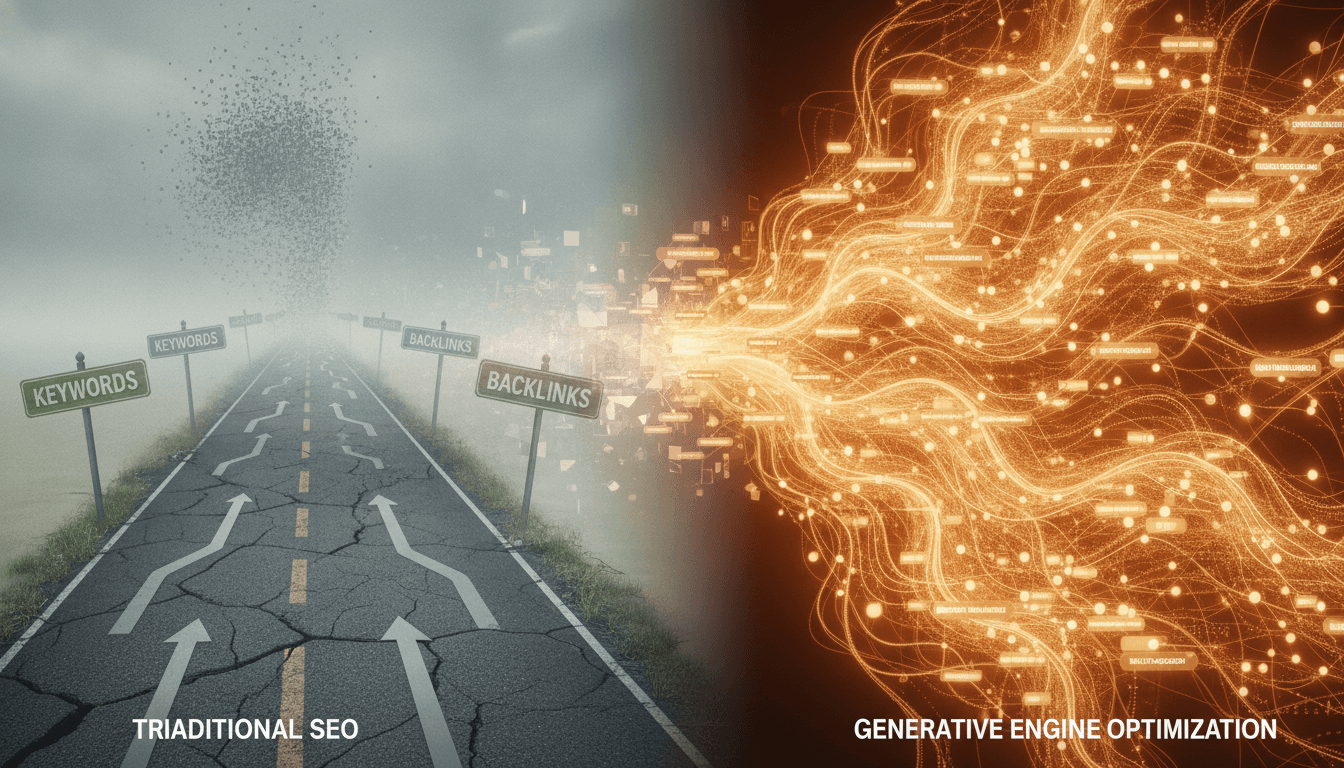
How Food & Beverage Brands Can Harness AI Search to Boost Product Discoverability and Sales
AI search is rapidly reshaping how consumers find and buy food & beverage products online. Discover actionable GEO strategies and best practices to elevate your brand’s visibility, build trust, and accelerate sales in the age of AI-driven commerce.

How Food & Beverage Brands Can Harness AI Search to Boost Product Discoverability and Sales
AI search is rapidly transforming how consumers discover and purchase food & beverage products online. Explore actionable GEO strategies and best practices to elevate your brand’s visibility, build trust, and accelerate sales in the era of AI-driven commerce.
In today’s fiercely competitive digital marketplace, 78% of online food shoppers rely on AI-driven product recommendations to find new items (Statista). For food & beverage brands, mastering AI search optimization is no longer optional—it’s critical for enhancing product discoverability and driving faster sales. This comprehensive guide breaks down how AI search engines rank your products, presents actionable GEO tactics tailored specifically for F&B brands, and details strategies to build consumer trust through AI-enhanced product presentation.
Ready to elevate your food & beverage product discoverability with AI-powered GEO strategies? Schedule a personalized consultation with our AI marketing experts today.
Understanding How AI Search Engines Rank Food & Beverage Products
AI search engines are fundamentally changing the way consumers discover and buy food & beverage products online. Their sophisticated algorithms rely on structured data, content quality, and consumer engagement signals to determine which products appear in search results and recommendations.
At the core of AI ranking lies structured metadata—including nutritional facts, product origin, ingredient lists, and clear, descriptive titles. This data must be accurate, detailed, and consistently formatted. According to recent research from Hexagon, brands optimized for AI search enjoyed a 32% increase in AI-driven traffic versus those without optimization (Hexagon AI Commerce Benchmark).
Here’s a closer look at the key factors AI search engines consider when ranking F&B products:
- Metadata and Attributes: Products with comprehensive, well-structured metadata are prioritized. Missing or inconsistent information—such as incomplete nutrition facts or unclear allergen warnings—can lead to lower visibility (Google Merchant Center Guidelines).
- Content Quality: High-quality, natural language product descriptions play a vital role. Generative AI search engines like ChatGPT and Perplexity utilize natural language understanding to match consumer queries with detailed, relevant product content (OpenAI Documentation).
- Freshness and Relevance: Regularly updated product information signals to AI that your data is current and trustworthy. Brands that maintain rich, up-to-date content are more likely to be featured prominently in recommendation lists (McKinsey & Company).
- Consumer Engagement: Ratings, reviews, and click-through rates inform AI’s understanding of a product’s popularity and reliability. Verified trust signals can improve AI recommendations by up to 25% (Forbes).
“AI search engines are revolutionizing product discovery. Brands that optimize structured data, imagery, and consumer trust markers are seeing tangible gains in recommendation frequency and sales,” explains Dr. Lisa Wong, Director of Product Data Science at NielsenIQ.
For food & beverage brands, grasping these ranking factors is the essential first step toward building a robust, AI-optimized presence.
Implementing GEO Strategies to Increase AI Recommendations in Food & Beverage
To outpace competitors in AI-driven marketplaces, food & beverage brands must embrace GEO (Generative Engine Optimization) strategies specifically designed to align with AI search engines’ selection and recommendation criteria.
Here’s how brands can implement effective GEO tactics:
Optimize Product Metadata with AI-Friendly Keywords
AI search engines excel when provided with structured, precise data. Ensure every product listing includes:
- Complete nutritional information, allergen details, and product origin.
- Unique selling points and sustainability credentials.
- AI-friendly keywords reflecting common consumer search terms.
For example, incorporating phrases like “organic,” “gluten-free,” or “locally sourced” helps boost relevance for targeted queries (Shopify Plus). Such GEO tactics significantly increase your product’s inclusion in AI search results.
Enhance Product Imagery Quality and Consistency
High-quality images are crucial—not only for attracting consumers but also for AI recognition. Studies reveal that quality product imagery leads to a 20% higher recommendation rate for F&B brands (NielsenIQ).
[IMG: Side-by-side comparison of low-quality and high-quality food product images]
Best practices include:
- Consistent, high-resolution photos with clean, neutral backgrounds.
- Multiple angles and close-ups to highlight packaging details and ingredients.
- Standardized image dimensions and clear, descriptive file naming conventions.
“Our research clearly links superior product content to enhanced AI-driven sales performance. Investing in quality imagery and transparent information pays dividends,” affirms Priya Desai, Senior Analyst at Gartner.
Use Natural Language Descriptions Aligned with Conversational AI Queries
Generative search engines interpret queries as natural conversations. Product descriptions should:
- Reflect the language consumers use when asking questions (e.g., “What’s the best dairy-free yogurt with live cultures?”).
- Provide detailed, easy-to-read information—avoiding jargon and keyword stuffing.
- Address common customer concerns such as taste, sourcing, and dietary suitability.
Rich, natural language content significantly improves AI discoverability (HubSpot).
Regularly Update Product Information
AI search algorithms prioritize freshness. Brands should:
- Consistently update product data with new certifications, seasonal offerings, and limited-time promotions.
- Remove outdated listings and swiftly correct inaccuracies.
- Monitor and eliminate data duplication, which can negatively impact rankings.
Brands that maintain current data are more frequently featured in AI-driven recommendation lists (McKinsey & Company).
Incorporate Certifications, Reviews, and Trust Signals
Trust signals are powerful ranking factors for AI. Incorporate:
- Verified customer reviews and ratings.
- Recognizable certifications such as USDA Organic or Non-GMO Project.
- Third-party quality assurance badges.
Consumer trust signals can boost AI recommendations by up to 25% (Forbes). F&B brands leveraging these strategies have enjoyed a 41% faster sales cycle (Shopify Plus), underscoring the commercial impact of robust GEO implementation.
Looking ahead, brands that fully embrace GEO strategies will continue to see outsized gains in visibility and sales velocity.
Ready to elevate your food & beverage product discoverability with AI-powered GEO strategies? Schedule a personalized consultation with our AI marketing experts today.
How to Build Consumer Trust Through AI Product Presentation
In today’s AI-powered commerce landscape, consumer trust is paramount—not only for conversion but also as a critical factor in AI ranking algorithms. AI increasingly favors brands that deliver trustworthy, transparent, and personalized product information.
Here’s how food & beverage brands can cultivate trust through AI-optimized product presentation:
Leverage Verified Customer Reviews and Ratings
- Showcase authentic, verified reviews that highlight customer satisfaction.
- Emphasize reviews addressing product quality, flavor, and value.
- Feature user-uploaded photos and testimonials to enhance credibility.
Integrating such trust signals can lead to a 25% boost in AI-driven recommendations (Forbes).
Showcase Certifications and Quality Assurance Badges
- Prominently display certifications like USDA Organic, Fair Trade, or Non-GMO Project.
- Include third-party quality assurance badges that reinforce product integrity.
- Ensure badges are clearly visible in both images and product descriptions.
[IMG: Food product page with highlighted certifications and quality badges]
“AI search engines favor brands that consistently present verified consumer trust signals, such as authentic reviews and reputable certifications,” states Alex Ramirez, Head of E-Commerce at Whole Foods Market.
Use AI to Personalize Product Presentation
Personalization drives engagement and conversions. AI enables:
- Dynamic product recommendations tailored to user preferences, purchase history, and dietary needs.
- Customized content addressing individual concerns or objections (e.g., “nut-free options for kids”).
- Responsive presentation formats optimized for mobile devices and voice search.
Ensure Transparency and Accuracy in Product Details
- Provide clear, thorough information on ingredients, sourcing, and nutrition.
- Avoid vague descriptions or misleading claims.
- Regularly update product details to maintain accuracy and relevance.
Brands that prioritize transparency reduce buyer hesitation and foster lasting loyalty. This trust not only improves AI rankings but also increases the frequency of product recommendations.
As AI search evolves, brands that emphasize trust and data integrity will secure enduring competitive advantages.
Best Practices for High-Quality Imagery and Content in AI-Powered Food Marketing
Compelling visuals and engaging content are essential not only for persuading consumers but also for maximizing AI-powered discoverability. Here’s how food & beverage brands can align their digital assets with AI search requirements.
Guidelines for Consistent, High-Resolution Product Images
- Use sharp, well-lit images with neutral backgrounds to highlight product details.
- Provide multiple shots: front, back, close-ups of ingredients, and lifestyle/context images (e.g., product in use).
- Standardize image sizes and aspect ratios to maintain consistency across platforms.
Superior image quality correlates with a 20% increase in AI product recommendation rates (NielsenIQ).
[IMG: Collage of high-resolution, professionally styled food & beverage product photos]
Craft Engaging, Natural Language Product Descriptions for Generative AI
- Write descriptions in a conversational, consumer-focused tone.
- Address common questions and pain points within the copy.
- Incorporate keywords naturally—avoid keyword stuffing or overly technical language.
“As generative search becomes mainstream, brands must move beyond traditional SEO to embrace GEO—ensuring every product tells a compelling, data-rich story,” advises Martin Klein, VP of Global Growth at Shopify.
Align Imagery and Content with Brand Identity and Consumer Expectations
- Ensure all visual and textual assets reflect your brand’s values and personality.
- Use color palettes, iconography, and language that resonate with your target audience.
- Highlight unique selling points such as family-owned heritage, local sourcing, or sustainable practices.
Looking forward, brands maintaining a consistent, high-quality digital presence will not only enhance AI discoverability but also deepen consumer loyalty and engagement.
Measuring and Iterating GEO Tactics for Sustained AI-Driven Growth
Sustained success in AI-powered food & beverage marketing demands continuous measurement and optimization. Brands must track performance metrics, analyze data, and adapt strategies in real time.
Here’s how to effectively measure and iterate GEO tactics:
Track Key Performance Metrics
- AI-driven traffic: Monitor the volume and sources of visits generated by AI recommendations.
- Conversion rates: Evaluate how effectively optimized product pages convert visitors into buyers.
- Sales velocity: Measure the speed at which products move from discovery to purchase.
Brands focusing on these metrics report a 41% faster sales cycle by continuously refining GEO strategies (Shopify Plus).
Use Feedback Loops to Refine Metadata, Imagery, and Content
- Utilize AI analytics tools to identify underperforming content or metadata gaps.
- Conduct A/B testing on product descriptions, images, and trust signals.
- Regularly update metadata based on AI performance insights and shifting consumer queries.
Adapt to Evolving AI Search Protocols and Consumer Trends
- Stay current with updates to AI search algorithms and guidelines.
- Monitor changes in consumer behavior, preferences, and trending search phrases.
- Implement iterative improvements to maintain relevance and ranking.
Moving forward, brands that treat GEO as an ongoing process—not a one-time effort—will consistently outperform competitors.
Case Studies: Food & Beverage Brands Successfully Leveraging AI Search Optimization
Several leading food & beverage brands have achieved impressive results by adopting AI search optimization and GEO strategies.
Case Study 1: Organic Snack Brand Accelerates Sales with AI-Optimized Content
An organic snack company revamped its product pages by:
- Incorporating structured metadata including detailed nutritional info, allergen declarations, and unique selling points.
- Utilizing high-resolution imagery that highlights packaging and ingredients.
- Crafting natural language descriptions addressing dietary needs and flavor profiles.
Results:
- 38% increase in AI-driven traffic within three months.
- 28% boost in recommendation rates following imagery and content updates.
- 42% faster sales cycles reported (Hexagon AI Commerce Benchmark).
Case Study 2: Beverage Startup Gains Market Share Through Trust Signals
A beverage startup focused on:
- Displaying third-party certifications (USDA Organic, Non-GMO Project) prominently on every listing.
- Showcasing verified customer reviews and user-submitted photos.
- Personalizing product recommendations using AI tools based on user preferences.
Results:
- 25% improvement in AI-driven recommendations.
- Significant increases in click-through and conversion rates.
- Rapid expansion into new online marketplaces (Forbes).
Lessons Learned and Replicable Strategies
- Invest in high-quality, consistent product imagery and comprehensive data.
- Incorporate robust trust signals to build consumer confidence.
- Continuously monitor and adapt GEO tactics to evolving AI protocols and consumer trends.
[IMG: Before-and-after analytics dashboard showing increased AI-driven traffic and recommendations for a food brand]
These outcomes underscore that AI-optimized GEO strategies directly drive measurable improvements in product discoverability, recommendations, and sales.
Conclusion: The Future of Food & Beverage Product Discovery Is AI-Driven
The digital shelf has never been more competitive, and AI search represents the new frontier for food & beverage brands seeking growth. Those investing in structured data, high-quality imagery, natural language content, and strong trust signals are already enjoying benefits—from increased traffic and product recommendations to accelerated sales cycles.
Looking ahead, as generative AI and conversational commerce reshape consumer behavior, brands must approach GEO as an essential, ongoing discipline. The most successful F&B companies will be those relentlessly optimizing their digital presence, adapting to evolving AI protocols, and placing consumer trust at the core of every product story.
Ready to elevate your food & beverage product discoverability with AI-powered GEO strategies? Schedule a personalized consultation with our AI marketing experts today.
Hexagon is your partner for AI-powered marketing excellence. For more insights and resources, explore our blog or connect with our team today.
Hexagon Team
Published April 1, 2026