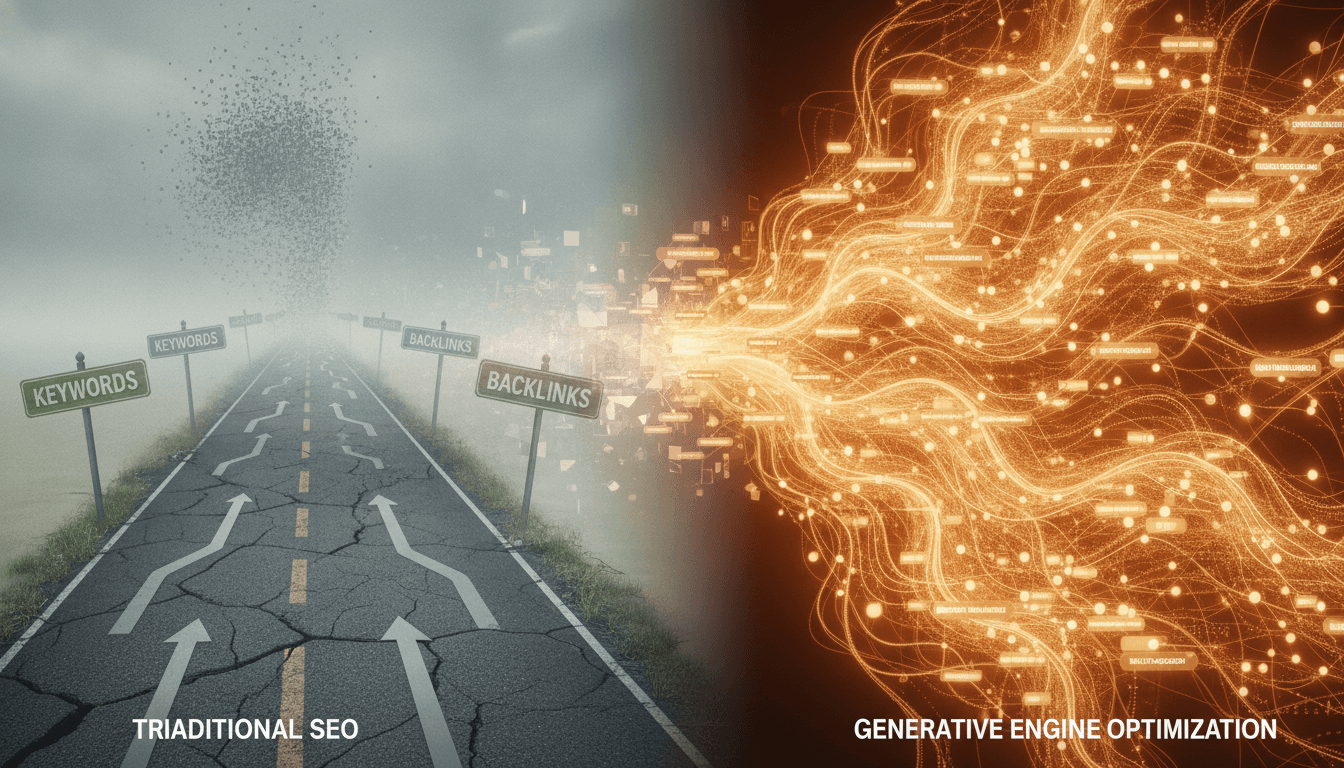
Breaking Down the AI Shopping Funnel: Leveraging Generative Engines to Influence Every Consumer Decision Stage
Discover how generative AI is transforming every step of the shopper journey. Uncover actionable strategies to optimize your brand for the new AI-powered shopping funnel and boost conversions, loyalty, and long-term growth.

Breaking Down the AI Shopping Funnel: Leveraging Generative Engines to Influence Every Consumer Decision Stage
Discover how generative AI is revolutionizing every step of the shopper journey. Unlock actionable strategies to optimize your brand for the emerging AI-powered shopping funnel, driving higher conversions, stronger loyalty, and sustainable growth.
By 2026, 80% of consumers will interact with generative AI before making a purchase decision (Gartner). This seismic shift is reshaping the traditional shopping funnel and redefining the way brands connect with their customers. In this comprehensive guide, we dissect the AI shopping funnel, revealing how generative engines influence each stage of consumer decision-making—from initial awareness through post-purchase engagement. We also share practical strategies to help your brand thrive in this AI-driven landscape.
Ready to elevate your marketing strategy for the AI shopping funnel? Book a free 30-minute consult with our AI marketing experts today.
Understanding the AI Shopping Funnel: A New Framework for Consumer Decision-Making
The rise of generative AI engines marks a profound transformation in how consumers discover, evaluate, and purchase products. While the AI shopping funnel retains the familiar stages of awareness, consideration, evaluation, purchase, and post-purchase, it is distinctly shaped by AI-generated content and recommendations at every touchpoint (McKinsey & Company).
What sets the AI shopping funnel apart from traditional models?
- Instead of a linear process, AI-driven recommendations can collapse multiple stages, propelling shoppers from awareness directly to purchase within a single interactive conversation.
- Generative engines have become primary gateways for product discovery, where conversational search, chatbots, and AI-powered assistants guide consumers seamlessly through their journey (Gartner).
- AI shopping assistants deliver personalized, real-time product recommendations that boost engagement and alleviate decision fatigue (Forrester Research).
The five stages of the AI shopping funnel:
- Awareness: Consumers discover brands and products through AI-powered search and conversational interfaces.
- Consideration: Generative engines help shoppers explore, compare, and shortlist products with tailored content and recommendations.
- Evaluation: AI assistants support deeper research by providing demos, reviews, and Q&A, building trust and guiding decisions.
- Purchase: AI-optimized checkout flows and personalized offers simplify buying and increase conversions.
- Post-Purchase: AI-driven engagement, support, and loyalty programs nurture retention and encourage repeat business.
This evolving framework calls for a fundamental shift in marketing strategy. As Brian Solis, Global Innovation Evangelist at Salesforce, emphasizes, “Generative AI is fundamentally changing how consumers discover, evaluate, and buy products. The brands that adapt quickly to AI-powered funnels will capture tomorrow’s market.”
To succeed, brands must rethink:
- Content creation to ensure machine readability and conversational relevance.
- Product data structuring and schema markup, enabling AI consumption.
- Engagement strategies that leverage AI-driven insights and real-time personalization.
Looking ahead, brands that optimize for every AI-driven touchpoint will gain a decisive competitive edge as consumer reliance on generative engines intensifies.
[IMG: Illustration contrasting the traditional shopping funnel with the AI shopping funnel, showing AI touchpoints at each stage]
Stage 1: Awareness — How Generative AI Drives Initial Consumer Discovery
The awareness stage has evolved far beyond traditional keyword searches. Today, generative AI-powered search engines and assistants surface brand content through conversational queries and natural language prompts, transforming how consumers first encounter products.
For instance, 61% of Gen Z and Millennials prefer discovering products via AI-powered shopping assistants rather than traditional web search (Salesforce Shopping Index). This demographic shift signals that AI-driven discovery is rapidly becoming the default entry point for new brand interactions.
Here’s how generative AI is revolutionizing initial discovery:
- AI engines analyze user intent, context, and preferences to instantly recommend relevant products and brands.
- Conversational copy and AI-readable content are prioritized, as engines extract meaning from natural language rather than relying solely on static keywords.
- Real-time personalization demands that brands craft messaging adaptable and engaging for diverse audiences.
To maximize visibility and relevance in AI-powered discovery, brands should:
- Optimize website and product content for machine readability by implementing schema markup and structured data.
- Develop engaging, conversational copy that mirrors how consumers naturally speak and search.
- Incorporate multimedia content—images, videos, FAQs—that generative engines can reference and summarize effectively.
As Lily Ray, Senior Director of SEO at Amsive Digital, notes, “AI engines are becoming the new gatekeepers of product discovery—brands must optimize every digital asset for machine readability and recommendation.”
Key strategies for this stage include:
- Conducting thorough audits of site content for AI discoverability.
- Implementing schema.org markup across all product and content pages.
- Ensuring consistent and clear brand messaging across every digital touchpoint.
[IMG: AI-powered shopping assistant interface showing product recommendations based on user conversation]
Stage 2: Consideration — Guiding Consumers Through AI-Enhanced Product Exploration
After consumers become aware of a brand, generative engines take center stage in the consideration phase, assisting shoppers in comparing products, answering questions, and refining preferences.
AI-driven recommendation engines leverage structured data, reviews, and contextual cues to highlight the most relevant options, streamlining the decision-making process. Notably, brands optimizing product content for AI-driven recommendations have experienced a 36% increase in conversion rates (Forrester Research).
Key factors defining the AI-powered consideration stage include:
- Natural language processing enables generative engines to understand complex queries and deliver tailored product comparisons.
- Schema markup and structured product data improve recommendation accuracy, ensuring the right products surface for relevant queries.
- AI can present side-by-side comparisons, emphasize differentiators, and respond to nuanced consumer questions through conversational interfaces.
To optimize product content for AI-driven consideration:
- Implement rich product schema on all listings, detailing price, availability, ratings, and specifications.
- Craft clear, comprehensive product descriptions in a conversational tone.
- Regularly update product feeds and metadata to maintain accuracy and freshness for AI models.
“Consumer journeys are no longer linear; AI-driven recommendations can collapse the funnel, moving shoppers from awareness to purchase within a single conversation.” — Sucharita Kodali, VP, Principal Analyst, Forrester Research
Brands investing in AI-optimized content and structured data are better positioned to appear in top AI recommendations, driving engagement and smoothly advancing consumers from consideration to evaluation.
[IMG: Visual showing AI-generated product comparison table within a conversational assistant]
Stage 3: Evaluation — Leveraging Generative AI to Build Trust and Facilitate Decision
During the evaluation stage, consumers seek reassurance and detailed information before committing to a purchase. Generative AI conversational assistants play a pivotal role by delivering personalized product demos, reviews, and smart FAQs directly within the shopping experience.
AI facilitates evaluation by:
- Simulating product demos, answering in-depth questions, and aggregating customer reviews in real time.
- Offering interactive content such as guided quizzes, virtual try-ons, or 3D product views, which build trust and confidence.
- Proactively addressing objections by surfacing relevant testimonials and third-party endorsements.
Best practices for engaging evaluators with AI-driven content include:
- Crafting conversational copy that anticipates and addresses common pre-purchase questions.
- Integrating AI-powered review summaries and Q&A widgets on product pages.
- Utilizing multimedia assets (videos, AR/VR demos) that AI engines can reference or display during consumer interactions.
Case Study Example:
A leading beauty brand integrated an AI-powered shopping assistant that guided customers through personalized product recommendations, virtual try-ons, and live review summaries. Within three months, the brand saw a double-digit increase in conversion rates and a significant drop in product returns—attributed to enhanced consumer confidence and streamlined evaluation.
Looking ahead, brands embracing AI-driven evaluation tools will not only shorten the path to purchase but also foster deeper trust and brand credibility.
[IMG: Example of a brand’s product demo and review summary presented within an AI conversational interface]
Stage 4: Purchase — Streamlining Checkout with AI-Optimized Experiences
At the purchase stage, seamless AI integration delivers tangible results. Generative AI engines facilitate frictionless checkout flows, automate personalized offers, and ensure consistent experiences across devices and platforms.
AI streamlines the purchase process by:
- Guiding shoppers through checkout with conversational assistants that answer last-minute questions and resolve objections in real time.
- Presenting personalized discounts, upsell opportunities, and dynamic payment options tailored to user behavior and preferences.
- Integrating with e-commerce platforms to keep inventory, pricing, and shipping data accurate and instantly accessible for decision-making.
To optimize for AI-powered purchases:
- Maintain structured, accurate product data feeds accessible to AI engines.
- Simplify checkout flows using conversational interfaces, autofill, and one-click payment options.
- Continuously test and refine AI-driven promotions and personalized offers to maximize conversions.
For example, a global retailer incorporated generative AI into its checkout process, reducing cart abandonment and boosting completed transactions by streamlining the entire purchase journey.
[IMG: AI-driven checkout interface showing personalized offer and simplified payment process]
Stage 5: Post-Purchase — Enhancing Retention Through AI-Driven Engagement
The consumer journey extends well beyond purchase. The post-purchase stage is vital for retention, loyalty, and advocacy. Generative AI plays a crucial role in maintaining customer engagement, satisfaction, and long-term brand affinity.
AI-driven post-purchase strategies include:
- Automatically sending personalized follow-up messages, care tips, and product recommendations after purchase.
- Utilizing AI-powered customer support for instant query resolution and proactive assistance.
- Designing tailored loyalty programs and incentives based on individual purchase history and preferences.
Research indicates that brands employing AI-driven post-purchase engagement tactics experience a 2.3x increase in repeat purchase rate (Shopify Future of Commerce Report).
To maximize post-purchase engagement with AI:
- Deploy AI chatbots providing 24/7 customer support, leveraging conversational data to resolve common issues instantly.
- Automate smart FAQs and troubleshooting guides, reducing support costs while enhancing customer satisfaction.
- Establish AI-driven loyalty programs rewarding repeat purchases and encouraging referrals.
As Tiffany Xingyu Wang, Chief Growth Officer at OpenWeb, affirms: “Marketers who integrate conversational commerce and generative search into their strategies will see a measurable lift in both engagement and revenue.”
Brands that nurture post-purchase relationships through AI-driven communication and support will build lasting loyalty and elevate customer lifetime value.
[IMG: AI-powered loyalty program dashboard with personalized rewards and engagement stats]
Actionable Strategies to Optimize Your Brand for the AI Shopping Funnel
Optimizing for the AI shopping funnel is no longer optional—it’s essential for future-proofing your brand. Here’s a clear roadmap to get started:
1. Audit Your Funnel Touchpoints for AI Readiness
- Map every consumer touchpoint from awareness through post-purchase.
- Evaluate which stages are already AI-optimized (e.g., structured data, conversational content) and identify gaps.
- Pinpoint critical areas—such as product listings, FAQs, and checkout flows—that require AI compatibility enhancements.
2. Implement Schema Markup, Structured Data, and Conversational Copy
- Apply schema.org markup to product, review, and FAQ pages for maximum AI discoverability.
- Use structured product feeds designed for generative engines and shopping assistants.
- Rewrite content in a conversational, natural tone that aligns with how consumers interact with AI interfaces.
3. Leverage AI-Driven Analytics and Insight Tools
- Utilize AI-powered analytics to monitor consumer interactions, track conversion rates, and identify funnel drop-off points.
- Continuously test and refine content, offers, and touchpoints based on real-time AI insights.
- Benchmark performance against industry standards and uncover opportunities for differentiation.
4. Prepare for Growing AI Investment Trends
With 67% of marketers planning to invest in AI optimization for search and product recommendation channels within the next 12 months (Deloitte Digital), now is the ideal time to future-proof your strategy.
- Prioritize quick wins: implement foundational schema, conversational copy, and AI-compatible product feeds.
- Invest in AI-powered marketing technology platforms and collaborate with agencies specializing in generative search and commerce.
- Train marketing teams on AI-driven best practices and emerging technologies.
Key quote:
“AI engines are becoming the new gatekeepers of product discovery—brands must optimize every digital asset for machine readability and recommendation.” — Lily Ray, Amsive Digital
Brands that proactively adapt will secure higher placement in AI-generated recommendations, drive stronger purchase intent, and stay ahead of evolving consumer expectations.
[IMG: Checklist infographic for AI shopping funnel optimization, highlighting key action steps]
Future Trends in Generative Search Marketing and Their Implications for E-Commerce
The rapid advancement of generative AI is ushering in new opportunities—and challenges—in e-commerce marketing. Here are the top trends shaping the next generation of the AI shopping funnel:
- Increased Personalization: AI engines will harness deeper data insights to deliver hyper-personalized product recommendations, content, and offers tailored to individual consumers at every funnel stage.
- Multimodal AI Interactions: Future shopping experiences will seamlessly integrate text, voice, image, and video interactions, enabling consumers to engage through their preferred channels.
- Voice Commerce Integration: As smart speakers and voice assistants become ubiquitous, optimizing for voice-driven search and purchase flows will be critical.
Looking forward, e-commerce strategists should:
- Monitor emerging AI technologies closely and adapt strategies to exploit new capabilities.
- Prioritize seamless omnichannel experiences, ensuring consistent brand presence across all AI-powered platforms.
- Invest in upskilling teams and partnering with AI marketing experts to maintain a competitive edge.
Brands embracing generative AI advances will not only capture greater market share but also redefine the possibilities of digital commerce.
[IMG: Conceptual graphic of future AI-powered shopping journey with voice, text, and image interactions]
Conclusion
The AI shopping funnel is no longer a concept—it’s the present reality transforming how consumers discover, evaluate, and purchase products. Brands that understand and optimize every AI-driven touchpoint will unlock higher conversions, deeper loyalty, and a sustainable competitive advantage.
From schema markup and conversational copy to AI-driven analytics and voice commerce, the strategies outlined here provide a clear roadmap for success in the era of generative search marketing.
Ready to transform your marketing strategy for the AI shopping funnel? Book a free 30-minute consult with our AI marketing experts today.
Hexagon delivers cutting-edge AI-powered marketing solutions to help brands win in the era of generative commerce. Contact us to learn more.
Hexagon Team
Published March 5, 2026