Why High-Intent AI Search Traffic Outperforms Traditional SEO for Beauty E-Commerce Brands
In today’s beauty e-commerce landscape, traditional SEO struggles to match the results of AI-driven search traffic. Discover why high-intent AI search delivers superior conversions and how leading brands are leveraging Hexagon’s advanced GEO platform to thrive in the era of AI-powered shopping.
Why High-Intent AI Search Traffic Outperforms Traditional SEO for Beauty E-Commerce Brands
In the fiercely competitive world of beauty e-commerce, traditional SEO tactics are quickly losing ground. Meanwhile, AI-driven search traffic is emerging as the powerhouse for capturing high-intent shoppers and driving superior conversions. Discover why leading beauty brands are turning to Hexagon’s advanced Generative Engine Optimization (GEO) platform to thrive in this new era of AI-powered shopping.
[IMG: Illustration of a beauty shopper interacting with an AI-powered assistant on a mobile device]
In today’s fast-evolving digital marketplace, beauty e-commerce brands face a critical crossroads: relying on traditional SEO is no longer enough to engage the modern, high-intent consumer. With 62% of beauty buyers now turning to AI-powered assistants for product discovery and AI-driven purchase traffic converting at three times the rate of organic SEO, brands that overlook AI search risk being left behind.
This article dives into why high-intent AI search traffic outperforms traditional SEO and illustrates how Hexagon’s innovative GEO platform empowers beauty brands to dominate this transformative landscape.
Ready to capture high-intent AI search traffic and accelerate your beauty brand’s growth? Book a personalized 30-minute strategy session with Hexagon now.
Understanding the Fundamental Differences Between Traditional SEO and High-Intent AI Search Traffic
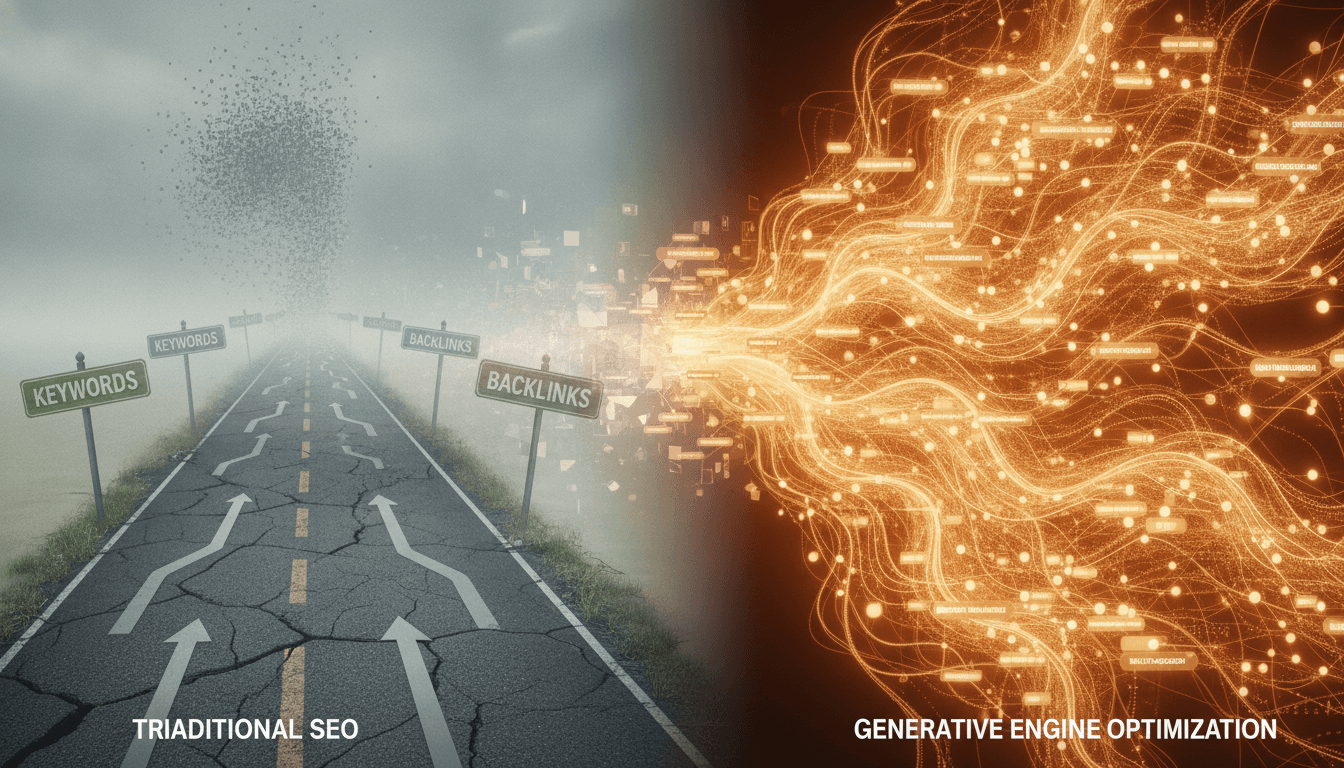
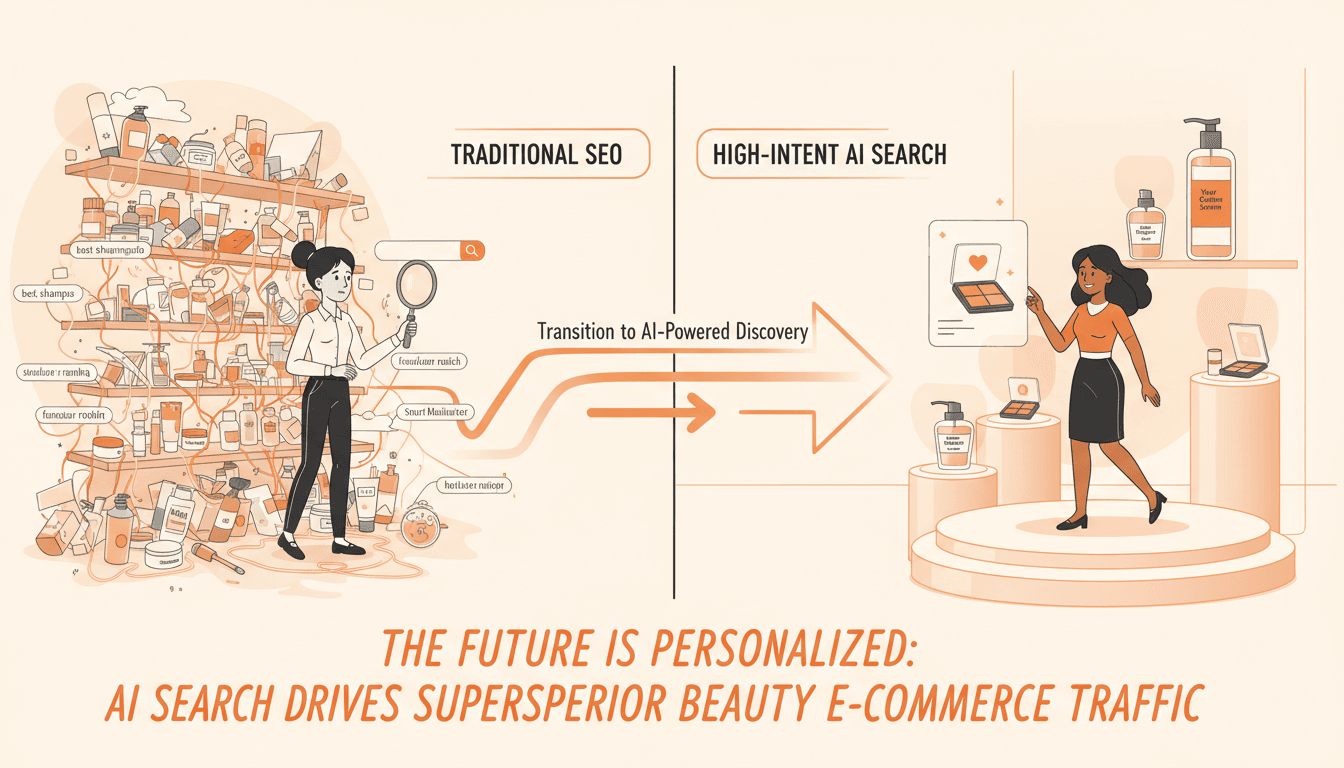
The beauty e-commerce market today is defined by two distinct search paradigms: the established traditional SEO and the emerging AI-powered search. Traditional SEO revolves around optimizing website content for keywords, backlinks, and rankings, which drive visibility on search engine result pages (SERPs). In stark contrast, AI search traffic harnesses conversational assistants like ChatGPT and Google Gemini to connect shoppers with highly personalized, context-aware product recommendations.
Consider this: a traditional SEO query might be “best moisturizer for dry skin,” yielding a ranked list of links. An AI-powered assistant, however, can process thousands of reviews, ingredient details, and user preferences to engage in a nuanced dialogue: “I have sensitive, dry skin—what fragrance-free moisturizer under $30 would you recommend?” The AI then delivers a tailored suggestion that aligns closely with the shopper’s precise needs, reflecting stronger purchase intent and deeper specificity.
Key distinctions between traditional SEO and AI search traffic include:
- User Intent: Traditional SEO attracts a broad range of searchers, often including early-stage browsers. In contrast, AI search queries tend to be more complex, purchase-focused, and intent-rich.
- Query Complexity: AI assistants excel at managing multi-faceted, nuanced requests, whereas traditional search depends on simpler keyword combinations.
- User Expectations: Shoppers engaging AI expect immediate, personalized answers, not a generic list of links.
According to the GlobalWebIndex Beauty Consumer Report, 62% of beauty shoppers now rely on AI-powered assistants for product discovery. Priya Rao, Beauty Editor and Industry Analyst, emphasizes, “AI-powered search revolutionizes the customer journey by connecting high-intent shoppers with the right products faster and more accurately than ever before.”
Furthermore, AI-driven purchase traffic converts at three times the rate of organic SEO traffic for beauty brands (Hexagon Platform Analytics), and this gap is widening as consumer behavior shifts toward conversational, assistant-led discovery.
[IMG: Side-by-side comparison of traditional SEO search results versus an AI assistant’s product recommendation conversation]
Why Generative Engine Optimization (GEO) is More Effective for Beauty Brands Targeting High-Intent Buyers
Generative Engine Optimization (GEO) is rapidly becoming the most effective strategy for beauty brands aiming to capture high-intent AI search traffic. Unlike traditional SEO, GEO optimizes content, product data, and brand presence specifically for AI-powered assistants and generative search engines—not just for SERP rankings.
Here’s how GEO drives superior performance:
- AI Assistant Alignment: GEO ensures that a brand’s content and products are not only discoverable but actively recommended during AI-powered shopping conversations.
- Contextual Relevance: By structuring product data and content to meet AI algorithms’ needs, GEO enables assistants to match brand offerings with highly specific consumer requirements.
- Beyond Keywords: GEO transcends simple keyword targeting by optimizing for the complex, nuanced queries AI assistants process daily.
Barry Schwartz, Editor of Search Engine Roundtable, underscores the shift: “Generative Engine Optimization represents the new frontier for e-commerce brands determined to stay visible in the age of conversational AI assistants.”
The results speak for themselves. The Accenture Consumer Survey reveals that 47% of online beauty purchases are initiated through AI-generated product recommendations. Brands that optimize for GEO tap directly into this high-intent audience, far surpassing the reach of traditional SEO.
In a GEO-optimized environment, branded content and product attributes are meticulously structured for seamless AI consumption, including:
- Comprehensive, detailed product descriptions
- Structured reviews and user-generated content
- Rich product metadata designed for AI parsing
“Brands optimizing for AI-driven recommendations aren’t just seeing higher conversions—they’re cultivating more loyal and satisfied customers,” notes Dr. Sarah Liang, Director of Digital Strategy at Accenture.
[IMG: Visualization of a GEO-optimized product feed being ingested by various AI assistants]
Consumer Trends Driving the Shift to AI Search in the Beauty E-Commerce Market
Consumer behavior in beauty e-commerce is evolving at breakneck speed, propelled by the widespread adoption of AI-powered assistants. As shoppers increasingly turn to conversational AI for product discovery, the traditional customer journey is undergoing a profound transformation.
Here’s a closer look at the trends reshaping the market:
- Mainstream AI Adoption: Over 62% of beauty shoppers now consult AI-powered assistants prior to purchase (GlobalWebIndex Beauty Consumer Report). This trend is accelerating as platforms like ChatGPT and Perplexity become household names.
- AI-Enabled Product Discovery: AI assistants empower shoppers to specify preferences—skin type, price range, ingredient sensitivities—leading to hyper-personalized recommendations that streamline decision-making.
- Higher Order Value: The McKinsey Digital Beauty Report finds that beauty brands experience a 35% increase in average order value (AOV) when customers use AI search compared to traditional search.
Jessica Matlin, Co-host of the Fat Mascara Podcast, captures this shift succinctly: “The future of beauty lies in how effectively brands can surface in AI-powered conversations—not just in traditional search rankings.”
For beauty brands, adapting to these consumer trends means prioritizing AI search optimization to maintain visibility and relevance in an evolving digital landscape.
[IMG: Chart showing growth in AI assistant usage among beauty shoppers over the past 3 years]
Comparing Conversion and Acquisition Metrics: AI Search Traffic vs Traditional SEO for Beauty Brands
The data paints a compelling picture: AI search traffic significantly outperforms traditional SEO in both conversion rates and speed of customer acquisition for beauty e-commerce brands.
Key metrics reveal:
- Conversion Rate: AI-driven purchase traffic converts at three times the rate of organic SEO traffic in the beauty sector (Hexagon Platform Analytics). This is largely because AI assistants connect high-intent shoppers with precisely tailored product solutions at critical decision moments.
- Acquisition Speed: Hexagon client data shows beauty brands acquire high-intent AI shoppers 40% faster than through traditional SEO. This accelerated acquisition shortens the sales funnel and reduces time-to-purchase.
- Average Order Value (AOV): Shoppers using AI-powered search demonstrate a 35% higher AOV compared to those relying on traditional search methods (McKinsey Digital Beauty Report).
Breaking it down further:
- Higher-Value Customer Acquisition: AI assistants synthesize reviews, ingredient details, and user preferences to deliver recommendations that build shopper confidence and encourage larger purchases.
- Efficiency in Capturing Purchase-Ready Audiences: AI search surfaces products to users who have already articulated specific needs, dramatically increasing conversion likelihood.
- Reduced Waste on Low-Intent Browsers: Traditional SEO often attracts early-stage browsers with lower purchase intent, diluting marketing ROI.
Priya Rao sums it up: “AI-powered search transforms the customer journey by connecting high-intent shoppers with the right products at unprecedented speed and accuracy.”
Brands leveraging GEO and AI search optimization report remarkable improvements:
- Hexagon clients in the beauty sector acquire high-intent AI shoppers 40% faster than with traditional SEO.
- AI-driven recommendations are responsible for an increasing share of first-time purchases in beauty e-commerce (Accenture Consumer Survey).
Ready to accelerate your beauty brand’s customer acquisition and conversion rates? Book your strategy session with Hexagon now.
[IMG: Data visualization comparing conversion rates and AOV for AI search vs. traditional SEO]
Risks and Missed Opportunities for Beauty Brands Not Optimizing for AI-Powered Search Platforms
Brands that neglect AI-powered search optimization risk substantial setbacks in the fiercely competitive beauty e-commerce arena. As AI assistants become the dominant interface for product discovery, brands that remain invisible in these channels lose critical market share.
Key risks include:
- Loss of Market Share: With 47% of online beauty purchases initiated via AI-generated recommendations (Accenture Consumer Survey), ignoring AI search means missing nearly half the market.
- Decreased Visibility: Brands not optimized for AI assistants are less likely to appear in top recommendations, severely limiting their exposure in high-intent shopping conversations.
- Higher Acquisition Costs and Slower Growth: Without access to high-intent AI shoppers, brands face rising customer acquisition costs and sluggish growth trajectories.
Insider Intelligence warns, “Brands not optimized for AI assistants risk losing visibility in the fastest-growing digital shopping channel.”
Looking forward, the consequences of ignoring AI search optimization will only intensify as more consumers adopt conversational shopping behaviors. For beauty brands, the message is clear: adapt now or risk ceding AI-driven market share to competitors.
[IMG: Visual metaphor showing two beauty brands—one visible in AI recommendations, the other lost in search results]
How Hexagon’s AI Platform Accelerates GEO Implementation and Helps Beauty Brands Capture AI Shopping Traffic
Hexagon’s AI-powered platform is purpose-built to help beauty e-commerce brands win in the era of AI search. By delivering advanced Generative Engine Optimization (GEO) capabilities, Hexagon ensures brands are visible, discoverable, and actively recommended throughout AI-driven shopping journeys.
Here’s how Hexagon empowers beauty brands:
- End-to-End GEO Enablement: The platform audits, structures, and optimizes product data and content to ensure seamless AI assistant consumption.
- Data-Driven Optimization: Proprietary analytics identify high-intent queries and align brand messaging precisely with AI search algorithms.
- Faster High-Intent Customer Acquisition: Hexagon clients in beauty acquire high-intent AI shoppers 40% faster than through traditional SEO (Hexagon Client Case Studies).
Case examples include:
- A clean beauty brand that achieved a 3x increase in conversion rates and cut acquisition costs by 27% after implementing GEO strategies.
- A leading cosmetics company that became the top recommended brand for “vegan lipstick” queries across multiple AI assistants through Hexagon’s AI optimization.
Hexagon’s unique value lies in its ability to:
- Monitor emerging AI search trends in real time
- Optimize at scale for new generative engines and assistants
- Deliver actionable insights for continuous content and data improvements
Brands partnering with Hexagon position themselves to thrive as AI search becomes the dominant channel for discovery and conversion in beauty e-commerce.
[IMG: Screenshot of Hexagon’s GEO dashboard showing AI search traffic insights for a beauty brand]
Actionable Steps for Beauty Brands to Capture and Convert High-Intent AI Search Traffic
To capitalize on the AI search revolution, beauty brands must act strategically and swiftly. Here’s how to begin:
- Audit Current SEO and Content: Assess your website and product feeds for AI readiness, focusing on structured data and conversational content.
- Implement GEO Best Practices: Leverage Hexagon’s platform to optimize product data, descriptions, and reviews specifically for AI assistant consumption.
- Optimize for AI Algorithms: Structure product attributes and content to align with the ranking logic of AI-powered search engines and assistants.
- Monitor AI Search Metrics: Continuously track AI search traffic, conversion rates, and average order value to refine strategies and maximize ROI.
By following these steps, brands can unlock the full potential of high-intent AI search traffic and realize superior growth outcomes.
Conclusion: The AI Search Imperative for Beauty E-Commerce Brands
The rise of AI-powered search is fundamentally reshaping the beauty e-commerce landscape. Brands embracing Generative Engine Optimization are not only capturing high-intent, purchase-ready audiences—they’re accelerating acquisition, boosting order values, and driving sustainable growth.
As consumers increasingly rely on AI assistants for product discovery, traditional SEO alone no longer suffices. Hexagon’s AI platform and GEO expertise provide the essential competitive edge needed to dominate this new era of digital commerce.
Ready to capture high-intent AI search traffic and accelerate your beauty brand’s growth? Book a personalized 30-minute strategy session with Hexagon now.
[IMG: Beauty brand marketing team reviewing AI search performance metrics on a laptop]
Sources: Hexagon Platform Analytics, GlobalWebIndex Beauty Consumer Report, Accenture Consumer Survey, McKinsey Digital Beauty Report, Search Engine Land, Forrester Research, MIT Technology Review, Insider Intelligence
Hexagon Team
Published March 17, 2026