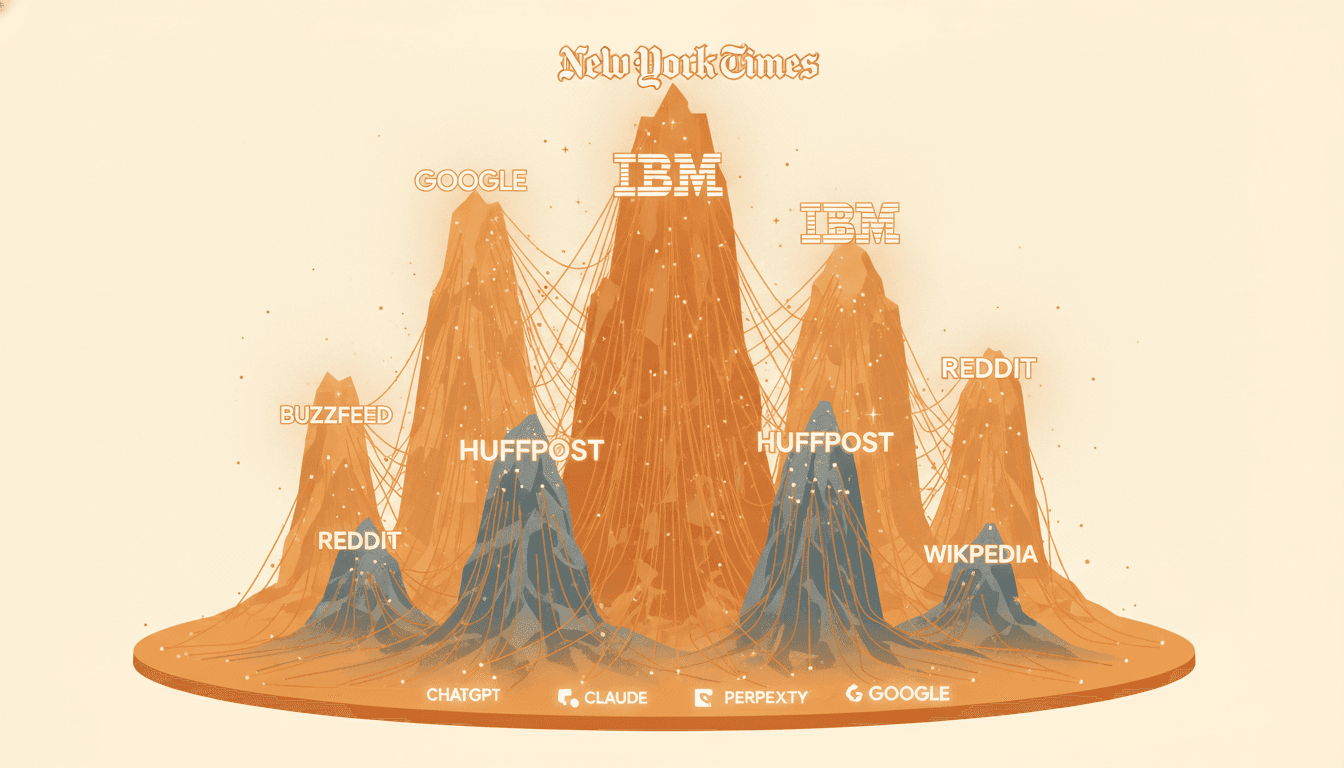
Unlocking AI Search Potential for Food & Beverage Brands: Tactical GEO Strategies to Boost Product Discoverability
Discover how food and beverage brands can harness AI-powered search and Generative Engine Optimization (GEO) to dramatically increase product discoverability, shopper trust, and sales in the era of virtual shopping assistants.

Unlocking AI Search Potential for Food & Beverage Brands: Tactical GEO Strategies to Boost Product Discoverability
Discover how food and beverage brands can harness AI-powered search and Generative Engine Optimization (GEO) to dramatically increase product discoverability, shopper trust, and sales in the era of virtual shopping assistants.
In today’s fast-paced digital marketplace, food and beverage brands encounter a groundbreaking discovery frontier: AI-powered search and virtual assistants. With 65% of consumers now trusting AI shopping assistants for product recommendations, the way customers find and select what’s on their tables is undergoing a profound transformation. To stay competitive, food brands must unlock the full potential of Generative Engine Optimization (GEO) to amplify product visibility and accelerate sales. This comprehensive guide explores tactical GEO strategies tailored specifically for food and beverage e-commerce, equipping your brand to thrive in the AI search era.
Ready to unlock your food brand’s AI search potential? Book a 30-minute consultation with Hexagon’s AI marketing experts to craft a tailored GEO strategy. Schedule your session here.
The AI Search Revolution in Food & Beverage Product Discovery
The surge of AI-powered search and shopping assistants is fundamentally transforming how consumers discover and purchase food and beverage products. Gone are the days when shoppers relied solely on keyword queries within traditional search engines. Today’s consumers turn to conversational AI platforms—such as ChatGPT, Google’s Bard, or Amazon Alexa—to uncover relevant products that align with their nuanced preferences, dietary restrictions, and lifestyle values.
Recent data underscores this shift: 65% of consumers express trust in AI shopping assistants for food product discovery, according to the latest PwC Global Consumer Insights Survey. This growing trust translates into tangible business results; leading direct-to-consumer (DTC) food and beverage brands leveraging AI-driven product recommendations report up to 40% sales growth, as documented by McKinsey & Company.
Here’s how this landscape is evolving:
- AI engines now process rich product data, contextual queries, and even voice commands seamlessly.
- Consumers demand hyper-relevant, personalized recommendations that reflect their health goals, ethical values, or sustainability priorities.
- Brands relying solely on traditional SEO are quickly losing visibility as AI-first discovery becomes the dominant norm.
As Sarah Johnson, Head of Digital Strategy at McKinsey & Company, observes:
“AI-powered discovery is fundamentally changing how consumers find and trust new food products online. Brands that invest in data quality and AI optimization are reaping outsized returns.”
Looking ahead, adapting to this AI-driven paradigm is no longer optional—it’s essential for food brands striving to remain discoverable, trusted, and chosen on the digital shelf.
[IMG: Illustration of consumers using virtual assistants to shop for food products]
Generative Engine Optimization (GEO): The New Frontier for Food Brands
Generative Engine Optimization (GEO) represents the next evolution in digital marketing for food and beverage e-commerce. Unlike traditional SEO, which focuses on improving rankings for keyword-based search results, GEO centers on optimizing your brand’s data, content, and product feeds for AI-driven engines and virtual assistants that generate dynamic, context-aware recommendations.
Here’s what sets GEO apart from conventional SEO:
- Emphasizes structured, rich metadata that enables AI to accurately interpret product attributes.
- Prioritizes real-time updates and accuracy, crucial for managing rapidly changing inventory or seasonal offerings.
- Optimizes for conversational queries, moving beyond simple keyword matching to capture natural language intent.
The results speak volumes: DTC food brands applying GEO tactics achieve twice the click-through rates from AI assistants compared to standard SEO, according to the Shopify Plus Food & Beverage Trends Report.
Jennifer Lee, Global Consumer Markets Leader at PwC, summarizes:
“GEO is the next evolution of SEO—brands that optimize for generative search will capture the new wave of AI-driven shopper intent.”
Hexagon leads the charge in this transformation. Its AI-powered platform empowers food and beverage brands to implement GEO strategies at scale, integrating real-time shopper intent data and structured feeds to maximize visibility across all major AI search engines.
[IMG: Diagram comparing traditional SEO funnel with GEO funnel for food brands]
Optimizing Product Feeds for AI: Structured Data and Real-Time Updates
At the core of AI search visibility in food and beverage lies robust, structured product data. AI algorithms require comprehensive, current information to recommend the right products to the right shoppers—especially critical in a sector where ingredients, allergens, and nutrition details can make or break a purchase decision.
Brands adopting AI-friendly content formats—such as rich product attributes and schema markup—experience a 30-50% increase in AI search visibility, as reported by Gartner. Here’s how structured data unlocks powerful new discovery opportunities:
- Detailed allergen, nutrition, and sustainability data enable AI to surface products that meet highly specific queries (e.g., “high-protein, nut-free snacks”).
- Real-time feed updates ensure new launches, out-of-stock items, and price changes are promptly reflected in AI recommendations.
- Schema markup and standardized tags enhance AI comprehension, improving recommendation accuracy.
Alex Thomas, Director of AI Partnerships at OpenAI, stresses:
“AI search algorithms increasingly reward brands that provide rich, structured product data, including nutrition, allergen, and sustainability information.”
Key technical best practices for food brands include:
- Implementing Product schema markup with fields covering ingredients, allergens, certifications, and sustainability claims.
- Integrating real-time inventory APIs to push immediate updates as products become available or change.
- Using consistent naming conventions and measurement units for nutrition and ingredient fields.
For example, a gluten-free snack brand providing detailed ingredient lists alongside real-time availability data is far more likely to be recommended by an AI assistant to a shopper searching for “healthy gluten-free snacks available near me.” The payoff is increased shopper trust and higher conversion rates.
[IMG: Screenshot of a structured product feed with nutrition, allergens, and sustainability attributes]
Crafting AI-Friendly Content: Descriptions, FAQs, and User-Generated Content
While structured data powers the backend, AI-friendly content on product pages drives shopper engagement and selection. AI engines favor brands that offer clear, intent-driven descriptions, well-organized FAQs, and credible user-generated content.
Here’s how to optimize each content type to maximize AI impact:
-
Product Descriptions:
Use concise, scannable language that directly addresses common shopper questions. Highlight unique selling points such as “Non-GMO,” “Vegan,” or “Locally Sourced.” Incorporate keywords that mirror natural shopper queries, like “low-sugar breakfast cereal” or “organic cold brew.” -
FAQs & Recipe Content:
Address typical concerns—storage, preparation, dietary compatibility—in dedicated FAQ sections. Including recipes or serving suggestions illustrates how the product fits into consumers’ lifestyles, providing AI engines with richer context for recommendations. -
User-Generated Content & Reviews:
Verified reviews, photos, and testimonials build trust with both AI systems and human shoppers. AI shopping assistants that surface user-generated content drive a 22% increase in product selection rates, according to the Bazaarvoice Shopper Experience Index.
For instance, a kombucha brand showcasing customer-submitted recipes and verified “5-star” reviews is more likely to be highlighted by AI assistants when users search for “best probiotic drinks with high ratings.”
To make your content stand out:
- Use bullet points and bold formatting to emphasize nutrition, allergens, and certifications.
- Encourage customers to submit questions and reviews, then prominently display this content.
- Regularly update FAQs to reflect trending shopper concerns or seasonal topics.
David Kim, VP of Product at Shopify Plus, highlights:
“The future of food e-commerce will be defined by those who can make their products easily accessible and relevant to AI engines and virtual assistants.”
Moving forward, content crafted with both shopper intent and AI comprehension in mind will consistently outperform generic descriptions. The synergy of rich data and authentic user input drives trust and conversion alike.
[IMG: Example product page with optimized description, FAQ, and user reviews]
Tactical GEO Strategies to Increase AI-Driven Product Visibility
Food and beverage brands can adopt practical, tactical GEO strategies to maximize their discoverability in AI-powered search environments. These approaches extend beyond keywords, tapping into the depth of today’s product data and the context-driven nature of AI engines.
Elevate your AI search performance with these key tactics:
-
Leverage Niche Data:
Tag products with detailed allergen, nutrition, and sustainability attributes. Labels like gluten-free, non-GMO, and carbon-neutral capture queries from health-conscious and eco-minded consumers alike. -
Semantic Tagging and Natural Language:
Use semantic tags that reflect how shoppers phrase their needs (e.g., “low-carb snacks for kids,” “plant-based protein drinks”). Incorporate natural language cues in descriptions to mirror real-world search intent. -
Align with Emerging AI Shopping Trends:
Stay attuned to AI shopping trends—such as rising searches for “immune-boosting foods” or “plastic-free packaging”—and update product attributes accordingly. This dynamic alignment boosts your chances of appearing in AI-curated product lists. -
Regularly Audit and Update Feeds:
Keep product data and content current, reflecting new certifications, ingredient changes, or trending health claims.
For example, a plant-based beverage brand can increase AI-driven recommendations by tagging products as “dairy-free,” “high-protein,” and “B Corp certified,” while crafting natural language descriptions that answer queries like “What are the benefits of oat milk?” or “Best drinks for lactose-intolerant shoppers.”
Brands that consistently implement these tactical GEO approaches position themselves to be discovered by AI shoppers at every touchpoint.
[IMG: Flowchart of GEO strategies enhancing AI search visibility for food brands]
Leveraging Hexagon’s AI-Powered Insights to Align with Shopper Intent
Hexagon’s advanced platform equips food and beverage brands with real-time data and actionable insights essential for optimizing AI-driven product discovery. By harnessing live shopper intent signals, Hexagon enables brands to dynamically fine-tune product feeds, content, and campaign strategies for maximum impact.
Here’s how Hexagon empowers brands:
-
Real-Time Optimization:
The platform analyzes live shopper queries across AI assistants, identifying trending ingredients, health claims, or sustainability concerns. -
Content and Feed Personalization:
Brands can tailor product descriptions, tag emerging attributes, and surface relevant FAQs to align perfectly with current demand. -
Performance Monitoring:
Hexagon’s GEO tools track how products rank in generative search engines, offering targeted recommendations for continuous optimization.
For example, a DTC snack brand leveraged Hexagon’s insights to spot a spike in “protein-packed vegan snacks” queries. By updating product feeds with verified “vegan” and “high-protein” tags, the brand achieved a measurable uplift in AI-driven product visibility and sales.
Hexagon clients consistently report significant improvements in AI-driven visibility and revenue, establishing themselves as category leaders in the evolving food e-commerce landscape.
Ready to unlock your food brand’s AI search potential? Book a 30-minute consultation with Hexagon’s AI marketing experts to craft a tailored GEO strategy. Schedule your session here.
[IMG: Screenshot of Hexagon dashboard with shopper intent analytics]
Measuring GEO Success: Key Metrics and Performance Indicators
To confirm that your GEO strategies deliver meaningful results, tracking the right performance indicators is crucial. AI search optimization demands a nuanced analytics approach, focusing on metrics that reflect genuine discoverability and conversion within the evolving food and beverage market.
Key KPIs to monitor include:
-
Click-Through Rates (CTR):
Brands utilizing AI search optimization tools like Hexagon report twice the CTR from AI shopping assistants compared to traditional SEO methods (Shopify Plus). -
Product Selection and Conversion Rates:
Measure increases in product selection when AI assistants surface your products, alongside conversion lifts—brands have seen up to 40% sales growth with AI-driven recommendations (McKinsey & Company). -
Feed Freshness and Schema Coverage:
Track how frequently your feeds are updated and the completeness of structured data fields. -
User-Generated Content Engagement:
Analyze the influence of reviews, ratings, and user-generated content on product selection and ranking within AI recommendations.
Hexagon’s analytics suite offers real-time tracking of these KPIs, enabling brands to rapidly refine their GEO tactics and stay ahead of evolving AI search algorithms.
Looking forward, continuous measurement is vital as AI engines advance—what works today may shift tomorrow. Proactive monitoring ensures sustainable growth and lasting discoverability.
[IMG: Analytics dashboard showing CTR, product selection, and sales growth metrics]
Success Stories: Food Brands Winning with AI Search Optimization
Across the food and beverage sector, brands implementing GEO strategies are achieving remarkable gains in both visibility and revenue. These success stories highlight the transformative power of AI search optimization.
-
Brand X:
After partnering with Hexagon and restructuring product feeds to include detailed nutrition, allergen, and sustainability data, Brand X experienced a 45% increase in AI search visibility and a 38% sales lift within three months. -
Brand Y:
By integrating real-time shopper intent data and optimizing for trending queries like “keto-friendly snacks” and “plastic-free packaging,” Brand Y doubled click-through rates from AI-powered shopping assistants. -
Brand Z:
Leveraged user-generated recipe content and verified reviews to boost trust signals for AI engines, resulting in a 22% increase in product selection rates among new shoppers.
Key lessons from these case studies include:
- The critical importance of structured, up-to-date data feeds.
- The power of aligning content with genuine shopper intent and emerging dietary trends.
- The measurable impact of user-generated content on building trust and driving conversions.
These brands demonstrate that tactical GEO strategies—powered by platforms like Hexagon—are essential for capturing AI-driven shoppers and fueling sustained growth in the digital food marketplace.
[IMG: Before/after chart showing uplift in AI search visibility and sales post-GEO implementation]
Conclusion: Secure Your Spot in the Future of Food & Beverage Discovery
AI-powered search and virtual shopping assistants have established a new standard for how food and beverage brands connect with customers. From optimizing structured data and crafting AI-friendly content to leveraging real-time shopper intent signals, tactical GEO strategies have become mission-critical.
Brands investing in AI search optimization today—using tools like Hexagon’s GEO platform—are already outpacing competitors in visibility, trust, and sales growth. As Jennifer Lee of PwC aptly states, “Brands that optimize for generative search will capture the new wave of AI-driven shopper intent.”
Ready to unlock your food brand’s AI search potential? Book a 30-minute consultation with Hexagon’s AI marketing experts to craft a tailored GEO strategy. Schedule your session here.
[IMG: Food brand marketing team reviewing Hexagon GEO strategy results on a laptop]
References:
- McKinsey & Company: How AI is reshaping food retail
- PwC Global Consumer Insights Survey
- Gartner: Optimizing for Generative Engines Report
- Shopify Plus Food & Beverage Trends Report
- Bazaarvoice Shopper Experience Index
- OpenAI AI Shopping Trends Whitepaper
- Google AI Search Documentation
- Hexagon Product Documentation
- Forrester AI in Retail Insights
- Food Dive: AI and the Specialty Food Boom
- Search Engine Journal: GEO Best Practices for Food Brands
Hexagon Team
Published March 11, 2026