trainingbrandsbrand
AI Training Data Gaps: Why 85% of E-Commerce Brands Are Missing from ChatGPT's Knowledge Base (And How to Fix It)
You've invested in SEO, content marketing, and paid social—but when potential customers ask ChatGPT for product recommendations in your category, your brand doesn't appear. Here's why 85% of DTC and emerging e-commerce brands are structurally absent from AI knowledge bases, and the actionable roadmap to fix it before the window closes.
13 min read

---


# AI Training Data Gaps: Why 85% of E-Commerce Brands Are Missing from ChatGPT's Knowledge Base (And How to Fix It)

A potential customer opens ChatGPT and asks for product recommendations in a specific category. The brand doesn't appear. Neither does the competitor's—but theirs shows up in the second response. This isn't random. 85% of DTC and emerging e-commerce brands are structurally absent from AI knowledge bases, and the window to fix it is closing faster than most founders realize.

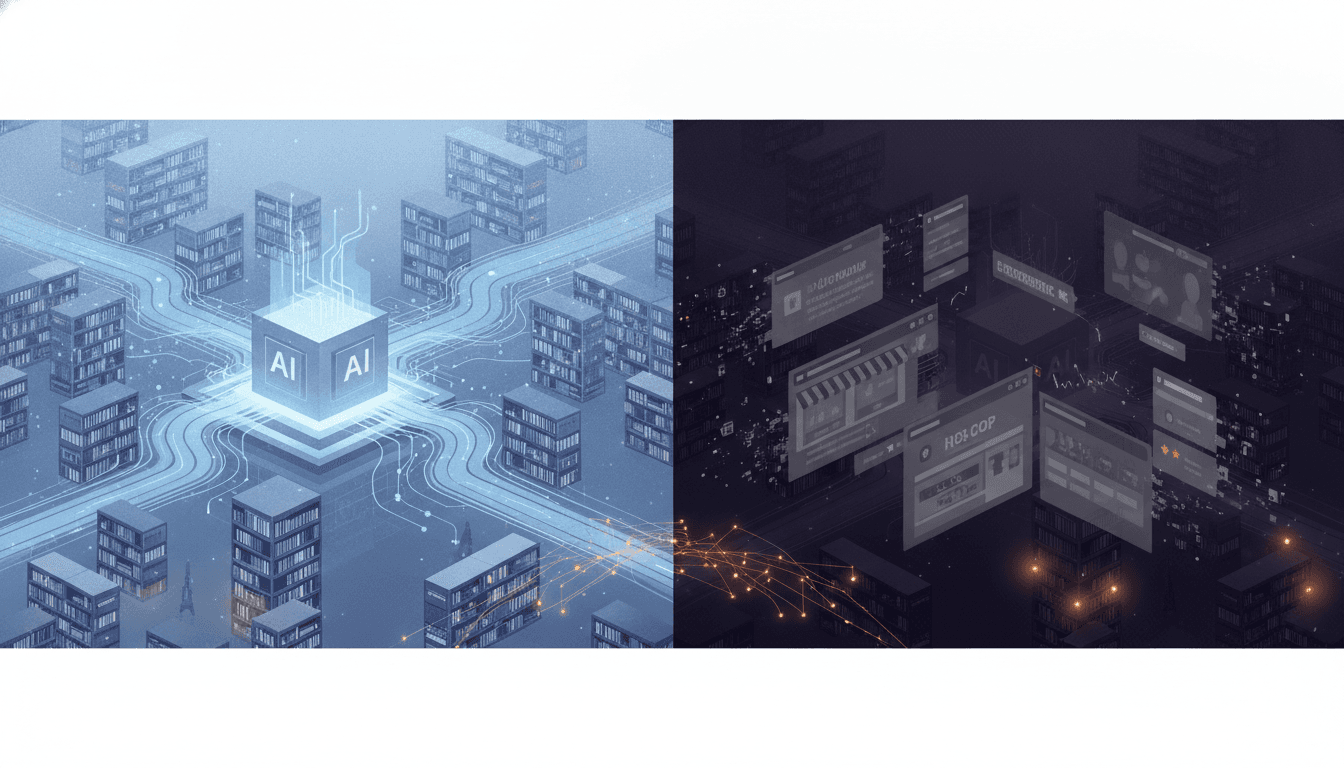
[IMG: Split-screen visual showing a brand's polished Shopify storefront on the left and a blank AI chat response on the right, symbolizing the disconnect between brand investment and AI visibility]


---


## The AI Knowledge Gap: A Structural Problem, Not a Marketing Problem

E-commerce brands have optimized their sites for Google, built loyal customer bases, and invested heavily in content marketing. Yet when potential customers open ChatGPT and ask for product recommendations, these brands vanish. **85% of DTC and emerging e-commerce brands are systematically absent from the AI knowledge bases** that power ChatGPT, Claude, and Perplexity.

This isn't a ranking problem or a content problem. It's a training data architecture problem—and understanding this distinction is critical to competing in AI discovery channels.

Here's how the structural exclusion works: More than 70% of ChatGPT's training data originates from web crawl sources filtered for high-authority domains, according to analysis of [OpenAI's GPT-3 training data composition](https://arxiv.org/abs/2005.14165) and [EleutherAI's Pile dataset research](https://arxiv.org/abs/2101.00027). Wikipedia, news media, and established editorial sites dominate these datasets by design. Brand-owned e-commerce content is structurally deprioritized because it lacks the editorial authority signals that quality filters look for.

An estimated **85% of DTC brands with under $50M in revenue, founded after 2018, have no meaningful parametric knowledge representation** in major LLMs, according to Hexagon's AI Visibility Analysis and Common Crawl Brand Representation research. This differs fundamentally from an SEO visibility challenge. No amount of keyword optimization or backlink building will fix a training data gap.

Brands that treat this as a traditional marketing problem will continue getting the wrong answer. The solution requires a different strategic discipline entirely.


---


## The Training Data Cutoff Problem: Your Brand Might Be Too New

The knowledge cutoff problem compounds the structural exclusion issue in ways most e-commerce founders haven't considered. GPT-4's training data has a hard cutoff of **April 2023**, as documented in [OpenAI's GPT-4 Technical Report](https://openai.com/research/gpt-4). Claude 3's cutoff sits at early 2024. Any brand that launched, rebranded, or significantly grew its digital presence after these dates is effectively nonexistent to these models.

Without retrieval-augmented generation supplements—and even RAG only partially compensates—newer brands face a structural disadvantage. Time alone will not solve this problem.

Aleyda Solis, International SEO Consultant and Founder of Orainti, identified the core issue: "The knowledge cutoff problem is real and it's going to get worse before it gets better. A brand that launched in 2022 and relied on Instagram and TikTok for growth has essentially zero footprint in the corpora that trained the dominant LLMs."

Here's how the timeline works against emerging brands. There's typically an **18-24 month lag** between a brand's founding or major digital activity and potential inclusion in a major LLM's training data. This accounts for web crawl schedules, data preprocessing timelines, and model training and release cycles. Brands must begin building AI-optimized content infrastructure well before they need AI-driven discovery.


---


## How AI Training Data Exclusion Impacts E-Commerce Discovery

The commercial stakes are escalating rapidly. **33% of U.S. consumers used an AI assistant to research a product purchase in the past six months**, up from under 10% in 2022, according to the [Salesforce State of the Connected Customer Report, 2024](https://www.salesforce.com/resources/research-reports/state-of-the-connected-customer/). Against the backdrop of a **$6.4 trillion projected global e-commerce market** by 2024 per [eMarketer's Global E-Commerce Forecast](https://www.emarketer.com/), the AI discovery channel is no longer a future consideration.

[IMG: Line graph showing the rapid growth of AI-assisted product research from under 10% in 2022 to 33% in 2024, with a projected upward trend line through 2026]

AI invisibility damages brands in two specific ways. First, brands absent from AI knowledge bases simply don't appear in recommendation queries. A customer asking "What are the best sustainable skincare brands under $50?" receives answers populated entirely by competitors with stronger AI representation. Second, when under-represented brands are mentioned at all, hallucination risk skyrockets.

When AI assistants have minimal training data on a brand, they fill gaps with plausible-sounding but fabricated product details, pricing, and brand histories, as documented in [Stanford HAI's hallucination research](https://hai.stanford.edu/). The data on third-party citations makes the solution direction unmistakable. **Brands mentioned in 10 or more third-party editorial sources are 3x more likely to receive accurate, positive mentions** in AI assistant responses, according to [GEO research from Princeton University, Georgia Tech, and IIT Delhi (2024)](https://arxiv.org/abs/2311.09735).

ChatGPT alone is handling over 100 million product-related queries per week as of early 2025. Brands not represented in training data are invisible to every single one of those queries.


---


*Not sure where a brand stands in AI knowledge bases? Hexagon offers audits of current AI visibility across ChatGPT, Claude, and Perplexity. [Schedule a 30-minute consultation](https://calendly.com/ramon-joinhexagon/30min) to understand AI training data gaps and build a GEO strategy.*


---


## The Business Impact: Why This Matters More Than You Think

AI discovery is transitioning from an emerging channel to a primary customer acquisition channel. What makes this transition particularly dangerous is the compounding nature of AI visibility disadvantage. Brands absent from AI knowledge bases don't just miss individual recommendation queries; they miss the entire flywheel that AI visibility creates.

More AI recommendations generate more press coverage. More press coverage generates more reviews and third-party citations. Those citations feed into future training datasets and strengthen representation further.

Lily Ray, VP of SEO Strategy & Research at Amsive Digital, identified the core vulnerability: "Most small and mid-sized brands have built their entire digital presence around paid social and performance marketing—channels that generate zero training signal for AI models. They're essentially invisible to the next generation of search."

The window to influence training data is closing. The 18-24 month lag means the cost of waiting compounds over time. Brands that build AI visibility now will benefit from a first-mover advantage that accelerates indefinitely.


---


## Why Third-Party Editorial Coverage Is the Highest-Leverage Fix

The path to AI training data inclusion runs directly through third-party editorial content. Training data curators prioritize product reviews, comparison guides, press mentions, and expert roundups because these content types carry the authority signals that quality filters look for. Brand-owned content on Shopify or WooCommerce storefronts rarely makes the cut, as confirmed by [EleutherAI's Pile dataset analysis](https://arxiv.org/abs/2101.00027) and [Stanford CRFM's Foundation Model Report](https://crfm.stanford.edu/).

Community discussions carry significant weight as well. Reddit data is a major component of LLM training datasets—a fact underscored by [OpenAI's 2024 data partnership with Reddit](https://www.reuters.com/technology/reddit-ai-content-licensing-deal-with-openai-2024-05-16/). Brands with strong organic presence in communities like r/BuyItForLife, r/SkincareAddiction, and r/personalfinance have a measurable training data advantage over brands that exist only in brand-owned channels.

This differs fundamentally from traditional earned media strategy. Traditional PR optimizes for human readers and brand sentiment. Generative Engine Optimization optimizes specifically for machine comprehension—the structure, citation density, and authority signals of content matter more than narrative appeal.

Citation worthiness and third-party amplification matter more than keyword density. This is a fundamentally different strategic discipline.

[IMG: Diagram showing the citation ecosystem—brand content at center, with arrows flowing outward to press coverage, Reddit discussions, review sites, and comparison guides, then arrows flowing back inward labeled "AI training data signals"]


---


## Generative Engine Optimization (GEO): A New Discipline Beyond SEO

Generative Engine Optimization is emerging as the successor discipline to traditional SEO, as documented in [Princeton, Georgia Tech, and IIT Delhi's 2024 GEO research paper](https://arxiv.org/abs/2311.09735). The distinction is critical: SEO optimizes for search crawler indexing and keyword ranking signals. GEO optimizes for AI training data ingestion pipelines and machine comprehension. These are fundamentally different technical and content challenges.

Rand Fishkin, Co-founder and CEO of SparkToro and founder of Moz, framed the stakes clearly: "The brands that will win the next decade of e-commerce are not necessarily the ones with the best products—they're the ones that become part of the information infrastructure that AI systems are trained on."

The core pillars of GEO differ from SEO in critical ways:

- **Citation worthiness over keyword density**—content must earn references from authoritative third parties
- **Third-party amplification over backlink volume**—editorial mentions matter more than link equity
- **Machine comprehension over human engagement metrics**—structure and authority signals are prioritized
- **Wikipedia presence as a credibility signal**—brands with Wikipedia pages are substantially more likely to be accurately represented in LLM outputs
- **Consistent NAP (Name, Address, Phone)** across business directories, social profiles, and review sites strengthens AI representation accuracy
- **Authoritative long-form content** that establishes topical expertise for AI training data curators


---


## The Technical Foundations: How to Build AI-Visible Content Infrastructure

Technical infrastructure is the non-negotiable foundation of any GEO strategy. It must be completed before pursuing editorial coverage at scale. Schema.org structured data markup improves the likelihood that a brand's information is correctly parsed and retained during AI training data preprocessing pipelines. Yet [fewer than 30% of DTC e-commerce sites implement comprehensive structured data](https://almanac.httparchive.org/en/2023/), according to the Web Almanac 2023 from HTTP Archive.

This gap represents both a widespread failure and a significant competitive opportunity. Here's how the technical foundations stack together:

- **Schema.org markup** for product information, company details, reviews, and FAQs—improving machine comprehension across all AI systems
- **Long-form content (2,000+ words)** that establishes topical authority, prioritized by training data curators over thin product pages
- **Wikipedia presence**—brands with Wikipedia pages are substantially more likely to be accurately represented in LLM outputs
- **Consistent NAP** across all business listings, directories, and social profiles—inconsistencies create representation errors in AI outputs
- **Machine-readable content formats** that survive data preprocessing pipelines intact

These foundations work together as a system, not independently. A brand with excellent long-form content but inconsistent NAP data will still generate hallucinated information when AI models attempt to fill in contact and location details. Foundations must be completed before pursuing editorial coverage.

[IMG: Technical architecture diagram showing the layers of AI-visible infrastructure: Schema markup at base, long-form content above it, Wikipedia/NAP consistency layer, and editorial citation ecosystem at top]


---


*Ready to build AI-visible infrastructure? Hexagon specializes in Generative Engine Optimization for e-commerce brands. [Schedule a consultation](https://calendly.com/ramon-joinhexagon/30min) to discuss AI visibility strategy.*


---


## Building Your AI Training Data Visibility Strategy: A Roadmap

A structured approach to GEO follows a clear sequence, with each phase building on the previous one. The 18-24 month lag means brands must act immediately—the training data that will power the next generation of LLMs is being shaped right now.

**Step 1: Audit Current AI Representation**

Query ChatGPT, Claude, and Perplexity directly for brand name, product category, and competitor comparisons. Document where the brand appears, what information is accurate, and where hallucinations occur. Identify which competitors have stronger AI representation and analyze their citation ecosystems.

**Step 2: Build Technical Foundations**

Implement comprehensive Schema.org structured data markup for all product information, company details, and reviews. Ensure consistent NAP across all business listings, directories, Google Business Profile, and social profiles. Audit and correct any inconsistencies in brand name, address, or contact information across the web.

**Step 3: Develop Authoritative Long-Form Content**

Create 2,000+ word content pieces that establish genuine topical expertise in the category. Structure content with clear headings, statistics, expert citations, and machine-readable formatting. Pursue Wikipedia page creation or enhancement where brand notability criteria are met.

**Step 4: Pursue Third-Party Editorial Coverage Strategically**

Develop relationships with product reviewers, journalists, and industry analysts in the category. Pitch comparison guides, expert roundups, and product review opportunities with GEO-optimized supporting materials. Build organic community presence on Reddit and niche forums where brand-relevant discussions occur.

**Step 5: Monitor AI Mentions and Iterate**

Track brand mentions across AI assistants on a regular cadence. Identify new hallucinations or gaps in representation and address them through targeted content and citation strategies. Measure progress against the 3x citation threshold (10+ third-party sources) as a leading indicator of AI visibility improvement.


---


## Common Mistakes E-Commerce Brands Make (And How to Avoid Them)

Most e-commerce brands approaching GEO for the first time repeat the same set of avoidable errors. Understanding these mistakes is as important as knowing the right strategy.

**Waiting for AI visibility to become "mainstream."** The 18-24 month lag means that by the time AI product discovery is universally recognized as critical, the window to influence current training datasets will have closed. Brands that wait will be playing catch-up against competitors who acted years earlier.

**Confusing GEO with traditional SEO tactics.** Optimizing meta descriptions, building exact-match anchor text links, and chasing keyword rankings do not improve AI training data representation. GEO requires third-party amplification and citation ecosystems, not on-page optimization.

**Focusing only on brand-owned content.** Brand websites, Shopify stores, and owned social channels generate zero meaningful training signal for AI models. The leverage is entirely in third-party editorial coverage. Brands mentioned in 10+ third-party sources are 3x more likely to receive accurate AI mentions.

**Neglecting technical foundations.** Pursuing editorial coverage before implementing structured data and ensuring NAP consistency means that citations, when they appear, point to an AI-invisible technical infrastructure. Foundations must come first.

**Not monitoring AI mentions.** Without systematic monitoring of AI responses, brands cannot identify hallucinations, measure progress, or iterate strategy. Monitoring is the feedback loop that makes GEO a compounding strategy rather than a one-time effort.


---


## The Compounding Advantage: Why Acting Now Matters

The flywheel of AI training data visibility creates a compounding advantage that makes early action disproportionately valuable. Brands with strong AI training data representation receive more AI recommendations. More AI recommendations lead to more press coverage, more product reviews, and more third-party citations.

Those citations feed into future training datasets, strengthening representation further—and the cycle accelerates. The next generation of LLMs will be trained on data that reflects today's AI visibility landscape. Brands building citation ecosystems and editorial coverage now are directly shaping the training data that will power GPT-5, Claude 4, and their successors.

Looking ahead, the AI discovery channel will only grow in commercial significance. The brands that establish strong parametric knowledge representation today will benefit from compounding advantages that become increasingly difficult for late movers to overcome.

[IMG: Flywheel diagram showing the compounding cycle: AI training data representation → AI recommendations → press coverage and citations → stronger future training data representation, with an arrow indicating acceleration over time]


---


## Conclusion

The 85% exclusion rate is not a flaw in the system—it is the system working exactly as designed. Training data curators prioritize high-authority editorial sources, and most DTC and emerging e-commerce brands have built their digital presence entirely in channels that generate no meaningful training signal. The fix requires a fundamentally different strategic discipline: Generative Engine Optimization, built on technical foundations, authoritative content, and a citation ecosystem that signals credibility to AI training pipelines.

The 18-24 month lag between brand activity and training data inclusion means the time to act is not when AI discovery becomes mainstream. It is now. Every month of delay is a month of compounding advantage handed to competitors who understand the structural dynamics of AI knowledge bases.


---


*Competitors are building AI training data visibility right now. The 18-24 month lag means the window to influence the next generation of LLM training datasets is closing. [Schedule a consultation with Hexagon's GEO strategists](https://calendly.com/ramon-joinhexagon/30min) to ensure a brand isn't left behind. Visit [joinhexagon.com](https://joinhexagon.com) to learn how Hexagon helps e-commerce brands win the AI discovery channel.*
H
Hexagon Team
Published September 4, 2026