The Essential Checklist for Preparing Your Health & Wellness Products for AI Search Recommendations
In a rapidly evolving AI-powered shopping landscape, health and wellness brands must optimize for AI-driven search to achieve maximum visibility and trust. Discover the step-by-step checklist to ensure your products are compliant, discoverable, and ready to rise in AI recommendations.
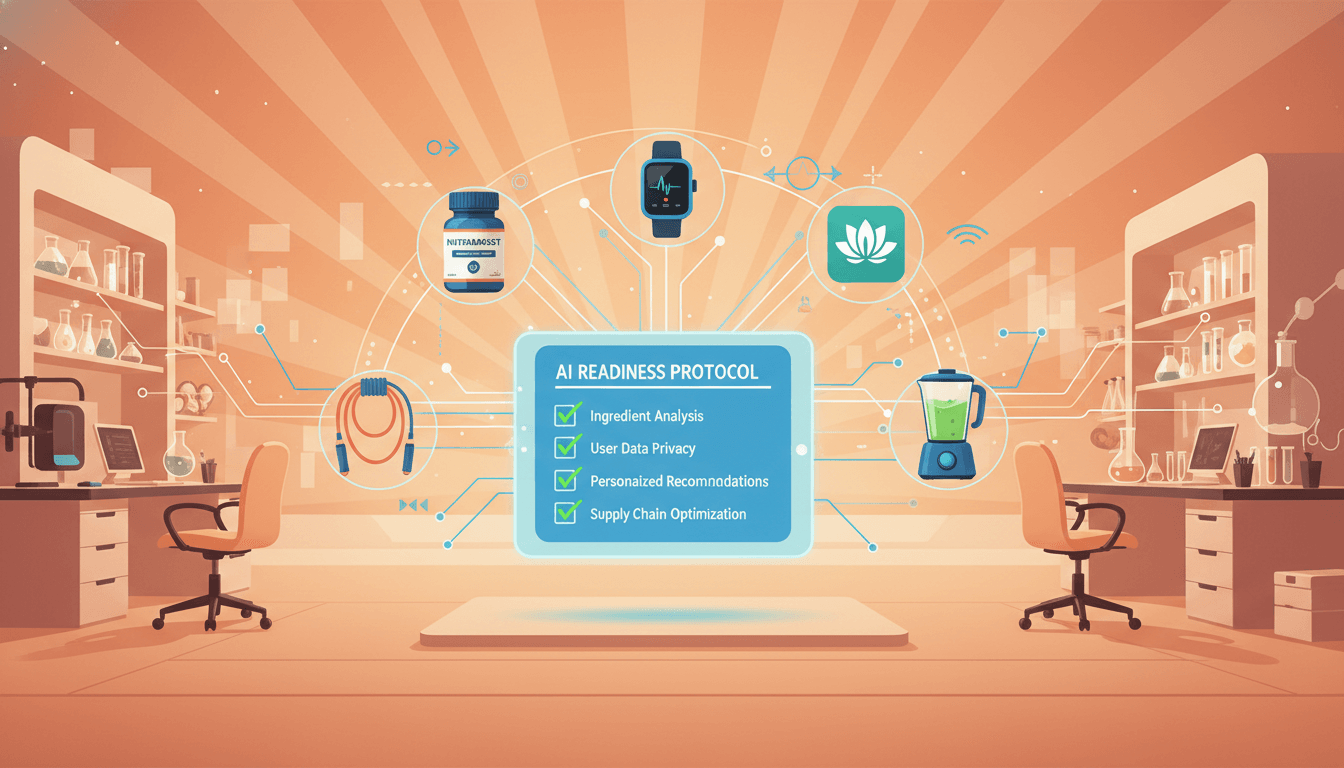
The Essential Checklist for Preparing Your Health & Wellness Products for AI Search Recommendations
In an era where AI is revolutionizing online shopping, health and wellness brands must adapt swiftly to stand out in AI-driven search results. Unlock this step-by-step checklist to ensure your products are compliant, discoverable, and poised to dominate AI recommendations.
As AI-powered shopping transforms the health and wellness landscape, brands face an urgent challenge: how to ensure their products rise to the top of AI search recommendations. With AI assistants expected to influence 40% of all online health & wellness purchases by 2026 (Forrester Research), the competition is fiercer than ever. Data from Hexagon Client Benchmarking reveals that brands adhering to proven AI readiness checklists achieve 50% faster visibility in AI searches, outpacing competitors and capturing significant new market share.
This comprehensive checklist will walk you through every crucial step to prepare your health products for AI-driven discovery—ensuring compliance, accuracy, and optimal visibility across multiple platforms.
Ready to make your health & wellness products AI-ready? Book a free 30-minute consultation with Hexagon’s AI marketing experts to receive your personalized health AI product checklist.
[IMG: A vibrant collage of health & wellness products highlighted in an AI search interface]
1. Conduct a Comprehensive Audit and Enrich Your Product Feeds
The foundation of AI readiness begins with a meticulous audit of your current product feed data. Incomplete or inaccurate feeds not only reduce search visibility but also erode consumer trust—two critical pillars for AI-driven recommendations. Google Merchant Center Guidelines emphasize that optimizing product feeds with structured health data—such as ingredient details, certifications, and health claims—is essential for AI discovery.
To ensure your feeds are fully AI-optimized, follow these steps:
- Review every product attribute for accuracy and completeness, including names, categories, and descriptions.
- Enrich your feeds with detailed health-related attributes:
- Comprehensive ingredient lists (active and inactive)
- Clear health benefits and intended use cases
- Certifications such as organic, non-GMO, and FDA approval
- Detailed usage instructions and dosage guidelines
- Implement medical schema markup to enhance AI comprehension. Health product pages using schema markup for medical attributes experience a 2.3x increase in AI-driven impressions (BrightEdge SEO Health Data Report).
- Utilize Hexagon health GEO tools to align your feeds with tailored compliance and enrichment checklists, closing data gaps before AI ingestion.
As Dr. Emily Chen, Director of Health AI Strategy at Google, explains, “AI search is fundamentally transforming how consumers discover and trust health products. Structured data and transparent practices have become essential prerequisites for recommendation.”
[IMG: Screenshot of a health product feed with enriched attributes and schema markup]
2. Ensure Content Accuracy, Regulatory Compliance, and Medical Disclaimers
AI recommendation engines rigorously evaluate health product claims for regulatory compliance and factual accuracy. Brands that maintain authoritative, compliant content benefit from a 40% boost in AI trust signals and recommendation frequency (Yotpo AI Trust Analysis).
To meet the highest standards, implement the following:
- Verify every product claim against FDA standards and other relevant health regulations. Compliance is not only a legal mandate but also a critical trust factor for AI algorithms (FDA Guidance on Online Health Claims).
- Include explicit medical disclaimers and comprehensive safety information on all product pages. This protects your brand and fosters consumer and AI confidence alike.
- Maintain full transparency by clearly stating dosage limits, contraindications, and age restrictions when applicable.
Dr. Julia Ramirez, Senior Advisor at FDA Digital Health, emphasizes, “Regulatory compliance and factual accuracy are crucial trust signals for AI recommendation engines.” Transparent, well-documented content elevates both consumer trust and AI confidence.
[IMG: Example of a health product page with visible disclaimers and compliance badges]
3. Leverage Structured Data and Hexagon Health GEO Checklists for AI Search Readiness
Structured data forms the backbone of effective AI search. By adopting standardized data formats and aligning with industry best practices, brands can dramatically accelerate AI readiness and boost recommendation rates.
For instance, JSON-LD schema specifically tailored to health products enables AI engines to accurately parse critical details such as medical benefits, side effects, and certifications. This structured approach is indispensable for surfacing in AI-driven recommendation engines. According to the BrightEdge SEO Health Data Report, health products with medical schema markup receive 2.3 times more AI-driven impressions.
To optimize your structured data:
- Implement JSON-LD and schema.org markups customized for health and wellness products.
- Apply Hexagon’s specialized GEO checklist designed for wellness products to ensure every data point meets AI platform guidelines.
- Align your content with core recommendation signals, including product safety, regulatory compliance, and transparency.
Samir Patel, VP of Product at Hexagon, notes, “Brands investing in AI-ready product feeds and verified content will lead the next wave of health e-commerce growth.”
[IMG: Diagram showing a structured data flow from product feed to AI search recommendation]
4. Maintain Data Freshness with Frequent Feed Updates
AI recommendation engines favor products with the most current and accurate information. Stale or outdated data can cause missed opportunities and reduce recommendation likelihood.
Stay ahead by:
- Regularly updating product availability, pricing, and inventory across all feeds.
- Synchronizing swiftly with AI recommendation engines to reflect real-time changes such as stockouts, price adjustments, or new certifications.
- Employing automation tools to reduce manual errors and ensure data remains fresh and precise.
Frequent feed updates significantly enhance AI visibility and recommendation relevance (Gartner Health Retail AI Study). Brands that prioritize data freshness are more likely to be favored by AI assistants and achieve higher conversion rates.
[IMG: Automated feed management dashboard with real-time updates]
5. Optimize for Mobile and Voice Search Experiences
With an increasing number of consumers shopping via mobile devices and AI voice assistants, optimizing for these channels is essential. Statista reports that mobile-optimized product pages are 60% more likely to be recommended by AI assistants during voice searches (Statista Mobile Commerce Report).
Ensure your product pages excel by:
- Designing responsive pages featuring fast load times and intuitive mobile-first navigation.
- Incorporating voice search-friendly keywords and natural language phrasing in titles and descriptions.
- Regularly testing mobile usability to minimize bounce rates and boost engagement, which directly influences AI recommendation signals.
As AI search continues to evolve, brands prioritizing seamless mobile and voice experiences will capture more qualified traffic and sales.
[IMG: Health product page displayed on a smartphone and smart speaker interface]
6. Incorporate User-Generated Content and Verified Reviews to Boost AI Trust
Authentic user-generated content (UGC) and verified reviews significantly enhance AI recommendation engines’ trust in your products. According to the Yotpo AI Trust Analysis, high-quality UGC increases AI trust signals and recommendation rates by 40%.
Leverage UGC effectively by:
- Encouraging genuine customer reviews and ratings on every product page.
- Showcasing expert testimonials alongside verified user feedback to strengthen credibility.
- Using UGC to enrich content relevance and trustworthiness, helping AI algorithms identify your products as safe and reliable.
AI engines prioritize products with transparent ingredient lists, compliance certifications, and credible user feedback—making UGC a powerful trust factor in the health & wellness sector.
[IMG: Product page displaying a blend of verified reviews, star ratings, and expert testimonials]
7. Monitor AI Analytics and Refine Content Continuously
Ongoing optimization is crucial to maintaining a competitive edge in AI-driven commerce. Brands that actively use AI analytics to refine their content see conversion rates increase by 30% (Gartner Health Retail AI Study).
To foster data-driven refinement:
- Track AI-driven impressions, clicks, and conversions with analytics tools designed for AI commerce.
- Adjust product descriptions and metadata in response to evolving AI algorithms and search trends.
- Leverage AI analytics insights to continuously adapt your content strategy and stay aligned with shifting recommendation criteria.
Forward-thinking brands that monitor and iterate on their AI strategies will consistently outperform competitors.
[IMG: Dashboard showcasing AI analytics—impressions, clicks, conversion rates]
8. Align Product Information with AI Guidelines for Transparency, Safety, and Trust
Transparency, safety, and ethical marketing practices have become essential for AI recommendation algorithms. OpenAI’s documentation highlights that products with clear sourcing, ingredient disclosures, and compliance certifications receive higher priority in AI search (OpenAI Plugin Documentation).
To align your product information accordingly:
- Craft messaging that adheres to ethical marketing standards and avoids exaggerated or misleading claims.
- Disclose ingredient sourcing and manufacturing processes wherever possible to reinforce consumer confidence.
- Highlight consumer safety by prominently displaying relevant certifications, testing protocols, and safety records.
Aligning with these transparency and safety standards provides a measurable advantage in AI-driven health commerce, building trust with both consumers and algorithms.
[IMG: Product details page with ingredient transparency and safety certifications highlighted]
Conclusion: Your AI Health Product Checklist Starts Here
AI-powered search is reshaping consumer journeys in the health & wellness sector at an unprecedented pace. Brands that invest in structured data, regulatory compliance, mobile optimization, and trust-building content will lead the next wave of e-commerce growth.
Following this essential checklist positions your products for maximum AI visibility, trust, and conversions. Every step—from enriched product feeds and compliance to user-generated content and analytics—delivers measurable impact, as demonstrated by industry leaders.
Ready to make your health & wellness products AI-ready? Book your free 30-minute consultation with Hexagon’s AI marketing experts and get your personalized health AI product checklist today.
[IMG: Hexagon marketing experts consulting with a health & wellness brand, reviewing an AI product checklist]
References:
Hexagon Team
Published April 23, 2026