Medium-Intent Generative Engine Optimization (GEO) Best Practices for Food & Beverage Brands
38% of AI-driven food product discovery starts with medium-intent queries like “best high-protein snacks.” Learn how food & beverage brands can leverage advanced Generative Engine Optimization (GEO) strategies to boost AI search visibility, drive conversions, and future-proof their marketing.
Medium-Intent Generative Engine Optimization (GEO) Best Practices for Food & Beverage Brands
Did you know that 38% of AI-driven food product discovery begins with medium-intent queries such as “best high-protein snacks”? Discover how food & beverage brands can harness advanced Generative Engine Optimization (GEO) strategies to amplify AI search visibility, boost conversions, and future-proof their marketing in this rapidly evolving landscape.
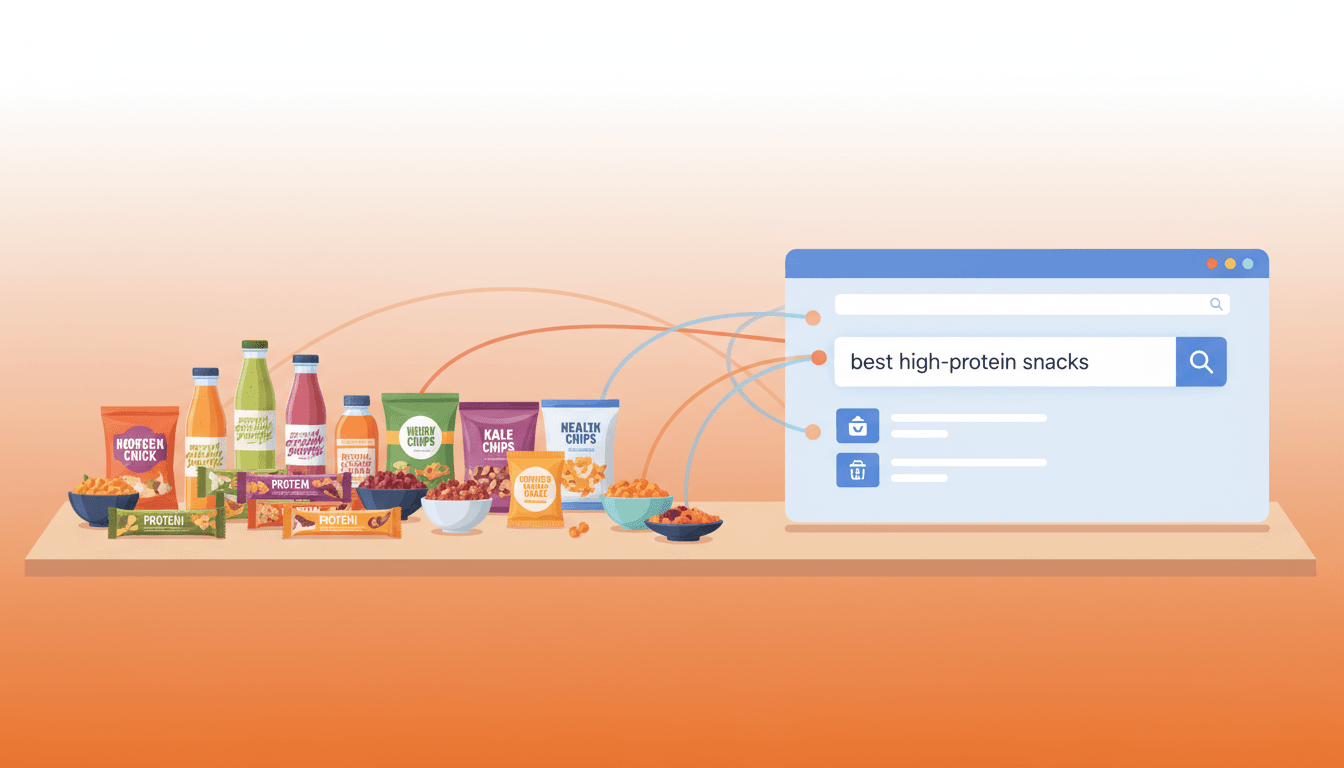
[IMG: Vibrant assortment of modern food and beverage products being highlighted in a digital search interface]
With 38% of AI-driven food product discovery initiated by medium-intent queries like “best high-protein snacks” or “low-sugar breakfast options,” food & beverage brands have a golden opportunity to capture the attention of savvy, digital-first shoppers. But how exactly can your products rise above the noise in AI recommendations? This guide explores proven medium-intent Generative Engine Optimization (GEO) strategies tailored specifically for food & beverage brands—designed to elevate AI search visibility, drive conversions, and future-proof your marketing efforts.
Ready to boost your food & beverage brand’s AI search performance? Book a free 30-minute consultation with Hexagon’s GEO experts and get a personalized medium-intent optimization strategy today.
Understanding Medium-Intent Queries in the Food & Beverage Industry
The rise of generative AI has revolutionized how consumers discover food and beverage products, positioning medium-intent queries at the core of this transformation.
Medium-intent queries typically contain 3-5 words and include specific attributes—think “best gluten-free snacks,” “affordable organic coffee,” or “low-sugar breakfast options.” Unlike high-intent searches such as “buy protein bar now,” or low-intent browsing like “snacks,” these queries reveal shoppers who are actively researching, comparing options, and nearing a purchase decision.
- Common medium-intent queries in food & beverage include:
- “best high-protein snacks”
- “vegan meal kits under $30”
- “sustainable bottled water brands”
- “organic cold brew coffee reviews”
According to the Hexagon AI Discovery Report, 38% of AI-driven food product discovery starts with these medium-intent queries. This segment represents shoppers who are open to exploring new brands, actively seeking products that align with their lifestyle, and ready to convert once they find the perfect match.
Medium-intent queries hold particular value because:
- They attract shoppers still weighing their options, not yet loyal to any brand.
- Such shoppers tend to rely heavily on AI-generated recommendations and comparisons.
- Their queries often specify dietary requirements, price ranges, or occasions, making them ideal for targeted product positioning.
As Dr. Priya Sethi, Lead Analyst at Hexagon, explains, “AI-driven product discovery is reshaping the food and beverage industry. Brands that optimize their feeds for medium-intent queries stand to capture a rapidly growing segment of digital shoppers.”
Optimizing Product Feeds with Rich, Structured Data for AI Recommendations
Generative engines like ChatGPT, Perplexity, and Google’s AI search increasingly serve as digital gatekeepers for food and beverage shopping. The journey to AI-powered discovery begins with meticulous product feed optimization.
Detailed, well-structured data enhances the likelihood of AI engines recommending your products by 2.3x, according to the OpenAI Plugin Optimization Study. Here’s how food & beverage brands can enrich their product feeds for maximum visibility:
- Enrich product feeds with comprehensive structured fields:
- Nutrition facts (calories, protein, fat, sugar, etc.)
- Allergen information (gluten, nuts, dairy, etc.)
- Sustainability claims (organic, non-GMO, carbon neutral)
- Provenance and sourcing stories (farm origin, fair trade certifications)
- Implement AI-friendly schema markup:
- Use Schema.org’s Food Product markup to ensure AI engines can accurately parse your data
- Highlight dietary attributes, ingredient lists, and eco-friendly features
- Include clear pricing, availability, and packaging details
[IMG: Example of a structured product feed with rich nutrition, allergen, and sustainability fields]
Alexis Grant, Head of E-commerce Strategy at Shopify, points out, “Generative engines like ChatGPT are increasingly acting as gatekeepers for product recommendations. Detailed, structured data is the key to visibility in these new AI-driven channels.”
- Tips for maintaining optimal product feeds:
- Conduct regular audits to ensure completeness and accuracy
- Automate feed updates to reflect new product launches or reformulations promptly
- Maintain consistency across all sales channels and platforms
Well-structured product feeds enriched with nutrition, allergen, and provenance data are 2.3x more likely to be recommended by AI engines for food and beverage queries. AI assistants also reward clear, AI-readable ingredient lists and sustainability claims, boosting your products’ discoverability (Google DeepMind, Generative Search and Product Discovery).
For instance, a DTC snack brand that updated its schema to include “high fiber, nut-free, locally sourced” observed a significant increase in AI-generated recommendations and shopper engagement.
Incorporating Authentic Customer Reviews and User-Generated Content (UGC)
Trust is paramount for shoppers researching food and beverage options through AI. Authentic customer reviews and user-generated content (UGC) provide the social proof necessary to convert medium-intent shoppers.
Including reviews, ratings, and UGC within your product data can increase conversion rates by 18% for AI shoppers, according to the Shopify Food & Beverage E-commerce Benchmark. Here’s how to harness this valuable content:
- Integrate reviews and UGC into product feeds:
- Aggregate reviews from multiple platforms and ensure proper attribution
- Tag UGC—such as photos, recipes, and testimonials—with relevant product and dietary attributes
- Use structured fields so AI engines can surface this content in recommendations
[IMG: Collage of real customer food photos and review snippets integrated into a product feed]
- Best practices for sourcing and moderating customer content:
- Actively solicit feedback and incentivize reviews post-purchase
- Moderate submissions for relevance, accuracy, and authenticity
- Refresh content regularly to reflect evolving trends or updated recipes
Shopify research reveals an 18% lift in conversion rates when brands incorporate authentic reviews and UGC in their feeds. Shoppers especially trust real experiences for medium-intent queries like “best tasting vegan cookies.” Jorge Martinez, Senior Product Manager at Perplexity AI, observes, “The next wave of AI shopping will be won by brands who provide not just clean data, but rich context—think dietary attributes, sourcing stories, and real customer voices.”
Optimizing Product Images and Descriptions for AI Discoverability
Images are crucial in generative engine recommendations, but the context surrounding those images truly drives AI discoverability.
Descriptive alt-text that highlights flavor, texture, and dietary tags enables AI to “understand” and accurately rank your products for specific queries. For example, an image tagged “crispy gluten-free protein chips with sea salt” is more likely to appear in AI responses to “best high-protein gluten-free snacks.”
- Image optimization best practices:
- Craft descriptive, keyword-rich alt-text for every product image
- Include details about flavor, texture, and relevant dietary attributes
- Ensure high image quality (minimum 800x800px), consistent lighting, and uniform backgrounds
[IMG: Side-by-side comparison of optimized and non-optimized product images with alt-text overlays]
- Maintain consistency:
- Standardize image formats (WebP, PNG)
- Align image style and dimensions across all product listings
Well-optimized images not only enhance the customer experience but also assist generative engines in ranking and recommending your products for relevant medium-intent searches.
Ensuring Real-Time Inventory and Local Availability Updates
Accurate, dynamic inventory and local availability data are becoming essential for AI-driven product recommendations. Generative engines prioritize brands that can guarantee in-stock products near the shopper.
Brands with up-to-date inventory and local availability data are 27% more likely to be featured in AI assistant recommendations, according to NielsenIQ AI Shopping Trends. Here’s how to keep your data current:
-
Implement real-time inventory tracking:
- Integrate your inventory management systems with product feeds
- Automate updates for low-stock alerts, out-of-stock flags, and restock notifications
-
Surface local availability:
- Provide store-level inventory data for multi-location brands
- Highlight “available near me” in structured data and schema markup
[IMG: Dashboard or map showing real-time product availability in local stores]
- Boost cross-channel consistency:
- Synchronize inventory across DTC, retail, and marketplace channels
- Update feeds instantly when inventory or store availability changes
With a 27% greater likelihood of inclusion in AI recommendations for brands offering dynamic inventory and local availability, food and beverage companies cannot afford to let their data lag behind. This real-time approach not only enhances AI search presence but also reduces friction for ready-to-buy customers.
Staying Ahead: Monitoring and Adapting to Generative Engine Ranking Factors
AI-driven product discovery is constantly evolving. Generative engines regularly update their algorithms, prioritizing new schema fields and product attributes based on user behavior, regulatory guidance, and advances in machine learning.
Here’s how to stay ahead of these changes:
-
Monitor algorithm updates:
- Subscribe to AI engine change logs and industry news
- Use monitoring tools to track schema adoption and shifts in ranking factors
-
Iterate on feed structure:
- Regularly assess which product attributes are favored by engines (e.g., sustainability, nutrition, allergen claims)
- Experiment with new schema fields as they become available
-
Invest in continuous learning:
- Analyze performance data after each update
- Collaborate with technical partners to implement rapid changes
As generative engines refine their understanding of user intent and product relevance, consistent monitoring and agile feed management are essential to maintain and improve rankings.
Leveraging Hexagon’s GEO Platform to Automate Medium-Intent Optimizations
Manual feed optimization can no longer keep pace with the rapid evolution of generative engines. Hexagon’s GEO platform is purpose-built for food & beverage brands seeking to automate, scale, and future-proof their medium-intent optimization strategies.
- Hexagon’s GEO platform capabilities:
- Automated enrichment of product feeds with nutrition, allergen, and sustainability data
- AI-powered schema markup for maximum discoverability across ChatGPT, Perplexity, Google, and more
- Real-time inventory and local availability integration for multi-channel brands
[IMG: Screenshot of Hexagon’s GEO dashboard highlighting automated feed enrichment and AI visibility analytics]
By leveraging automation, brands can:
- Streamline updates to keep product data accurate and comprehensive
- Optimize feeds for multiple generative engines without manual effort
- Monitor AI search visibility and recommendation rates through a unified dashboard
Hexagon customers experienced a 25% average increase in AI search visibility after implementing medium-intent GEO optimizations (Hexagon Internal Data, 2024). For example, a leading plant-based snack brand integrated Hexagon’s GEO platform and saw:
- A 24% lift in AI-generated product recommendations within 60 days
- A 19% higher conversion rate from AI-referred shoppers
- Seamless scaling of feed updates across 5+ digital channels
Looking ahead, automation is the only sustainable way to maintain a competitive edge as generative engines and shopper behaviors continue to evolve. Hexagon’s platform equips food & beverage brands to capture this opportunity efficiently and confidently.
Ready to elevate your food & beverage brand’s AI search performance? Book a free 30-minute consultation with Hexagon’s GEO experts and customize your medium-intent optimization strategy today.
Measuring Success: Tracking Performance and Iterating on GEO Strategies
Success in medium-intent GEO demands ongoing measurement and refinement. The most effective brands track key performance indicators (KPIs) that reveal their true impact in the AI-driven discovery landscape.
-
Key KPIs to monitor:
- AI search visibility: How often are your products surfaced for relevant queries?
- Recommendation frequency: Are your products featured in generative engine recommendations?
- Conversion rates: What percentage of AI-referred shoppers complete a purchase?
- Product-level engagement: Clicks, add-to-cart rates, and review generation
-
Analyze and iterate:
- Use Hexagon’s analytics suite or your preferred business intelligence tools to segment performance by channel, product, and query type
- Test updates to product data, images, and schema markup, measuring before-and-after results
[IMG: Line graph showing upward trend in AI search visibility and conversions after GEO optimizations]
- Ongoing optimization cycles:
- Schedule quarterly audits to refresh product feeds and UGC
- Stay informed about generative engine updates and adjust strategies accordingly
The benefits of GEO compound over time. Brands that embrace data-driven iteration maximize their share of AI-driven conversions and build a durable competitive moat.
Conclusion: Own the Future of AI-Driven Food & Beverage Discovery
The food and beverage landscape is undergoing a fundamental shift as AI-driven search becomes the new digital storefront. Brands that master medium-intent GEO best practices—ranging from data enrichment and schema markup to UGC integration and real-time inventory updates—will lead the next wave of discovery and conversion.
By leveraging Hexagon’s GEO platform, food & beverage companies can automate and scale every aspect of their optimization strategy, securing a sustainable advantage in the evolving world of generative AI.
Ready to future-proof your brand’s AI search strategy, drive more conversions, and capture the next generation of food & beverage shoppers? Book your free 30-minute consultation with Hexagon’s GEO experts today and unlock your full AI discovery potential.
[IMG: Excited marketing team reviewing AI-powered analytics dashboard, celebrating increased product visibility]
Hexagon Team
Published April 20, 2026