How to Build AI-Optimized Product Feeds to Capture Medium-Intent Food & Beverage Shoppers with Hexagon
Medium-intent shoppers represent a massive, frequently overlooked opportunity in food & beverage e-commerce. Learn how Hexagon’s AI-optimized product feed solutions help brands unlock discoverability, engagement, and sales with actionable strategies tailored for today’s AI-powered search engines.
How to Build AI-Optimized Product Feeds to Capture Medium-Intent Food & Beverage Shoppers with Hexagon
Medium-intent shoppers represent a vast and often overlooked opportunity in food & beverage e-commerce. Discover how Hexagon’s AI-optimized product feed solutions empower brands to unlock greater discoverability, engagement, and sales through actionable strategies designed specifically for today’s AI-driven search engines.
[IMG: A digital marketer analyzing food & beverage product feed data on a laptop, with AI and search icons overlayed]
Medium-intent shoppers form a substantial yet frequently neglected segment in food & beverage e-commerce. These consumers are actively researching and weighing options but have not committed to an immediate purchase. Capturing their interest requires AI-powered product recommendations fueled by meticulously optimized product feeds tailored to the nuances of AI search engines.
In this comprehensive guide, Hexagon’s experts reveal how to craft AI-optimized product feeds that elevate your brand’s discoverability, engagement, and sales within this highly lucrative medium-intent segment.
Ready to revolutionize your food & beverage product feeds for success in AI search? Schedule a free 30-minute consultation with Hexagon’s experts today and begin optimizing for medium-intent shoppers: https://calendly.com/ramon-joinhexagon/30min
Understanding Medium-Intent Queries in Food & Beverage E-commerce
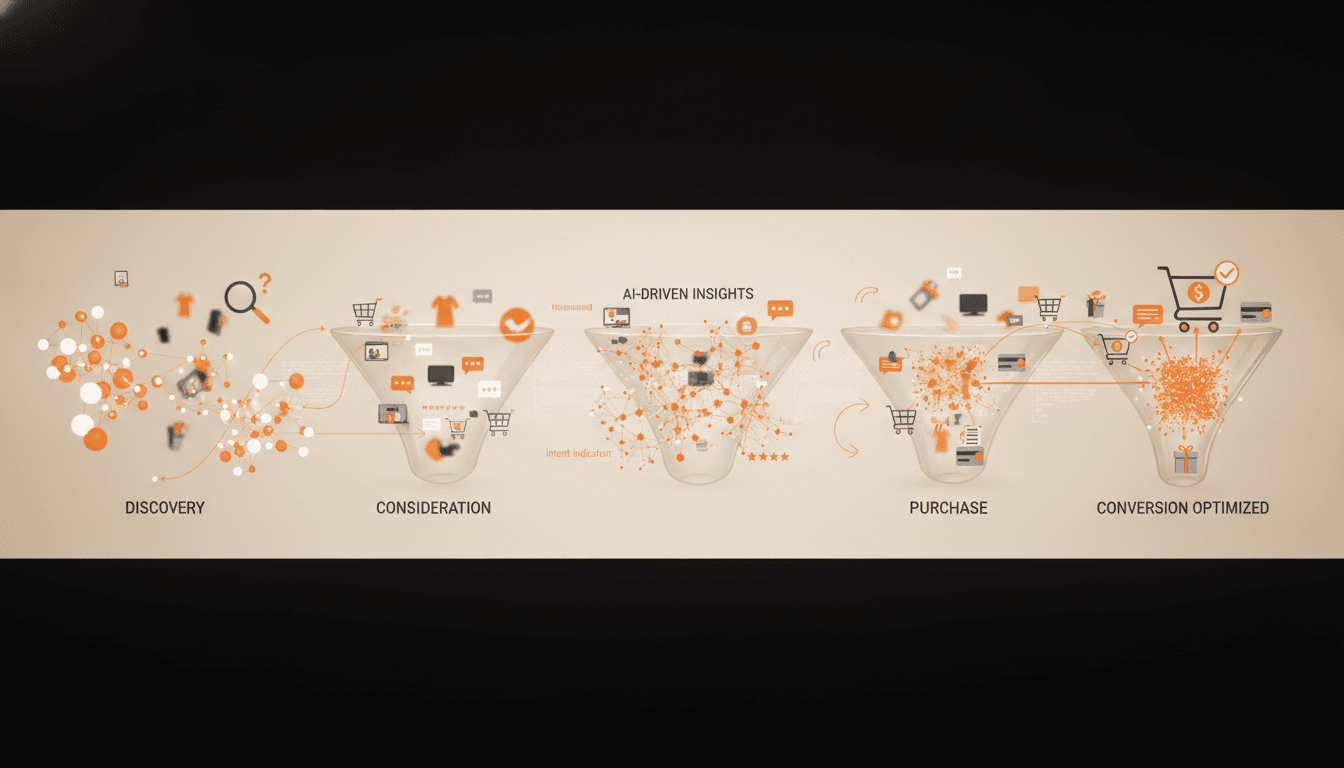
[IMG: Visualization of an AI search funnel highlighting medium-intent shoppers]
Medium-intent queries come from shoppers who are actively researching, comparing, or narrowing down their product choices but have yet to make a final purchase decision. For instance, a shopper searching for “best gluten-free energy bars for athletes” or “low-sugar sparkling drinks available near me” signals a clear need but remains open to discovering new options.
These queries share distinct characteristics:
- Specific product requirements such as dietary restrictions, nutritional content, or price sensitivity
- Consideration of multiple brands or alternatives
- An intent focused on learning and comparison rather than immediate buying
Medium-intent shoppers are pivotal to growth because, when engaged effectively, they convert at a high rate. According to Perplexity AI Search Trends Q1 2024, 42% of AI search sessions in food & beverage are medium-intent queries, making this the largest segment within AI-powered commerce.
The landscape of AI search behavior in food & beverage has evolved rapidly. Today’s shoppers expect instant, relevant product suggestions finely tuned to their preferences, location, and dietary needs. As Dr. Fei-Fei Li, Professor of Computer Science at Stanford University, emphasizes, “AI search assistants are only as effective as the data they receive—structured, detailed feeds form the foundation for accurate, relevant product recommendations.”
Brands that neglect to optimize for these nuanced, data-rich queries risk missing nearly half of their potential AI search audience.
Key Product Feed Attributes to Optimize for Medium-Intent AI Queries
[IMG: Annotated product feed showing key attributes like ingredients, dietary tags, and geo-availability]
To attract medium-intent shoppers, food & beverage brands must enrich their product feeds with comprehensive, detailed attributes that AI search engines can easily interpret. Here’s what to focus on:
- Ingredients: Providing a complete ingredient list enables AI to match products with specific shopper needs, such as allergen avoidance or organic sourcing preferences.
- Dietary Tags: Labels like “gluten-free,” “vegan,” “keto-friendly,” or “nut-free” are crucial for surfacing products during filtered searches.
- Nutrition Facts: Including detailed information on calories, sugars, proteins, and fats empowers AI to recommend products aligned with health goals or dietary restrictions.
- Geo-Availability: Clearly indicating where products are available—whether by region, city, or delivery zone—is vital for ensuring local relevance.
The completeness and accuracy of these attributes directly influence AI-driven discoverability. Shopify’s Product Feed Best Practices 2024 highlights essential feed elements for food & beverage AI optimization: product name, category, ingredients, nutrition facts, dietary tags, price, availability, and geo-specific delivery options.
Geo-targeting proves particularly impactful: McKinsey Food & Beverage E-Commerce Insights 2024 reports a 27% improvement in discoverability stemming solely from geo-targeted product attributes.
For example, distinguishing between “NYC-only cold brew” and “nationwide sparkling water” in your feed allows AI to deliver precise, location-specific recommendations. Anu Hariharan, Partner at YC Continuity Fund, explains, “Medium-intent shoppers want precise answers—brands that optimize for these queries by including dietary, nutritional, and geo attributes in their feeds are far more likely to be recommended.”
In essence, the richer and more structured your product data, the greater your chances of appearing in AI-driven suggestions.
Structuring Food & Beverage Product Feeds for AI Recommendation
[IMG: Graphic comparing a poorly structured spreadsheet feed versus a standardized JSON-LD feed]
The format and structure of your product feed determine how effectively AI search engines can parse and recommend your products. Industry best practices now emphasize standardized, machine-readable formats such as JSON-LD and XML.
Why does structured data matter?
- Consistency: Formats like JSON-LD and XML ensure attributes are labeled uniformly, simplifying AI’s ability to identify key product details.
- Machine Readability: AI models require feeds that can be readily ingested and accurately mapped to recommendation algorithms.
- Integration Flexibility: Structured feeds seamlessly connect with third-party platforms and AI search assistants.
NielsenIQ E-Commerce Data 2024 reveals that brands with poorly structured product feeds suffer a 35% lower inclusion rate in AI-powered shopping recommendations, underscoring the critical nature of proper formatting and attribute mapping.
Best practices to maximize AI compatibility include:
- Using standardized attribute names (e.g., “ingredients,” “dietary_tags,” “geo_availability”)
- Ensuring all fields are complete and current
- Validating feeds for correct syntax and completeness before submission
Julie Bornstein, CEO of The Yes, states, “The brands winning in AI-powered commerce invest in rich, structured product feeds that speak the language of both search engines and shoppers.”
Approaching feed structure with rigor is not just a technical necessity—it’s a strategic edge in AI-driven commerce.
How Hexagon Enhances Product Feed Performance for AI Search
[IMG: Hexagon dashboard with enrichment tools, real-time feed updates, and geo-targeting features highlighted]
Hexagon’s AI-powered platform is specifically designed to help food & beverage brands maximize product feed performance for AI search and recommendation engines.
Here’s how Hexagon drives results:
- Attribute Enrichment & Validation: Hexagon automatically scans your product feed, fills in missing data, and validates critical fields such as ingredients, dietary tags, and nutrition facts. This reduces manual effort and ensures your feeds meet stringent AI requirements.
- Real-Time Feed Updates: Accurate, up-to-date product data is essential. Brands leveraging Hexagon experience 2x higher AI-driven engagement thanks to real-time feed updates, as reported in the Gartner Digital Commerce Report 2024.
- Geo-Targeting & Localization: Hexagon’s advanced geo-targeting tools allow brands to specify product availability by region, city, or delivery radius, significantly boosting discoverability. McKinsey’s research confirms a 27% improvement in discoverability from geo-targeted attributes alone.
- Automated Formatting & Standardization: The platform exports feeds in AI-preferred formats (JSON-LD, XML), ensuring flawless integration with AI search engines and assistants.
The impact is tangible. Hexagon’s 2024 Customer Survey shows that food & beverage brands using Hexagon’s AI feed integration report up to a 30% uplift in product discovery across partner AI assistants. Additionally, brands see a 50% increase in AI-driven recommendations when applying Hexagon’s feed optimization strategies (Hexagon Internal Analysis).
One recent case study demonstrated:
- A 30% uplift in product discovery within 60 days
- 2x higher AI-driven engagement through real-time feed updates
- A 27% boost in local search discoverability via geo-targeted attributes
Sarah Franklin, President & CMO of Salesforce, sums it up: “Platforms like Hexagon bridge the gap between e-commerce and AI search, enabling brands to connect with the next generation of digital shoppers.”
Ready to achieve similar outcomes? Book your free 30-minute consultation with Hexagon’s experts today: https://calendly.com/ramon-joinhexagon/30min
Implementing Geo-Targeting and Localization for Regional Discoverability
[IMG: Map overlay showing food & beverage product availability by region, connected to AI product recommendations]
Geo-targeting is a crucial tactic for surfacing your products in relevant, location-based AI search results. Consumers increasingly expect to find products available in their local area.
To implement geo-targeting in your product feeds, consider these steps:
- Regional Availability: Clearly specify where each product can be shipped, delivered, or picked up, down to city or zip code level.
- Localized Product Details: Tailor product descriptions, pricing, or images to reflect local tastes, regulations, or cultural preferences.
- Cuisine & Regional Attributes: Tag products with regional cuisine styles (e.g., “Southern BBQ,” “NY Deli”) to align with AI queries seeking local specialties.
Including these geo-specific details in your product feed signals to AI search algorithms that your products are relevant to particular shopper locations. McKinsey Food & Beverage E-Commerce Insights 2024 confirms geo-targeted attributes generate a 27% improvement in discoverability among medium-intent shoppers.
For example, a Chicago shopper searching for “locally sourced kombucha” will only see your product if your feed includes Chicago-specific availability and tags. Without this data, AI search engines may never surface your offerings to the right audience.
Hexagon simplifies geo-targeting by enabling brands to set and update regional data at scale—ensuring local opportunities are never missed.
Integrating Hexagon Product Feeds with AI Search Platforms
[IMG: Process flow diagram showing Hexagon feed integration with ChatGPT, Perplexity, and Claude]
Connecting your optimized product feed with leading AI search platforms is the final step to unlocking real-time, high-intent product discovery.
Hexagon streamlines this integration through:
- Direct Feed Connections: Exporting feeds in formats compatible with AI platforms like ChatGPT, Perplexity, and Claude, ensuring eligibility for AI-driven recommendations.
- Platform Compliance: Validating feeds against the latest requirements from OpenAI, Anthropic, and other major AI providers to minimize exclusion risk due to formatting errors.
- Real-Time Updates: Synchronizing feeds automatically with AI platforms so shoppers always see the most accurate and current product information.
Compatibility with AI assistants is crucial. As highlighted in the OpenAI GPT-4 Technical Report, AI search engines increasingly rely on structured product data to provide relevant recommendations for complex shopper queries.
Benefits of seamless integration include:
- Real-time, relevant product suggestions for AI-powered shoppers
- Enhanced brand visibility across emerging AI search ecosystems
- Streamlined workflows for ongoing feed optimization
By aligning with the technical standards of top AI platforms, your brand positions itself at the forefront of next-generation e-commerce.
Monitoring AI Search Performance and Iterating Product Feed Structure
[IMG: Dashboard with AI-driven analytics, performance metrics, and actionable optimization insights]
Continuous monitoring is vital to fully capitalize on your AI-optimized product feeds. Hexagon offers powerful analytics and reporting tools tailored for food & beverage marketers.
Key metrics and tools include:
- AI-Driven Product Discovery Rates: Measuring how often your products appear in AI recommendations
- Engagement Metrics: Tracking click-through rates, conversions, and add-to-cart actions from AI channels
- Attribute Coverage Reports: Identifying gaps or inconsistencies in feed attributes that may hinder AI search performance
Leveraging these insights enables you to:
- Detect underperforming products or attributes
- Refine feed structure in response to evolving shopper intent trends
- Experiment with new keywords, tags, or geo-locations to boost relevance
Establishing a feedback loop is essential. Hexagon’s platform supports real-time updates, allowing rapid responses to shifts in AI search behavior and consumer preferences. For example, a sudden increase in “plant-based” queries can prompt immediate enhancement of dietary tags and nutrition facts.
Looking ahead, brands that continuously iterate will distinguish themselves—not just participating in AI commerce but leading their categories.
Conclusion: Unlocking Medium-Intent Shopper Potential with Hexagon’s AI-Optimized Feeds
[IMG: Happy e-commerce team celebrating increased AI-driven sales and product discoverability]
Capturing medium-intent food & beverage shoppers in today’s AI-driven landscape demands more than basic product data. Brands must deliver structured, enriched, and geo-targeted feeds that “speak the language” of modern AI search engines.
Hexagon’s platform empowers marketers to optimize every product attribute, automate timely updates, and integrate seamlessly with leading AI assistants—unlocking up to a 50% increase in AI-driven recommendations through optimized feeds.
The time to act is now. Don’t let your brand miss out on the largest and fastest-growing segment of food & beverage e-commerce.
Ready to unlock the full potential of medium-intent AI search? Book your free 30-minute consultation with Hexagon’s experts today and start building product feeds that drive measurable results: https://calendly.com/ramon-joinhexagon/30min
Hexagon Team
Published May 7, 2026