Building AI-Optimized Product Feeds for Medium-Intent Food & Beverage Shoppers with Hexagon
Unlock exponential growth by transforming your product feeds for the AI era. Discover how Hexagon automates and enriches your food & beverage listings to engage and convert medium-intent shoppers—faster, smarter, and at scale.
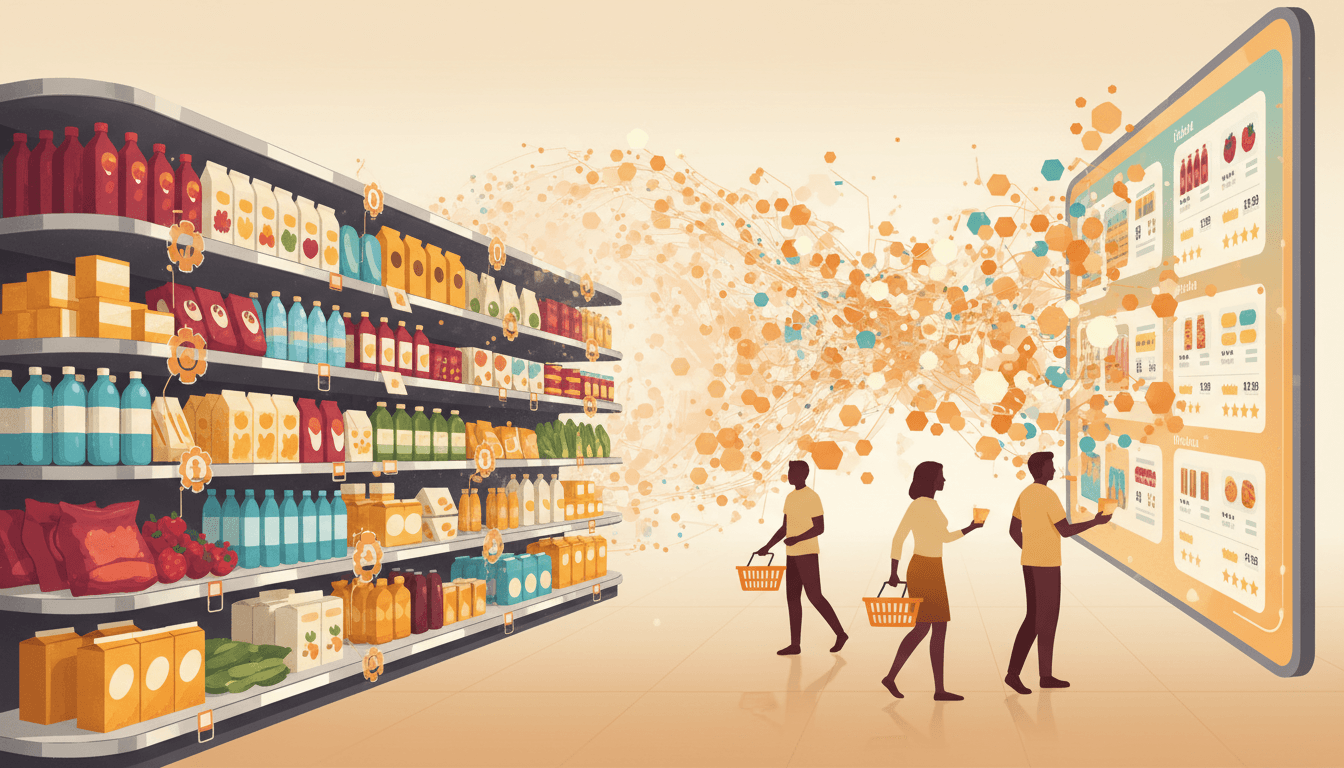
Building AI-Optimized Product Feeds for Medium-Intent Food & Beverage Shoppers with Hexagon
Unlock exponential growth by transforming your product feeds for the AI era. Discover how Hexagon automates and enriches your food & beverage listings to engage and convert medium-intent shoppers—faster, smarter, and at scale.
In an era dominated by AI-driven shopping experiences, capturing the attention of medium-intent food and beverage shoppers is crucial for your brand’s growth trajectory. These shoppers aren’t just casually browsing—they are actively evaluating their options but require precise, relevant information presented in an AI-friendly format to make a purchase decision. Unfortunately, many brands fall short, struggling to create product feeds that satisfy the complex demands of AI recommendation engines. This gap results in missed opportunities and inefficient ad spend.
Enter Hexagon. Our platform specializes in automating and optimizing AI-optimized product feeds tailored specifically for medium-intent food & beverage shoppers. The result? Increased visibility, enhanced engagement, and higher sales—all achieved with less manual effort and greater precision.
Ready to elevate your food & beverage product feeds for AI-driven growth? Book a free 30-minute consultation with Hexagon’s experts to get started.
[IMG: A frustrated food & beverage marketer reviewing a cluttered spreadsheet, with an AI-powered dashboard overlay showing improved metrics]
Understanding Medium-Intent Food & Beverage Shoppers and Their Decision Journey
Medium-intent shoppers occupy a pivotal position in the food and beverage e-commerce ecosystem. These consumers have moved beyond casual browsing but haven’t yet committed to a purchase. They seek detailed, relevant information to guide their choices—often comparing products, scrutinizing reviews, and searching for attributes that align with their dietary preferences.
For food & beverage brands, this segment represents a significant growth opportunity. According to Google Retail Insights, medium-intent shoppers are 2.5x more likely to engage with enriched product listings compared to low-intent browsers. Their decision-making journey typically involves:
- Searching by category, dietary need, or specific ingredients
- Comparing nutrition facts, allergens, and certifications
- Reading customer reviews and ratings to assess real-world satisfaction
Yet, these shoppers are also the most likely to abandon their journey if your product data is incomplete or poorly formatted for AI engines. As Lila Brown, Director of Commerce Data at Google, highlights, “Completeness and accuracy of product data are now paramount—not just for traditional search, but for AI that interprets and recommends products in real time.” This insight gains even more weight as AI-driven discovery becomes ubiquitous across voice assistants, search engines, and marketplaces.
Brands investing in AI-optimized, comprehensive product feeds are uniquely positioned to capture this medium-intent audience. By delivering targeted feeds with the most relevant and contextual information at the precise moment in the shopper’s journey, brands drive deeper engagement and higher conversion rates.
[IMG: Shopper comparing food products on a mobile device, with highlighted AI-powered recommendations]
Critical Product Feed Data Fields for AI Recommendation Engines
To thrive in AI-driven retail channels, a food & beverage product feed must extend well beyond basic titles and prices. Rich, structured feeds form the foundation of AI-powered product discovery. The richer the context you provide, the more effectively AI assistants can match your products to shopper intent," explains Priya Chandrasekaran, VP of AI Product at Hexagon.
Key data fields essential for AI-ready product feeds include:
- Product Title: Clear, descriptive names emphasizing key differentiators
- Description: Concise yet keyword-rich, highlighting use cases and benefits
- Pricing: Accurate, current, and inclusive of promotions
- Availability: Real-time stock status ensuring recommendations align with supply
For food & beverage brands, specialized fields are critical:
- Dietary Tags: Vegan, gluten-free, organic, kosher, and more
- Ingredient Lists: Transparent, detailed breakdowns for health-conscious consumers
- Allergen Information: Vital for safety and regulatory compliance
- Nutrition Facts: Calories, macronutrients, vitamins, and other essential data
Metadata and structured data formats significantly enhance AI discoverability:
- Schema.org Markup: Enables AI engines to parse and highlight granular product details
- JSON-LD Formatting: Preferred for seamless integration with Google Merchant Center and other platforms
- Custom Fields: Certifications, sourcing details, and sustainability badges
The impact of comprehensive feeds is measurable. Brands that complete all relevant fields experience a 60% increase in product visibility in AI search engines (eMarketer). Additionally, Shopify Data Best Practices identify critical AI optimization fields as product title, description, nutrition facts, dietary tags, price, availability, reviews/ratings, and high-resolution images.
A well-structured, fully enriched feed delivers tangible benefits:
- Ensures eligibility for AI-driven recommendations across major platforms
- Answers key shopper questions upfront, reducing friction for medium-intent buyers
- Boosts presence in niche, attribute-driven searches (e.g., “vegan protein bars, nut-free”)
[IMG: Annotated product feed example highlighting key AI-optimized fields, such as dietary tags and nutrition facts]
The Role of GEO Feeds and Regional Compliance for Food & Beverage Brands
Navigating regional regulations, labeling standards, and consumer preferences is a complex challenge for food & beverage brands. GEO feeds, or geo-targeted product feeds, allow brands to tailor product data to specific regions, ensuring compliance and relevance simultaneously.
GEO feeds provide:
- Localized product information: Language, currency, and measurement units customized per market
- Region-specific inventory and availability: Display only products that can be shipped or sold in the given area
- Regulatory data: Ingredients, allergens, and labeling aligned with local standards
Megan Lee, Head of Industry, Food & Beverage at Shopify, emphasizes, “For food & beverage, geo-targeted and attribute-rich feeds ensure compliance and relevance—two areas where AI assistants are particularly discerning.”
The benefits of GEO feeds include:
- Enhanced AI recommendation relevance: AI engines prioritize products matching a shopper’s location and legal requirements
- Increased customer trust: Transparent, regionally accurate information reduces confusion and builds loyalty
- Simplified compliance management: Automated updates lower the risk of regulatory infractions
As AI-powered commerce grows increasingly global and personalized, regional feed optimization will become indispensable for brands aiming to expand their reach.
[IMG: Map visualization showing different product listings and compliance labels for various global regions]
Leveraging Hexagon to Automate Product Feed Optimization
Managing product feeds manually is unsustainable in today’s AI-first marketplace. Hexagon’s platform harnesses artificial intelligence to automate feed optimization, ensuring your food & beverage products are perpetually AI-ready—regardless of catalog size or complexity.
Hexagon’s AI feed optimization features include:
- Automated data enrichment: Completes missing fields, adds structured metadata, and crafts descriptions optimized for AI parsing
- Real-time feed updates: Synchronizes inventory, pricing, and availability to keep recommendations accurate
- Multi-platform integration: Connects seamlessly with leading e-commerce systems like Shopify, WooCommerce, and BigCommerce (Hexagon Product Documentation)
For instance, a major food brand using Hexagon achieved a 2x faster time-to-market for new products by automating feed creation and updates. Furthermore, Hexagon’s internal data reveals that brands utilizing AI-optimized feeds experience a 40% increase in AI-driven product recommendations.
Hexagon revolutionizes your product feed workflow by offering:
- Set-and-forget automation: Shift focus from tedious spreadsheet edits to product innovation
- Consistent feed quality: Minimize human error and ensure all products meet AI channel standards
- Scalability across regions: GEO feed support enables compliant, localized feeds at scale
Jared Silver, Retail Technology Analyst at Forrester, observes, “Automated feed optimization tools are becoming essential for brands aiming to thrive in the new era of conversational and AI-driven commerce.”
In essence, Hexagon empowers you to:
- Launch new products quickly, complete with all necessary data and compliance details
- Sustain high feed quality as your catalog expands
- Unlock greater AI-driven product discovery and recommendations
[IMG: Hexagon platform dashboard showing AI-powered feed optimization in progress]
Best Practices for Feed Enrichment: Images, Reviews, Dietary Tags, and More
The effectiveness of a product feed hinges on the quality of its content. For food & beverage brands, enhanced images and user-generated content are vital to capturing medium-intent shoppers and establishing trust.
Top feed enrichment practices include:
- High-quality images: Multiple, high-resolution photos showcasing packaging, ingredients, and serving suggestions
- User-generated content: Embedding customer reviews and ratings directly within product feeds
- Comprehensive dietary tags: Clearly marking vegan, gluten-free, allergen-free, and other niche attributes
- Regular audits and updates: Keeping data current, accurate, and reflective of seasonal trends
NielsenIQ reports that product feeds featuring enhanced images and user-generated content see a 25% increase in click-through rates among food & beverage shoppers. This is particularly critical for medium-intent audiences who depend on visual cues and social proof to finalize their choices.
These enrichment tactics accelerate engagement by:
- Images: Highlighting product details, shelf life, and recipe ideas to inspire shoppers
- Reviews & ratings: Building credibility and alleviating buyer hesitation
- Dietary tags: Surfacing products in niche, high-intent AI searches
- Ongoing updates: Adapting swiftly to new regulations and evolving consumer trends
For example, a gluten-free snack brand incorporated customer reviews and refreshed product images, leading to a notable increase in both AI-driven recommendations and conversions.
Looking ahead, brands prioritizing feed enrichment will continue to outpace competitors, especially as AI engines grow more adept at parsing and showcasing rich content.
[IMG: Side-by-side comparison of a basic and an enriched product feed, highlighting images, reviews, and dietary tags]
Measuring and Iterating: KPIs for AI-Driven Product Feed Performance
Optimizing product feeds is not a one-time task but an ongoing journey. The most successful food & beverage brands continuously measure, analyze, and refine their feeds to maximize impact in AI-driven channels.
Key performance indicators (KPIs) to monitor include:
- Number of AI recommendations served: Reflects how often AI assistants surface your products to shoppers
- Click-through rate (CTR): Gauges shopper engagement with your listings
- Conversion rate: Tracks the percentage of shoppers completing purchases after interacting with your feed
Brands can track these KPIs using analytics tools integrated into e-commerce platforms, complemented by custom dashboards from feed optimization partners like Hexagon.
Continuous optimization delivers results by helping you:
- Identify gaps: Detect incomplete data or underperforming products for targeted fixes
- Benchmark performance: Compare against industry standards and past performance
- Test and refine: Experiment with enrichment tactics—like updated images or seasonal tags—and measure their effect
For instance, a beverage company observed a consistent rise in AI-driven recommendations and conversions after implementing regular feed audits using Hexagon’s analytics suite.
As AI commerce evolves, brands embracing data-driven iteration will be best equipped to capture medium-intent shoppers and maximize ROI.
[IMG: Analytics dashboard displaying KPIs for AI-driven product feed performance]
Conclusion: Feed Optimization Is the Linchpin of AI-Driven Growth
In the rapidly evolving landscape of AI-powered commerce, food & beverage brands can no longer rely on incomplete or generic product feeds. Medium-intent shoppers demand rich, contextual information, and AI recommendation engines require structured, up-to-date data to present the right products at the right time.
With Hexagon’s AI-optimized feed automation, brands achieve:
- A 2x faster time-to-market for new products
- Up to 40% more visibility and engagement in AI-driven channels
- Consistent, compliant, and enriched feeds delivered at scale
As Priya Chandrasekaran of Hexagon states, “Rich, structured product feeds are the lifeblood of AI-driven retail discovery.” Brands investing in feed optimization today will become the market leaders of tomorrow.
Ready to transform your food & beverage product feeds for AI-driven growth? Book a free 30-minute consultation with Hexagon’s experts to get started.
[IMG: Confident marketer reviewing improved sales and engagement metrics on a Hexagon dashboard]
Empower your brand for AI-driven commerce. Let Hexagon automate, enrich, and scale your product feeds—so you can focus on what matters most: delighting your customers and driving growth.
Hexagon Team
Published May 5, 2026