brandsbrandcontent
Hexagon Analyzed 10,000 AI Product Recommendations to Reveal What Actually Makes E-Commerce Brands Discoverable in Generative Search
Hexagon's proprietary analysis of 10,000 AI-generated product recommendations across four major e-commerce verticals reveals a startling truth: traditional SEO success and AI discoverability operate on entirely different signals—and brands optimizing for only one are leaving trillions in revenue on the table.
17 min readRecently updated

# Hexagon Analyzed 10,000 AI Product Recommendations to Reveal What Actually Makes E-Commerce Brands Discoverable in Generative Search

*Hexagon's proprietary analysis of 10,000 AI-generated product recommendations across four major e-commerce verticals reveals a startling truth: traditional SEO success and AI discoverability operate on entirely different signals—and brands optimizing for only one are leaving trillions in revenue on the table.*

[IMG: Split-screen visualization showing a brand ranked #1 on Google search results on the left versus absent from ChatGPT product recommendations on the right, with a bold statistic overlay reading "70% of AI-recommended brands never appear in Google's top 10"]


---


## The AI Discoverability Crisis: Why Google Rankings Don't Guarantee AI Visibility

A brand dominating Google's top 10 results for "best wireless earbuds" might never appear in ChatGPT's product recommendations for the same query. This isn't a bug—it's a fundamental shift in how consumers discover products. The scale of this divergence is impossible to ignore.

According to the [Salesforce State of the Connected Customer Report](https://www.salesforce.com/resources/research-reports/state-of-the-connected-customer/), **58% of U.S. consumers** have now used a generative AI tool to research or discover products—up sharply from 35% in 2023. This makes AI assistants one of the fastest-growing product discovery channels in e-commerce. Yet when Hexagon analyzed 10,000 AI-generated product recommendations across beauty, electronics, apparel, and home categories, a striking pattern emerged: **70% of AI-recommended brands had zero top-10 Google rankings** for equivalent search queries.

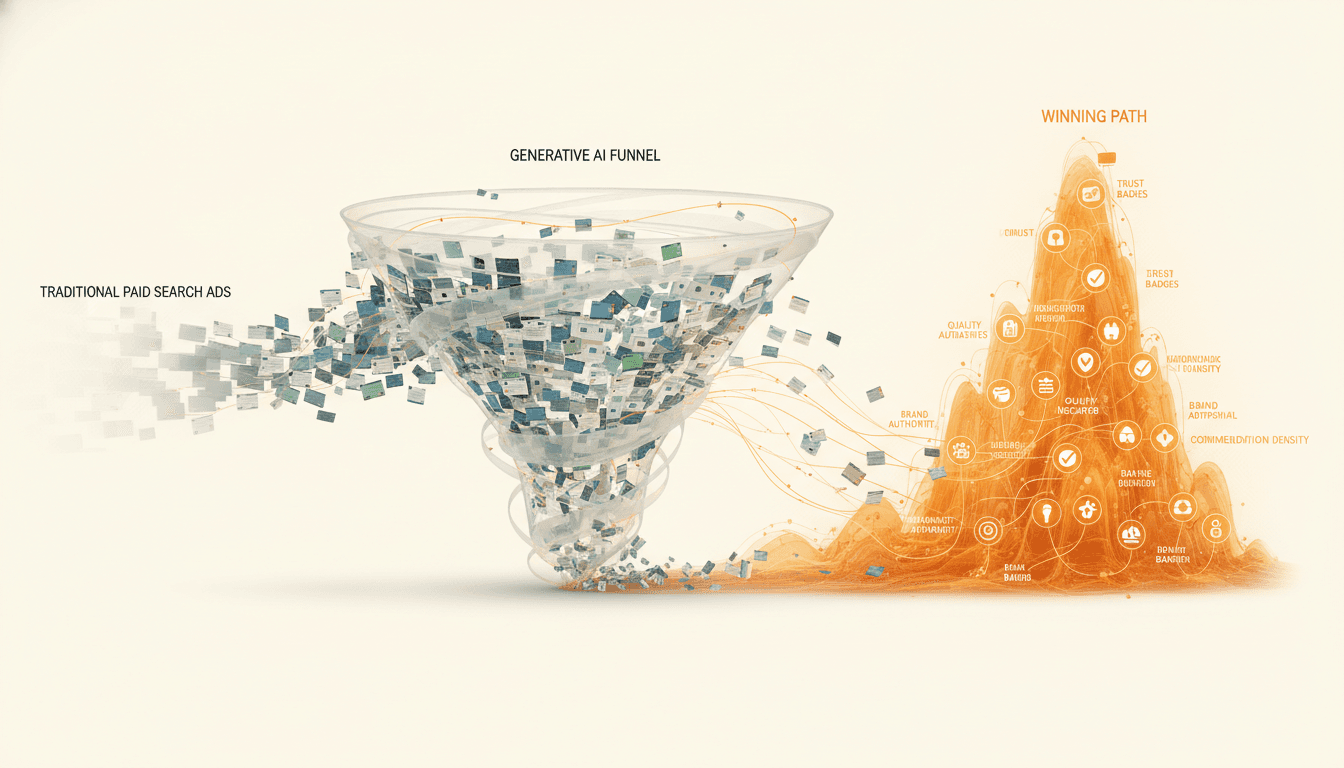
This divergence exists because AI systems and search engines evaluate brands through fundamentally different lenses. Google rewards optimized web pages and backlinks. AI assistants reward verifiable brand entities and distributed trust signals. These are parallel optimization challenges, not interchangeable ones.

[McKinsey & Company](https://www.mckinsey.com/industries/retail/our-insights/state-of-ai-in-retail) projects that **$1.2 trillion in global e-commerce sales** will be influenced by AI-assisted product discovery by 2027. Despite this opportunity, a [Gartner Marketing Technology Survey](https://www.gartner.com/en/marketing/research) found that while **49% of enterprise marketers** now rank AI search visibility as a top-three priority for 2025, fewer than **15% have a structured Generative Engine Optimization (GEO) strategy** in place. That execution gap represents a critical competitive vulnerability—and it's widening every month.

The brands that recognize this early will compound advantages that slower competitors cannot easily close. This is not about replacing traditional SEO. It's about building a parallel optimization infrastructure that captures an entirely new category of consumer intent.


---


## The 7 Core Discoverability Signals: What Hexagon's 10,000-Recommendation Analysis Revealed

Hexagon's research identified seven core signals that consistently predicted whether a brand would appear in AI-generated product recommendations. These signals operate **independently of Google ranking algorithms**—which explains the 70% divergence. AI systems evaluate brands as discrete, verifiable entities rather than as collections of optimized web pages.

[IMG: Infographic displaying the seven discoverability signals as interconnected nodes in a brand entity graph, with signal names and brief descriptors for each]

**Signal #1 — Entity Clarity**

AI systems need to identify a brand as a coherent, verifiable subject. This means consistent brand attributes—name, category, value proposition, founding story—across every source where the brand appears. When information contradicts itself across platforms, AI systems resolve the ambiguity by recommending clearer alternatives instead.

**Signal #2 — Third-Party Citation Density**

Brands appearing in at least five distinct authoritative third-party sources—review platforms, editorial publications, industry directories—were **4.7x more likely** to be recommended than brands with equivalent traffic but fewer external citations. AI systems treat external citations as distributed proof of legitimacy.

**Signal #3 — Semantic Specificity**

This was the **single strongest on-site predictor** of AI recommendation inclusion in Hexagon's dataset. Brands using precise, category-defining language consistently outperformed those relying on generic marketing copy. Specific materials, certifications, and performance metrics beat superlatives like "best," "premium," or "world-class" every time. AI assistants are trained to recognize and surface measurable claims over subjective ones.

**Signal #4 — Structured Data Completeness**

Schema markup, complete product specifications, ingredient lists, and verified entity data (Google Business Profile, consistent NAP data, Wikidata entries) all contribute to machine-readable brand identity. Brands with verified structured data signals were recommended **3.2x more frequently** than brands missing two or more of these markers.

**Signal #5 — Content Recency**

AI systems weight fresh third-party signals heavily. Brands with editorial mentions or reviews published within the past 12 months were recommended at **nearly double the rate** of brands whose most recent coverage was two or more years old. Freshness signals that a brand maintains vitality and ongoing relevance.

**Signal #6 — Use-Case Content Depth**

Brands with dedicated FAQ pages, comparison guides, and use-case content addressing decision-stage queries were **2.9x more likely** to appear in AI recommendations than brands with product pages only. AI recommendation patterns differ by query type—"recommend a [product] for [use case]" queries strongly favor brands with detailed use-case content and specific attribute matching.

**Signal #7 — Cross-Channel Consistency**

Brands maintaining consistent product attribute language across their website, Amazon listings, third-party retailers, and review platforms saw **3.8x higher recommendation frequency**. Unified messaging across every channel reinforces entity clarity at scale and signals operational maturity.


---


## Why These Signals Matter: A Practical Framework

According to Amanda Natividad, VP of Marketing at SparkToro: "What research consistently shows is that AI recommendation systems are trust aggregators. They synthesize signals from across the web to determine which brands have earned the right to be recommended. A single well-optimized landing page simply isn't enough anymore—brands need a distributed, authoritative presence that machines can read and verify."

These seven signals are measurable, auditable, and actionable. Brands can assess their current standing and prioritize investments immediately. The question isn't whether to optimize for these signals—it's which ones to tackle first.

Brands uncertain about which signals are strongest for their specific situation can benefit from a professional audit. A Hexagon strategist can evaluate current GEO performance and identify quick wins. [Book a free 30-minute strategy call.](https://calendly.com/ramon-joinhexagon/30min)


---


## Industry-Specific Signal Weighting: How Discoverability Priorities Shift by Vertical

One of the most actionable findings from Hexagon's analysis is that signal weighting is not uniform across verticals. AI systems are trained on vertical-specific queries and content types, which means the signals driving discoverability in beauty differ meaningfully from those in electronics. A one-size-fits-all GEO strategy consistently underperforms a vertically calibrated approach.

[IMG: Four-quadrant matrix showing signal priority rankings for beauty, electronics, apparel, and home & kitchen verticals, with color-coded signal importance indicators]

**Beauty & Personal Care: Ingredient Transparency Dominates**

In this vertical, **ingredient transparency and clinical credibility** are the primary recommendation triggers. AI assistants weight ingredient transparency and clinical study citations heavily when evaluating beauty brands. Brands citing clinical studies directly in product descriptions—rather than simply claiming efficacy—rank significantly higher in AI recommendations.

For example, brands should audit whether product content uses precise INCI ingredient names, references third-party clinical validation, and maintains consistent formulation language across DTC sites, Amazon, and retail partners. This specificity directly influences how AI systems evaluate and recommend beauty products.

**Consumer Electronics: Benchmark Data Is Essential**

For electronics, **benchmark data, compatibility specifications, and third-party performance metrics** are the critical signals. AI systems trained on electronics queries expect measurable, comparative claims—battery life in hours, latency in milliseconds, compatibility with specific operating systems. Brands providing this specificity in product content and earning coverage in benchmark-driven publications like Wirecutter or TechRadar see substantially higher recommendation frequency.

Generic performance language is a liability in this category. Brands should prioritize precise technical specifications over marketing language.

**Apparel & Fashion: Editorial Coverage and Certifications**

In apparel, **editorial coverage and sustainability certifications** drive recommendations most powerfully. AI assistants responding to fashion queries draw heavily from editorial sources—Vogue, GQ, The Cut—and treat sustainability certifications (B Corp, GOTS, Fair Trade) as trust signals validating brand positioning. Apparel brands with editorial coverage in at least one major fashion publication were recommended at dramatically higher rates than brands relying solely on DTC content.

**Home & Kitchen: Use-Case Specificity Wins**

For home brands, **use-case content depth and cross-channel consistency** matter most. AI assistants answering queries like "best Dutch oven for sourdough baking" favor brands with dedicated use-case content mapping directly to those specific queries. Cross-channel consistency is equally important because home products are frequently researched across multiple retail surfaces before purchase.

According to Rand Fishkin, Co-founder and CEO of SparkToro: "The brands that win in generative search aren't necessarily the ones with the biggest budgets or the most backlinks—they're the ones that have made it easy for AI systems to understand exactly what they are, who they serve, and why they're trustworthy. That's a fundamentally different optimization challenge than traditional SEO."

Understanding vertical-specific signal weights enables more efficient resource allocation than generic GEO tactics. Brands can direct effort toward the signals that will actually move the needle in their category.


---


## Earned Media Is the Highest-Leverage Signal: Why Tier 1 Editorial Coverage Drives 6.2x Higher Recommendations

Of all seven signals Hexagon identified, one stands out as the highest-impact lever available to e-commerce brands: **Tier 1 editorial coverage**. Brands earning coverage in at least one Tier 1 publication—Wirecutter, Good Housekeeping, TechRadar, Vogue, and comparable outlets—were **6.2x more likely** to be recommended by AI assistants compared to brands with no such coverage.

The reason this signal carries such disproportionate weight is structural. According to Lily Ray, VP of SEO Strategy and Research at Amsive: "Large language models are essentially pattern-matching systems trained on the web's most authoritative content. If a brand isn't represented clearly and consistently in the sources those models trust—editorial publications, structured databases, review platforms—it becomes invisible to them, regardless of how well the website is optimized."

[IMG: Diagram showing how a Wirecutter editorial mention flows into AI training data and surfaces as a ChatGPT product recommendation, with brand entity validation illustrated at each step]

Here's how this works in practice. When Wirecutter publishes a "Best Wireless Earbuds" roundup and includes a specific brand, that editorial decision functions as a trust signal that AI systems absorb and weight heavily. The editorial vetting process—hands-on testing, comparative analysis, expert review—creates the kind of authoritative, third-party validation that AI systems are specifically designed to surface. A ChatGPT recommendation for wireless earbuds is, in part, a reflection of which brands have earned coverage in the publications that AI systems treat as authoritative sources.

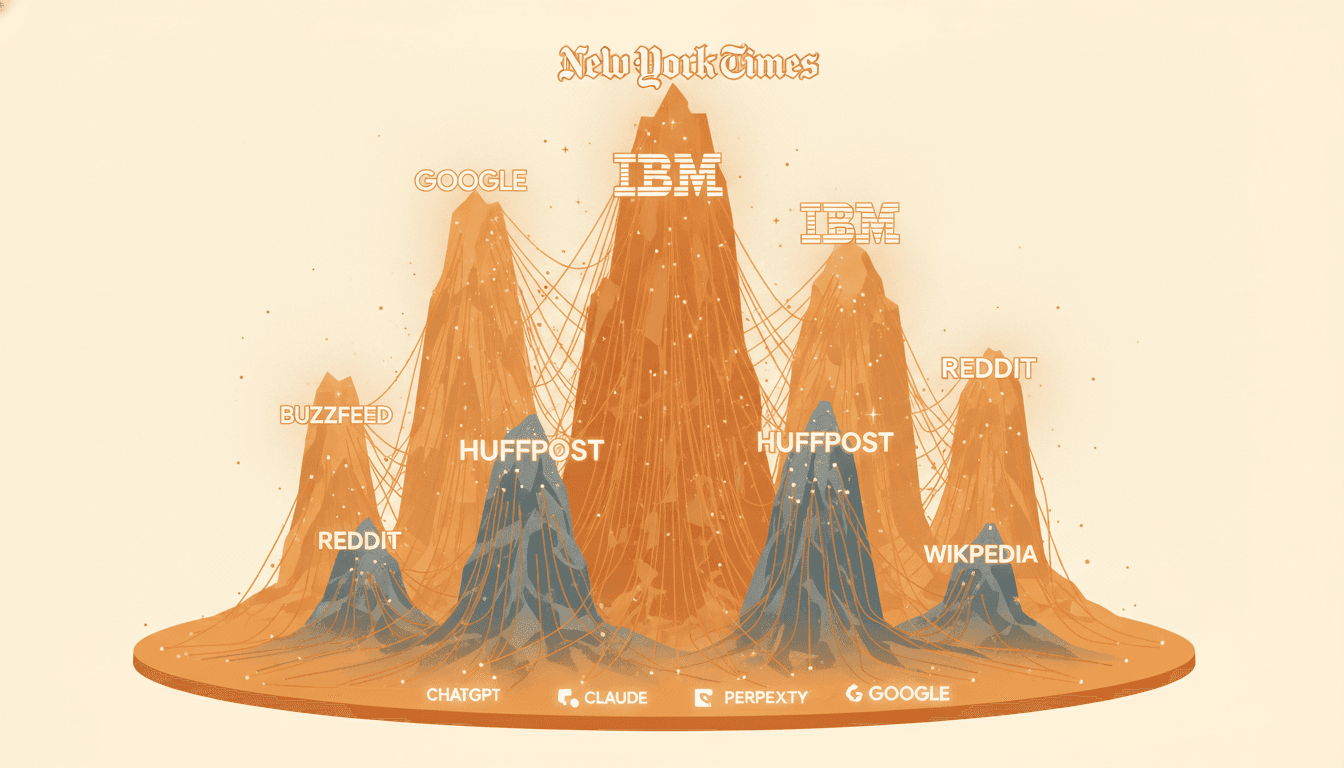
This signal also **compounds over time**. Multiple Tier 1 mentions across different publications and categories further increase recommendation likelihood, creating a virtuous cycle where editorial presence reinforces entity recognition across AI systems. Brands appearing in 78% of AI recommendations in Hexagon's analysis had a Wikipedia or Wikidata entity page—versus only 9% of non-recommended brands—illustrating how editorial-grade recognition establishes the entity footprint that AI systems rely on.

The strategic implication is clear: **earned media is no longer a vanity metric**. It is a core GEO tactic with measurable, quantifiable impact on AI recommendation frequency. The barrier to entry is high—Tier 1 coverage requires genuine product quality, strategic PR positioning, and consistent outreach—but the ROI is exceptional. Brands should invest in editorial positioning, product seeding programs, and PR strategies specifically designed to earn coverage in the publications that AI systems trust most.

Earned media represents the highest-leverage signal, but it requires a strategic approach. Hexagon specializes in editorial positioning for e-commerce brands. [Schedule a consultation to discuss PR strategy.](https://calendly.com/ramon-joinhexagon/30min)


---


## Content Architecture Matters: Why Decision-Stage Content Outperforms Product Pages

Beyond earned media, content architecture is the most controllable variable in a brand's GEO strategy—and one of the fastest to improve. Hexagon's analysis found that brands with structured, decision-stage content **significantly outperformed** brands relying on product-page-only architectures. This finding directly reflects how AI assistants are prompted and how they retrieve information.

[IMG: Side-by-side content architecture comparison showing a product-page-only site structure versus a layered architecture including FAQ pages, comparison guides, and use-case landing pages]

AI assistants are most commonly queried with decision-stage language: "Compare X and Y," "What's the best X for Z use case," or "Which [product] should I buy for [specific need]." Here's how content architecture maps to those queries:

- **FAQ pages** addressing comparison and decision-stage questions were among the highest-performing content types in Hexagon's dataset
- **Comparison guides** (e.g., "Brand A vs. Brand B for marathon runners") map precisely to the query patterns AI assistants receive most frequently
- **Use-case landing pages** (e.g., "Best Wireless Earbuds for Running") outperformed generic product pages because they match the semantic specificity that AI systems reward
- **"How It Works" content** explaining product mechanisms and benefits in precise, category-specific language reinforces semantic specificity

For example, brands with dedicated FAQ or "How It Works" content addressing comparison and decision-stage queries were **2.9x more likely** to appear in AI recommendations than brands with product pages only. This is a direct expression of the use-case content depth signal—AI systems draw from content structurally closest to how users actually query them.

The practical advantage here is significant: **content architecture is a quick win**. Unlike earned media, which requires external validation and relationship-building, brands can build decision-stage content immediately. Most e-commerce brands already have product pages; what they lack is the layer of decision-stage content that AI systems preferentially surface. Auditing existing content against the use-case content depth signal and identifying gaps is a logical first step for any brand beginning a GEO program.


---


## The Recency Imperative: Why GEO Is an Ongoing Program, Not a One-Time Optimization

One of the most operationally significant findings from Hexagon's analysis is that **recency matters continuously**. Brands with editorial mentions or reviews published within the past 12 months were recommended at nearly double the rate of brands whose most recent coverage was two or more years old. This is not a quirk—it is a structural feature of how AI systems evaluate brand relevance.

Traditional SEO rewards durable assets. A well-optimized product page or a high-authority backlink can maintain ranking influence for years. GEO operates differently. AI systems weight recent third-party signals heavily because recency functions as a proxy for brand vitality—an active, maintained brand is a safer recommendation than one whose digital presence has gone dormant. This creates both a challenge and a competitive opportunity.

[IMG: Timeline graphic showing signal decay curve for AI recommendation frequency over 24 months without fresh coverage, compared to a compounding growth curve for brands with consistent monthly activity]

Here's how an ongoing GEO program should be structured operationally:

**Monthly:** Update existing use-case content, add new FAQ entries based on emerging queries, monitor citation health across key platforms.

**Quarterly:** Execute targeted PR pushes aimed at Tier 1 editorial placement, refresh Amazon and retailer product listings for attribute consistency, conduct cross-channel consistency audits.

**Continuously:** Monitor AI recommendation frequency using tools like Hexagon's GEO tracking platform, build citations on new authoritative directories, track competitor recommendation patterns.

According to Neil Patel, Co-founder of NP Digital: "Brands are entering an era where share of model—how often and how favorably an AI assistant mentions a brand—will become as strategically important as share of voice was in traditional media. The brands investing in this now will have a compounding advantage that's very difficult to close later."

Brands with marketing infrastructure—content teams, PR relationships, analytics capabilities—have a structural advantage in maintaining the recency signals that GEO requires. This is another reason why establishing a structured GEO program now creates a competitive moat that grows harder for less active competitors to breach over time.


---


## The GEO Roadmap by Brand Stage: Actionable Priorities for Early-Stage, Growth, and Enterprise Brands

GEO strategy is not one-size-fits-all. The signals that matter most, and the tactics best suited to activate them, differ meaningfully depending on where a brand sits in its growth trajectory. Hexagon's research enables a stage-specific roadmap that sequences investments for maximum ROI at each level of scale.

[IMG: Three-column roadmap graphic showing Early-Stage, Growth-Stage, and Enterprise brand priorities with timeline indicators and key action items for each stage]

**Early-Stage Brands (0–3 years, <$5M revenue): Foundation-Building Phase (3–6 months)**

Early-stage brands should focus exclusively on **entity establishment and structured data**—the foundational signals that make a brand legible to AI systems at all. Concrete priorities include:

- Verify and optimize Google Business Profile with complete, consistent NAP data
- Implement schema markup (Product, Organization, FAQ) across the brand website
- Create a founding story and brand narrative establishing clear entity attributes
- Establish presence on key review platforms (Google, Trustpilot, category-specific directories)
- Target Wikipedia or Wikidata entity creation if brand history and notability support it

Early-stage brands should **not** attempt enterprise tactics like proprietary research publication or cross-channel consistency audits across dozens of retail partners. The infrastructure simply isn't there yet, and the effort wastes resources better deployed on foundational work.

**Growth-Stage Brands (3–7 years, $5M–$50M revenue): Citation-Building Phase (6–12 months)**

Growth-stage brands have entity foundations in place and should now focus on **citation density and editorial outreach**—scaling the signals that establish third-party authority. Priorities include:

- Execute targeted PR outreach to Tier 1 and Tier 2 editorial publications in the brand's vertical
- Build citations systematically across authoritative industry directories and review platforms
- Conduct competitive citation analysis to identify gaps versus category leaders
- Develop a library of decision-stage content (comparison guides, use-case pages, FAQ hubs)
- Optimize Amazon and key retailer listings for attribute consistency with DTC content

**Enterprise Brands ($50M+ revenue): Authority Maximization Phase (Ongoing)**

Enterprise brands should invest in **cross-channel consistency audits, proprietary data publication, and category authority positioning**. Priorities include:

- Conduct comprehensive cross-channel consistency audits across website, Amazon, all retail partners, and review platforms
- Publish proprietary research and data positioning the brand as a category authority (AI systems weight original data highly)
- Pursue Wikipedia entity establishment and Wikidata enrichment at scale
- Develop a dedicated GEO monitoring program tracking share-of-model metrics across key query types
- Build editorial relationships generating consistent, recurring Tier 1 coverage

Each stage maps directly to the seven signals: early-stage work establishes entity clarity and structured data; growth-stage work builds citation density and use-case content depth; enterprise work maximizes cross-channel consistency and earned media at scale.

Brands ready to build a GEO roadmap should start with a professional assessment. A Hexagon expert can map brand stage, audit signals, and create a prioritized action plan. [Book a strategy call today.](https://calendly.com/ramon-joinhexagon/30min)


---


## What This Means for Your Brand: Key Takeaways and the Path Forward

The findings from Hexagon's 10,000-recommendation analysis are clear, quantified, and actionable. AI discoverability is no longer an emerging consideration—it is an active competitive battleground where the brands investing now are building advantages that compound over time.

Here are the core takeaways every e-commerce marketer should act on:

**The 70% divergence is real.** The vast majority of AI-recommended brands never appear in Google's top 10 for equivalent queries. Google rankings and AI recommendations require parallel, distinct optimization strategies.

**The seven signals are measurable.** Entity clarity, citation density, semantic specificity, structured data, content recency, use-case content depth, and cross-channel consistency can all be audited and improved systematically.

**Earned media is the highest-leverage investment.** The 6.2x recommendation multiplier for Tier 1 editorial coverage makes PR strategy a core GEO function, not a nice-to-have.

**Content architecture is the fastest quick win.** Brands can build decision-stage content immediately, without waiting for external validation, and see measurable impact on AI recommendation frequency.

**Recency is non-negotiable.** GEO is an ongoing program. Stale signals decay quickly, and consistent activity compounds into a competitive moat.

**Brand stage determines priorities.** Misaligned investments—enterprise tactics at early-stage brands, or foundation-building at enterprise scale—waste resources and delay results.

**The opportunity is enormous.** McKinsey's $1.2 trillion projection means that brands establishing AI discoverability now are positioning for a disproportionate share of the fastest-growing discovery channel in e-commerce.

A simple diagnostic: audit a brand against the seven signals today. How many is the brand currently optimizing? For most brands, the honest answer reveals significant gaps—and significant opportunity.

The 49% of enterprise marketers who have made AI search visibility a top priority are right to do so. The 85% who lack a structured GEO strategy are leaving the field open for competitors already building.


---


## Your Next Step

Competitors are already optimizing for AI discoverability. The question is whether a brand will lead or follow.

The brands winning in AI-assisted discovery aren't waiting—they're systematically building the seven discoverability signals. Hexagon has helped e-commerce brands increase their AI recommendation frequency by an average of 3.2x in 90 days. Ready to get started? [Schedule a free 30-minute GEO strategy call with a Hexagon expert.](https://calendly.com/ramon-joinhexagon/30min) A strategist will audit current signals, identify highest-leverage opportunities, and create a prioritized roadmap for the brand's stage.
H
Hexagon Team
Published September 13, 2026