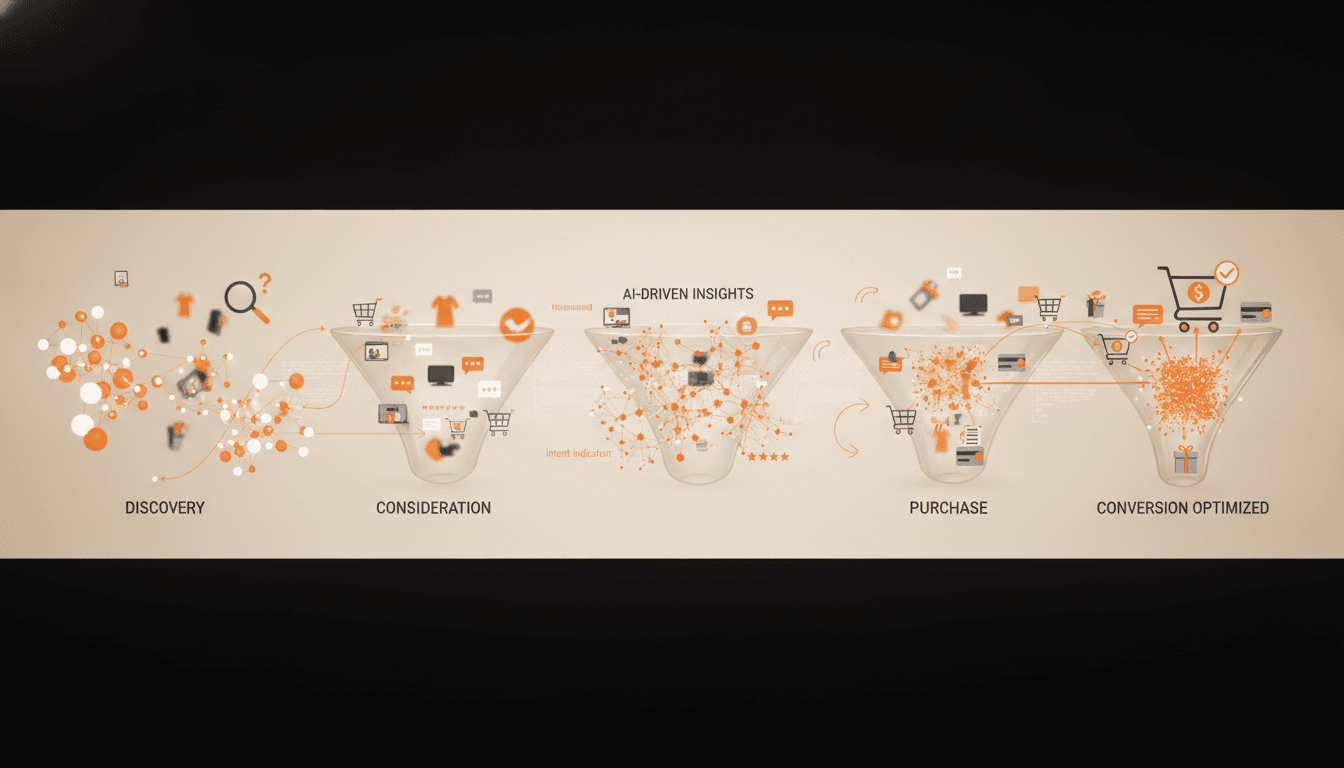
Building AI-Optimized Product Feeds to Capture Medium-Intent Food & Beverage Shoppers
Unlock the power of AI-driven product feeds to engage medium-intent food & beverage shoppers, boost AI meal planning visibility, and increase conversions. Discover actionable strategies for feed optimization, geo-targeting, and automation with Hexagon’s platform.

Building AI-Optimized Product Feeds to Capture Medium-Intent Food & Beverage Shoppers
Unlock the transformative potential of AI-driven product feeds to engage medium-intent food & beverage shoppers, elevate your brand’s visibility in AI meal planning platforms, and drive higher conversions. Explore actionable strategies for feed optimization, geo-targeting, and automation powered by Hexagon’s innovative platform.
In the rapidly evolving AI-driven food & beverage ecommerce landscape, medium-intent shoppers form a crucial yet often underappreciated segment. These consumers are actively exploring options but haven’t yet committed to a purchase, making their decisions highly influenced by AI-powered recommendations. The question is: are your product feeds optimized to capture this valuable audience? This guide reveals how AI-optimized product feeds—enriched with essential data fields and smart geo-targeting—can significantly boost your brand’s visibility in AI meal planning engines and increase conversions. Plus, discover how Hexagon’s platform simplifies and automates this process, positioning your brand as a preferred choice in AI-driven food shopping.
Ready to unlock greater AI recommendation visibility and capture medium-intent food shoppers? Book a free 30-minute consultation with Hexagon’s AI feed optimization experts today.
[IMG: Shoppers browsing AI-powered food & beverage recommendations on mobile devices]
Understanding Medium-Intent Shoppers in AI-Driven Food Ecommerce
Medium-intent shoppers occupy a pivotal space in the online food and beverage journey. They actively explore meal planning tools, compare product attributes, or seek inspiration for their next grocery order—but haven’t yet made a firm purchase decision. In the AI-driven ecommerce funnel, these shoppers bridge the gap between casual browsers and high-intent buyers.
AI technologies are reshaping how these consumers discover, evaluate, and select products. Recommendation engines like ChatGPT, Perplexity, and Google Shopping now influence over 38% of food & beverage ecommerce purchase decisions (Gartner, 2024). These AI platforms analyze vast amounts of product data to suggest meals, recipes, and grocery lists tailored to individual preferences.
Importantly, 50% of AI-driven food product queries come from medium-intent shoppers (McKinsey Digital, 2024). This segment is especially receptive to personalized recommendations and can shift their choices rapidly when presented with relevant, data-rich options. Brands that effectively target medium-intent shoppers stand to:
- Boost conversion rates by appearing at the “moment of inspiration”
- Engage consumers earlier in their purchase journey
- Distinguish themselves through enhanced visibility in AI-driven tools
As Sarah Kim, Director of E-Commerce Innovation at Forrester, observes, “Brands that treat their product feeds as structured, AI-ready data assets will win the next wave of food e-commerce discovery.” By understanding medium-intent shopper behaviors and triggers—and optimizing your feeds accordingly—your brand can transform curiosity into conversion.
[IMG: AI recommendation interface highlighting medium-intent shopper queries]
Key Data Fields to Improve AI Recommendation Visibility in Food Ecommerce
The cornerstone of AI visibility is the structure and richness of your product feed. Modern AI meal planning and recipe engines prioritize specific data fields that enable precise parsing and personalized recommendations.
Ensure your feeds include these critical fields valued by AI:
- Nutrition Facts: Detailed information on calories, macronutrients, vitamins, and minerals enables AI to filter products according to dietary preferences and health goals.
- Allergens: Clearly marked allergen information (e.g., nuts, dairy, gluten) is vital for safe, relevant recommendations.
- Cuisine Types: Identifying cuisines (e.g., Mediterranean, Asian, Vegan) helps AI suggest culturally appropriate recipes and meals.
- Preparation Time: Tags like “under 30 minutes” attract busy consumers and support time-based filtering.
- Dietary Tags: Labels such as Vegan, Keto, Paleo, Gluten-Free, and Low-Sodium are increasingly prioritized by AI meal recommendation engines (OpenAI Research, 2024).
- Serving Size: Accurate serving information aids portion planning and recipe scaling.
- Sustainability Claims: Certifications like Organic, Non-GMO, and Fair Trade resonate with environmentally conscious shoppers and AI platforms alike.
For instance, an optimized feed entry for a chickpea pasta might include:
- Product Name: Organic Chickpea Pasta
- Cuisine: Mediterranean
- Preparation Time: 9 minutes
- Dietary Tags: Vegan, Gluten-Free, High-Protein
- Allergen Information: Contains legumes
- Sustainability: USDA Organic, Non-GMO
Such comprehensive detail allows AI platforms to align product suggestions with user preferences and dietary needs, increasing the likelihood of recommendation and purchase.
Additionally, Schema.org Product and Recipe markup plays a pivotal role in enhancing AI assistant visibility. Lina Chao, Product Manager at Google Shopping, emphasizes, “Structured data and schema adoption are now table stakes—without them, food brands risk being invisible to AI assistants.” By implementing Schema.org’s Product and Recipe schemas, brands empower AI parsing engines to accurately interpret ingredients, nutritional values, preparation instructions, and more.
Structured data benefits AI recommendation accuracy by:
- Increasing inclusion in recipe and meal planning queries
- Reducing ambiguity for AI and voice assistants
- Enhancing discoverability across multiple platforms
Feeds enriched with these metadata fields have demonstrated up to a 40% increase in AI recommendation occurrence (Hexagon Internal Data, 2024), translating directly into higher engagement and sales.
[IMG: Visual illustration of key product data fields in an AI-optimized food product feed]
Implementing GEO Product Feed Optimization for Localized AI Relevance
Geo-targeting is a powerful tool to enhance product feed relevance for both AI engines and local consumers. Regional tastes, ingredient availability, and dietary trends all shape how AI recommends food and beverage products at the local level.
Geo-targeted optimization delivers several advantages:
- Boosts conversion rates by highlighting locally available products
- Increases AI recommendation frequency for region-specific queries
- Drives engagement by reflecting regional flavors and consumer preferences
According to eMarketer, geo-targeted product feed optimization results in an 18% uplift in conversion rates (eMarketer, 2024). By incorporating geolocation data into product feeds, brands ensure their offerings are both visible and actionable for shoppers in targeted regions.
Best practices for geo-optimization include:
- Adding geo-location fields such as “Available in: California, New York, Texas”
- Highlighting regionally popular variants (e.g., BBQ sauces favored in the South)
- Tagging limited-time or seasonal products by city or state
- Adjusting nutrition facts or packaging to meet local regulations
For example, a meal kit company might enrich its feed to specify which recipes qualify for same-day delivery in urban hubs, while a beverage brand could showcase exclusive flavors tailored to local tastes.
Medium-intent shoppers, in particular, respond strongly to local relevance. James Patel, CEO of Hexagon, notes, “Medium-intent shoppers are ready to be inspired—optimized feeds ensure your products appear at the right AI-driven moment.” When a shopper asks an AI assistant for “easy dinner ideas available near me,” only geo-optimized products will surface prominently.
[IMG: Map overlay showing geo-targeted food product availability in AI shopping tools]
Leveraging Hexagon’s Platform for Automated Feed Ingestion, Validation, and Enrichment
Hexagon’s AI-powered platform is engineered to automate and elevate every facet of food & beverage product feed optimization. Built for scale and precision, Hexagon processes over 1 million SKUs daily with less than a 0.1% error rate (Hexagon Platform Benchmarks, 2024).
Here’s how Hexagon revolutionizes feed management for food brands:
- Automated Feed Ingestion: Seamlessly imports data from diverse sources—POS, ERP, supplier catalogs—consolidating feeds into AI-ready formats.
- Real-Time Validation: Identifies and corrects errors, missing fields, and formatting inconsistencies, drastically reducing manual QA efforts.
- Data Enrichment: Automatically adds or enhances critical metadata—nutrition, allergens, dietary tags, cuisine types—aligned with AI platform requirements.
- Geo-Targeting Support: Integrates location data to enable precise regional targeting and regulatory compliance.
Hexagon’s platform continuously evolves to keep pace with changing requirements from AI meal planning tools and recipe recommendation engines. Dr. Miguel Alvarez, Head of Food AI Research at OpenAI, highlights, “The future of meal planning is powered by AI, but only if brands supply the granular data these engines need to personalize recommendations.”
For example, brands using Hexagon can automatically populate missing dietary tags for new products, update allergen information in real time, and instantly flag items lacking Schema.org markup.
The impact is clear:
- Brands integrating Hexagon saw a 35% increase in inclusion in AI meal planning tools within three months (Hexagon Case Study: FreshFields, 2024).
- Optimized feeds drove a 40% rise in AI recommendation occurrences, attracting more qualified traffic and boosting conversions.
By automating ingestion, validation, and enrichment, Hexagon frees ecommerce teams to focus on strategy and growth—ensuring feeds remain AI-optimized, error-free, and compliant.
Ready to amplify your product’s AI visibility and streamline feed management? Book a free demo with Hexagon’s experts today.
[IMG: Hexagon platform dashboard showing feed ingestion, validation, and enrichment metrics]
Monitoring, Benchmarking, and Adapting Feeds for Continuous AI Performance
Sustained success in AI-driven ecommerce demands ongoing feed optimization. As AI platforms evolve, their data structure, freshness, and compliance requirements shift.
Top food & beverage brands adopt these practices to monitor and adapt their product feeds:
- Key Performance Metrics: Track error rates, recommendation frequency, and inclusion rates in meal planning engines.
- Continuous Monitoring: Utilize dashboards and automated alerts to detect data gaps, schema mismatches, and outdated information promptly.
- Benchmarking: Measure performance against industry peers and historical baselines to identify growth opportunities.
- Adaptive Optimization: Update feeds proactively to align with evolving AI input standards—such as new dietary tags, sustainability claims, or regional data fields.
For example, a brand may experience decreased AI recommendation rates following a schema update by a major platform. Swift benchmarking and feed adjustments ensure sustained visibility and conversions.
Leading brands leverage automated tools like Hexagon to streamline these efforts:
- Real-time feed validation and error detection
- Automated reporting on inclusion and recommendation metrics
- Version control for feed changes and schema updates
By prioritizing continuous monitoring and adaptation, brands stay ahead of AI-driven discovery trends, safeguarding and expanding their share of medium-intent shoppers.
[IMG: Analytics dashboard displaying feed performance KPIs over time]
Case Study: How a Leading Food Brand Boosted AI Meal Planning Visibility and Sales with Hexagon
Background:
FreshFields, a nationally recognized healthy food brand, struggled to gain visibility within AI-powered meal planning and recipe engines. Despite a strong product lineup, their feeds lacked essential metadata, geo-targeting, and structured schema, limiting AI inclusion and consumer reach.
Solution Implementation:
FreshFields partnered with Hexagon to transform its product feed strategy by:
- Automating ingestion of product data from ERP and supplier systems
- Conducting comprehensive feed validation and error correction
- Enriching feeds with nutrition facts, allergens, cuisine types, and dietary tags
- Integrating Schema.org Product and Recipe markups
- Adding geo-targeting fields to highlight local availability and seasonal products
Results:
Within three months, FreshFields achieved:
- 40% increase in AI recommendation occurrences across major meal planning and recipe platforms
- 35% rise in inclusion rates within leading AI meal planning tools
- 18% uplift in conversion rates for geo-targeted products
- Over 60% reduction in manual QA time due to Hexagon’s automated validation
[IMG: Before-and-after graph of FreshFields’ AI recommendation and inclusion rates]
Lessons Learned and Best Practices:
FreshFields’ success highlights these critical insights for food & beverage brands:
- Prioritize key data fields—nutrition, allergens, dietary tags, cuisine types—to maximize AI visibility
- Implement robust schema markup to ensure compatibility with evolving AI and voice assistant standards
- Leverage geo-targeting to connect with local shoppers and enhance conversions
- Automate feed ingestion and validation to reduce errors and speed time to market
Brands aiming to replicate FreshFields’ results should treat product feeds as dynamic, AI-optimized assets—continuously refined to maximize discovery and engagement.
[IMG: FreshFields product featured in an AI meal planning app recommendation]
Conclusion: Capturing Medium-Intent AI Food Shoppers Through Optimized Product Feeds
The future of food & beverage ecommerce is undeniably AI-powered. Medium-intent shoppers represent a significant growth opportunity—one that can be unlocked through optimized product feeds enriched with detailed metadata, robust schema markup, and precise geo-targeting.
By making your products discoverable at the moment shoppers seek inspiration, you position your brand for success. Hexagon’s platform streamlines feed management, automates enrichment, and ensures your brand remains a top contender in AI-driven food shopping.
Looking forward, brands that continuously monitor, benchmark, and adapt their feeds will capture—and convert—medium-intent AI food shoppers at scale.
Ready to capture more AI-driven shoppers and turn inspiration into conversion? Book your free consultation with Hexagon’s experts today.
[IMG: Food & beverage brand team celebrating increased sales and AI recommendation visibility]
Hexagon Team
Published May 2, 2026