How Food & Beverage Brands Can Structure AI-Optimized Product Feeds to Capture High-Intent Shoppers
With AI-powered shopping assistants reshaping online grocery and food discovery, food and beverage brands need to rethink product feed optimization. Discover how enriched, structured feeds unlock new revenue streams and connect your products with ready-to-buy, high-intent AI shoppers.
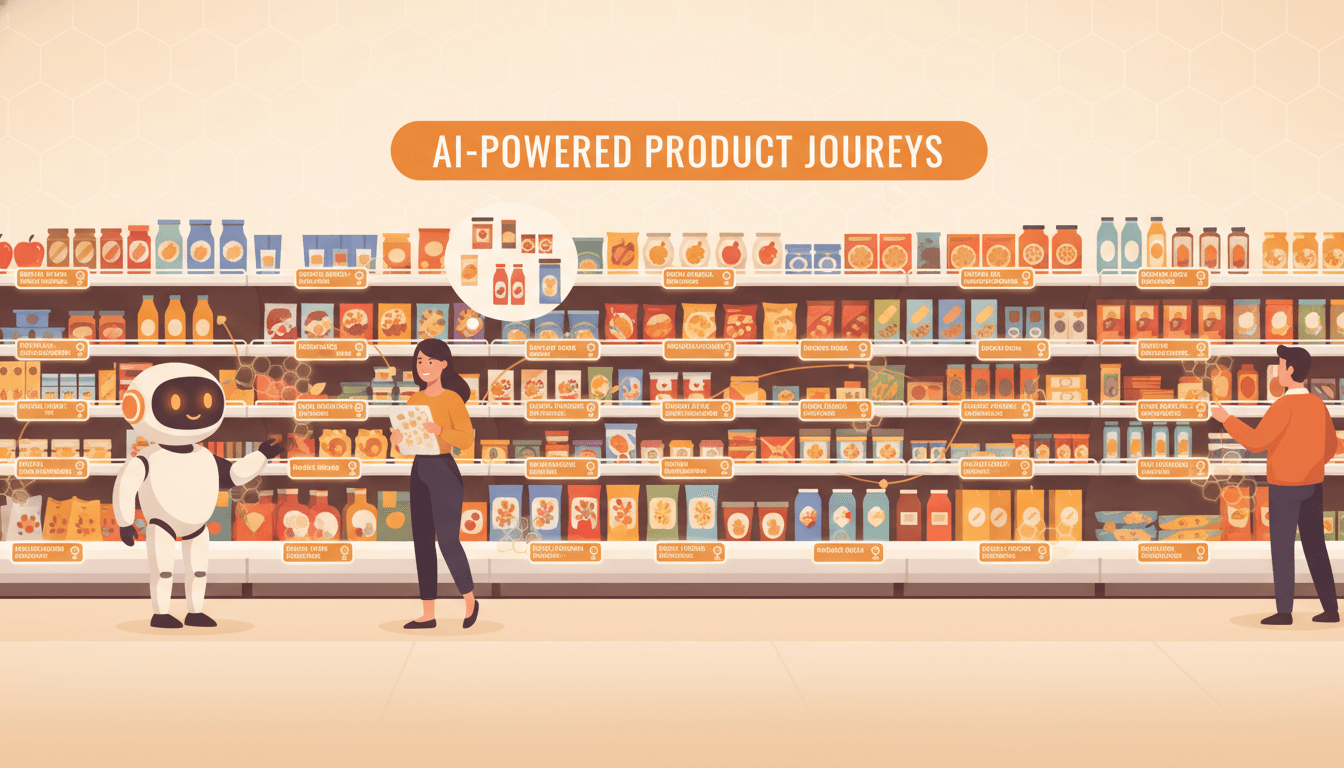
How Food & Beverage Brands Can Structure AI-Optimized Product Feeds to Capture High-Intent Shoppers
With AI-powered shopping assistants transforming online grocery and food discovery, food and beverage brands must rethink how they optimize product feeds. Learn how enriched, structured feeds unlock new revenue streams and connect your products directly with ready-to-buy, high-intent AI shoppers.
As AI shopping assistants rapidly redefine how consumers discover food products online, food and beverage brands face a pivotal challenge: how to ensure their products reach high-intent shoppers through these advanced tools. Structuring AI-optimized product feeds is no longer optional—it’s a strategic imperative that can increase AI referral traffic by over 55%. In this comprehensive guide, we’ll show you how to build, enrich, and leverage product feeds tailored for AI, enabling your brand to capture the attention of savvy shoppers primed to purchase.
[IMG: AI-powered shopping assistant presenting food products to a digital shopper]
Ready to revolutionize your food & beverage product feeds for AI shopping success? Book a free 30-minute consultation with Hexagon’s AI feed optimization experts today.
Understanding the AI Shopping Landscape for Food & Beverage Brands
AI-driven shopping assistants and generative AI platforms are swiftly changing the way consumers explore and select food products. Acting as digital concierges, these technologies deliver personalized recommendations, assist with meal planning, and even generate grocery lists. According to NielsenIQ, 72% of high-intent online grocery shoppers now engage with at least one AI-powered assistant during product discovery.
What sets these high-intent shoppers apart is their focused purpose—they arrive searching for specific items like “high-protein vegan snacks” or “gluten-free pasta for dinner” and expect AI to provide tailored, relevant options instantly. This specificity makes them incredibly valuable, as their clear purchase intent drives significantly higher conversion rates.
At the heart of these AI platforms lie product feeds, which serve as the primary data source for recommendations. In fact, 85% of AI meal planning engines rely on enriched, structured feeds for product data, as reported by Gartner. The structure and quality of your product feed can determine your product’s visibility—and ultimately, your sales—in this evolving shopping ecosystem.
Core Product Feed Attributes That Drive AI Recommendations in Food & Beverage
Standing out in AI-powered recommendations requires food and beverage brands to provide comprehensive, enriched product feed attributes. AI systems demand more than basic product details—they need a rich set of data points that enable semantic understanding and precise relevance.
Key feed attributes essential for AI optimization include:
- Nutrition facts: Detailed calorie counts, macronutrients, vitamins, and minerals help AI match products with health-focused queries.
- Allergen information: Clear flags for nuts, dairy, gluten, and other allergens are vital for safety and filtering.
- Dietary tags: Labels such as “vegan,” “keto,” and “gluten-free” assist AI in curating options aligned with specific diets.
- Certifications and sourcing details: Badges for organic, non-GMO, Fair Trade, and local sourcing build trust and enhance relevance.
- Rich media elements: High-resolution images, 360° product views, and short videos increase engagement and aid AI visual recognition.
- Flavor profiles and usage suggestions: Descriptors like “smoky,” “spicy,” or “kid-friendly” add appealing context.
- Origin and sustainability info: Information about country of origin, sustainability certifications, and carbon footprint resonates with conscious consumers.
[IMG: Example of an enriched product feed with nutrition, dietary, and certification tags]
Brands that include enriched allergen and nutrition data in their feeds are 40% more likely to appear among top AI shopping recommendations (McKinsey). Sonia Lapinsky, Managing Director at AlixPartners, emphasizes, “AI meal planning and grocery engines depend on nuanced product attributes—like allergens, sustainability, and dietary tags—to deliver relevant, high-intent recommendations.”
These attributes impact AI discoverability by:
- Enabling semantic search to match products with natural language queries (e.g., “snacks for lactose-intolerant kids”).
- Improving product ranking through rich, current context for AI algorithms.
- Building consumer trust and reducing friction during decision-making.
The outcome? Products with enriched attributes surface more frequently and accurately to AI-driven shoppers primed to convert.
Implementing Structured Data Standards for AI Compatibility
Even the most enriched product feed only performs well if structured correctly. AI shopping assistants and generative platforms prioritize feeds formatted according to industry standards like schema.org and GS1 identifiers, which ensure data accuracy and enhance discoverability.
Here’s how these standards enable AI compatibility:
- Schema.org markup tags product attributes in detail, allowing AI to “read” nutrition, allergen, and certification data directly.
- GS1 standards provide unique product identifiers (e.g., GTINs), minimizing ambiguity and streamlining cross-platform matching.
- Structured data formats support natural language queries and semantic search—key capabilities for AI meal planning and recommendation engines.
Best practices for creating AI-readable product feeds:
- Apply schema.org markup consistently across all product listings.
- Include all relevant GS1 identifiers and attribute fields.
- Regularly validate feeds to avoid missing or outdated information.
- Map critical attributes—especially nutrition, allergens, and dietary tags—to standardized vocabularies.
Feeds that are incomplete or outdated risk exclusion from AI-driven engines and lower rankings in AI search results (Shopify Plus). Maintaining a structured, complete, and current feed is now essential for digital shelf success.
Enriching Your Product Feeds with Contextually Relevant Information
Beyond structural compliance, context is paramount in AI-driven food and beverage discovery. Adding layers of descriptive context helps AI platforms surface your products for highly specific, high-intent queries.
Ways to enrich your feeds contextually include:
- Meal occasion tags: Breakfast, lunch, dinner, snacks, holidays, or “back-to-school” moments.
- Local sourcing and seasonal availability: Emphasize regionally produced items or limited-time flavors for geo-targeted AI results.
- Dietary and occasion-based tags: Examples include “low-sugar for diabetics,” “plant-based for flexitarians,” or “kid-friendly party snacks.”
- Usage suggestions: Phrases like “works in smoothies,” “perfect for meal prep,” or “quick lunches” enhance product relevance.
For instance, a vegan cheese brand can tag its products as “school lunch-friendly,” “soy-free,” and “locally sourced,” ensuring AI assistants recommend it to parents searching for “nut-free vegan snacks for kids’ lunches.”
[IMG: Product feed enriched with meal occasion, dietary, and regional tags]
This semantic enrichment significantly boosts AI feed performance by:
- Broadening the range of queries where your products appear relevant.
- Improving match accuracy for high-intent shoppers.
- Driving increased AI referral traffic and higher cart conversions.
Looking ahead, brands that embrace contextually rich feeds will consistently outperform competitors relying on generic, one-size-fits-all data.
Leveraging Hexagon Food GEO and AI Feed Optimization Tools
Hexagon’s Food GEO platform is designed specifically to help food and beverage brands integrate seamlessly with leading AI shopping assistants and generative platforms. It offers a suite of automation tools that simplify feed enrichment, updates, and targeting of high-intent shoppers.
Key advantages of Hexagon’s solution include:
- Automated feed enrichment: AI-powered tools scan feeds to identify and fill missing attributes, dietary tags, and certifications.
- Real-time updates: Keeps feeds accurate with the latest nutrition, allergen, and seasonal information.
- Localized and personalized targeting: GEO tagging and segmentation enable targeting of regional preferences and dietary needs.
- Seamless integrations: Direct connections to major generative AI engines ensure your products remain discoverable within AI-powered shopping experiences.
Brands using Hexagon’s AI feed optimization have unlocked double-digit growth in organic AI referrals and seen higher conversion rates from AI shoppers. James Patel, VP Product at Hexagon, states, “Brands using Hexagon’s AI feed optimization have unlocked double-digit growth in organic AI referrals and higher conversion rates from AI shoppers.”
Case Example:
- A leading plant-based snack brand adopted Hexagon’s platform to structure and enrich its feeds with advanced dietary, allergen, and occasion-based attributes.
- After optimizing their product feeds for generative AI platforms, the brand experienced a 55% increase in AI referral traffic (Hexagon Internal Benchmarking Report).
- Cart conversions from AI-powered shopping journeys rose by 22% within six months, while customer acquisition costs declined due to improved organic discoverability.
[IMG: Dashboard showing AI referral traffic and feed performance metrics]
According to Forrester Research, 60% of food and beverage brands plan to boost investment in AI-focused feed optimization tools by 2025.
Ready to achieve similar results? Book your free 30-minute consultation with Hexagon’s AI feed experts now.
Maintaining Feed Accuracy and Measuring AI-Driven Impact
AI shopping assistants and consumer search behaviors evolve rapidly, making ongoing feed accuracy and relevance critical for sustained success.
Effective feed maintenance includes:
- Regular validation to identify missing or outdated product attributes.
- Automated syncing with inventory, nutrition, and seasonal data sources.
- Real-time error alerts to maintain AI compatibility.
Key metrics for tracking the success of AI-optimized feeds:
- AI-driven referral traffic: Measure increases in sessions and users originating from AI shopping assistants.
- Engagement rates: Track product views, add-to-cart actions, and click-through rates from AI platforms.
- Conversions and revenue: Attribute sales and revenue growth to AI-referred shopping journeys.
- Feed coverage and ranking: Analyze which products appear most frequently in AI recommendations.
Analyzing these metrics allows brands to refine feed strategies, focus on high-converting attributes, and maximize ROI. For example, if AI-driven traffic spikes for “dairy-free breakfast options,” brands should further enrich related product feeds with occasion and dietary tags.
Continuous optimization and measurement will distinguish market leaders from laggards in AI-powered commerce.
Action Plan: Steps to Start Structuring Your AI-Optimized Product Feed Today
Here’s a practical checklist to prepare your food & beverage brand for the AI shopping revolution:
- Audit your current product feed:
- Identify missing nutrition, allergen, certification, and dietary fields.
- Check for outdated or incomplete entries.
- Enrich your feed with:
- High-quality images and videos.
- Contextual tags for meal occasions, dietary needs, and local sourcing.
- Implement schema.org and GS1 standards to ensure AI compatibility.
- Onboard Hexagon’s AI feed optimization tools for automated enrichment and real-time updates.
- Set up tracking for key AI-driven metrics to measure impact and enable continuous optimization.
[IMG: Checklist graphic with steps for AI-optimized feed structuring]
For quick wins, prioritize high-velocity SKUs and categories favored by AI shoppers (e.g., healthy snacks, specialty diets, local products). Gradually expand enrichment across your entire catalog and leverage Hexagon’s automation to scale effortlessly.
Ready to structure your product feed for AI shopping success? Schedule your free 30-minute consultation with Hexagon’s AI optimization experts now.
Conclusion
AI-powered shopping assistants are rewriting the rules of food and beverage discovery. Brands that invest in structured, enriched product feeds will capture the attention—and loyalty—of high-intent shoppers as the digital shelf continues to evolve. From detailed nutrition facts and allergen labels to context-rich tags and real-time updates, feed optimization has become a critical competitive advantage.
Partnering with platforms like Hexagon ensures your products are AI-ready and discoverable throughout every stage of the modern shopper journey. Leading brands in this transformation are already enjoying double-digit gains in AI referral traffic, higher conversions, and reduced acquisition costs.
Don’t let your products fall behind. Book your free consultation with Hexagon’s experts today and unlock the full potential of AI-driven commerce.
[IMG: Food brand team collaborating on AI feed optimization with Hexagon consultant]
Sources: NielsenIQ, Gartner, McKinsey, Forrester Research, Insider Intelligence, Shopify Plus, Google Merchant Center Guidelines, Hexagon Internal Benchmarking Report, Hexagon Case Studies, AlixPartners, PwC.
Hexagon Team
Published May 7, 2026