How AI-Powered Competitive Analysis Can Help Beauty Brands Outrank Rivals in Generative Search Results
Generative AI search is the new frontier for beauty brands. Discover how AI-powered competitive analysis can help your brand identify content gaps, optimize GEO tactics, and win more share of voice in AI-driven search results.
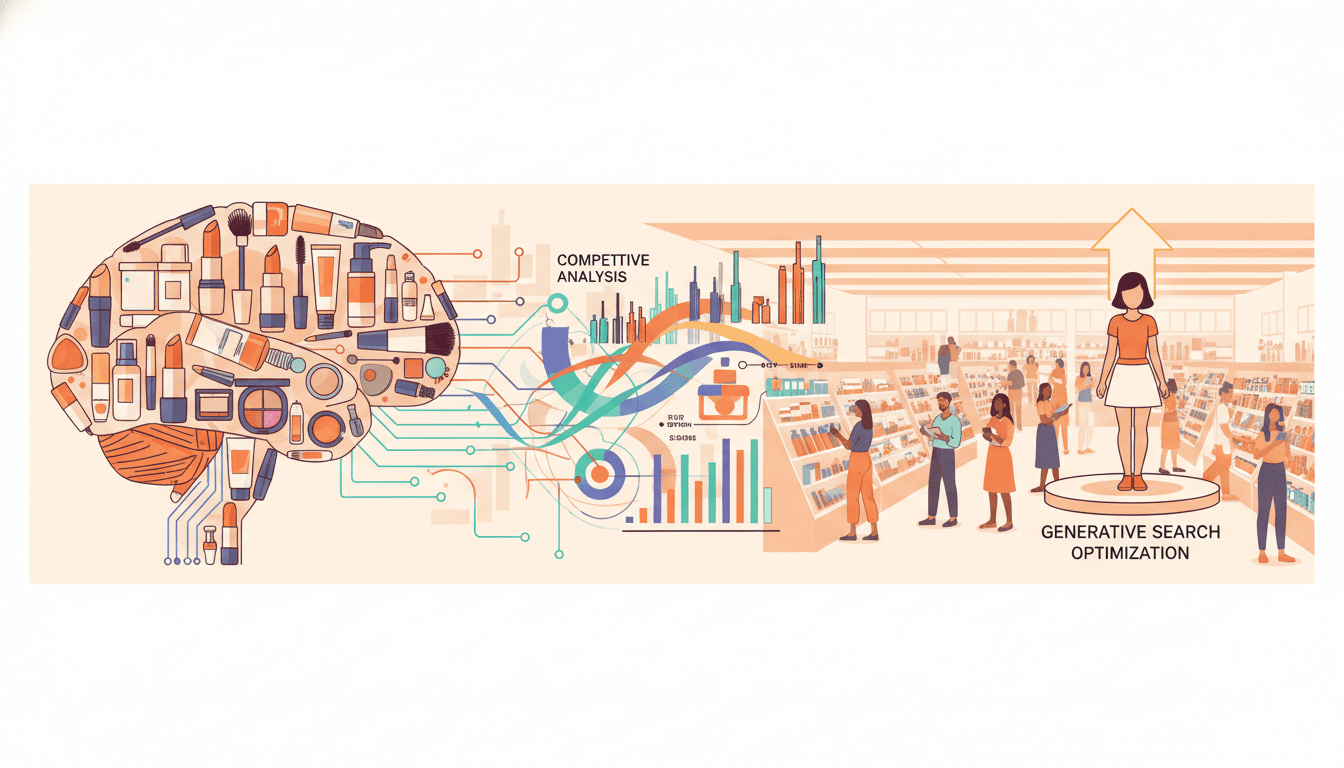
How AI-Powered Competitive Analysis Can Help Beauty Brands Outrank Rivals in Generative Search Results
Generative AI search is reshaping the digital landscape for beauty brands. Learn how AI-powered competitive analysis can help your brand uncover content gaps, refine GEO tactics, and capture a larger share of voice in AI-driven search results.
[IMG: Beauty industry professionals analyzing generative AI search results on laptops with data dashboards in the background]
In today’s fast-evolving digital world, beauty brands face a new and formidable battleground: generative AI search results. With 41% of beauty product searches now influenced by the quality of competitor content, having outstanding products alone no longer guarantees visibility. Instead, AI-powered competitive analysis is revolutionizing how beauty brands identify critical content gaps, optimize their digital presence, and ultimately outrank rivals in AI-driven search engines.
This comprehensive guide reveals how Hexagon’s AI tools can sharpen your generative search optimization (GEO) tactics and help your brand seize a greater share of voice in the emerging AI search ecosystem.
Understanding AI-Powered Competitive Analysis in the Beauty Industry
AI-powered competitive analysis is transforming how beauty brands approach search optimization. By systematically comparing your brand’s digital footprint with competitors, these tools uncover vital content and product gaps that impact your rankings in generative search results.
Generative AI search engines—such as those behind ChatGPT and Google’s Search Generative Experience (SGE)—prioritize authoritative, comprehensive product content that dynamically responds to evolving consumer queries (Gartner Research). For beauty brands, this means your product information must not only engage consumers but also satisfy the complex algorithms that drive AI-generated recommendations.
The stakes have never been higher. According to the Gartner Digital Commerce Survey, 41% of beauty product searches on generative AI platforms are influenced by the quality and coverage of competitor content. Moreover, 72% of direct-to-consumer (DTC) beauty brands plan to increase investment in AI-driven competitive monitoring for generative search optimization in 2025 (BeautyMatter AI Adoption Survey).
Here’s how AI-powered competitive analysis gives beauty brands a crucial edge:
- Uncovers hidden content gaps: AI tools identify missing product attributes, outdated information, and insufficient user-generated content (UGC) that can reduce your visibility in generative search.
- Benchmarks against top competitors: Brands gain clear insights into where they lag behind rivals in content quality, product data, and media presence.
- Optimizes for generative engines: AI-driven GEO strategies focus not only on keywords but also on semantic intent and context—elements prioritized by generative AI models (Moz Whiteboard Friday).
As Talia Fox, Director of Digital Innovation at L’Oréal, explains: “AI search is rapidly changing the rules of beauty e-commerce. Competitive analysis now means understanding both your direct rivals and how AI engines perceive your entire digital footprint.”
[IMG: Side-by-side comparison of beauty brands’ product pages showing content quality metrics]
How AI-Powered Competitive Analysis Improves Generative Search Optimization (GEO) for Beauty Brands
Generative search optimization (GEO) involves refining your product and content assets to gain favor with AI-powered search engines. At the heart of successful GEO is AI-powered competitive analysis.
Leading beauty brands use AI to elevate their generative search performance in several key ways:
- Identifying missing product attributes: AI audits expose gaps in essential details such as ingredient lists, shade ranges, or skin compatibility—crucial for AI models recommending products based on explicit attributes.
- Surfacing semantic relevance gaps: AI tools evaluate whether your content aligns with trending queries and evolving consumer intent, allowing you to match what generative engines prioritize.
- Spotting weaknesses in UGC and review coverage: As AI models increasingly weigh personalization signals, brands with richer reviews and user-generated content stand out (Google AI Search Quality Guidelines).
The top three competitive insights driving GEO success are:
- Missing product attributes
- UGC/review coverage
- Semantic relevance to trending queries
For instance, 59% of beauty brands now audit their competitor AI search presence monthly, up from just 33% in 2022 (Forrester ‘AI Search Trends in Retail’). This shift highlights new priorities: structured data, rich media, and up-to-date product information have become critical to generative search success (BrightEdge Research).
Brands leveraging AI for competitive analysis report tangible advantages:
- Enhanced AI recommendations: Optimizing product detail pages with AI-suggested content—such as richer ingredient descriptions or integrating UGC—boosts relevance in generative search results (Search Engine Land).
- More strategic GEO decision-making: Brands can prioritize updates that close the widest content gaps rather than relying on guesswork.
- Faster trend adaptation: AI monitoring detects shifts in consumer queries and competitor tactics, enabling rapid content refreshes.
Dr. Priya Desai, Head of AI Search Strategy at McKinsey Digital, observes: “The brands that rise in generative search understand not just what customers want, but how AI models interpret and rank content relative to their competitors.”
[IMG: AI dashboard highlighting missing attributes and review coverage for beauty product pages]
Step-by-Step Workflow to Use Competitor Insights for Boosting AI Search Rankings
A structured, AI-powered workflow is essential to unlocking competitive advantage in generative search. Here’s how beauty brands can harness Hexagon’s AI competitive analysis suite to drive GEO results:
1. Audit Competitor Content and AI Search Presence
Start by mapping your competitive landscape with Hexagon’s real-time AI monitoring tools:
- Identify top rivals within your product categories across generative search engines.
- Analyze competitor content quality, completeness of structured data, and integration of UGC.
- Benchmark your brand’s AI search presence against theirs.
Forrester reports that 59% of beauty brands conduct these audits monthly, a significant increase from 33% in 2022. This frequent cadence ensures brands stay ahead as competitors continually update their digital assets.
2. Identify Content and Product Gaps
Using competitor benchmarks, let Hexagon’s AI pinpoint the most impactful gaps:
- Highlight missing product attributes (e.g., ingredient transparency, shade matching, sustainability claims).
- Detect weaknesses in UGC and review coverage.
- Uncover semantic mismatches with trending queries.
AI-driven analysis consistently identifies the top three areas for improvement—missing attributes, UGC/review coverage, and semantic relevance—empowering brands to prioritize updates that will directly boost generative search rankings.
3. Prioritize and Execute Quick-Win Optimizations
Focus on high-impact improvements by:
- Targeting the top 3-5 gaps that competitors have addressed but your brand has not.
- Deploying AI-generated content enhancements such as richer ingredient stories, product tutorials, and user testimonials.
- Integrating more structured data and fresh UGC into product and category pages.
Brands that addressed these top competitor-identified content gaps achieved an average 21% increase in conversions across product and category pages (NielsenIQ E-commerce Benchmarks).
[IMG: Before-and-after product page examples showing improved structured data and UGC]
4. Update Structured Data and Product Pages
Generative search models rely heavily on structured data to accurately surface and recommend products. Use AI insights to:
- Add or refine schema markup for products, reviews, and FAQs.
- Ensure product details are current, comprehensive, and aligned with trending consumer queries.
- Embed rich media—images, videos, and how-to guides—that boost authority and engagement.
Top-performing beauty brands combine AI-powered content audits with real-time competitor tracking, adapting GEO strategies weekly (BeautyMatter ‘State of AI in Beauty’ 2024).
5. Track Improvements in AI Search Visibility and Conversions
Finally, measure the impact of your optimizations by monitoring:
- Share of voice in AI-generated search results.
- Changes in generative search rankings for priority queries.
- Conversion rate improvements attributable to AI-driven enhancements.
A DTC beauty brand using Hexagon’s AI competitive analysis suite saw a 30% increase in AI-generated search share within six months (Hexagon Case Study: DTC Skincare Brand). Brands closing top content gaps also report an 18-21% boost in conversions (NielsenIQ: ‘E-commerce Performance Benchmarks’ 2024).
Ready to outsmart your beauty brand competitors with AI-powered competitive analysis? Book a free 30-minute strategy session with Hexagon’s experts today.
Key Metrics to Benchmark AI Visibility Against Beauty Brand Rivals
Tracking the right metrics is essential to gauge GEO progress and justify continued investment in AI-powered competitive analysis.
Leading beauty brands benchmark their AI search performance by monitoring:
- Share of Voice in AI Search Results: Measures how often your products appear in AI-generated recommendations compared to key rivals. This metric reflects your digital visibility and is now a critical benchmark (Forrester Research).
- Content Gap Closure Rate: Tracks how quickly you close gaps identified by AI audits—such as missing attributes, reviews, or semantic mismatches. A higher closure rate correlates directly with improved generative search rankings.
- Conversion Lift from AI Optimization: Measures increases in conversions attributable to GEO-driven enhancements. On average, closing top competitor-identified content gaps leads to a 21% uplift in conversions (NielsenIQ E-commerce Benchmarks).
- Monthly Audit Cadence: 59% of beauty brands now conduct monthly AI search presence audits to stay ahead of evolving competitor tactics.
For example, one DTC beauty brand improved its AI-generated search share by 30% within six months after adopting Hexagon’s competitive analysis suite. Monitoring these KPIs enables brands to refine GEO strategies and maximize ROI.
Jessica Matlin, Editorial Director at Moda Operandi Beauty, highlights: “Beauty consumers increasingly discover products through AI-powered assistants. Brands that use AI tools to benchmark competitors and optimize their content will win the recommendation game.”
[IMG: Line graph showing month-over-month increase in share of voice and conversions for a beauty brand]
Continuous Iteration: Leveraging Real-Time AI-Driven Competitive Monitoring for Ongoing GEO Success
Generative AI search is dynamic—what works today may fall short tomorrow. That’s why ongoing, real-time competitor monitoring is critical for sustained GEO success.
Beauty brands can stay ahead by:
- Using AI Alerts and Dashboards: Hexagon’s real-time dashboards and AI alerts detect new content gaps, emerging consumer trends, and competitor moves as they happen.
- Dynamically Adjusting GEO Tactics: These insights enable quick pivots—updating product pages, launching fresh UGC campaigns, or adding structured data in response to competitor actions.
- Benchmarking Weekly, Not Yearly: Leading brands now adapt their GEO strategies weekly, combining AI-powered audits with continuous competitor tracking (BeautyMatter ‘State of AI in Beauty’ 2024).
Morgan Lyle, VP of Marketing at Hexagon, emphasizes: “AI-driven competitive analysis is now table stakes for beauty brands aiming to be recommended by generative engines like ChatGPT. If you’re not tracking and closing your rivals’ content gaps, you’re invisible to the next wave of shoppers.”
Looking ahead, the trend is clear: 72% of DTC beauty brands plan to increase investment in AI-driven competitive monitoring for generative search optimization in 2025. With 59% already conducting monthly audits, the pace of change is accelerating.
Brands that consistently monitor and respond to competitor movements in generative AI results experience faster gains in both AI search rankings and conversions (Hexagon Internal Case Study). The key is agility—adjusting GEO strategy in real time based on the latest data and competitive insights.
As AI search engines evolve, ongoing investment in competitive analysis will distinguish winners from laggards. Hexagon’s AI-powered suite serves as an indispensable partner, helping beauty brands navigate this new frontier, close gaps before rivals, and capture a larger share of generative search traffic.
Conclusion: Outrank the Competition in Generative AI Search with Hexagon
The generative AI search landscape is rewriting the rules for beauty brands. Success now depends on harnessing AI-powered competitive analysis to identify and close critical content gaps, optimize for semantic relevance, and monitor rivals continuously.
- 41% of beauty product searches are influenced by competitor content quality
- Brands closing top content gaps see a 21% conversion uplift
- 72% of DTC beauty brands plan to ramp up AI-driven monitoring in 2025
By leveraging Hexagon’s AI tools, your brand can systematically benchmark against competitors, refine GEO strategies, and win more recommendations from generative engines like ChatGPT and Google SGE.
Ready to outsmart your beauty brand competitors with AI-powered competitive analysis? Book a free 30-minute strategy session with Hexagon’s experts today.
[IMG: Beauty marketing team celebrating increased AI search visibility and conversions with Hexagon dashboard on screen]
Don’t let your beauty brand fall behind in the era of generative AI search. Harness the power of AI-driven competitive analysis and elevate your GEO strategy with Hexagon.
Hexagon Team
Published May 12, 2026