Global GEO: Understanding How AI Search Optimization Differs Across International Markets
Unlock exponential e-commerce growth by mastering how AI search optimization varies across international markets. Learn actionable strategies for localization, compliance, and technical excellence in this essential global GEO guide.
Global GEO: Understanding How AI Search Optimization Differs Across International Markets
Unlock exponential e-commerce growth by mastering how AI search optimization varies across international markets. Learn actionable strategies for localization, compliance, and technical excellence in this essential global GEO guide.
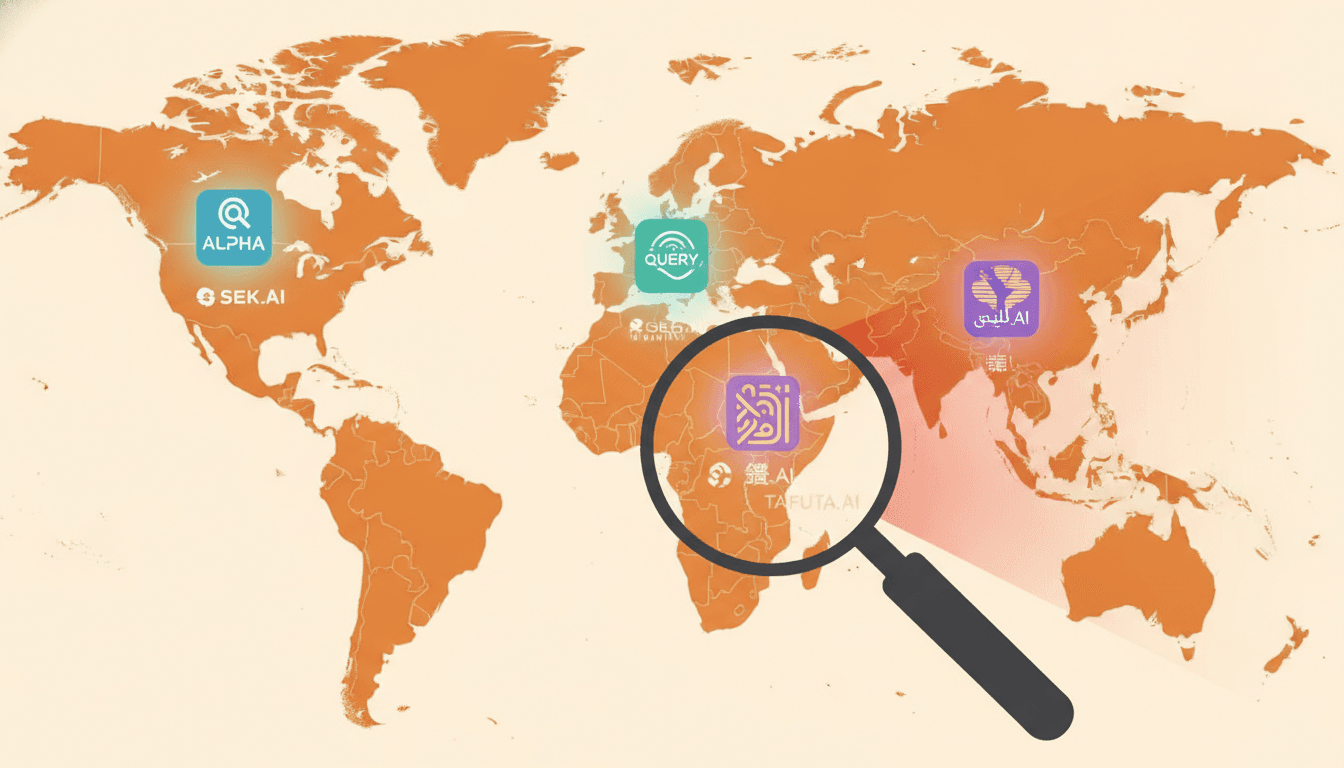
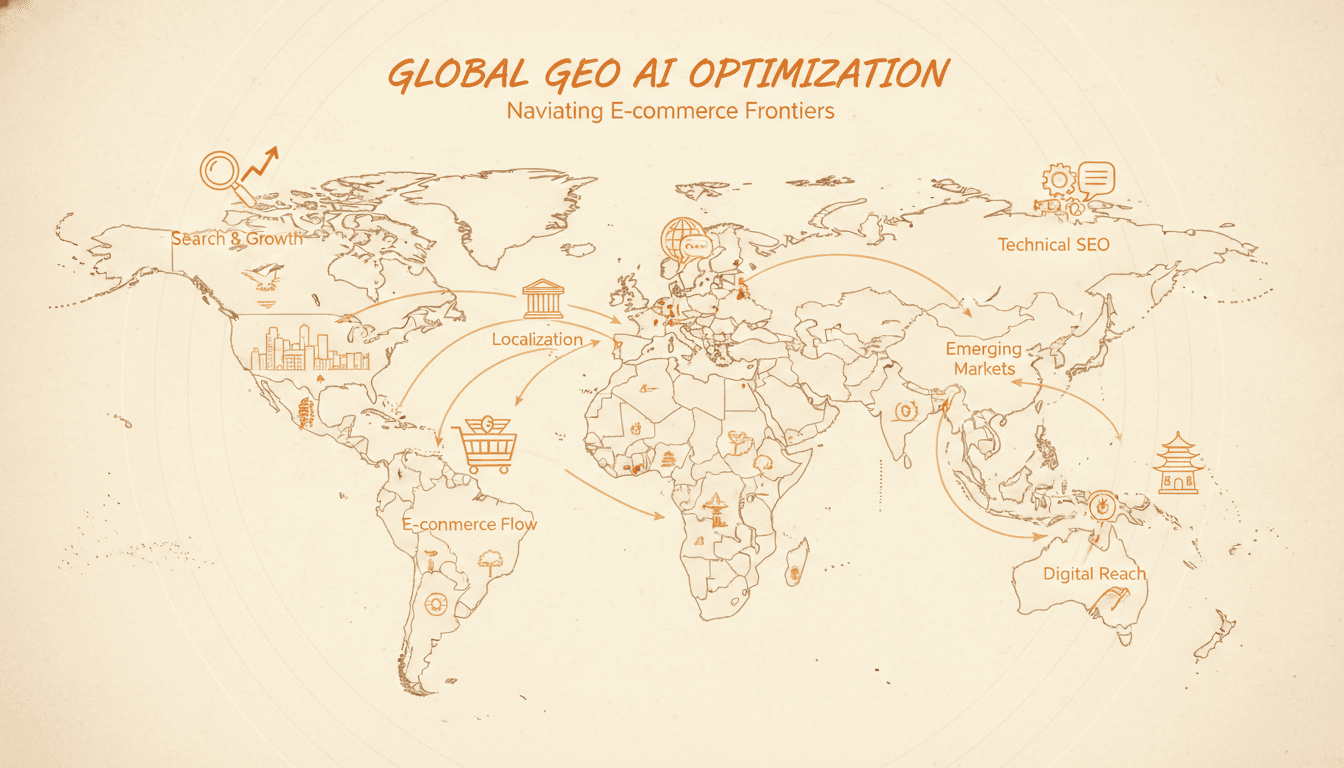
[IMG: A world map overlaid with icons representing AI search and e-commerce activity in major international regions]
In today’s fast-changing digital world, AI-powered search is transforming the way consumers discover products and services across the globe. However, AI search optimization is far from a one-size-fits-all solution. Recognizing how AI search behaves uniquely in different countries—and tailoring your strategy accordingly—can unlock tremendous growth opportunities in international markets.
This comprehensive guide explores global GEO strategies, equipping you with the insights needed to adapt your AI marketing approach for diverse audiences and outperform competitors worldwide.
Ready to elevate your international AI marketing strategy with expert guidance? Book a free 30-minute consultation with Hexagon’s AI search optimization specialists today.
The Landscape of AI Search Across Global Markets
[IMG: Regional icons representing North America, Europe, Asia-Pacific, and MENA, each with AI and search graphics]
AI search engines function within distinct digital ecosystems where user behavior and platform dominance differ dramatically by region. For instance, North America is dominated by Google’s AI-powered search, while Europe’s market is fragmented due to linguistic diversity and stringent regulations. In Asia-Pacific, homegrown platforms like Baidu, Naver, and Rakuten create unique search dynamics; meanwhile, the MENA region blends Western and local platforms to serve rapidly digitizing populations.
These regional differences in user preferences and behaviors directly shape how AI models recommend products and brands. Take Japan, where 61% of consumer queries on generative AI platforms are in Japanese, underscoring the necessity of native-language optimization (Microsoft Japan). In Germany, 58% of AI search engine users express greater trust in recommendations featuring local brands (HubSpot), highlighting the critical role of cultural and brand familiarity in AI-driven results.
Moreover, dominant AI platforms and technology ecosystems present distinct opportunities and challenges across markets:
- North America: Led by Google and Microsoft Bing, with strong support for English-language AI search and extensive product data integration.
- Europe: Requires nuanced localization due to multiple languages, with GDPR shaping data access and personalization.
- Asia-Pacific: Chinese AI models such as Baidu ERNIE Bot and Alibaba Tongyi Qianwen emphasize local content and comply with region-specific regulations (MIT Technology Review).
- MENA: Combines global and regional platforms, with rising demand for Arabic and English content, alongside sensitivity to local customs and observances.
Local search behaviors—including preferred product features, shopping holidays, and trust drivers—influence which brands AI assistants recommend and how consumers engage with e-commerce. As John Mueller, Search Advocate at Google, points out: “The future of e-commerce AI search is hyper-local. AI models are increasingly sensitive to regional trends, regulations, and shopper preferences.”
How Language Models and Training Data Influence Regional AI Search Results
[IMG: Visualization of AI language models pulling data from diverse regional sources]
Not all AI language models perform equally, especially across international markets. Models like GPT-4, Gemini, and Claude are trained on datasets that vary regionally, resulting in different recommendation outputs for the same queries depending on the country (Stanford HAI). The language, slang, and cultural references embedded within these datasets profoundly affect AI search results.
Localized data is the cornerstone for enhancing the relevance of AI-powered recommendations. For example, 76% of global consumers prefer product information in their native language—a critical expectation that directly impacts e-commerce success on AI search platforms (CSA Research). Brands that localize product content across multiple languages achieve higher visibility and conversion rates compared to those relying solely on machine translation (CSA Research).
Generic AI models often overlook regional nuances, leading to missed optimization opportunities. Region-specific models excel by:
- Grasping local idioms and user intent more accurately
- Incorporating region-specific shopping behaviors and seasonal trends
- Respecting regulatory and cultural content restrictions
As Dr. Emily Bender, Professor of Linguistics at the University of Washington, emphasizes: “Generative AI’s recommendations are only as diverse as the datasets and local nuances they’re trained on. For e-commerce, localization is no longer optional—it’s essential for AI discoverability.”
Beyond Translation: Effective Localization Tactics for International GEO
[IMG: Side-by-side comparison of literal translation vs. culturally adapted e-commerce content]
Literal translation alone no longer suffices for AI search localization success. Today’s AI platforms evaluate not only language but cultural context, user intent, and local search trends to determine which products to recommend. Brands investing in comprehensive localization—adapting language and cultural context alike—achieve significantly better results on AI search platforms worldwide, notes Aleyda Solis, International SEO Consultant.
Top brands implement effective AI search localization through:
- Cultural adaptation: Embedding region-specific idioms, references, and customs into product descriptions, landing pages, and metadata.
- User intent alignment: Understanding and integrating local search behaviors such as favored product features, payment methods, and shopping holidays.
- Metadata optimization: Employing location-specific keywords, structured data, and schema markup to signal regional relevance to AI search engines.
For example, localizing for Japan involves more than translating into Japanese; it requires tailoring product descriptions to align with Japanese shopping etiquette and preferences. In Germany, highlighting trusted local brands and certifications can elevate AI search rankings and foster consumer trust.
The impact is measurable: 44% of e-commerce brands reported higher AI search rankings after adopting local language SEO and GEO strategies in three or more markets (SEMrush). Additionally, regional slang, idioms, and cultural references critically influence how AI models interpret and recommend products (Common Sense Advisory).
Ready to elevate your international AI marketing strategy with expert guidance? Book a free 30-minute consultation with Hexagon’s AI search optimization specialists today.
Navigating Legal and Regulatory Constraints in AI Search Optimization
[IMG: Flowchart showing impact of global privacy laws (GDPR, CCPA, CSL) on AI search workflow]
Legal and regulatory frameworks add significant complexity to AI search optimization across international markets. Europe’s GDPR imposes strict rules on consumer data collection, storage, and use in AI-driven personalization (DLA Piper). In the U.S., the California Consumer Privacy Act (CCPA) mandates transparency and grants consumers rights over their personal information.
China’s Cybersecurity Law (CSL) and Personal Information Protection Law (PIPL) further restrict cross-border data transfers and require AI platforms to prioritize local data residency. These national regulations shape how AI search engines index, store, and recommend content.
Best practices for compliance in global AI search include:
- Conducting regular audits of data collection and storage processes
- Implementing consent mechanisms and privacy notices tailored to each market
- Collaborating closely with legal experts to stay abreast of evolving AI and data privacy laws
Maintaining compliance not only avoids costly penalties but also fosters trust with local consumers—an indispensable factor for sustainable international growth.
Technical Tactics to Optimize AI Search for Multi-Market E-Commerce
[IMG: Diagram showing structured data and schema markup tailored for different country domains]
Technical optimization forms the foundation of successful AI search strategies in diverse GEOs. Brands that customize structured data markup for local AI search engines report increased product visibility in generative assistant recommendations (Schema.org & SEMrush).
To make your e-commerce site AI-friendly across international markets, focus on:
- Structured data and schema markup: Tailor these for region-specific search engines (e.g., Baidu, Yandex, Google) to enhance relevance and discoverability.
- Local APIs and data sources: Integrate regional product feeds, local reviews, and inventory data to enrich AI-driven recommendations (OpenAI).
- Regional domain presence: Utilize country code top-level domains (ccTLDs) and implement hreflang tags to signal language and regional targeting accurately.
For example, brands applying region-specific structured data have experienced a 39% increase in AI-driven product recommendation clicks (BrightEdge). Establishing a local web presence is also crucial, as some AI search engines prioritize results from local brands and domains (BrightEdge).
Key technical checklist for global GEO AI search:
- Use localized schema.org markup (e.g., Product, Offer, Review)
- Implement hreflang tags to prevent duplicate content issues and enhance language targeting
- Host localized content on ccTLDs or dedicated subdirectories for improved regional indexing
Monitoring and Measuring AI Search Performance Across International Markets
[IMG: Dashboard view showing AI search KPIs segmented by country]
Robust measurement is essential for refining AI search strategies across multiple markets. Tracking the right KPIs provides clarity on the effectiveness of your localization efforts.
Critical performance indicators for global GEO campaigns include:
- AI-driven impressions and click-through rates segmented by region
- Conversion rates and revenue generated from AI search recommendations
- Visibility and ranking changes for localized product content
Specialized analytics tools help brands monitor AI search performance worldwide:
- Google Search Console with international segmentation
- BrightEdge and SEMrush for global SEO and structured data impact analysis
- Custom dashboards aggregating data from AI-powered APIs and regional e-commerce platforms
Leveraging AI-driven insights enables continuous improvement. For example, if a newly localized product page underperforms in a specific region, analyze language accuracy, cultural relevance, and technical elements to diagnose issues. Lily Ray, Senior Director of SEO at Amsive Digital, advises: “Optimizing for global GEO requires ongoing monitoring of how AI assistants adjust their recommendation algorithms across markets and languages.”
Case Studies: Brands Winning with Localized Global GEO Strategies
[IMG: Collage of global brand logos with AI search and localization icons]
Several global brands have perfected AI-powered search localization, achieving remarkable results. Zara, for instance, boosted its AI search visibility across Europe and Asia by hyper-localizing product descriptions and collaborating with regional influencers (Business of Fashion). Samsung optimized its e-commerce content around local shopping holidays and payment preferences, leading to higher conversion rates in South Korea and the Middle East.
Key tactics and lessons from these successes include:
- Deep integration with local platforms and influencers
- Tailored metadata and schema markup for regional search engines
- Balancing consistent global branding with locally relevant messaging
These examples demonstrate that striking a balance between international consistency and hyper-localized content is vital. The payoff: increased consumer trust, engagement, and AI-driven sales in every target market.
Future Trends: How AI Assistants Are Shaping the Next Wave of International E-Commerce
[IMG: AI assistant icons interacting with users in different languages and cultural settings]
Looking forward, AI assistants will spearhead the next phase of global e-commerce evolution. Their advancing capabilities include real-time comprehension of cultural nuances, personalized voice and visual search, and seamless integration with local commerce ecosystems.
Emerging trends shaping the future of international AI search include:
- AI assistants becoming adept at detecting subtle regional slang, shopping habits, and preferences
- Growing adoption of voice search and visual AI (e.g., image-based product discovery) in markets like South Korea, India, and Brazil
- APIs enabling direct integration of local content to influence AI recommendations per market
Preparing your GEO strategy for these innovations is essential. As John Mueller of Google observes, “AI models are increasingly sensitive to regional trends, regulations, and shopper preferences.” Brands that invest early in hyper-local AI search optimization and remain agile will be best positioned to meet evolving consumer expectations.
Conclusion
Global AI search optimization presents a complex yet rewarding opportunity for e-commerce brands. To succeed internationally, brands must go beyond generic strategies—embracing authentic localization, technical precision, and continuous performance tracking.
By mastering the unique behaviors, languages, regulations, and technical demands of each market, you can unlock new growth avenues and outpace competitors worldwide.
Ready to elevate your international AI marketing strategy with expert guidance? Book a free 30-minute consultation with Hexagon’s AI search optimization specialists today.
[IMG: Professional team at Hexagon consulting with clients on multi-market AI search optimization]
Hexagon Team
Published April 27, 2026