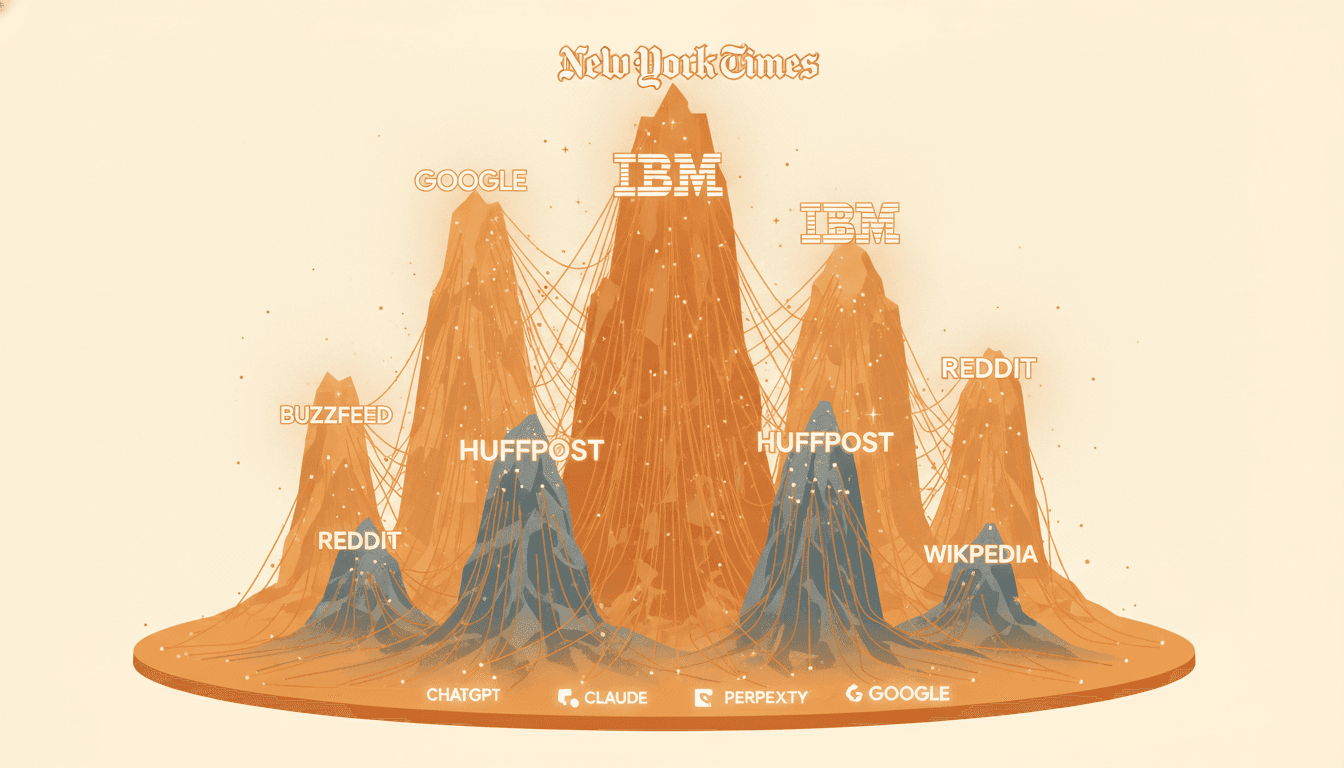
Demystifying AI Citation: How Medium-Intent E-Commerce Brands Build Trust with Generative Search Engines
As AI-driven search engines shape the future of online discovery, e-commerce brands face a new imperative: earning citations from generative AI to capture trust and market share. This guide unpacks the mechanics of AI citation—and reveals actionable strategies for dominating medium-intent search queries where purchase decisions are made.
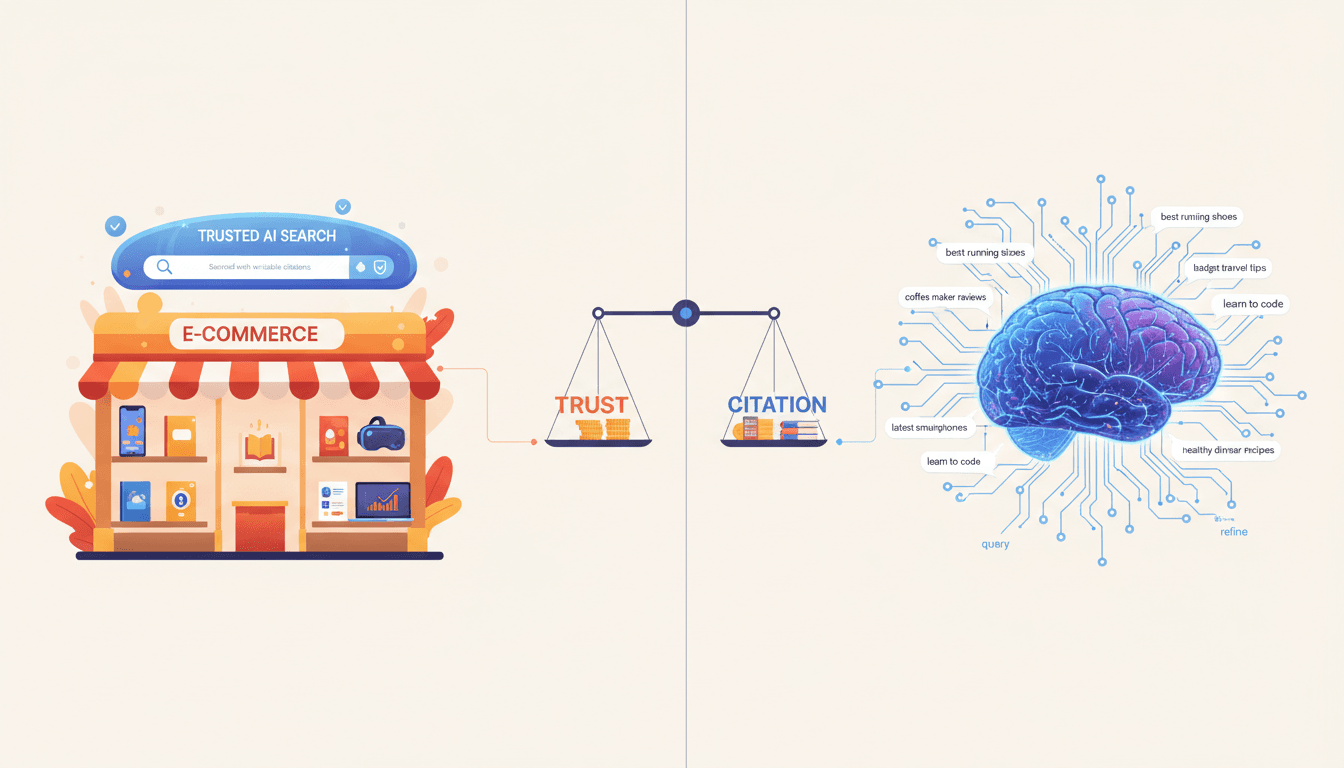
Demystifying AI Citation: How Medium-Intent E-Commerce Brands Build Trust with Generative Search Engines
As AI-driven search engines revolutionize online discovery, e-commerce brands face a critical new challenge: securing citations from generative AI to build trust and capture market share. This comprehensive guide unpacks the mechanics of AI citation and reveals proven strategies to dominate medium-intent search queries—those pivotal moments when purchase decisions are made.
Generative AI is transforming how consumers find and evaluate products online, making AI citation a vital factor for e-commerce success. Medium-intent queries—where shoppers research and compare options—offer a prime opportunity to become a trusted source. In this guide, we demystify AI citation and show you how to establish brand trust and authority that generative search engines recognize and reward.
[IMG: Abstract representation of AI-powered search with brands being highlighted in search results]
Ready to elevate your e-commerce brand’s authority in generative AI search? Book a free 30-minute strategy session with our experts to start optimizing your AI citation profile today.
What is AI Citation and Why Does It Matter for E-Commerce Brands?
AI citation is the process by which generative search engines reference and recommend specific brands or content sources in response to user queries. As AI-powered search evolves into a more conversational and recommendation-driven experience, being cited by these engines has become the new standard for digital visibility.
For e-commerce brands, AI citation transcends traditional SEO metrics—it directly drives trust, exposure, and authority. Hexagon’s internal data shows that brands cited by AI search engines experience up to a 30% increase in brand exposure. Furthermore, 67% of AI search users report trusting recommendations more when sources are clearly cited (Pew Research Center).
Here’s how AI citation is reshaping e-commerce visibility:
- Generative search engines like Google SGE and Bing AI now embed recommended brands directly within their answers to user queries.
- Brands with strong citation signals—such as authoritative content, structured data, and high-quality backlinks—are more frequently referenced and recommended.
- AI citations influence not only which brands appear but also how trustworthy consumers perceive them to be.
Looking ahead, e-commerce brands that master AI citation optimization will gain a decisive competitive edge. As Rand Fishkin, Co-founder of SparkToro, observes:
“AI citation is rapidly becoming the new battleground for e-commerce visibility. Brands investing in trust signals and structured data will lead the next wave of digital commerce.”
[IMG: Diagram showing the flow from user query to AI search engine to cited brand recommendations]
Understanding Medium-Intent AI Search Queries and Their Commercial Impact
Medium-intent queries represent search terms where users are actively researching or comparing products but have not yet committed to purchase. Unlike low-intent (informational) or high-intent (transactional) searches, these queries often include phrases like “best running shoes for flat feet” or “eco-friendly office supplies” (Search Engine Journal).
These queries are critical for e-commerce brands because they:
- Indicate that shoppers are evaluating options and remain open to brand influence.
- Mark crucial moments where trust, authority, and AI citations can sway purchase decisions.
- Provide opportunities for brands to be discovered as AI search engines recommend credible sources for deeper exploration.
For instance, a shopper searching for “top noise-cancelling headphones under $200” will likely encounter AI-generated answers citing expert reviews, brand pages, and user testimonials. Importantly, 70% of top results in AI-driven e-commerce searches link to brands with strong citation profiles (Hexagon Analysis of AI Search Results).
E-commerce SEO strategists are taking note: 80% plan to prioritize AI citation optimization in 2025 (Search Engine Land). The brands that succeed will be those whose expertise, trustworthiness, and authority are unmistakably signaled to AI engines.
[IMG: Example SERP with medium-intent queries and cited brands highlighted]
Trust Signals AI Search Engines Look For: Structured Data, Backlinks, and E-E-A-T
To minimize misinformation and maximize user trust, AI search engines evaluate a variety of trust signals before citing brands in response to medium-intent queries.
Key trust signals include:
- Structured Data: Utilizing Schema.org markup enables AI to precisely identify product details, reviews, FAQs, and brand credentials. BrightEdge reports that structured data increases the likelihood of AI citation by 25% (BrightEdge).
- Backlinks: Links from reputable, authoritative third-party domains act as strong endorsements of brand credibility. Ahrefs identifies backlinks from established, relevant sites as among the strongest predictors of AI citation in product-related queries (Ahrefs).
- E-E-A-T (Experience, Expertise, Authoritativeness, Trustworthiness): Google’s Quality Rater Guidelines emphasize that brands demonstrating E-E-A-T are more likely to be recommended by AI for medium-intent searches (Google Quality Rater Guidelines).
Jim Yu, Founder of BrightEdge, summarizes the new standard:
“Structured data and authoritative backlinks are now essential for brands hoping to be surfaced—and trusted—by AI-driven search engines.”
Brands that systematically incorporate these signals into their digital presence will be best positioned to earn AI citations—and the conversions that follow.
[IMG: Visual breakdown of structured data, backlinks, and E-E-A-T as overlapping trust signals]
Strategies for Building a Strong AI Citation Profile in Medium-Intent E-Commerce
To capture medium-intent moments and secure AI citations, e-commerce brands must adopt a deliberate, multi-layered strategy. Here’s how to build a citation profile that generative search engines prioritize:
-
Create High-Quality, Relevant Content
Develop comprehensive, transparent, and actionable content that addresses medium-intent queries. Detailed buying guides, expert comparisons, and thorough FAQs demonstrate both expertise and empathy for user needs. -
Establish Brand Authority through Expertise and Transparency
Showcase expert contributors, certifications, and clear credentials. Generative AI favors brands that openly demonstrate knowledge, experience, and a commitment to serving users. -
Leverage Third-Party Validation
Secure backlinks from reputable publishers, industry blogs, and review sites. User-generated content (UGC)—including authentic reviews, testimonials, and Q&A sections—is increasingly cited by AI as trusted sources (Perplexity AI Research). -
Implement Structured Data Markup
Apply Schema.org markup across product, review, and informational pages. Structured data enables AI to parse and cite brand details, product specifications, and trust signals with precision. Brands see a 25% higher likelihood of AI citation following structured data implementation (BrightEdge). -
Foster User-Generated Content (UGC)
Encourage customer reviews and community Q&A on product pages. UGC enhances shopper trust and serves as a valuable citation source for AI search engines.
Brands combining authoritative editorial content, robust structured data, and an active review ecosystem consistently outperform competitors in AI-powered search citations. The correlation is clear: backlinks and UGC drive increased citation rates, while structured data ensures AI can reliably identify and reference your brand.
Danny Sullivan, Google’s Public Liaison for Search, underscores the stakes:
“Generative AI search isn’t just about answering questions—it’s about recommending the best sources. Brands must prove their expertise at every step.”
[IMG: Flowchart showing the interconnected strategies for building a strong AI citation profile]
Analyzing the Correlation Between Structured Data, Backlinks, and AI Citation Likelihood
Recent research highlights the measurable impact of combining structured data and backlinks on AI citation rates. When both elements are present, the chance of being cited by generative search engines as a trusted source rises significantly.
Key findings include:
- Brands using structured data experience a 25% higher likelihood of AI citation (BrightEdge).
- Backlinks from authoritative domains serve as critical endorsements heavily weighted by AI algorithms in ranking and citation (Ahrefs).
- 70% of top AI search results link to brands with strong citation profiles that combine structured data and robust backlink networks (Hexagon Analysis of AI Search Results).
To maximize AI citation potential, brands should:
- Prioritize implementing structured data across all essential e-commerce pages.
- Cultivate backlink relationships with respected industry sites and authoritative publications.
- Monitor citation metrics to identify which content types and trust signals yield the most AI recommendations.
Looking forward, the synergy between structured data and authoritative backlinks will remain a decisive factor in e-commerce AI search visibility.
[IMG: Graph showing AI citation likelihood relative to structured data and backlink strength]
Emerging Trends: The Rise of User-Generated Content as a Citation Source
Generative AI search engines increasingly value authentic user-generated content (UGC)—from product reviews to customer Q&A—as reliable trust signals. This reflects AI’s growing emphasis on citing sources that resonate with real-world user experiences and social proof.
UGC enhances AI citation rates by offering:
- Authenticity: User reviews and testimonials provide credible, diverse perspectives AI recognizes as trustworthy.
- Coverage: UGC fills informational gaps, delivering insights on product quality, fit, and customer service.
- Citation Frequency: AI engines like Perplexity and Bing reference UGC more often, especially for medium-intent queries.
Brands that actively gather and showcase customer feedback enjoy higher AI citation rates and increased user trust. With 67% of AI search users trusting recommendations more when sources are clearly cited, authentic UGC has become indispensable in the AI era (Pew Research Center).
Integrating UGC into your brand strategy is now essential for engaging both human shoppers and AI algorithms.
[IMG: Collage of user reviews and product Q&A highlighted in AI search results]
Measurable Business Impact of Increased AI Citation for E-Commerce Brands
The benefits of enhanced AI citation extend well beyond improved search rankings. For e-commerce brands, the impact is both immediate and enduring.
Key advantages include:
- Increased Brand Exposure: Brands cited by AI search engines experience up to a 30% boost in visibility and exposure (Hexagon Internal Data).
- Higher Conversion Rates: Stronger trust and authority signals lead to more confident purchase decisions and improved conversion performance.
- Sustainable SEO Advantage: A robust AI citation profile creates a durable competitive moat, keeping your brand top-of-mind—and top-of-search—as generative AI continues to evolve.
With 70% of leading AI search results linking to brands with strong citation profiles, the financial upside of AI citation optimization is clear (Hexagon Analysis of AI Search Results).
[IMG: Before-and-after chart showing brand exposure and conversion uplift from increased AI citation]
Actionable Steps for SEO Strategists to Optimize for AI Citation and Brand Trust
To seize the opportunities presented by AI citation, e-commerce SEO strategists should adopt a systematic, data-driven approach. Begin with these practical steps:
-
Audit and Implement Structured Data Markup
- Ensure comprehensive Schema.org markup on all product, review, and informational pages.
- Validate and test structured data to maximize AI crawlability and parsing accuracy.
-
Develop Content Targeting Medium-Intent Queries
- Identify the most relevant medium-intent questions in your category.
- Produce authoritative, in-depth content addressing these queries, incorporating expert insights and supporting data.
-
Build and Strengthen Backlink Strategies
- Pursue backlinks from reputable publishers, industry authorities, and relevant blogs.
- Focus on securing editorial mentions and product reviews that enhance third-party validation.
-
Encourage and Leverage User-Generated Content
- Simplify the process for customers to submit reviews, ask questions, and share testimonials.
- Prominently feature UGC on key landing pages to boost both user trust and AI citation potential.
-
Monitor AI Citation Metrics and Optimize Accordingly
- Track which content and pages receive AI citations.
- Refine strategies based on citation frequency, trust signal effectiveness, and competitive gaps.
With 80% of e-commerce SEO strategists planning to focus on AI citation optimization in 2025 (Search Engine Land), the time to act is now to secure your brand’s authority in the generative search landscape.
[IMG: Checklist infographic of AI citation optimization steps for e-commerce SEO teams]
Conclusion: The New Era of E-Commerce Authority Starts with AI Citation
Generative AI is reshaping how consumers discover, compare, and trust e-commerce brands. Mastering AI citation—especially for medium-intent queries—positions your brand as the trusted choice at the most influential moments in the buyer journey.
Structured data, authoritative backlinks, E-E-A-T, and authentic user-generated content now form the pillars of digital trust and recommendation. As Lily Ray, Senior Director of SEO at Amsive Digital, emphasizes:
“The future of search is conversational and recommendation-based: if your brand isn’t being cited by AI, you’re invisible to the next generation of shoppers.”
Looking ahead, brands investing in AI citation today will dominate tomorrow’s e-commerce battlegrounds. Make your brand the trusted answer in every AI-powered conversation.
Ready to elevate your e-commerce brand’s authority in generative AI search? Book a free 30-minute strategy session with our experts to start optimizing your AI citation profile today.
[IMG: Team of e-commerce marketers collaborating on AI citation strategies]
Hexagon Team
Published April 10, 2026