citationbrandsauthority
The AI Search Citation Economy: How Top Brands Became Trusted Sources in Generative Commerce (2026 Analysis)
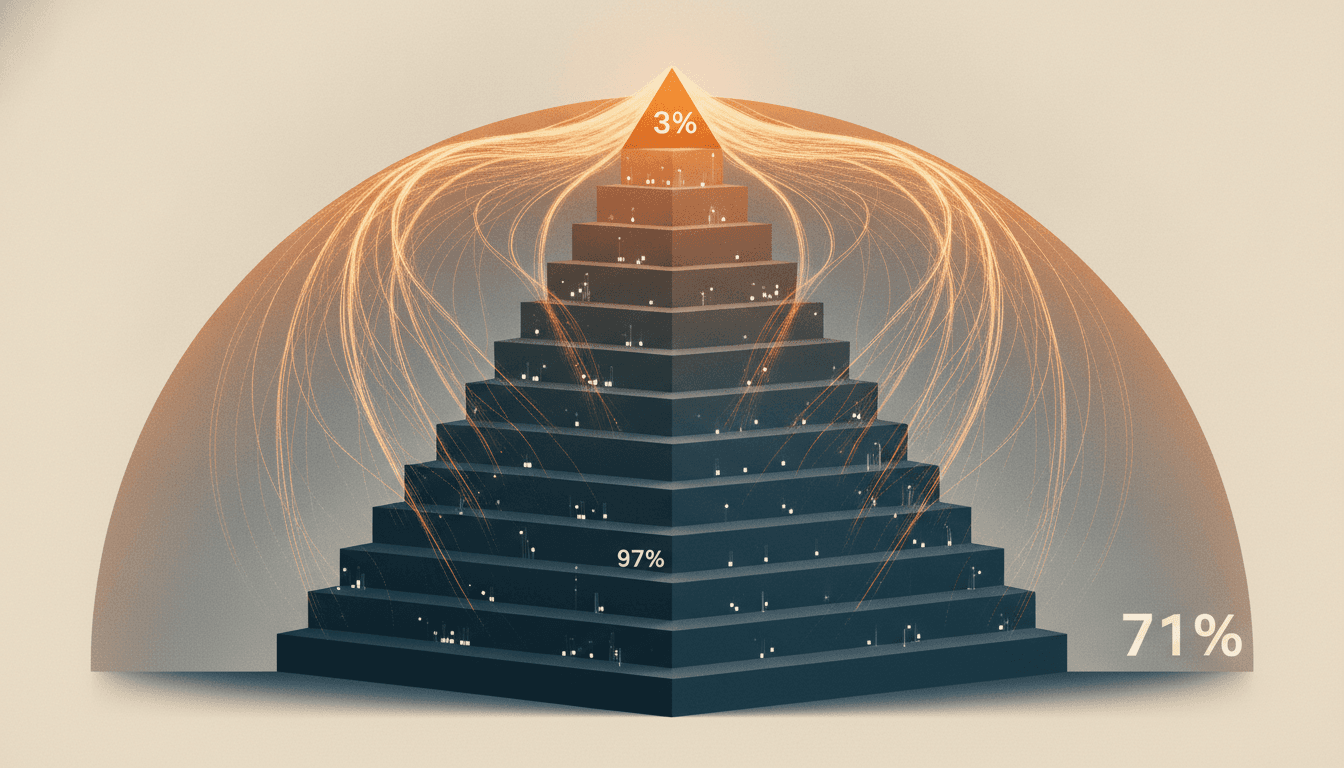
In 2026, the top 2% of brands by AI citation rate will capture $4.2 billion in e-commerce revenue—while most Fortune 500 companies still have no strategy to compete for a single citation. Here's how the citation economy works, who is winning, and why the window to act is closing faster than most CMOs realize.
15 min read

# The AI Search Citation Economy: How Top Brands Became Trusted Sources in Generative Commerce (2026 Analysis)

*In 2026, the top 2% of brands by AI citation rate will capture $4.2 billion in e-commerce revenue. Meanwhile, 86% of Fortune 500 companies have no strategy to compete for a single citation. This is not a channel optimization problem. It's a structural shift that will define which brands survive the next decade of commerce.*

[IMG: A split visualization showing traditional search results (thousands of blue links) collapsing into a single AI recommendation panel surfacing 2–5 brand citations, with revenue flow arrows pointing to the cited brands]


---


## The Compression of E-Commerce Visibility: Why Rankings No Longer Matter

The economics of brand discovery have fundamentally changed—and most enterprise leaders haven't noticed yet.

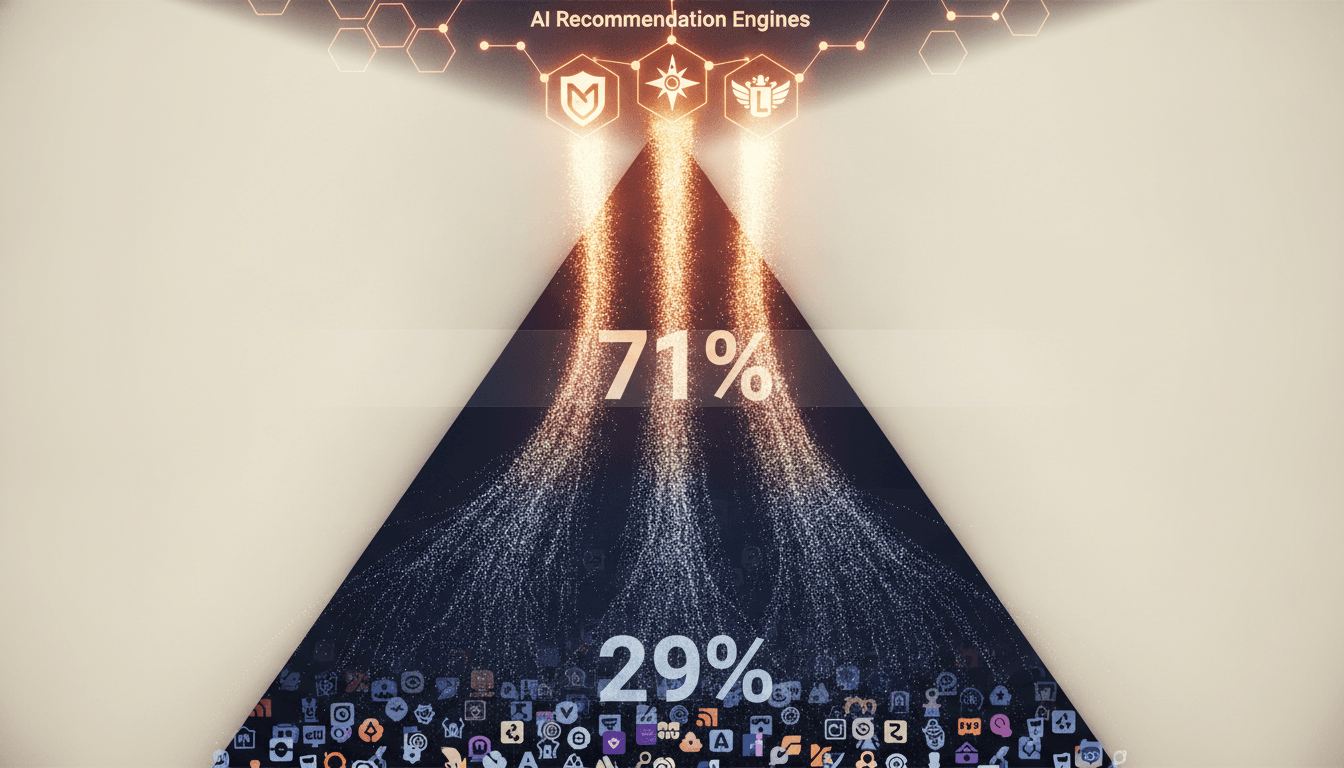
AI search engines don't rank thousands of products. They recommend 2–5 trusted sources per query. The brands that built citation authority in 2024–2025 are already locking in competitive advantages that late movers will spend years trying to breach.

This is not about optimizing for the next algorithm update. This is about recognizing that the dominant channel of e-commerce discovery by 2027 will be AI citations—and the window to establish authority is closing.

The structural shift is stark. [Gartner Digital Commerce Research](https://www.gartner.com) reports that generative AI search engines typically surface between 2 and 5 brand citations per product recommendation query, compared to the 10 blue links of traditional search. That's a 50–80% compression of competitive visibility—making each citation exponentially more valuable.

For enterprise brands built on keyword rankings and paid search volume, this compression is not an inconvenience. It's an existential threat to their discovery economics.

The scale of displacement is already measurable. [eMarketer / Insider Intelligence](https://www.emarketer.com) forecasts that 45% of all e-commerce product discovery interactions will be driven by AI citations by 2027, surpassing paid search (28%) and organic SEO (19%). Brands optimizing for keyword rankings are optimizing for a channel that will represent less than 20% of discovery within two years.

In the winner-take-most dynamics of citation economics, citation #1 captures disproportionate traffic and conversion advantage versus citation #3 or #4. The difference between inclusion and exclusion becomes a direct revenue variable.

As [Shelly Kramer, Principal Analyst at Futurum Research](https://futurumgroup.com), puts it: "When an AI assistant recommends three brands in response to a purchase query, the other 47,000 brands in that category simply do not exist for that consumer. The compression of visibility is absolute."

Most enterprise brands are dangerously unprepared. They're still measuring share of voice in search results pages that consumers are increasingly bypassing entirely.

The brands recognizing this structural change now—and investing accordingly—are the ones defining the competitive landscape of e-commerce for the next decade.


---


## The Citation Economy Explained: How AI Builds Trust and Drives Revenue

[IMG: Infographic showing the trust transfer mechanism: AI assistant → expert endorsement perception (68%) → pre-qualified buyer intent → 3.1x conversion rate lift versus paid search]

The citation economy operates on a fundamentally different trust mechanism than traditional paid or organic search. When an AI assistant recommends a brand, consumers don't experience it as advertising. They experience it as expert guidance.

According to the [Edelman Trust Barometer Special Report: AI and Consumer Commerce, 2025](https://www.edelman.com), 68% of shoppers who receive a brand recommendation from an AI assistant treat it as an "expert endorsement," compared to just 21% for sponsored search results. That's a 3.2x trust premium—and it directly shapes purchase behavior.

That trust premium translates into measurable commercial advantage. [McKinsey & Company's research on the consumer decision journey](https://www.mckinsey.com) shows that AI-cited brands report conversion rates 3.1x higher than equivalent paid search traffic. The mechanism is straightforward: AI recommendation context pre-qualifies buyer intent and transfers authority from the AI engine to the recommended brand.

Consumers arrive with higher confidence and lower purchase friction than any paid channel can deliver.

The revenue concentration this creates is already dramatic. [Forrester Research's Generative Commerce Revenue Report (Q1 2025)](https://www.forrester.com) projects that the top 2% of brands by AI citation rate will capture $4.2 billion in AI-attributed e-commerce revenue by end of 2026. This isn't a projection based on hypothetical future behavior—it's based on current citation rates, current conversion premiums, and adoption trajectories already in motion.

Here's how the compounding dynamic works:

- Each citation generates additional training signal, increasing the probability of future citations
- Higher citation rates drive higher revenue, which funds greater investment in citation authority infrastructure
- Greater citation authority creates deeper third-party editorial validation, which further strengthens AI training signals
- Brands that entered this loop in 2023–2024 are already 2–3 compounding cycles ahead of brands entering in 2026

As [Greg Silverman, Global Director of Brand Economics at Interpublic Group](https://www.interpublic.com), observes: "CFOs are asking CMOs a question they never asked before: 'What is our AI citation rate compared to competitors?' That single question signals how quickly the citation economy has moved from a marketing curiosity to a board-level business performance metric."

The citation economy is not theoretical. It's already generating outsized, measurable returns for early movers—and the gap is widening every quarter.


---


## What Actually Determines Citation Authority: It's Not Domain Authority or Keywords

[IMG: Side-by-side comparison graphic: traditional SEO ranking factors (domain authority, backlinks, keyword density) versus AI citation authority factors (structured data, third-party editorial validation, semantic consistency, verified reviews)]

Here's the most consequential misconception in enterprise marketing today: strong traditional SEO assets automatically transfer to AI citation authority. They don't.

[BrightEdge's AI Search Visibility Study (2025)](https://www.brightedge.com) found that brands with fully structured product data environments achieve **4.7x higher AI citation rates** than brands with equivalent domain authority but unstructured data. Domain authority and keyword rankings are not the currency of the citation economy.

Structured data quality, third-party editorial validation, and semantic brand consistency are.

The primary determinants of AI citation inclusion differ sharply from traditional SEO signals:

**Structured data engineering.** Schema.org markup, rich product feeds, and verified review ecosystems make product information machine-readable and trustworthy to AI systems. Without clean, complete structured data, no other strategy matters.

**Third-party editorial validation.** Reviews from authoritative publications, industry analyst mentions, and expert endorsements are the single strongest predictor of AI recommendation inclusion—outweighing brand-owned content signals by a factor of 6:1, according to [Semrush's AI Visibility Ranking Factors Report (2025)](https://www.semrush.com).

**Semantic brand consistency.** Coherent, consistent brand and product descriptions across owned, earned, and structured data channels create coherence signals that AI systems reward. Contradictions undermine trust.

**Depth of authoritative mentions.** The breadth and authority of third-party references across the open web signals trustworthiness to AI training data in ways that owned content cannot replicate.

The implication for enterprise marketing teams is significant. Investment in Schema.org markup, verified review feeds, and rich product data is no longer just a technical SEO best practice—it's a prerequisite for citation consideration.

Without structured data infrastructure, no amount of PR budget or content production will drive AI citation inclusion.

As [Brent Adamson, Principal Advisor at Gartner Marketing Practice](https://www.gartner.com), frames it: "Citation authority is the new market share. The brands winning in AI citations are the ones that have become genuinely hard to ignore—not just technically optimized."


---


## The Competitive Advantage of High Citation Rates: A Strategic Moat That Compounds

[IMG: Compounding advantage curve showing citation authority growth over time for early movers (2023–2024 entrants) versus late movers (2026 entrants), with revenue gap widening exponentially]

The strategic moat that citation authority creates isn't static—it compounds.

[Hexagon's AI Commerce Index (2025 Forecast Report)](https://joinhexagon.com) documents that enterprise brands beginning structured AI citation programs in 2023–2024 are now seeing self-reinforcing returns. Each incremental citation creates additional training data signal, increasing the probability of future citations in an authority loop competitors find increasingly difficult to disrupt.

This isn't a gap that budget can close. It's a structural advantage built on trust signals accumulated over years.

The competitive concentration is already visible at the category level. In 15 of 20 major e-commerce product categories analyzed by [Profound AI Brand Visibility Report (Q1 2025)](https://www.profound.com), the same 3–7 brand names appear in over 80% of AI-generated recommendation responses, regardless of which AI platform is queried. The citation economy isn't distributing visibility broadly—it's concentrating it among a small number of established authorities.

The enterprise-level strategic gap is equally stark. According to the [CMO Council's State of Marketing Intelligence Survey (2025)](https://www.cmocouncil.org):

- **73%** of Fortune 500 CMOs acknowledge AI search is materially affecting their brand's organic discovery rates
- **Only 14%** have a dedicated AI citation or generative search strategy in place as of Q2 2025
- This **59-point gap** represents a window of opportunity that early movers are actively exploiting

For brands moving now, the opportunity is clear: establish citation authority before competitive parity forms. For brands that wait, the cost of entry rises exponentially.

Citation authority is built on long-term trust signals and third-party validation that cannot be manufactured quickly. The 2025–2026 window is critical—and it's closing.


---


## How Brands Build Citation Authority: The Four Pillars of Generative Presence

[IMG: Four-pillar framework diagram showing: Structured Data Engineering, Third-Party PR/Editorial Strategy, AI-Native Content Architecture, and Citation Monitoring, unified under a 'Generative Presence' capability layer]

Building citation authority isn't a single tactic. It's an integrated capability requiring four distinct, coordinated functions operating as a unified "generative presence" strategy. Brands with fully integrated generative presence functions achieve **4.7x higher citation rates** than those with fragmented, siloed approaches.

**Pillar 1: Structured Data Engineering**

Structured data is the prerequisite for citation consideration. Without it, no amount of PR or content investment will drive AI citation inclusion. This means implementing Schema.org markup across all product pages, maintaining rich product feeds with accurate and complete attributes, and building verified review ecosystems that provide AI systems with trustworthy, machine-readable product intelligence.

Structured data engineering is a technical function, but its business impact is commercial: it's the foundation on which all other citation authority is built.

**Pillar 2: Third-Party PR and Editorial Strategy**

Third-party editorial mentions—from review publications, industry analysts, and authoritative media—are the single strongest predictor of AI recommendation inclusion. A dedicated PR and editorial strategy focused on generating authoritative third-party mentions isn't optional in the citation economy; it's the primary driver of AI training signal quality.

Brands that treat PR as a brand awareness function, rather than a citation authority function, are leaving their most powerful citation lever underutilized.

**Pillar 3: AI-Native Content Architecture**

AI-native content means creating content that answers the specific questions AI systems ask when evaluating citation candidates. What makes a product the best choice for a specific use case? What third-party evidence supports that claim? This differs fundamentally from keyword-optimized content.

It requires understanding the retrieval logic of generative engines and structuring content to provide clear, authoritative answers to the evaluative queries those engines run when deciding which brands to cite.

**Pillar 4: Citation Monitoring**

Citation monitoring provides real-time feedback on which strategies are driving inclusion across different AI recommendation engines—ChatGPT, Perplexity, Claude, Google AI Overviews, and others. Google's AI Overviews now appear in over [47% of all product-related search queries in the United States](https://sparktoro.com), according to SparkToro & Datos Search Behavior Analysis (2025).

Citation monitoring across platforms is a strategic necessity, not a nice-to-have. Without it, brands cannot optimize, cannot measure ROI, and cannot identify the citation gaps competitors are exploiting.


---


## The 2027 Forecast: Why AI Citations Will Dominate E-Commerce Discovery

[IMG: Channel share forecast chart (2022–2027) showing AI citations rising to 45%, paid search declining to 28%, organic SEO declining to 19%, with revenue attribution overlays]

The 2027 forecast isn't speculative. It's an extrapolation of trends already visible in current AI adoption rates, training data composition, and consumer behavior patterns across major e-commerce platforms.

By 2027, AI citations are projected to represent **45% of all e-commerce product discovery interactions**, compared to 28% for paid search and 19% for organic SEO, according to [eMarketer / Insider Intelligence's Generative AI Commerce Forecast 2025–2028](https://www.emarketer.com). This represents a fundamental shift in the dominant channel of commerce—from search-based discovery to recommendation-based discovery—within the next 18–24 months.

The economics of customer acquisition will be fundamentally altered for brands on both sides of the citation divide. Cited brands will benefit from a 3.1x conversion rate advantage and the 68% expert endorsement trust premium, producing lower customer acquisition costs and higher customer lifetime value than any paid channel can deliver.

Non-cited brands will face rising CAC, declining organic visibility, and structural disadvantage in the channel that will represent the plurality of all e-commerce discovery.

The market concentration dynamic makes this forecast particularly consequential. In 15 of 20 major product categories, the same small cohort of brands already dominates AI recommendation responses across all major AI platforms. By 2026, an estimated 12 million monthly consumer product discovery interactions are projected to occur through AI recommendation engines—up from approximately 2.3 million monthly Google Shopping clicks captured by comparable brand cohorts in 2022.

That's a 5x shift in the locus of e-commerce discovery, per [Hexagon's AI Commerce Index](https://joinhexagon.com).

Brands without citation authority by 2027 won't simply be missing an emerging channel. They'll be ceding the dominant channel of near-future commerce to a small group of competitors who moved earlier and moved decisively.


---


## The Strategic Imperative: Why 2025–2026 Is the Critical Window

The 59-point gap between CMO awareness (73%) and citation strategy adoption (14%) is the defining strategic opportunity in enterprise marketing right now.

It means the majority of the market has identified the threat but hasn't mobilized to address it. That creates a window for early movers to establish citation authority before competitive parity forms. Brands establishing citation programs in 2025 will have 2–3 years of compounding advantage before the market catches up.

The cost of late entry isn't linear—it's exponential. Citation authority is built on long-term trust signals: third-party editorial validation accumulated over years, structured data ecosystems maintained consistently, and semantic brand authority reinforced across hundreds of third-party sources.

A brand entering the citation economy in 2026–2027 will face competitors who've been building these signals since 2023–2024. The gap in citation rates will reflect years of compounding advantage that cannot be replicated with a single campaign or budget injection.

The defensibility of citation authority is equally important. Unlike paid search, where any competitor can outbid for visibility, citation authority is based on structural factors—data quality, third-party validation, semantic consistency—that require sustained, coordinated investment.

For brands establishing citation authority now, this creates a durable competitive moat. For brands that delay, it creates a structural disadvantage defining their competitive position for years.

As [Amanda Whalen, Chief Marketing Officer at ThoughtWorks](https://www.thoughtworks.com), observes: "Enterprise organizations are witnessing the most significant restructuring of e-commerce visibility since the advent of Google Shopping. The brands that will dominate the next decade are not the ones optimizing for clicks—they are the ones engineering the conditions under which AI systems learn to trust and recommend them."

The brands that will dominate the citation economy in 2027 are already making moves in 2025. Enterprise marketing teams should understand how their brand stacks up against competitors in AI recommendation engines—and what citation authority strategy will work for their market. [Book a 30-minute consultation with generative presence strategists to audit citation opportunity and build a roadmap to authority.](https://calendly.com/ramon-joinhexagon/30min)


---


## What This Means for Your Brand: From Strategy to Action

[IMG: Action roadmap graphic showing the four-step citation authority audit process: Citation Presence Audit → Structured Data Assessment → Editorial Presence Evaluation → AI-Native Content Gap Analysis]

Most brands have zero visibility into their current citation presence across major AI recommendation engines. Before any strategy can be built, that visibility gap must be closed.

Here's how enterprise marketing teams should approach the transition from awareness to action.

**Audit current citation presence.** Run structured queries across ChatGPT, Perplexity, Claude, and Google AI Overviews for primary product categories and use cases. Document which brands are being cited, how frequently, and in what contexts. This baseline audit reveals both the competitive landscape and the specific citation gaps that need closing.

**Assess structured data maturity.** Structured data is the prerequisite—without it, no strategy will drive citation inclusion. Evaluate current Schema.org implementation, product feed completeness, and verified review ecosystem. Identify gaps and prioritize remediation before investing in editorial or content strategies.

**Evaluate third-party editorial presence.** Inventory existing reviews, media coverage, analyst mentions, and expert endorsements. Assess the authority and recency of these sources. Third-party editorial validation is weighted heavily in AI citation decisions—a gap here is a direct gap in citation probability.

**Define AI-native content strategy.** Identify the specific questions AI systems ask when evaluating brands and products. What makes a product the best choice for a specific use case? What third-party evidence supports that claim? Build content that answers these evaluative questions with authority and specificity.

**Establish citation monitoring as ongoing function.** Citation monitoring provides real-time feedback on strategy effectiveness and competitive positioning. This isn't a one-time audit—it's a continuous capability that must sit above traditional SEO and content silos with dedicated ownership and measurable KPIs.

Citation authority is not a side project. It's a core business objective with direct revenue implications. The brands that treat it as such in 2025 will be the ones capturing disproportionate AI-attributed revenue in 2027.

Enterprise marketing teams should not let their brands become late movers in the citation economy. The window to establish authority is open—but it won't stay open forever. [Schedule a consultation to learn how generative presence strategies help brands build citation authority and capture AI-attributed revenue.](https://calendly.com/ramon-joinhexagon/30min)

Visit [joinhexagon.com](https://joinhexagon.com) to explore generative presence solutions and citation authority frameworks.
H
Hexagon Team
Published July 5, 2026