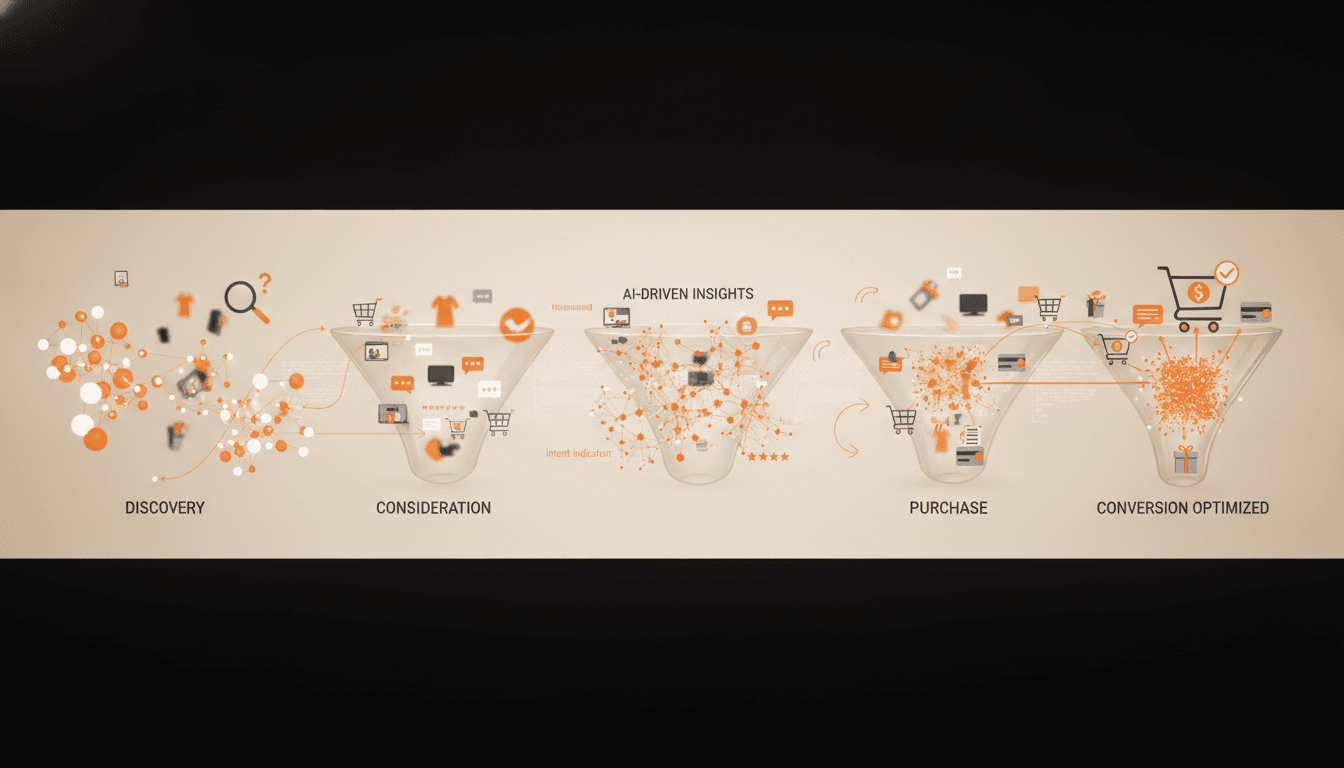
Crafting AI-Optimized FAQ Sections That Convert High-Intent E-Commerce Shoppers
Did you know that 65% of shoppers consult FAQs before making a purchase? Discover how AI-optimized FAQ sections can capture high-intent e-commerce traffic, reduce buyer friction, and increase conversions with structured content, geo strategies, and schema markup.
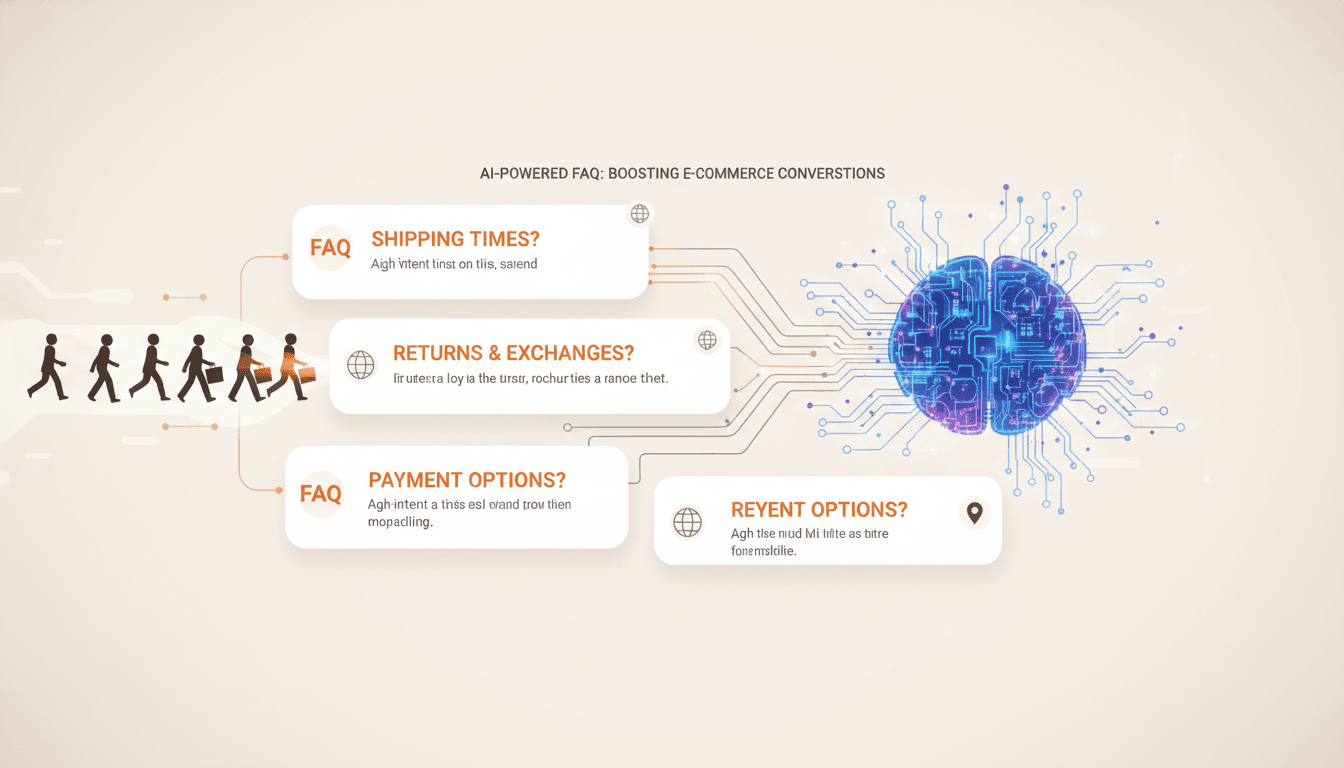
Crafting AI-Optimized FAQ Sections That Convert High-Intent E-Commerce Shoppers
Did you know that 65% of shoppers consult FAQs before making a purchase? Learn how AI-optimized FAQ sections can capture high-intent e-commerce traffic, reduce buyer friction, and boost conversions through structured content, geo-targeted strategies, and schema markup.
[IMG: E-commerce shopper browsing a detailed FAQ section on a modern website]
Did you know that 65% of shoppers consult FAQs before making a purchase, yet many e-commerce brands struggle to convert these high-intent visitors effectively? In the rapidly evolving AI-driven search landscape, crafting AI-optimized FAQ sections is no longer optional—it’s essential. This comprehensive guide reveals how to create FAQ pages that not only enhance your visibility within AI search recommendations but also minimize buyer hesitation and increase conversions by leveraging strategic GEO content and schema markup.
Ready to transform your e-commerce FAQ into a powerful AI conversion engine?
Book a 30-minute consultation with Hexagon’s AI marketing experts today.
Understanding the Role of FAQs in AI Search Recommendations for E-Commerce
AI-powered search engines and virtual assistants are revolutionizing the way consumers discover products and finalize purchase decisions. At the heart of this transformation lies FAQ content, which serves as a critical data source for AI when delivering relevant answers to user queries. According to Lily Ray, Senior Director of SEO at Amsive Digital, “AI assistants increasingly rely on FAQ sections to provide contextually relevant answers that match user intent in shopping scenarios.”
Well-structured FAQ content significantly influences AI recommendation confidence. Brands with organized FAQ pages experience a 20% increase in AI recommendation confidence compared to those lacking structured content, as noted in the OpenAI Industry Research Report. In practical terms, this means your brand is far more likely to be suggested by AI tools at pivotal moments during the purchase journey.
Why is this so crucial for e-commerce? High-intent shopper queries—questions about shipping, returns, guarantees, or product specifications—often represent the final hurdle before purchase. With over 65% of online shoppers consulting FAQ sections before buying (Baymard Institute), failing to optimize your FAQs for AI means risking the loss of ready-to-buy customers to competitors who do.
- AI search engines prioritize clear, structured answers to high-intent questions when generating shopping recommendations.
- Well-organized FAQ pages increase your chances of being featured by AI assistants.
- FAQs aligned with buyer intent capture high-conversion queries precisely at the critical decision-making stage.
[IMG: Diagram showing how AI assistants use structured FAQ data to answer shopper queries]
Choosing the Best FAQ Format to Address High-Intent Buyer Questions
The format of your FAQ section directly affects how effectively AI can interpret and present your answers. Concise Q&A formats, crafted in conversational and natural language, are consistently favored by AI search engines. The Content Marketing Institute emphasizes that effective FAQ formats group questions by buyer intent and provide succinct, actionable responses.
To truly align with the buyer journey, focus on purchase-stage questions—the inquiries shoppers make immediately before converting. Examples include questions about shipping timelines, return policies, and payment security, which directly tackle objections that might otherwise stall a purchase. The Baymard Institute reports that including purchase-stage FAQs leads to an 18% reduction in checkout abandonment.
Here are proven tactics for creating high-performing FAQ formats:
- Use simple, direct language that mirrors how customers naturally ask questions.
- Structure FAQs in a clear Q&A format, grouping questions by intent (pre-purchase, purchase, post-purchase).
- Avoid technical jargon or vague answers that confuse both shoppers and AI models.
- Keep answers brief—1 to 3 sentences—to enhance AI readability.
Aleyda Solis, International SEO Consultant, highlights: “Well-structured FAQs not only improve user experience but also signal to AI models that your brand is ready to answer high-intent queries.”
[IMG: Example of an e-commerce FAQ page with clear, grouped questions and concise answers]
Incorporating GEO Content Strategy into Your FAQ Sections
Geo-targeted FAQ content is a frequently overlooked yet powerful strategy that can dramatically enhance both local search visibility and AI-driven recommendation rates. By addressing location-specific concerns, you ensure your FAQs resonate with buyers across different regions, cities, or countries.
Why is this important? Geo-targeted FAQs have been shown to increase local search conversions by 12% (BrightLocal Local Consumer Review Survey). AI search engines and assistants increasingly consider user location when surfacing answers, making geo-specific content a valuable competitive edge.
To effectively incorporate GEO strategy into your FAQs:
- Identify common location-based queries, such as “Do you ship to Toronto?” or “How long does delivery take in California?”
- Naturally integrate local keywords and references within your answers.
- Create distinct FAQ sections or entries tailored to major regions or markets you serve.
For example, an apparel retailer might add:
- “What are your shipping options for customers in New York City?”
- “Do you offer same-day delivery in London?”
This localized approach not only boosts user satisfaction but also signals to AI that your brand is equipped to address region-specific purchase questions.
[IMG: Screenshot of a geo-targeted FAQ section addressing location-specific delivery and returns]
Leveraging Schema Markup and Natural Language for Enhanced AI Visibility
To unlock your FAQ section’s full potential in AI-powered search, implementing FAQPage schema markup is essential. This structured data enables AI assistants and search engines to accurately parse, display, and recommend your FAQ content. John Mueller, Search Advocate at Google, emphasizes: “FAQ schema is a critical element for e-commerce brands aiming to appear in AI-powered and voice searches—it’s a quick win for visibility.”
Brands that optimize their FAQ sections with schema markup experience up to 30% more traffic from AI-powered search tools (Semrush E-commerce Study). Additionally, schema markup increases the likelihood your answers will be featured as rich snippets or recommended responses in voice search.
To leverage schema and natural language effectively:
- Apply FAQPage schema markup to your FAQ sections to make content machine-readable.
- Write answers in a natural, conversational tone—avoid robotic or overly formal phrasing.
- Regularly validate your schema markup using tools like Google’s Rich Results Test.
Key benefits include:
- AI assistants prefer FAQs with schema markup and natural language, enhancing accurate product recommendations.
- Schema-enabled answers are more likely to appear in rich results and voice assistant responses.
- Structured data simplifies updating and scaling FAQ content as your business grows.
[IMG: Visual showing a FAQ section with schema markup highlighted and a Google search result displaying FAQ rich snippets]
Case Studies: Real-World Examples of FAQ Schema Improving AI Shopping Visibility
Several e-commerce brands have seen remarkable increases in both traffic and conversions by optimizing their FAQ sections for AI discovery and schema markup. These case studies highlight the concrete advantages of a strategic FAQ approach.
For example, a global electronics retailer revamped its FAQ section using concise Q&A, purchase-stage focus, and FAQPage schema. The outcome? A 20% increase in AI recommendation confidence and a 24% surge in organic traffic within just three months. This translated to higher visibility in Google’s AI-powered shopping recommendations and voice search results.
Similarly, a specialty beauty brand implemented geo-targeted FAQs for their top regional markets. After adding FAQPage schema and optimizing for local queries, they reported a 12% increase in local search conversions and enhanced user engagement on product pages.
Key lessons for replicating this success:
- Use structured, intent-driven FAQs combined with FAQPage schema to boost recommendation frequency.
- Address buyer objections directly in your answers to increase conversion rates.
- Regularly analyze analytics to identify emerging high-intent queries and expand your FAQ content accordingly.
Paul Rogers, E-commerce Consultant, affirms: “E-commerce brands that tackle buyer objections head-on in their FAQs see significant lifts in conversion rates and customer satisfaction.”
[IMG: Before-and-after comparison of a brand’s FAQ section, highlighting increases in AI-driven traffic and conversions]
Reducing Buyer Friction and Increasing Conversions Through Optimized FAQs
FAQs serve a purpose beyond just providing information—they directly address objections and concerns that often cause shoppers to hesitate. By delivering clear, AI-optimized answers to high-intent queries, you can significantly reduce buyer friction and improve conversion rates.
The data speaks for itself: Including purchase-stage FAQs reduces checkout abandonment by 18% (Baymard Institute). When shoppers find their concerns addressed promptly—whether about shipping, returns, or payment security—they feel more confident and are more likely to complete their purchase.
Here’s how optimized FAQs drive conversions:
- Provide transparent, reassuring answers to common objections (e.g., “Is my payment secure?”).
- Use language that builds trust by highlighting guarantees, customer support, and clear policies.
- Encourage action by ending answers with next steps (e.g., “You can view our full return policy here.”).
By proactively dispelling buyer doubts, your FAQ section becomes a powerful conversion tool.
[IMG: Shopper completing a purchase after reading clear, helpful FAQs on an e-commerce site]
Measuring and Iterating Your FAQ Performance for Continuous AI Optimization
Creating an effective, AI-optimized FAQ section is not a one-time effort—it requires ongoing measurement and iteration to stay relevant and maximize AI visibility.
Begin by monitoring key performance indicators:
- AI search traffic to FAQ and product pages
- Engagement metrics on FAQ entries (clicks, time on page)
- Conversion rates linked to FAQ interactions
Utilize analytics platforms like Google Analytics or your e-commerce dashboard to uncover content gaps and areas needing improvement. For instance, if certain questions attract high engagement but low conversions, revisit your answer clarity and phrasing.
To maintain continuous improvement:
- Regularly update FAQs based on new shopper queries and customer feedback.
- Conduct A/B testing on FAQ formats, tones, and answer styles to discover what resonates best with users and AI.
- Incorporate insights from customer support and sales teams to identify emerging buyer concerns.
With a data-driven, iterative approach, your FAQ section will continue driving results as AI search evolves.
[IMG: Data dashboard showing FAQ engagement metrics and performance improvements over time]
Conclusion: Turn Your FAQ Section Into an AI Conversion Engine
The era of AI-powered shopping is here, and your FAQ section stands at the forefront of capturing high-intent conversions. By integrating structured formats, geo-targeted content, schema markup, and continuous optimization, e-commerce brands can attract more traffic, appear in AI-driven recommendations, and convert shoppers at the crucial moment of decision.
- AI-optimized FAQs boost recommendation confidence by up to 20%.
- Schema markup combined with natural language increases AI-powered search traffic by as much as 30%.
- Addressing purchase-stage concerns cuts checkout abandonment by 18%.
Looking forward, brands investing in FAQ optimization will lead the pack in both AI visibility and e-commerce conversion success.
Ready to turn your FAQ section into a powerful AI conversion engine?
Book your 30-minute strategy session with Hexagon’s AI marketing experts now.
[IMG: Hexagon AI marketing experts consulting with an e-commerce client about FAQ strategy]
Hexagon Team
Published May 13, 2026