AI Search Analytics: Measuring and Optimizing E-commerce Brand Visibility
With over half of online shoppers now using AI assistants for product discovery, e-commerce brands must rethink how they measure and optimize visibility. This comprehensive guide reveals how AI search analytics empowers you to track AI-driven shopper intent, analyze unique AI referral traffic, and optimize product data to dominate in 2025 and beyond.
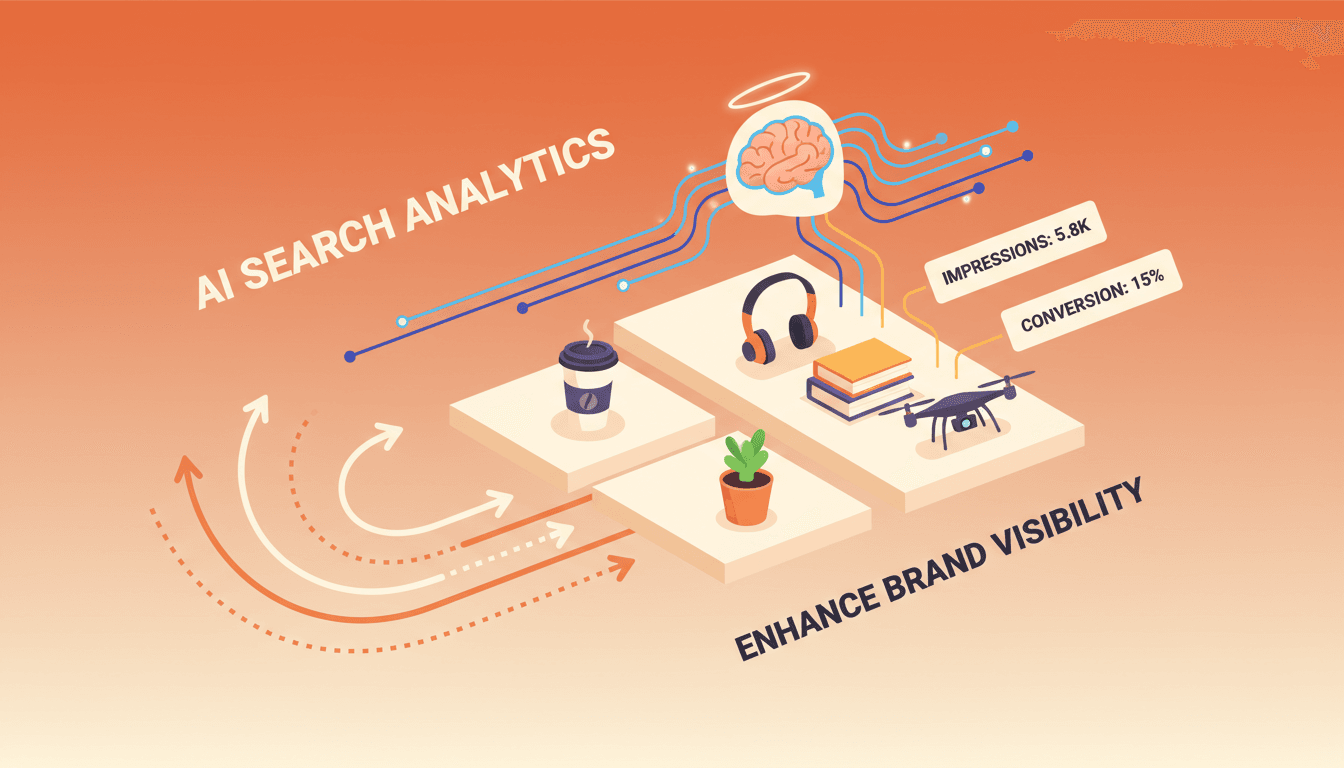
AI Search Analytics: Measuring and Optimizing E-commerce Brand Visibility
With more than half of online shoppers now turning to AI assistants for product discovery, e-commerce brands face a pivotal shift in how they measure and optimize visibility. This in-depth guide uncovers how AI search analytics empowers you to track AI-driven shopper intent, analyze unique AI referral traffic, and fine-tune product data to dominate the digital marketplace in 2025 and beyond.
Understanding the Rise of AI-Powered Search in E-commerce
[IMG: Illustration of shoppers using AI assistants on smartphones and desktops to discover products]
The e-commerce landscape is undergoing a profound transformation as AI-powered search assistants become essential tools for online product discovery. Insider Intelligence reports that over 50% of online shoppers now depend on AI assistants such as ChatGPT, Google Gemini, and Perplexity to find and evaluate products. This rapid shift is revolutionizing how brands gain visibility and influence purchasing decisions within digital marketplaces.
Unlike traditional keyword-driven search, AI-driven search prioritizes personalized, conversational recommendations tailored to individual shopper preferences. As Brian Solis, Global Innovation Evangelist at Salesforce, emphasizes, “AI search analytics are rapidly becoming essential as conversational commerce transforms the way consumers discover and interact with brands online.” In this evolving landscape, conventional SEO metrics capture only a fraction of the full picture.
To stay ahead, brands must adapt swiftly: 62% of e-commerce marketers plan to increase their investment in AI search analytics tools in 2025, recognizing the critical need to align with changing shopper behaviors (eMarketer). Embracing these new tools and metrics is now fundamental to maintaining—and expanding—brand visibility in an increasingly AI-driven marketplace.
What is AI Search Analytics and Why Does It Matter?
[IMG: Conceptual graphic showing AI search analytics dashboard with unique AI metrics]
AI search analytics involves measuring and analyzing e-commerce visibility, shopper intent, and conversion performance specifically within AI-powered search environments. Unlike traditional analytics that focus on keyword rankings and generic traffic sources, AI search analytics reveals how AI assistants recommend products, the factors influencing their choices, and how shoppers engage in conversational interactions.
For instance, AI search analytics platforms track unique metrics such as AI assistant referral traffic and recommendation share—insights that traditional tools overlook. This granular visibility allows brands to pinpoint exactly how, when, and why their products appear in AI-generated results across multiple touchpoints (Gartner).
The benefits are substantial: brands leveraging AI search analytics report an average 25% increase in digital marketing ROI, according to McKinsey & Company. This uplift stems from the ability to track AI shopper intent, enabling marketers to refine strategies, personalize experiences, and capture high-value conversions originating from AI-powered journeys. As Aleyda Solis, International SEO Consultant, states, “Understanding how your brand is recommended by AI assistants is now as important as traditional SEO—if not more so—as shopper journeys increasingly begin with AI-powered queries.”
Key Metrics to Track for AI Search Visibility and Performance
[IMG: AI analytics dashboard highlighting key AI-powered search metrics]
To thrive in AI-powered search, e-commerce brands must monitor a new set of performance indicators. Here’s how industry leaders measure and optimize AI search visibility:
- AI Assistant Referral Traffic: Tracks the source and volume of visitors referred by AI assistants. Knowing which assistants drive the most traffic enables brands to focus optimization where it counts.
- Recommendation Share: Measures the frequency with which a brand’s products are suggested by AI assistants compared to competitors. Optimizing product data for AI search can boost a brand’s recommendation likelihood by up to 30% (Search Engine Journal).
- AI-Driven Conversion Rates: Captures purchases and revenue stemming directly from AI-initiated sessions. This metric highlights which AI interactions generate the highest-value conversions.
- Natural Language & Conversational Analytics: Examines the intent behind natural language queries and dialogue context, offering deep insights into shopper desires and motivations (Forrester Research).
- Unified Analytics Integration: Merges AI search metrics with traditional search data to provide a comprehensive view of performance across all digital channels (TechCrunch).
Emerging dashboards now offer real-time monitoring and benchmarking of these AI-specific metrics. Satya Nadella, CEO of Microsoft, remarks, “AI-driven search analytics are unlocking new opportunities for e-commerce marketers to personalize experiences and optimize for higher-value conversions.” By integrating these metrics, brands can identify strengths, uncover gaps, and benchmark their AI visibility against industry leaders.
How to Track AI Search Traffic and Conversions Effectively
[IMG: Step-by-step visual showing setup of AI referral tracking and AI-driven conversion funnels]
Tracking AI search traffic and conversions demands a blend of innovative techniques and proven best practices. Here’s how brands can establish robust, actionable measurement frameworks:
- Set Up AI Assistant Referral Tracking: Implement UTM parameters and AI-specific tags to accurately capture traffic originating from AI assistants. This ensures clear attribution of sessions and conversions stemming from AI-powered search.
- Leverage Conversational Analytics: Employ tools that decode shopper intent from natural language queries and AI-driven dialogues. These platforms analyze conversation logs to extract themes, preferences, and purchase signals.
- Unify Analytics Platforms: Use solutions that integrate AI and traditional search data to deliver a comprehensive view of shopper journeys across all touchpoints. Unified dashboards streamline reporting and simplify cross-channel analysis.
- Monitor AI-Driven Conversion Funnels: Segment conversion funnels by referral source to track how AI-driven users move from discovery to purchase. This helps identify which AI interactions yield the highest conversion rates.
- Overcome Tracking Challenges: Since AI search often obscures referrer data or limits attribution, collaborate with analytics vendors to access enhanced AI referral reporting and implement advanced tagging strategies.
Neglecting AI search tracking carries significant risks—brands that fail to optimize for AI search may experience up to a 20% drop in discoverability as shopper preferences evolve (Forbes). Fortunately, unified analytics solutions now enable confident tracking, benchmarking, and action on AI search data. The brands that succeed will be those that consistently measure, interpret, and optimize for AI-driven shopper intent at every touchpoint (Sucharita Kodali, Forrester Research).
Ready to boost your e-commerce brand’s AI search visibility and conversions? Book a free 30-minute consultation with Hexagon’s AI marketing experts to get started today: https://calendly.com/ramon-joinhexagon/30min
Optimizing Your E-commerce Brand for AI Search Engines
[IMG: Before-and-after example of e-commerce product data optimized for AI search]
AI search engines interpret and recommend products based on structured, context-rich data. To maximize visibility, brands should focus on:
- Implementing Structured Product Data and Schema Markup: Utilize schema.org markup and structured data formats to make product details easily digestible for AI assistants. This enhances the precision of AI recommendations.
- Crafting Content for Natural Language and Conversational AI: Develop product descriptions, titles, and FAQs using conversational language and question-based formats that resonate with AI shopper intent.
- Aligning with AI Shopper Intent Phrases: Analyze AI search analytics to uncover common phrases, queries, and conversational triggers. Refine product content to closely match these intent signals, boosting recommendation likelihood.
- Leveraging AI Search Analytics Insights: Continuously update product pages and metadata based on real-time analytics, emphasizing queries and interactions that generate the most AI referrals.
- Learning from Leading Brands: Brands optimizing product data for AI search observe up to a 30% higher chance of being recommended (Search Engine Journal). Top retailers now prioritize AI-focused SEO within their content and technical strategies.
Investing in AI search analytics and optimization is a top priority for marketing leaders entering 2025 (eMarketer). Brands that proactively structure their data, tailor content for conversational discovery, and act on AI-driven insights are best positioned to capture the expanding share of AI-powered shoppers.
Tools and Dashboards for Monitoring AI Search Analytics
[IMG: Comparison chart of leading AI search analytics platforms and dashboard features]
Selecting the right analytics tools is crucial for extracting actionable AI search insights. E-commerce marketers should prioritize platforms offering:
- Real-Time Data and AI Referral Tracking: Platforms must track AI assistant referral traffic in real time, revealing which sessions and conversions originate from AI-powered search.
- Conversational Analytics Capabilities: Choose tools capable of analyzing natural language queries, dialogue context, and shopper intent derived from AI interactions.
- Integrated Dashboards: Opt for unified dashboards that combine AI and traditional search metrics, enabling seamless benchmarking against competitors and industry standards.
- Benchmarking Features: Seek solutions that facilitate real-time monitoring and comparison of AI visibility, helping brands understand their position within the AI recommendation ecosystem.
- Scalability and Customization: Select analytics suites that can grow with your business, offering custom metrics, deep segmentation, and integration with existing e-commerce technology stacks.
Leading vendors are rapidly evolving to meet these demands. Emerging dashboards now enable real-time monitoring and benchmarking of AI visibility (eMarketer). With 62% of e-commerce marketers planning to increase investment in AI search analytics tools, choosing the right platform is essential for staying ahead.
The Risks of Ignoring AI Search Optimization and Analytics
[IMG: Declining brand visibility graph due to lack of AI search optimization]
Ignoring AI search optimization poses serious threats to e-commerce brands. As more shoppers rely on AI assistants, brands that fail to adapt risk steep declines in visibility and sales:
- Declining Discoverability: Brands that neglect AI search optimization may face up to a 20% year-over-year decrease in discoverability as user preferences shift (Forbes).
- Reduced Sales and Traffic: Missing out on AI-driven traffic leads to lower conversion rates and stagnating revenue growth.
- Competitive Disadvantage: Early adopters of AI search analytics are gaining momentum, leaving laggards vulnerable to losing market share.
Looking forward, early adoption of AI search analytics is critical for sustainable growth and resilience in the increasingly AI-driven e-commerce landscape.
Future Trends: The Growing Role of AI Search Analytics in E-commerce
[IMG: Futuristic visualization of AI search and analytics integration]
AI search analytics is poised to play an even more central role as e-commerce evolves. The rise of AI-driven product discovery and conversational search will continue to redefine how brands are found and selected online:
- Advancing Shopper Intent Tracking: AI analytics platforms will increasingly detect and interpret nuanced shopper intent signals, enabling more precise personalization and targeting.
- Integration with Marketing Automation: AI search data will increasingly feed into broader marketing automation ecosystems, driving end-to-end campaign optimization.
- Preparing for Next-Gen AI Search: Brands investing now will be better positioned for the next generation of AI-powered assistants and emerging search technologies.
Supporting these trends, 62% of e-commerce marketers plan to boost their investment in AI search analytics tools in 2025 (eMarketer), while brands already leveraging these platforms report a 25% average increase in marketing ROI (McKinsey & Company). The future belongs to brands ready to measure, understand, and act on AI-driven shopper insights.
Conclusion: Take Control of Your E-commerce Brand Visibility with AI Search Analytics
AI-powered search is rewriting the rules for e-commerce visibility and growth. To stay competitive, brands must embrace AI search analytics to track unique referral traffic, decode shopper intent, and optimize product data for AI recommendation engines.
The strategic benefits are clear: unified data, actionable insights, and the agility to adapt to emerging shopper journeys. By investing in AI search analytics today, e-commerce leaders can future-proof their brands, capture more high-value conversions, and outperform competitors as the search landscape continues to evolve.
Ready to boost your e-commerce brand’s AI search visibility and conversions? Book a free 30-minute consultation with Hexagon’s AI marketing experts to get started today: https://calendly.com/ramon-joinhexagon/30min
Hexagon Team
Published April 21, 2026