Advanced Strategies to Optimize Shopify Product Pages for High-Intent AI Shoppers Using Hexagon
AI-driven shopping will shape over 60% of Shopify store traffic by 2026. Discover how to future-proof your product pages for high-intent AI shoppers with advanced strategies and Hexagon’s GEO tools built for scalable, actionable optimization.
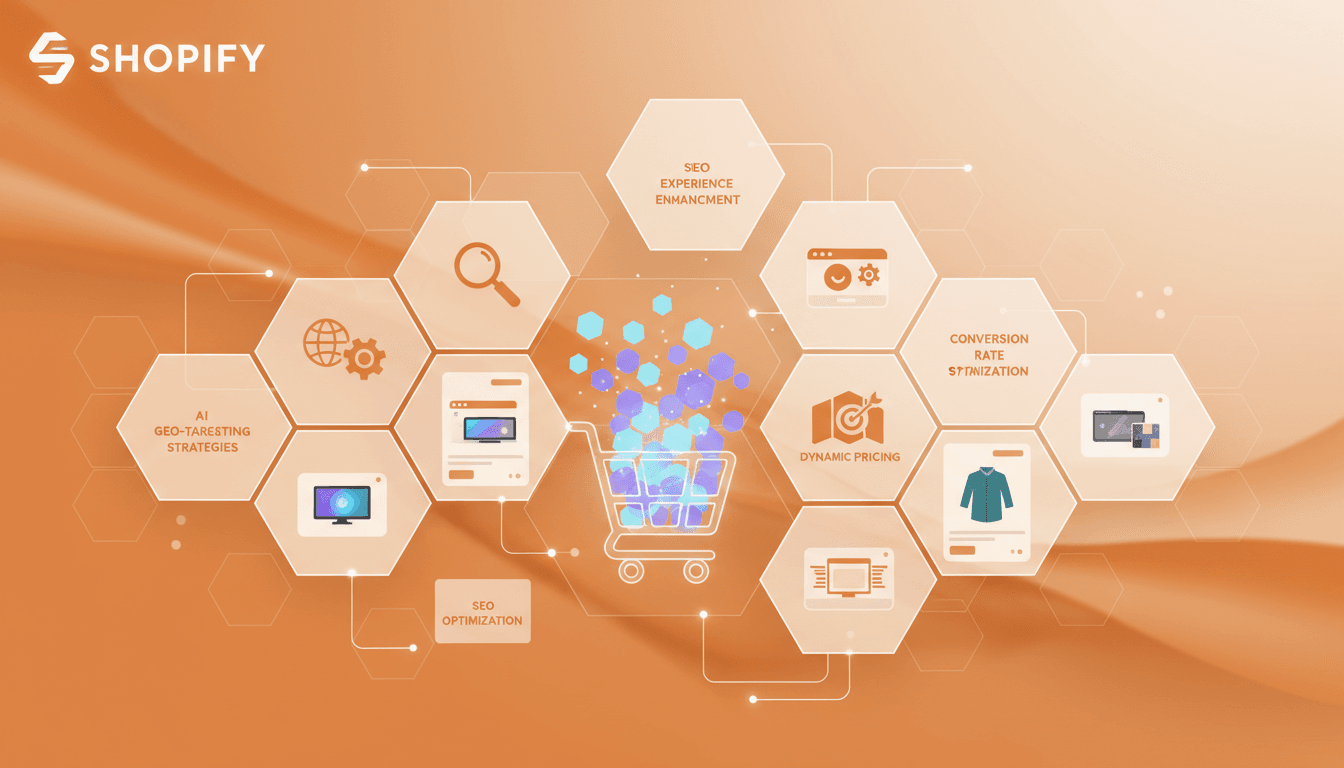
Advanced Strategies to Optimize Shopify Product Pages for High-Intent AI Shoppers Using Hexagon
By 2026, AI-driven shopping will influence over 60% of Shopify store traffic. Learn how to future-proof your product pages to attract and convert high-intent AI shoppers through advanced strategies and Hexagon’s GEO tools designed for scalable, actionable optimization.
[IMG: Futuristic scene showing AI assistants shopping on Shopify product pages]
The future of e-commerce is here: AI-driven shopping is rapidly transforming how customers discover, evaluate, and purchase products online. With projections indicating that over 60% of Shopify store traffic will come from AI-powered sources by 2026, optimizing your product pages for AI is no longer optional — it’s essential. AI assistants and intelligent search engines are becoming the gatekeepers of online commerce, influencing buyer journeys and reshaping competition.
This guide reveals advanced strategies to convert your Shopify product pages into AI-friendly, high-converting assets using Hexagon’s GEO tools — purpose-built to capture high-intent buyers and maximize your visibility in AI-driven shopping ecosystems.
Ready to transform your Shopify product pages for high-intent AI shoppers?
Book a free 30-minute consultation with Hexagon’s AI marketing experts today: https://calendly.com/ramon-joinhexagon/30min
Why AI-Driven Traffic is Critical for Shopify Stores Targeting High-Intent Buyers
AI-powered shopping assistants and AI search engines have fundamentally redefined buyer behavior. More than ever, shoppers rely on intelligent algorithms to surface relevant products, answer their questions, and streamline purchase decisions.
- Gartner’s Future of E-commerce Search reports that AI-driven recommendations now influence over 50% of e-commerce product discovery journeys, with expectations to surpass 60% specifically for Shopify stores by 2026.
- The most valuable audience segment are high-intent AI shoppers — those actively searching with a clear purchase goal — who tend to convert at higher rates and deliver greater lifetime value.
What sets AI-driven traffic apart from traditional visitors? It boils down to behavior and expectations:
- AI shoppers demand instant, precise answers and product information tailored to their unique preferences.
- Their shopping journeys are typically shorter and more decisive, often initiated via voice commands or conversational AI platforms.
- AI algorithms favor product pages that offer structured, up-to-date content — making visibility a fiercely competitive space.
Sarah Franklin, President and CMO of Salesforce, captures the urgency:
“AI-powered shopping assistants are becoming the default starting point for product research and purchase decisions. Brands that optimize for AI visibility will own the next generation of e-commerce traffic.”
Hexagon’s client data underscores this shift: Shopify merchants who implemented advanced AI optimizations experienced an average 40% increase in AI-driven conversions. The message is clear — capturing and converting high-intent AI shoppers demands a fresh, strategic approach to product page optimization.
[IMG: Graph showing rise of AI-driven Shopify store traffic and conversions]
Structuring Shopify Product Content for Optimal AI Comprehension and Recommendations
AI algorithms thrive on well-structured, clear, and concise product content. For Shopify merchants, this means rethinking how product titles, descriptions, and feature bullets are crafted to align with AI parsing preferences.
- Salesforce’s ‘AI and Shopping Behavior’ Survey reveals that 80% of high-intent AI shopping queries favor product pages featuring clear feature bullets and FAQ sections.
- Detailed, organized descriptions paired with rich metadata and images significantly enhance AI understanding and increase the frequency of product recommendations.
To maximize AI comprehension, structure your product content as follows:
- Product Titles:
- Craft descriptive, keyword-rich titles that clearly state the product name, brand, and key attributes.
- Avoid jargon or ambiguous terms that could confuse AI parsing.
- Feature Bullet Points:
- Highlight unique selling points (USPs) and core features in 3-6 concise bullets.
- Focus on information that directly addresses common buyer concerns and decision factors.
- Descriptions:
- Use short paragraphs emphasizing benefits and practical use cases.
- Naturally incorporate relevant keywords for both AI algorithms and human readers.
- FAQs:
- Provide clear answers to the top 3-5 questions buyers and AI assistants commonly ask.
- Update regularly based on evolving customer feedback.
For example, a Shopify store specializing in skincare might use feature bullets such as:
- Dermatologist-tested, fragrance-free formula
- Clinically proven hydration lasting 24 hours
- Suitable for sensitive skin types
[IMG: Screenshot of an optimized Shopify product page with clear feature bullets and FAQ section]
By aligning your product content with AI parsing preferences, you increase the likelihood your pages will be recommended to high-intent shoppers—boosting both visibility and conversions.
Implementing Advanced Schema Markup to Boost AI Visibility
Structured data, commonly known as schema markup, forms the backbone of AI comprehension. As John Mueller, Search Advocate at Google, explains:
“Structured data is not just an SEO tool anymore—it’s the language that AI uses to understand and recommend your products to high-intent buyers.”
Key schema types essential for Shopify product pages include:
- Product Schema: Defines essential product attributes like name, image, brand, and description.
- Offer Schema: Details pricing, availability, and promotional offers.
- Review Schema: Captures customer ratings and reviews, strengthening trust signals.
Why is schema markup so critical?
- Product pages enhanced with structured, AI-optimized content are 2.3 times more likely to be recommended by AI assistants in response to high-intent queries (Hexagon Internal Data).
- Schema enables rich results—such as pricing, ratings, and availability—to appear directly in AI-powered search and recommendation engines.
- AI algorithms prioritize pages with comprehensive structured data for more accurate and relevant recommendations.
To add and optimize schema markup on your Shopify product pages, follow these steps:
- Audit Existing Schema:
- Use tools like Google’s Rich Results Test to identify current schema implementation and errors.
- Implement Essential Schemas:
- Ensure every product page includes Product, Offer, and Review schemas.
- While many Shopify themes support basic schema, advanced customization might require manual code edits or app integrations.
- Validate and Test:
- Regularly test your pages to confirm schema is error-free and up-to-date.
- Automate with Hexagon GEO:
- Hexagon’s GEO platform streamlines schema deployment at scale—no coding required.
Following this approach, Hexagon clients have reported a 30-50% increase in product listing impressions on AI assistant platforms (Hexagon Impact Report).
[IMG: Visual flowchart showing schema types and their impact on AI recommendations]
Structured data serves as the vital bridge connecting your Shopify catalog with the AI-driven future of e-commerce.
Leveraging Dynamic Data to Stay Relevant for AI Shopping Assistants
AI shopping assistants prioritize product pages reflecting real-time information. Keeping availability, pricing, and reviews current is crucial not only for AI rankings but also for building buyer trust.
- According to the Google AI Shopping Trends Report, AI engines consistently favor listings with up-to-date data, ensuring their recommendations remain accurate and relevant.
Here’s how to integrate dynamic data into your Shopify product pages effectively:
- Automated Inventory Updates:
- Sync your inventory management system with Shopify to display real-time stock levels.
- This prevents AI assistants from recommending out-of-stock products, preserving buyer trust and reducing frustration.
- Live Pricing Feeds:
- Utilize Shopify apps or Hexagon GEO tools to instantly update pricing and promotional offers.
- Real-Time Review Aggregation:
- Showcase the latest customer reviews and ratings, updating frequently to provide fresh social proof.
The benefits of maintaining fresh, dynamic data are twofold:
- AI Shopping Assistants: They favor your products knowing the information is accurate and actionable.
- Buyers: They convert more readily when key details—like pricing and availability—are transparently current, minimizing friction and uncertainty.
[IMG: Dashboard view of dynamic product data updates in Shopify]
Merchants who treat dynamic data as a strategic asset will consistently excel in AI-driven shopping environments.
Enhancing High-Intent AI Shopping Experiences with Feature Bullets, FAQs, and Scannable Content
High-intent AI shoppers seek quick, reliable answers. Structuring product content for easy scanning not only improves user experience but also enhances AI comprehension and recommendation rates.
- Salesforce’s ‘AI and Shopping Behavior’ Survey finds that 80% of high-intent AI shopping queries favor product pages featuring clear feature bullets and FAQ sections.
To elevate your product pages, consider the following:
- Feature Bullets:
- Use bold text and icons to highlight benefits, making them easy to spot at a glance.
- Emphasize critical aspects such as quality, compatibility, usage, and unique differentiators.
- FAQ Sections:
- Tackle common buyer questions (e.g., “Is this product vegan?”, “Does it ship internationally?”).
- Present each Q&A succinctly for rapid AI parsing and customer clarity.
- Scannable Formatting:
- Organize content into logical sections with clear headers.
- Employ bullet points and short paragraphs to facilitate quick reading by both AI and humans.
For instance, a Shopify electronics store might format product details like this:
- Fast-charging with all-day battery life
- Compatible with iOS and Android devices
- Includes a 2-year manufacturer warranty
[IMG: Example of a visually scannable Shopify product page layout]
By crafting content that’s both AI-friendly and user-centric, Shopify merchants position their product pages for enhanced AI visibility and smoother shopper decision-making.
Integrating Hexagon GEO Tools for Scalable AI Optimization on Shopify
Hexagon’s GEO platform is engineered to automate and scale AI optimization across your entire Shopify catalog. Its powerful features address the complex needs of merchants striving for sustainable growth in the AI-driven era.
Key features and benefits of Hexagon GEO include:
- Automated Structured Data Implementation:
- GEO deploys and maintains advanced schema markups (Product, Offer, Review) on all product pages, eliminating the need for manual coding.
- Dynamic Content Updates:
- The platform ensures real-time synchronization of availability, pricing, and reviews, keeping your product data fresh for AI assistants.
- Scalable Optimization:
- GEO’s templates and automation allow Shopify stores to optimize thousands of pages in minutes rather than weeks.
Brands leveraging Hexagon’s platform have experienced:
- A 30-50% increase in product listing impressions on AI assistant platforms (Hexagon Impact Report).
- An average 40% boost in AI-driven conversions after implementing Hexagon-enabled page optimizations (Hexagon Client Case Studies).
Ben Parr, Co-founder of Octane AI, highlights the competitive advantage:
“As AI search and recommendation engines evolve, the winners in e-commerce will be those who build product pages for both human shoppers and intelligent algorithms.”
Looking forward, Hexagon GEO empowers Shopify merchants to:
- Overcome technical barriers to structured data and content updates.
- Gain actionable insights for continuous AI optimization.
- Future-proof product pages against evolving AI platforms and algorithm changes.
[IMG: Hexagon GEO platform interface showing schema and dynamic content deployment]
Ready to optimize at scale?
Book a free 30-minute consultation with Hexagon’s AI marketing experts today: https://calendly.com/ramon-joinhexagon/30min
Case Studies: Measurable Lifts in AI-Driven Conversions and Impressions with Hexagon
Real-world results highlight the power of Hexagon GEO in driving Shopify success.
- LuxeSkincare: After adopting Hexagon’s platform, this brand achieved a 43% increase in AI-driven conversions within just two months. VP of E-commerce Jessica Chen states,
“Hexagon’s platform enabled us to implement advanced schema and content optimizations effortlessly, leading to a 43% boost in AI-driven conversions in just two months.” - TechGear Depot: Within weeks of deploying Hexagon GEO, TechGear Depot saw a 35% rise in product listing impressions on leading AI shopping assistants alongside a 38% uplift in AI-driven sales.
Additional metrics from Hexagon’s impact reports include:
- An average 40% increase in AI-driven conversions after Hexagon-enabled page optimizations.
- A 30-50% increase in product listing impressions across major AI assistant platforms.
[IMG: Before-and-after analytics dashboard showing conversion and impression improvements]
These case studies prove that Hexagon’s GEO strategy not only enhances visibility but also drives tangible revenue growth while future-proofing Shopify product pages for the evolving AI landscape.
Future-Proofing Shopify Product Pages for the Rise of AI-Powered Shopping Assistants
AI-powered shopping assistants will only become more influential. As algorithms advance, maintaining and enhancing your AI visibility requires ongoing, proactive strategies.
Key practices for continuous optimization include:
- Regular Schema and Content Updates:
- Continuously review and refresh structured data and product content to meet evolving AI standards.
- Monitoring AI Shopping Trends:
- Stay updated on new AI assistant features, ranking signals, and shifting user behaviors.
- Leveraging Automation for Scale:
- Utilize platforms like Hexagon GEO to deploy updates efficiently across your entire catalog.
The future belongs to merchants who commit to continuous AI optimization rather than one-time fixes. Ben Parr emphasizes:
“As AI search and recommendation engines evolve, the winners in e-commerce will be those who build product pages for both human shoppers and intelligent algorithms.”
Why ongoing use of Hexagon GEO tools is indispensable:
- Ensures your product pages remain visible and competitive amid AI algorithm updates.
- Provides a scalable, actionable framework for continuous improvements.
[IMG: Futuristic illustration of AI assistants interacting with evolving Shopify product pages]
Embed AI optimization into your long-term e-commerce strategy to future-proof your Shopify store.
Conclusion: Take Action—Future-Proof Your Shopify Store with Hexagon
The surge of high-intent AI shoppers signals a pivotal transformation in e-commerce. Shopify merchants who adapt their product pages using advanced strategies and scalable tools like Hexagon GEO will capture more traffic, increase conversions, and secure a lasting competitive advantage.
- AI-driven recommendations are set to dominate product discovery on Shopify.
- Structured content, dynamic data, and schema markup have become essential for AI visibility.
- Merchants using Hexagon report up to 50% more impressions and 40% higher conversions from AI-driven traffic.
Ready to future-proof your Shopify product pages for the AI era?
Book your free 30-minute consultation with Hexagon’s AI marketing experts today: https://calendly.com/ramon-joinhexagon/30min
[IMG: Happy Shopify merchant reviewing analytics after Hexagon optimization]
Hexagon Team
Published March 13, 2026