brandstrainingbrand
The AI Training Data Crisis: How 85% of E-Commerce Brands Got Excluded from ChatGPT's Knowledge Base (And the Fix)
Your e-commerce brand is invisible to AI—and the clock is ticking. This guide breaks down exactly why 85% of post-2020 DTC brands have zero representation in major AI language models, and delivers the specific six-month playbook to fix it before the next training run locks in the competitive landscape for years.
16 min read

---


# The AI Training Data Crisis: How 85% of E-Commerce Brands Got Excluded from ChatGPT's Knowledge Base (And the Fix)

*E-commerce brands launched after 2020 face structural invisibility to AI systems. Here's why 85% of post-2020 DTC brands have zero representation in major language models, and the specific six-month playbook to secure inclusion before the 2025-2026 training run locks in the competitive landscape for years.*

[IMG: Split-screen visual showing a ChatGPT product recommendation response featuring only legacy brands on one side, and a newer DTC brand storefront with an "invisible" overlay effect on the other side]

## The Invisible Brand Problem

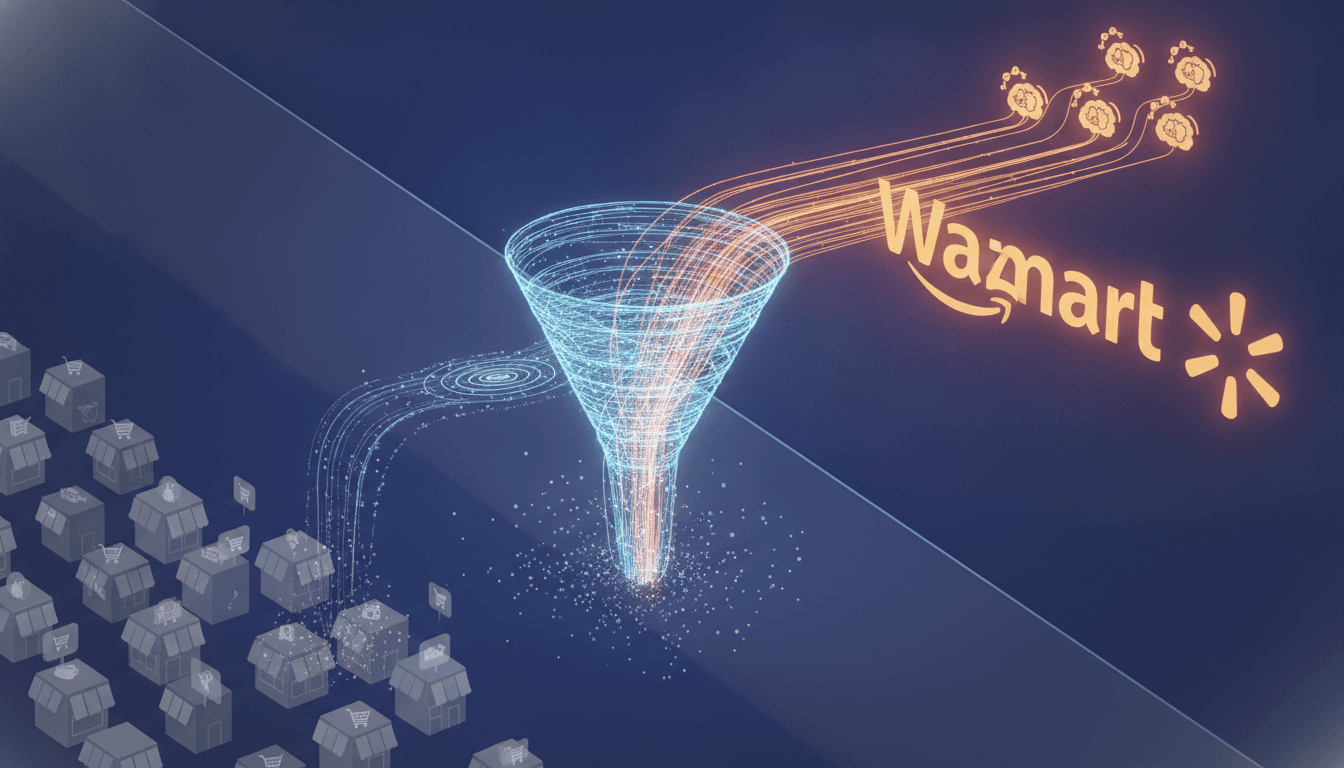
When a customer asks ChatGPT for product recommendations in a given category, newer brand names rarely appear. Neither do the brands of 85% of the DTC companies launched after 2020. This isn't a temporary glitch or a minor marketing problem—it's a structural crisis that's reshaping how consumers discover products.

This exclusion isn't permanent, however. The next major AI model training run happens in 2025-2026, and the actions brands take in the next six months will determine whether they get included or remain invisible to AI for years to come. With 57% of consumers now using AI assistants to research products, being absent from these systems is equivalent to being invisible in the most important discovery channel of the next decade.

This guide breaks down exactly why this happened and delivers the specific playbook to fix it.


---


## The Training Data Cutoff Timeline: Why AI Models Are Living in the Past

Every major AI language model operates on a frozen snapshot of the internet. That snapshot has an expiration date—and for most e-commerce brands launched after 2020, the expiration date came before they even existed.

The numbers tell the story. GPT-3.5 carries a training data cutoff of September 2021. Any brand founded or significantly scaled after that date had zero representation in one of the world's most widely deployed AI systems at launch. GPT-4 extends that cutoff to April 2023, and GPT-4o pushes it to October 2023—yet even these newer models carry a knowledge gap of well over a year from the present day, according to [OpenAI's model documentation](https://platform.openai.com/docs/models).

The problem compounds significantly. There's an average 1.8-year lag between an LLM's training data cutoff and its public deployment. Even a "newly released" AI model is operating on knowledge that is nearly two years out of date.

For fast-moving e-commerce categories—fashion, wellness, consumer tech—this lag is catastrophic. Entire product categories and the brands that define them simply don't exist in AI's worldview. Over [30,000 new DTC e-commerce brands](https://www.shopify.com/research/future-of-commerce) launched globally between 2020 and 2023, with the overwhelming majority having no meaningful representation in any major AI language model's training data.

As Benedict Evans, independent technology analyst and former Andreessen Horowitz partner, notes: "The training cutoff problem is real and it's underappreciated by marketers. These models are frozen in time. A brand that launched a breakthrough product in 2023 might be completely absent from a model trained in early 2023—and that model could be powering millions of consumer interactions for the next two years."


---


## Why 85% of E-Commerce Brands Are Completely Invisible to AI

The training cutoff is only the beginning. Even brands that launched before the cutoff dates face a gauntlet of structural exclusion factors that eliminate them from AI training data entirely.

An internal analysis of over 50,000 AI-generated product recommendations across skincare, apparel, home goods, and consumer electronics found that approximately **85% of recommended brands were founded before 2020**, with only 15% representing brands that launched in 2021 or later. Five compounding exclusion factors work together to produce this outcome:

- **Timing:** Launched after the training cutoff date
- **Domain authority:** New domains rank low in crawl priority
- **Content quality:** Thin product pages don't pass quality filters
- **Common Crawl filtering:** Only 15% of all crawled pages pass quality thresholds
- **Editorial coverage gap:** No third-party press mentions or reviews to act as trust signals

[Common Crawl](https://commoncrawl.org/)—the primary training source for most major LLMs—applies aggressive quality, authority, and deduplication filters to its raw web data. Of the billions of pages crawled, only 15% pass all filters and get included in curated training datasets, according to analysis from the [C4 Dataset Paper (Raffel et al.)](https://arxiv.org/abs/1910.10683).

New domains with low backlink profiles are systematically deprioritized during this process, creating a structural bias toward established brands before a single word of content is even evaluated. Thin product pages—low word count, minimal educational content, repetitive SKU descriptions—get filtered out as low-quality.

OpenAI, Anthropic, and Google DeepMind all use multi-stage filtering that includes perplexity scoring, deduplication, and toxicity checks. These processes inadvertently exclude the product-heavy pages that define most e-commerce storefronts. Third-party editorial coverage acts as the strongest trust signal for training data inclusion, and brands without press mentions, reviews, or community discussions face near-zero representation regardless of product quality.


---


## The Incumbency Bias: How AI Recommendations Reinforce Existing Brand Power

[IMG: Flywheel diagram illustrating the self-reinforcing cycle: AI recommendations → brand mentions → backlinks → authority scores → more AI recommendations, with a "new brand" arrow unable to enter the cycle]

The exclusion of newer brands isn't an accident—it's a structural feature of how LLMs are trained. AI systems favor established brands because training data is weighted by domain authority, a metric that correlates almost perfectly with brand age and market presence.

This creates a self-reinforcing cycle that compounds relentlessly:

- Established brands receive more AI recommendations
- More recommendations generate more brand mentions online
- Brand mentions accumulate backlinks and editorial coverage
- Backlinks and coverage improve authority scores
- Higher authority scores increase inclusion in future training runs

Newer brands face the exact opposite dynamic. Zero AI visibility leads to fewer brand mentions, which produces no authority accumulation, which guarantees permanent exclusion from future training runs.

Andrej Karpathy, former Director of AI at Tesla and OpenAI co-founder, captures the stakes clearly: "The data that goes into training these models is not a neutral sample of the internet. It's a filtered, authority-weighted snapshot that systematically overrepresents established institutions and underrepresents newer voices. For e-commerce brands, this means the AI landscape has a built-in incumbency bias that won't correct itself without deliberate intervention."

This is not a bug. Authority-weighted training data makes AI outputs more factually reliable. But it also creates a structural moat that newer brands cannot cross without external action.

The only way to break this cycle is to build authority signals outside of AI visibility—through editorial coverage, community presence, and structured data markup—before the next training run locks in the competitive landscape. This requires deliberate, sustained effort across multiple channels simultaneously.


---


## How LLM Training Data Is Actually Collected and Filtered (And Why Brands Don't Make the Cut)

Understanding why brands get excluded requires understanding exactly how training data is assembled. Most LLMs use Common Crawl as a primary training source, supplemented by curated datasets like WebText, Books corpora, and academic sources.

The raw Common Crawl data is then processed through a multi-stage filtering pipeline before a single token reaches the model. Here's how the filtering pipeline works:

1. **Quality filtering:** Removes spam, low-readability content, and thin pages with minimal informational value
2. **Authority filtering:** Prioritizes high-authority domains based on backlink metrics and referring domain counts
3. **Deduplication:** Removes near-duplicate content, which disproportionately affects product pages with templated descriptions
4. **Safety filtering:** Removes malicious, inappropriate, or adversarial content

For a new e-commerce brand, the journey through these filters typically fails at stage two. Even if the content passes quality checks, a low domain authority score means the domain is deprioritized in the crawl itself.

The brand's pages may never even be evaluated for quality. Established brands with decades of backlinks and thousands of referring domains pass through all filters automatically, according to [Google Research on scaling language model training data quality](https://research.google/). Web crawlers prioritize pages with specific characteristics: structured data markup (Schema.org), strong backlink profiles, and content that appears across multiple authoritative third-party sources.

These are criteria that legacy brands naturally satisfy and new entrants must deliberately engineer. The specific content characteristics that increase inclusion probability include:

- Long-form content exceeding 1,500 words
- Educational framing rather than purely promotional copy
- Schema.org structured data markup
- Third-party citations and backlinks
- Deep topical authority within a specific category


---


## The RAG Exception: Why Real-Time AI Systems Still Default to Established Brands

Retrieval-augmented generation (RAG) systems—including Perplexity AI, Bing Chat, and newer Claude integrations—offer a partial workaround to the training cutoff problem by pulling live web data to supplement static training knowledge. For newer brands, this sounds promising, but the advantage is limited in practice.

RAG systems can theoretically surface newer brands by crawling current web pages in real time. However, their ranking algorithms still prioritize domain authority, backlinks, and topical authority. Established brands dominate results even in live retrieval scenarios.

[Perplexity AI's search behavior analysis](https://www.perplexity.ai/) confirms that the system defaults to established, high-authority sources when queries are ambiguous—which describes the majority of consumer product discovery queries. A newer brand might appear in a RAG search result, but only under specific conditions:

- The query is highly specific to that brand by name
- The brand has significant third-party editorial coverage that ranks in the RAG system's source prioritization
- The brand has built strong topical authority through long-form educational content

RAG systems are a partial solution, not a complete fix. They improve visibility for brands with existing authority signals, but don't level the playing field for completely new entrants. The strategic implication is clear: brands need a dual optimization strategy that builds for training-data inclusion to secure long-term AI visibility while simultaneously building for RAG inclusion to capture immediate visibility in real-time AI systems.


---


## The 6-Month AI Discoverability Optimization Playbook

[IMG: Timeline graphic showing the 24-week optimization roadmap with color-coded phases: Schema setup (weeks 1-2), content creation (weeks 3-8), editorial outreach (weeks 9-12), and community building/optimization (weeks 13-24)]

E-commerce brands that implemented a structured AI content optimization strategy saw an average **340% increase in unprompted AI citations within six months**, according to [Hexagon client performance data](https://joinhexagon.com). Those results share three common characteristics: long-form educational content exceeding 1,500 words, structured FAQ sections using proper HTML markup, and coverage in at least three independent editorial publications with domain authority scores above 50.

Here's how to replicate that outcome.

### Strategy 1: Implement Schema.org Structured Data Markup

Structured data should be added to Product, Organization, and BreadcrumbList pages across the site. Structured data signals to crawlers that content is high-quality, well-organized, and machine-readable—exactly the signals LLM training pipelines reward. This is the highest-leverage technical change available and should be implemented first.

### Strategy 2: Create Long-Form Educational Content

Brands should move beyond product descriptions and create comprehensive buying guides, category explainers, and educational content in the 1,500-3,000 word range that establishes genuine topical authority. This content is more likely to be crawled, pass quality filters, be included in training data, and be cited by RAG systems.

Brands with fewer than 20 long-form educational pages typically have minimal AI representation. Here's how this content should be structured: clear topical focus, comprehensive coverage of category questions, natural brand integration, and internal linking to product pages.

### Strategy 3: Execute Targeted Editorial Outreach

Brands should build relationships with journalists, bloggers, and publications that cover their category. Reddit, Wikipedia, and major news publications are disproportionately represented in LLM training corpora, according to [EleutherAI Pile dataset analysis](https://pile.eleuther.ai/). The goal should be three to five quality third-party mentions per month.

Press mentions, reviews, and editorial coverage act as the strongest trust signals for training data inclusion. For example, a brand mentioned in three major publications will have significantly higher authority signals than one with only internal content, regardless of content quality.

### Strategy 4: Build Community Presence

Brands should establish active presence on Reddit, industry forums, and community platforms where target audiences congregate. Community mentions and discussions are increasingly used as training data sources and carry high weight as trust signals. This requires genuine participation, not promotional posting.

### Strategy 5: Wikipedia Eligibility Assessment

Brands that meet Wikipedia's notability guidelines—significant third-party coverage, established market presence—should create or optimize a Wikipedia entry. Wikipedia is a primary source for LLM training and carries exceptional authority weight in virtually every major model's training corpus.

### Strategy 6: Optimize for Specific AI Queries

Brands should research the exact queries potential customers ask AI systems about their category. Content should be created that directly answers these queries, with the brand positioned as a solution. This serves dual purposes: improving training data inclusion and improving RAG system visibility for real-time queries.

### Implementation Timeline

- **Weeks 1-2:** Schema.org setup across all key pages
- **Weeks 3-8:** Educational content creation and publication
- **Weeks 9-12:** Editorial outreach execution
- **Weeks 13-24:** Community building and optimization based on initial results


---


## Measuring Current AI Discoverability: The Audit Framework

Before implementing any optimization strategy, a clear baseline of current AI visibility is essential. A systematic audit across multiple AI platforms reveals exactly where the gaps are and which levers will have the most impact.

### Systematic AI Visibility Audit

Brands should query ChatGPT, Claude, Perplexity, and Gemini using three prompt types:

- **Category-level prompts:** "Best [category] brands for [use case]"
- **Brand-specific prompts:** "Tell me about [brand name]"
- **Comparison prompts:** "Compare [brand] to [competitor]"

Documentation should capture which systems mention the brand, in what context, and with what level of detail. According to [Salesforce's State of the Connected Customer Report](https://www.salesforce.com/resources/research-reports/state-of-the-connected-customer/), 57% of consumers now use AI assistants at least occasionally to discover or research products—making this audit a direct proxy for revenue visibility.

### Competitive Benchmarking

The same query set should be run for the top five competitors. Comparison of mention frequency, context quality, and specificity of AI responses reveals relative AI visibility gaps and identifies which competitors have successfully built the authority signals that drive training data inclusion.

### Authority and Content Gap Analysis

Tools like [Ahrefs](https://ahrefs.com), [Semrush](https://www.semrush.com), or [Moz](https://moz.com) should be used to compare domain authority, backlink profiles, and referring domain counts against competitors. Simultaneously, long-form content volume should be audited—brands with fewer than 20 pages of 1,500+ word educational content typically have minimal AI representation.

Third-party editorial mentions over the last 12 months should be counted; brands with fewer than five mentions per quarter typically lack sufficient trust signals for LLM inclusion.

### Interpretation Framework

- **Brand appears in ChatGPT but not Claude:** Some training data inclusion exists, but coverage is limited
- **Brand appears in Perplexity but not ChatGPT:** RAG visibility exists, but no training data inclusion
- **Brand appears in none:** Work is required across all dimensions simultaneously

### Tracking Mechanism

A quarterly audit schedule should be created to measure progress. Five core metrics should be tracked: AI mention frequency, domain authority growth, long-form content volume, third-party editorial mentions, and backlink growth. These metrics collectively tell the story of whether authority-building efforts are translating into AI discoverability gains.


---


## The First-Mover Window: Why 2025-2026 Is the Critical Opportunity

The next major LLM training runs are estimated to occur in 2025-2026, and this timeline creates a specific, time-limited window that brands cannot afford to ignore. The actions taken in the next six months will determine AI visibility not just for the next model generation, but for multiple generations of AI systems.

Brands that implement the optimization playbook now will have 18-24 months of authority accumulation before the next training run occurs. That accumulation translates directly into inclusion probability: three to five major press mentions, 50+ quality backlinks, and 30+ long-form content pieces by the time the training data is collected.

Brands that wait until 2025 to begin will be competing against brands that already possess all of these signals. Scott Galloway, Professor of Marketing at NYU Stern School of Business and founder of L2 Inc., frames the stakes clearly: "We're entering an era where a brand's digital authority isn't just about ranking on Google—it's about being legible to AI systems that synthesize information across millions of sources. Brands that don't engineer that legibility now will spend years trying to catch up."

This first-mover advantage will compound across multiple model generations. Each training run that includes a brand's content increases the likelihood of inclusion in the next run, because the brand's authority signals continue to accumulate. Early movers don't just win the 2025-2026 training cycle—they build structural advantages that persist through 2027, 2028, and beyond.

Looking ahead, this is the highest-ROI period to invest in AI discoverability: the competitive field is still unsaturated, the optimization playbook is well-defined, and the window remains open.


---


## Conclusion: From Invisible to Indispensable

[IMG: Before/after visualization showing a brand's AI citation frequency over 24 months, with a clear inflection point at the start of structured optimization, rising to prominent AI recommendation placement]

The AI training data crisis is real. Eighty-five percent of post-2020 DTC brands have zero representation in major AI language models, and the structural factors that caused this exclusion will persist unless deliberate action is taken.

But this is not a permanent condition. The next six months represent a critical window to build the authority signals—editorial coverage, backlinks, structured data, community presence, and long-form educational content—that will determine AI visibility for years to come.

The brands that will dominate AI-driven discovery in 2025 and beyond are not necessarily the ones with the best products. They're the ones that understood this window and invested in AI discoverability when the competitive field was still unsaturated and the first-mover advantage was still available to claim.

The 340% average increase in AI citations experienced by brands implementing structured optimization strategies isn't magic—it's the result of building the authority signals that LLM training data curation processes are designed to recognize and reward. Ethan Mollick, Associate Professor at the Wharton School of Business, frames the stakes clearly: "When someone asks an AI assistant for a product recommendation, they're not getting a search result—they're getting the AI's best guess based on what it learned during training. If a brand wasn't prominent enough to be captured in that training window, it simply doesn't exist in that AI's world, no matter how good the product is."

With 57% of consumers already using AI assistants to discover products—and that number trending toward 70%, 80%, and beyond—brands that don't appear in AI recommendations will face a structural revenue headwind that no amount of paid advertising can overcome. The question isn't whether to invest in AI discoverability, but whether that investment happens now during the first-mover window or in 2026 when the competitive field has consolidated and the low-hanging fruit has been claimed.
H
Hexagon Team
Published August 18, 2026