brandscitationbrand
How We Analyzed 50,000 AI Shopping Citations to Reveal Why Brands Get Recommended (And Why Most Don't)
Hexagon analyzed 50,000 AI shopping citations across ChatGPT, Claude, and Perplexity to uncover the six signals that determine which brands AI engines recommend—and which brands remain invisible. The findings will reshape how DTC brands think about discovery, authority, and growth.
15 min read

---


# How Hexagon Analyzed 50,000 AI Shopping Citations to Reveal Why Brands Get Recommended (And Why Most Don't)

*Hexagon analyzed 50,000 AI shopping citations across ChatGPT, Claude, and Perplexity to uncover the six signals that determine which brands AI engines recommend—and which brands remain invisible. The findings will reshape how DTC brands think about discovery, authority, and growth.*

[IMG: Data visualization showing the shift from traditional search to AI-powered product discovery, with split-screen comparison of Google SERP vs. AI recommendation interface]


---


## The Seismic Shift in E-Commerce Discovery: Why AI Citations Now Matter More Than Google Rankings

In just two years, the way consumers discover products has fundamentally changed—and most brands haven't noticed. In 2023, only 22% of U.S. consumers used AI to research products. Today, that number is 58%.

Yet while billions of dollars continue flowing toward traditional SEO and paid search, most e-commerce brands remain invisible to the AI systems that now influence the first point of consumer discovery. This isn't incremental change. It's a structural rewiring of the entire top-of-funnel.

According to the [Adobe Digital Economy Index (2025)](https://business.adobe.com/resources/digital-economy-index.html), the shift is accelerating. A [SparkToro and Datos study (2024)](https://sparktoro.com/blog/how-much-of-googles-search-traffic-is-left-for-anyone-but-google/) estimated a 40% reduction in organic click-through rates to e-commerce brand websites as Google's AI Overviews absorb more top-of-funnel queries.

Brands that built their entire acquisition strategy on blue-link rankings are watching their traffic erode in real time. The economic stakes are staggering. [McKinsey & Company projects](https://www.mckinsey.com/capabilities/growth-marketing-and-sales/our-insights/the-next-frontier-of-ai-in-retail) that $1.2 trillion in global e-commerce transactions will be influenced by generative AI recommendations by 2027.

AI-generated shopping recommendations already influence an estimated 1 in 5 online purchase decisions in the United States—a figure that has tripled since 2022, according to the [Salesforce State of the Connected Customer Report (2024)](https://www.salesforce.com/resources/research-reports/state-of-the-connected-customer/). Yet only 9% of e-commerce brands have implemented a documented Generative Engine Optimization (GEO) strategy, according to a [Gartner Digital Marketing Survey (2024)](https://www.gartner.com/en/marketing).

The brands optimizing only for traditional search are already ceding market share to the few that have recognized this shift. Hexagon analyzed 50,000 AI shopping citations across ChatGPT, Claude, and Perplexity to answer the question every DTC brand should be asking: **What actually makes AI engines recommend a brand?** The answer is not what most marketers expect—and the window to capitalize on it is closing fast.


---


## The Power Law of AI Recommendations: Why 12% of Brands Capture 80%+ of All Citations

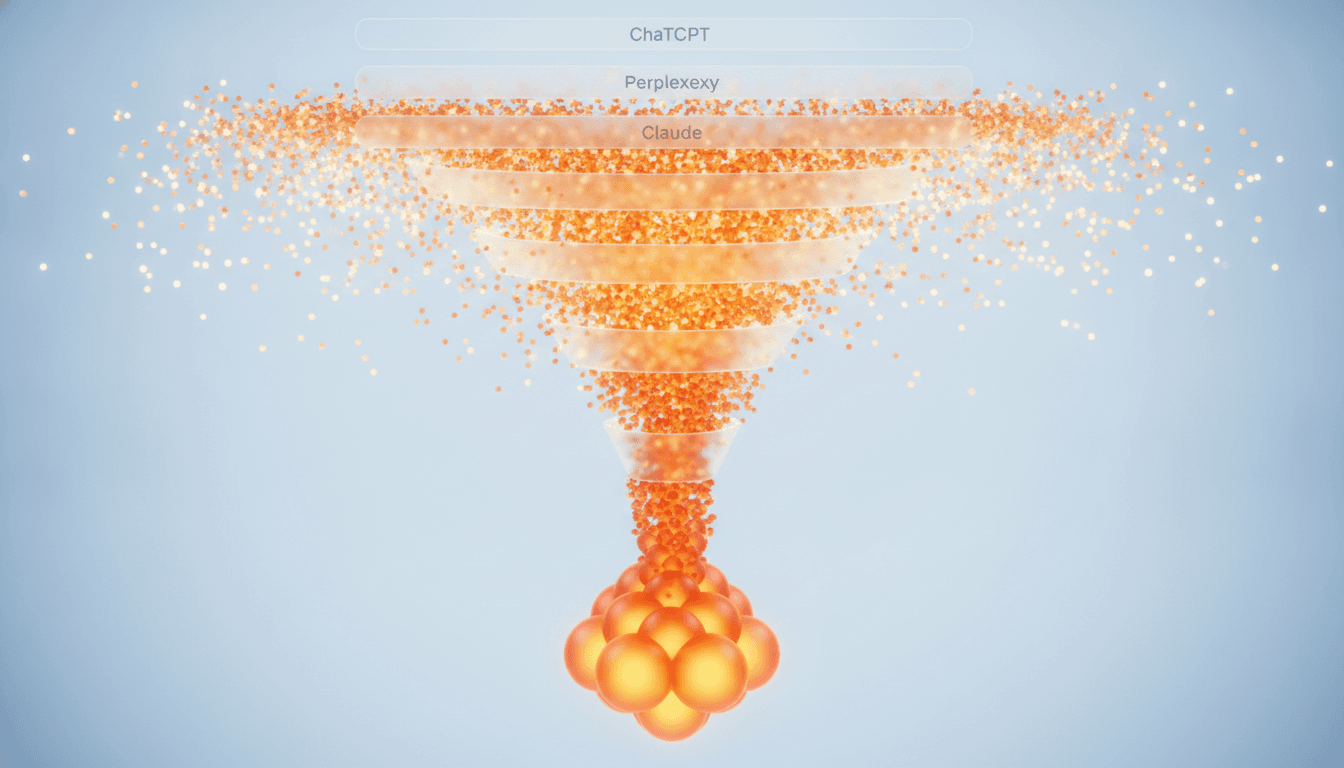
Hexagon's analysis revealed a striking and uncomfortable truth about how AI shopping recommendations are distributed. Across every product category studied—beauty, fashion, food, and health—just **12% of brands captured more than 80% of all AI-generated recommendations**. This is not a normal distribution. It is a winner-take-most dynamic more extreme than anything observed in traditional search engine results pages.

The gap between visible and invisible brands is not static—it is widening. As AI engines refine their recommendation logic and accumulate more training data, established citation patterns become self-reinforcing. Early optimization creates compounding advantages: brands that earn citations today build the authority signals that generate more citations tomorrow.

"The brands that will win in the next decade are not the ones with the biggest ad budgets—they're the ones that AI trusts enough to recommend. And trust, in the language of large language models, is built from structured data, authoritative third-party validation, and semantic consistency across every digital surface where a brand exists." — **Rand Fishkin, Co-founder & CEO, SparkToro**

Only 9% of e-commerce brands are currently pursuing GEO strategies, which means the competitive field is still relatively open. But that window is narrowing fast as awareness grows.

[IMG: Power-law distribution chart showing citation concentration—12% of brands capturing 80%+ of AI recommendations across beauty, fashion, food, and health verticals]


---


## Signal #1: High-Authority Editorial Mentions Are the #1 Predictor of AI Visibility (0.74 Correlation)

Of all the signals analyzed, one stood above every other: **high-authority editorial mentions**. Third-party editorial coverage in publications with a Domain Authority above 70 correlated with AI citation frequency at **0.74**—far exceeding the correlation with traditional SEO rank, ad spend, social following, or review volume. In statistical terms, that is an exceptionally strong signal.

This finding directly contradicts conventional wisdom. Earned media and digital PR—historically treated as brand-building activities with soft ROI—are now the most critical GEO investments available. A single placement in a high-authority publication does more to increase AI citation frequency than months of on-site SEO work.

"We're entering a phase where the discovery layer is being fundamentally restructured. Generative AI doesn't browse ads—it reads reputation. Brands that have invested in genuine authority signals, consistent brand language, and substantive content are seeing citation rates that dwarf their competitors, even competitors with far larger marketing budgets." — **Aleyda Solis, International SEO Consultant & Founder, Orainti**

Here's how this should reshape budget allocation for DTC brands. Media placement strategy must become a core pillar of every brand's GEO planning. The ROI is no longer soft—it's measurable and direct.


---


## Signal #2: Complete Structured Data Markup Drives 3.7x Higher Citation Frequency

Structured data is the technical backbone of AI discoverability—and most DTC brands are leaving an enormous optimization opportunity untouched. Brands with complete schema markup were cited **3.7x more frequently** by Claude and Perplexity than comparable brands without structured data. This is one of the most actionable findings in the entire dataset.

The schema types that matter most are:

- **Product schema** — including detailed ingredient lists, use-case descriptions, certifications, and pricing
- **Review schema** — surfacing verified customer ratings and review counts
- **FAQ schema** — enabling AI engines to extract question-and-answer content directly
- **Organization schema** — establishing brand identity, founding information, and credibility signals

The majority of DTC brands have incomplete or entirely absent structured data. This means implementation is the lowest-hanging fruit for rapid GEO improvement. The good news: implementation is technically straightforward. It requires a structured audit and disciplined deployment, not a complete site overhaul.

For example, brands looking for a quick win with measurable impact on AI citation frequency should prioritize structured data implementation.

[IMG: Technical diagram showing schema markup implementation across a product page, with callouts indicating which schema types influence which AI platforms]


---


## Signal #3: Review Volume Consistency Beats Perfect Ratings (500+ Verified Reviews)

One of the most counterintuitive findings from the research involves customer reviews. Conventional wisdom holds that star ratings are what matter—that a 4.9-star product will outperform a 4.3-star competitor. The data tells a different story.

**Review volume consistency drives citation probability far more than average star rating.** Brands with 500+ verified reviews were cited 4.2x more frequently than brands with fewer than 50 reviews, regardless of average rating. The threshold appears to signal to AI engines that a brand has achieved sustained, proven market validation—not just a handful of enthusiastic early adopters.

Platform diversity amplifies this signal further. Reviews distributed across multiple platforms (Trustpilot, Google Reviews, Bazaarvoice) are weighted more heavily than an equivalent volume concentrated on a single source.

Here's how brands should operationalize this insight. Systematic review generation—through post-purchase email sequences, loyalty program incentives, and proactive customer outreach—should become a core component of GEO strategy, not an afterthought. The goal is not a perfect rating. The goal is consistent volume across multiple credible platforms, maintained over time.


---


## Signal #4: Platform-Specific Citation Biases Require Distinct Visibility Strategies

Not all AI engines are created equal. ChatGPT, Claude, and Perplexity exhibit meaningfully different citation behaviors. A one-size-fits-all approach to GEO optimization will systematically underperform.

Consider fashion brands: some received heavy recommendations from Perplexity but near-zero citations from Claude. This variance is not random—it reflects fundamental differences in how each platform evaluates and surfaces brands.

The platform-specific biases break down as follows:

**Perplexity — Recency is king.** Brands with recent press coverage were cited 2.1x more than those with older mentions. Perplexity's shopping-focused queries now generate over 100 million monthly searches globally, growing at approximately 40% quarter-over-quarter as of Q1 2025. PR timing and news angle are critical levers for Perplexity visibility.

**Claude — Long-form content wins.** This platform weights original research and expert-authored long-form content most heavily. Brands that published proprietary data or expert-authored content on their own domains were cited by Claude at a rate **5.1x higher** than brands relying solely on product description pages.

**ChatGPT — Reviews matter most.** ChatGPT shows the broadest brand diversity but the strongest correlation with review platform presence. Review generation strategy should be calibrated with ChatGPT visibility as a primary objective.

Tactical implications are significant. Media placement timing, content format, and review platform prioritization should differ depending on which AI engine a brand is targeting. Brands that develop platform-specific strategies will consistently outperform those treating GEO as a monolithic discipline.

[IMG: Side-by-side comparison graphic showing citation bias profiles for ChatGPT, Claude, and Perplexity with key optimization levers for each]


---


## Signal #5: Semantic Brand Consistency Drives 2.4x Higher Citation Frequency

AI engines do not evaluate brands in isolation—they synthesize signals across every digital surface where a brand exists. Brands maintaining consistent brand descriptor language, positioning statements, and factual claims across their website, press releases, and third-party listings were cited **2.4x more frequently** than brands with inconsistent signals.

AI engines appear to use cross-source signal alignment as a proxy for brand credibility and trustworthiness. "What's striking about AI shopping behavior is that it mirrors how a highly informed human expert would give a recommendation—it synthesizes reputation, consistency, specificity, and recency. Brands that have been playing the long game on content quality and earned media are suddenly finding themselves with an enormous structural advantage." — **Lily Ray, VP of SEO Strategy & Research, Amsive**

Here's how inconsistency actively suppresses visibility. When a brand's founding story differs between its About page and a Forbes profile, or when product specifications vary between its website and a third-party review, AI engines encounter conflicting signals and reduce citation confidence.

The fix requires coordination across PR, content, owned media, and brand guidelines. Conducting a semantic audit across all digital surfaces—identifying discrepancies in company descriptions, founding dates, product claims, and positioning language—allows teams to enforce consistency as a standing operational standard.


---


## Signal #6: YMYL Vertical Concentration—Why Health & Wellness Is Hardest to Penetrate

The health and wellness vertical presents the most challenging GEO environment of any category analyzed. The top **8% of brands received 85% of all AI recommendations** in this vertical—an even more extreme concentration than the cross-category average of 12% capturing 80%.

This is not accidental. It is a direct consequence of AI engines applying heightened scrutiny to YMYL (Your Money, Your Life) categories, where the cost of a bad recommendation is perceived as significantly higher. AI engines operating under YMYL policies heavily favor brands that have established credentialed authority. Clinical references, partnerships with medical professionals, and coverage in recognized health and medical publications are weighted far more heavily in this vertical than in fashion or food.

For health and wellness brands, the standard GEO playbook is necessary but not sufficient. Prioritizing these additional elements will strengthen visibility:

- Earned media from credible health and medical publications (DA 70+, with editorial medical standards)
- Partnerships with licensed medical professionals, clinical researchers, or credentialed health experts for content co-creation and endorsement
- Clinical references and study citations embedded in product and content pages
- Third-party credentialing from recognized industry bodies or certification organizations

The barrier to entry is higher in YMYL—but so is the reward for brands that clear it. Early authority-building investment creates citation dominance that is exceptionally difficult for later entrants to displace.


---


## The GEO Optimization Playbook: 7 Immediate Actions to Increase AI Citation Frequency

The research identifies six measurable citation signals. Each of the following actions directly addresses one or more of those signals, ordered by a combination of implementation speed and expected impact.

[IMG: Visual roadmap/checklist graphic showing the 7 GEO optimization actions with quick-win vs. long-term win indicators]

**Action 1: Conduct a structured data audit and implement complete schema markup.**

Brands should audit current schema implementation across product, review, FAQ, and organization data. Deploying missing schema types with priority on product and review schema represents a quick win—implementable within weeks—with an expected 3.7x citation frequency multiplier.

**Action 2: Launch a strategic PR campaign targeting high-authority publications (DA 70+).**

Developing newsworthy angles tied to product category and pitching to outlets with Domain Authority above 70 creates a longer-term investment with the highest overall citation impact, given the 0.74 correlation coefficient. Prioritizing placements that include brand descriptors aligned with semantic consistency standards amplifies results.

**Action 3: Standardize brand messaging across all owned and earned digital surfaces.**

Conducting a semantic audit of brand descriptors, positioning language, founding story, product specifications, and factual claims across website, press releases, social profiles, and third-party listings enables teams to enforce consistency through updated brand guidelines and a cross-functional review process. Expected outcome: 2.4x citation frequency increase.

**Action 4: Implement systematic review generation targeting 500+ verified reviews across multiple platforms.**

Building post-purchase review request sequences and prioritizing distribution across Trustpilot, Google Reviews, and Bazaarvoice represents a medium-term investment with compounding returns as volume accumulates. Volume and platform diversity matter more than rating perfection.

**Action 5: Develop platform-specific content and PR strategies for Perplexity, Claude, and ChatGPT.**

Aligning PR timing and news angles with Perplexity's recency bias, investing in original research and expert-authored long-form content for Claude visibility, and prioritizing review platform presence for ChatGPT citation frequency ensures each platform receives a distinct tactical approach.

**Action 6: For YMYL brands, prioritize credentialing partnerships and clinical content.**

Engaging licensed medical professionals or clinical researchers for content co-creation and pursuing coverage in credentialed health publications strengthens authority signals. Embedding clinical references and certifications in product pages and structured data amplifies YMYL visibility.

**Action 7: Monitor AI citation frequency across platforms and adjust strategy based on performance data.**

Establishing a baseline audit of current citation frequency across ChatGPT, Claude, and Perplexity enables teams to implement monthly monitoring and competitive benchmarking. Using performance data to iterate on PR strategy, content approach, and review generation velocity drives continuous improvement.


---


## Why Most Brands Will Miss This Window: The Urgency of Acting Now

The competitive window for GEO first-mover advantage is real—and it is narrowing. Only 9% of e-commerce brands currently have a documented GEO strategy, despite 67% of marketing leaders acknowledging that generative AI will significantly impact customer acquisition channels within two years. That gap between awareness and action is the opportunity.

The analogy that fits best is Google in 2003–2005. Brands that invested in SEO during that window built organic authority that compounded for years, generating returns that far exceeded what later entrants could achieve with significantly larger budgets. Looking ahead, GEO will become standard practice within 12–18 months as awareness reaches the mainstream marketing community.

"The shift from keyword-based search to intent-based AI recommendation changes the entire calculus of brand building. It's no longer about ranking for a term—it's about being the answer to a question. That requires brands to think like publishers, speak like experts, and be cited like authorities." — **Neil Patel, Co-founder, NP Digital**

Brands that optimize now will establish citation dominance at a fraction of the cost required once competitive intensity increases. Waiting is not a neutral decision—it is a compounding cost.


---


## Measuring Success: How to Track and Optimize AI Citation Performance

Effective GEO strategy requires a measurement framework as disciplined as any performance marketing program. The starting point is a baseline audit: manually querying ChatGPT, Claude, and Perplexity with the product category and use-case questions most relevant to a brand. Documenting which brands are cited and how frequently establishes the competitive benchmark against which all optimization efforts are measured.

Leading indicators to track on a monthly basis include:

- **Editorial mention volume** — Number of new placements in DA 70+ publications
- **Structured data completeness** — Percentage of product and content pages with full schema implementation
- **Review volume and platform distribution** — Total verified reviews and spread across platforms
- **Semantic consistency score** — Percentage of digital surfaces with aligned brand descriptors and factual claims

Lagging indicators—AI citation frequency, citation velocity, and platform-specific citation distribution—should be audited monthly, with a deeper competitive benchmarking review conducted quarterly. For YMYL brands, tracking credentialing mentions and clinical reference citations adds an additional layer of vertical-specific measurement.

The feedback loop is critical. Attribution of citation improvements to specific optimizations—a new PR placement, a schema deployment, a review generation campaign—allows teams to identify which levers are delivering the highest return and concentrate resources accordingly. GEO is not a one-time project. It is an ongoing optimization discipline that rewards consistent measurement and iteration.


---


## Conclusion: The Brands AI Trusts Are the Brands That Win

The findings from the 50,000-citation analysis are clear. AI shopping recommendations follow a power-law distribution. The brands that win are not necessarily the biggest or the best-funded—they are the ones that AI engines trust.

That trust is built from six measurable signals: high-authority editorial mentions, complete structured data, review volume consistency, platform-specific optimization, semantic brand consistency, and—for YMYL brands—credentialed authority. The strategic implication is equally clear. Earned media, structured data, and brand consistency are not soft brand-building activities. They are the core technical and editorial infrastructure of AI visibility.

Brands that treat GEO as a strategic priority today will compound that advantage over the next 12–18 months as the competitive field catches up. The window is open. It will not stay open indefinitely.


---


## Next Steps for DTC Brands

Hexagon specializes in GEO strategy for DTC brands. The firm analyzes current AI visibility, identifies highest-impact optimization opportunities, and builds platform-specific citation strategies tailored to each vertical. [Book a free 30-minute GEO strategy session →](https://calendly.com/ramon-joinhexagon/30min)
H
Hexagon Team
Published July 22, 2026