searchgooglebrands
What Makes AI Search Different from Traditional Google Search: A Complete Breakdown
Only 9% of brands recommended by ChatGPT overlap with top Google Shopping results. If your SEO strategy stops at Google, you're already invisible to the fastest-growing search channel in e-commerce. Here's what's changed—and what to do about it.
13 min read
---


# What Makes AI Search Different from Traditional Google Search: A Complete Breakdown

*Only 9% of brands recommended by ChatGPT overlap with top Google Shopping results—and that gap is widening fast. This represents a fundamental shift in how search visibility works. Understanding what's changed, why traditional tactics won't work, and what to do about it is now essential for e-commerce brands.*

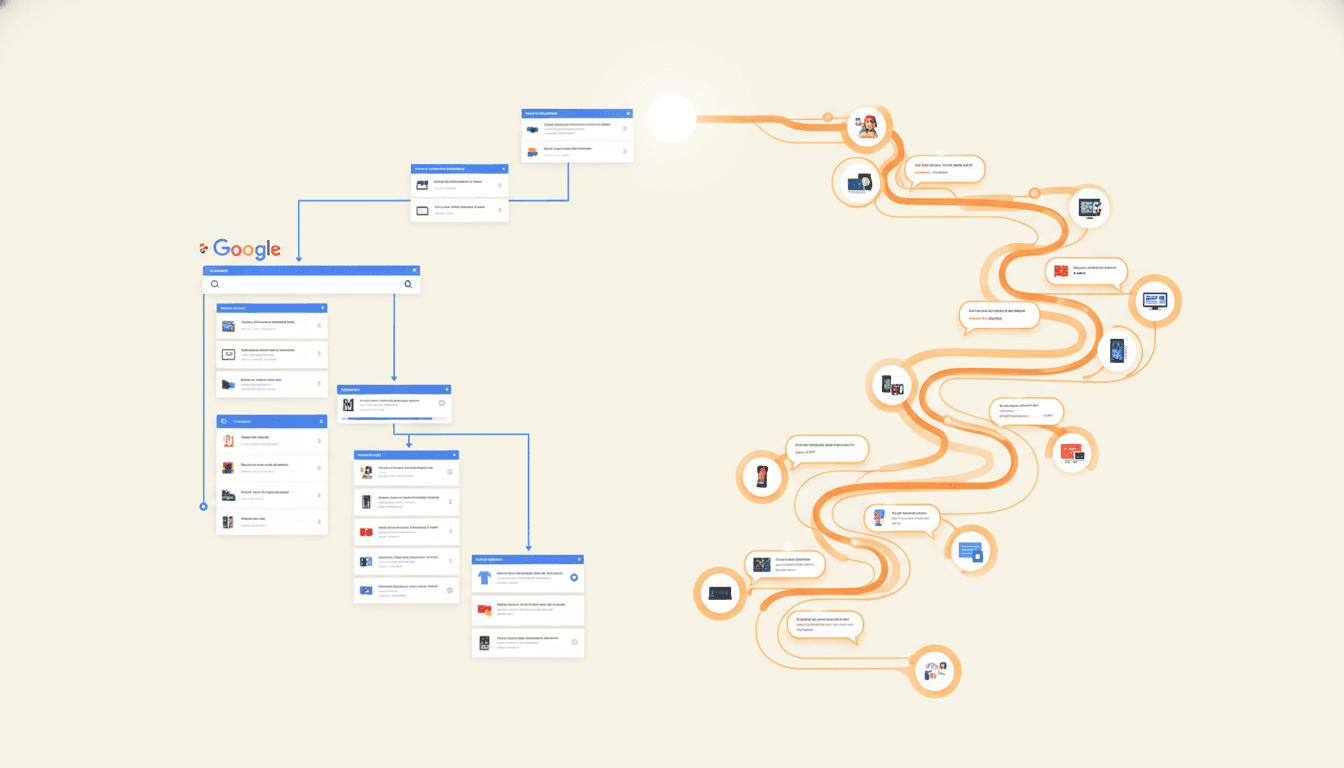
[IMG: Split-screen visualization showing a traditional Google search results page on the left versus an AI-generated conversational answer on the right, with a stark contrast in how brands are surfaced]


---


Brands have spent years perfecting Google rankings, dominating first-page results, and building bulletproof technical SEO. Yet here's the uncomfortable truth: **only 9% of brands recommended by ChatGPT overlap with the top Google Shopping results for identical queries.** This isn't a coincidence—it's evidence of a fundamental shift in how search works. For brands optimizing only for Google, invisibility to the fastest-growing search channel in e-commerce is already a reality.

AI search engines operate by completely different rules than traditional search. They don't rank pages; they synthesize answers. They don't prioritize keywords; they evaluate brand authority. They don't reward technical optimization; they reward reputation. This guide breaks down exactly how AI search differs from traditional Google search, why current SEO strategies won't transfer, and what brands need to do to become trusted answers in AI-powered search results.


---


## The Fundamental Shift: From Keyword Matching to Semantic Understanding

Google's mechanism is elegant in its simplicity: Googlebot crawls and indexes over 400 billion web pages, then ranks them using 200+ algorithmic signals. These signals include PageRank, keyword relevance, backlinks, and dozens more. The result is a list of URLs ordered by relevance.

AI search operates on an entirely different principle. Instead of returning a ranked list of links, platforms like ChatGPT and Perplexity use large language models (LLMs) to synthesize information from multiple sources and generate a direct answer. There is no page-level ranking—there is only inclusion or exclusion from the response.

This distinction reshapes everything about how e-commerce brands approach search visibility. Traditional Google search prioritizes page-level signals: keywords, links, and technical SEO. AI search prioritizes **brand-level authority signals**: citations, mentions, and reputation across the web.

Here's how the mental model needs to shift: ranking on Google is about being found; being cited in AI search is about being trusted. As [Rand Fishkin, Co-Founder & CEO of SparkToro](https://sparktoro.com), puts it: *"Google rewarded pages; AI rewards reputations. Brands that understand this distinction will dominate the next decade of e-commerce."*

LLMs are trained to recognize and actively deprioritize the low-quality SEO patterns that once worked—keyword stuffing, thin content, and link schemes. The tactics that gamed earlier Google algorithms now signal spam to AI systems. Additionally, the zero-click problem presents another layer of complexity: AI models synthesize answers without directing users to source websites, meaning even when brand information is used, no traffic benefit may result.


---


## The Five Major AI Search Platforms and Their Different Indexing Methods

Not all AI search platforms work the same way. Each uses different training data, retrieval methods, and authority signals. Building a multi-platform visibility strategy requires understanding these distinctions.

**ChatGPT** is trained on web data with a cutoff of April 2024, supplemented by a browsing feature powered by Bing for real-time queries. Brands absent from high-authority publications before that training cutoff may be invisible regardless of current Google rankings.

**Perplexity** operates as a web-native AI search engine using real-time indexing via Bing's API combined with LLM synthesis. It cites sources by default and prioritizes freshness, recency, and domain authority over keyword density.

**Claude (Anthropic)** is trained on curated datasets emphasizing books, academic papers, long-form journalism, and structured reference content. Brands appearing in editorial reviews and industry reports have a structural advantage here compared to platforms like ChatGPT.

**Google AI Overviews** are integrated directly into Google Search, drawing from Google's existing index. Interestingly, they pull from top-10 organic results approximately 52% of the time—but also frequently cite sources that don't rank in the top 10, suggesting different authority weighting.

**Microsoft Copilot** is powered by Bing's index and integrated across the Microsoft ecosystem. Brands with strong Bing Webmaster Tools setup have a measurable advantage in Copilot recommendations.

[IMG: Comparison table showing the five major AI search platforms, their indexing methods, data sources, and key authority signals side by side]

The implications are significant. According to the [Salesforce State of the Connected Customer Report 2024](https://www.salesforce.com/resources/research-reports/state-of-the-connected-customer/), **58% of consumers have already used AI chatbots or AI-powered search to research a product purchase**—up from just 28% in 2023. Each platform weights authority signals differently based on training data and retrieval methods. A single optimization approach won't work across all platforms; brands must develop platform-specific visibility strategies.


---


## Why Traditional SEO Tactics Don't Work for AI Search Engines

The skills that helped brands climb Google's rankings don't transfer to AI search—and in many cases, they actively undermine AI visibility. LLMs are trained on human-written content and are highly capable of distinguishing between natural writing and keyword-optimized text. Exact-match anchor text, keyword density manipulation, and thin content pages are patterns that AI models are specifically trained to deprioritize.

As [Lily Ray, VP of SEO Strategy & Research at Amsive](https://www.amsive.com), explains: *"Traditional SEO was about telling Google what your page was about. AI search optimization is about convincing a language model that your brand is the most credible, most cited, most trusted answer to a user's problem. Those are completely different disciplines."*

Link schemes and low-quality backlink profiles signal spam to AI systems rather than authority. Page-level optimization like meta tags and H1 tags matters far less when AI synthesizes answers without directing traffic to individual URLs. Technical SEO factors like site speed and mobile optimization, while still valuable for Google, have minimal influence on whether an AI model recommends a brand.

The core problem is this: the same manipulative patterns that once gamed early Google algorithms are now the fastest way to become invisible to AI search. Brands that built visibility on these tactics face a significant rebuild—not a simple pivot.


---


## What AI Search Actually Rewards: Authority Signals That Matter

If traditional SEO signals don't work, what does? AI search rewards a fundamentally different set of authority signals—ones built around brand reputation, third-party validation, and consistent presence across trusted sources.

**Third-party press mentions and editorial coverage** in publications like Forbes, TechCrunch, and Wirecutter are heavily weighted in LLM training data and RAG retrieval pipelines as high-trust reference points. These are direct AI search visibility drivers, not just marketing wins.

**User-generated content** on Reddit, review platforms, and social media carries significant weight. Modern LLMs are trained on community discussions, and Reddit mentions in particular are heavily indexed by AI search platforms.

**Citations in high-trust publications and industry authorities** signal brand credibility in ways that backlinks from low-authority sites never can. An editorial mention in a respected industry publication is worth far more than a dozen links from mediocre sources.

**Structured data and schema markup** (JSON-LD) improve AI search visibility because LLMs and RAG systems can parse structured product data—price, ratings, availability, reviews—more reliably than unstructured prose. This is one area where traditional SEO and AI optimization align.

**Comprehensive product information and transparent brand messaging** reduce ambiguity for AI models attempting to synthesize accurate recommendations. Vague or incomplete product information makes it harder for AI to confidently recommend a brand.

**Consistent brand voice across multiple platforms** signals reliability and authority at the brand level, not just the page level. AI models evaluate entire web presences, not individual pages.

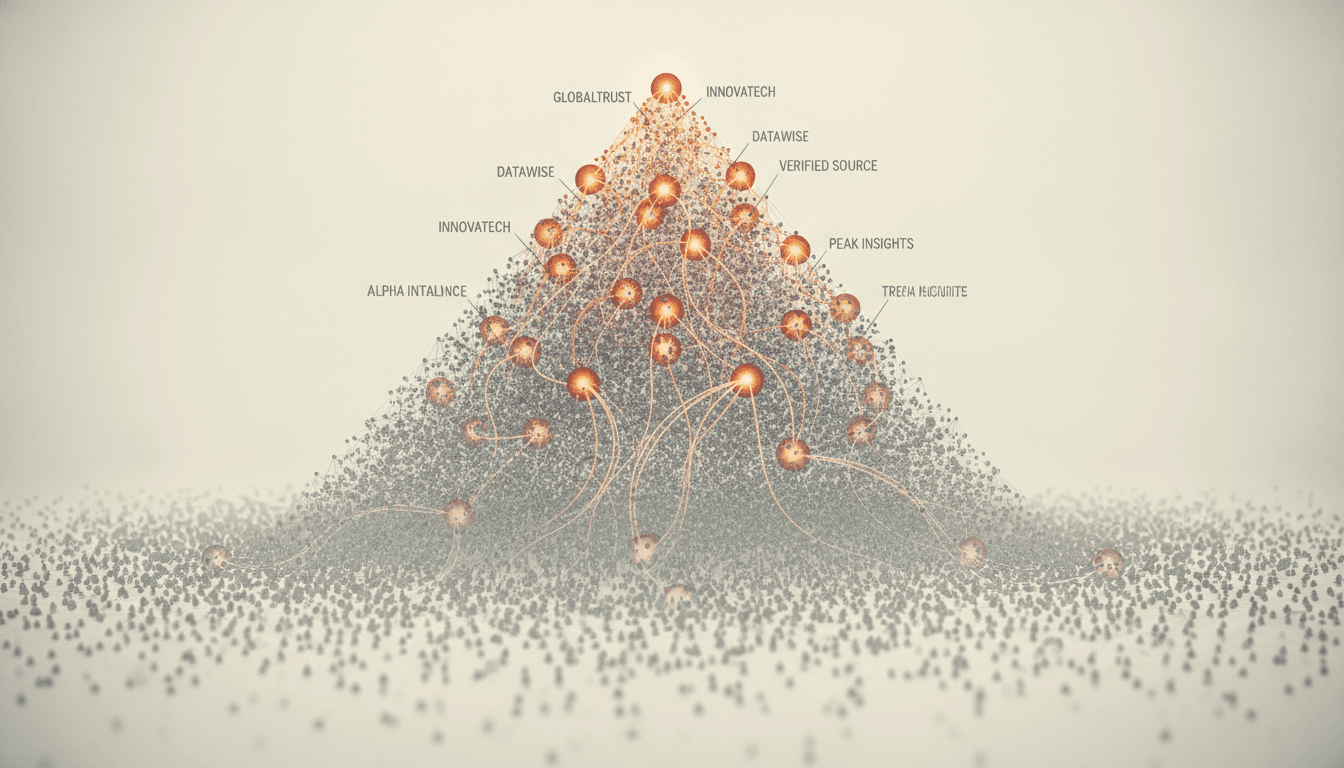
[IMG: Infographic showing the authority signal pyramid for AI search, with brand-level signals at the top and page-level technical signals at the bottom]

The stakes are genuinely high. According to [BrightEdge Generative AI Search Research 2024](https://www.brightedge.com/resources/research-reports), **72% of AI-generated answers cite fewer than 5 sources**, meaning the majority of brands in any given category receive zero AI search visibility. As [Amanda Whalen, CMO at Conductor](https://www.conductor.com), notes: *"The brands winning in AI search today are the ones whose names appear consistently in trusted reviews, comparison articles, and editorial content that AI models were trained on or actively retrieve."*

Brand-level authority signals matter more than any single optimized page. Unlike Google, which evaluates individual page authority, AI models aggregate signals across the entire web—including YouTube transcripts, podcasts, and social media—making brand reputation across diverse platforms the true competitive moat.


---


## The Zero-Click Problem: Why AI Search Visibility Doesn't Always Mean Traffic

AI search introduces a paradox that e-commerce brands must understand before building their strategy: being cited by an AI doesn't necessarily mean receiving traffic. AI platforms answer product questions directly, often without sending users to brand websites at all. Even when brand information forms the basis of an AI-generated answer, no measurable click-through benefit may result.

This is already happening at scale. According to a [SparkToro & Datos Clickstream Study 2024](https://sparktoro.com/blog/), websites are already experiencing an estimated **25-30% reduction in organic click-through traffic** from Google as AI Overviews answer queries directly on the search results page. [Gartner forecasts](https://www.gartner.com/en/newsroom/press-releases) that traditional search engine volume will drop by **25% by 2026** as AI chatbots handle an increasing share of queries.

This shifts the competitive advantage from ranking to being cited. Brand mention tracking becomes an essential new KPI, replacing or supplementing traditional click-through rate monitoring. Citation monitoring across AI-indexed sources—not just Google Analytics traffic—is the new measure of search visibility.

The long-term revenue stakes are significant. [McKinsey Global Institute](https://www.mckinsey.com/capabilities/mckinsey-digital/our-insights) projects **$1.3 trillion in AI-influenced e-commerce revenue globally by 2030**, with AI assistants playing a growing role in product discovery and purchase decisions. Early movers who establish AI search authority now will build durable advantages before competitive positions solidify.


---


## How to Optimize for AI Search: A Strategic Framework for E-Commerce Brands

Building AI search visibility requires a deliberate, multi-platform strategy focused on brand authority rather than page-level optimization. Here's how e-commerce brands can begin closing the gap:

- **Build thought leadership content** that positions brands as trusted answers in their category. Long-form editorial content, expert guides, and original research are the types of content AI models recognize as authoritative.

- **Invest in third-party press coverage and editorial mentions.** Proactive PR in publications that AI models weight heavily—industry trade publications, consumer review outlets, and mainstream media—is now a direct AI search optimization tactic.

- **Encourage and amplify user-generated content and reviews.** Reddit discussions, verified product reviews, and community conversations are heavily indexed by modern LLMs. Brands that actively cultivate these signals build AI visibility at scale.

- **Implement comprehensive schema markup (JSON-LD)** for all product pages, including price, availability, ratings, and reviews. This is one of the few page-level optimizations that still matters for AI search.

- **Create consistent brand messaging across all platforms**—website, social, press materials, and third-party listings. Inconsistency confuses AI models and reduces authority scores.

- **Monitor brand mentions and citations** across AI-indexed sources using tools like Semrush, Moz, or dedicated AI visibility platforms. What gets measured gets improved.

- **Develop platform-specific visibility strategies** for ChatGPT, Perplexity, Claude, Google AI Overviews, and Microsoft Copilot. Each platform has different strengths and weaknesses requiring tailored approaches.

[IMG: Strategic framework diagram showing the six pillars of AI search optimization for e-commerce brands]

As [Greg Sterling, Co-Founder of Near Media](https://nearmedianews.com), frames it: *"Your product doesn't just need to be findable—it needs to be the answer the AI chooses to give."* The competitive window for establishing AI search authority is narrow. Brands investing in these signals now will build compounding advantages as AI adoption accelerates.


---


**Ready to audit brand AI search visibility across ChatGPT, Perplexity, Claude, and Google AI Overviews? Schedule a 30-minute consultation with an AI search strategy specialist. The session will analyze current authority signals, identify gaps in AI visibility, and create a roadmap to become the trusted answer in the category. [Book Your AI Search Strategy Session](https://calendly.com/ramon-joinhexagon/30min)**


---


## The Competitive Window Is Closing: Why an AI Search Strategy Is Essential Now

AI models update their training data and retrieval preferences regularly, and brands that establish authority signals early will benefit from compounding returns. Late movers face a structural disadvantage: entrenched competitive positions are harder to displace once AI models associate a category with a specific set of trusted brands.

The numbers make the urgency clear. **58% of consumers are already using AI search for product research**, and Gartner predicts 25% of traditional search volume will shift to AI by 2026. The 9% overlap between AI recommendations and Google rankings signals a bifurcated search landscape that is widening, not narrowing.

Waiting until AI search dominates means competing from a position of weakness. Brand authority in AI search is harder to build after competitors establish dominance, because AI models are less likely to surface new entrants when established brands already occupy the trusted-answer position. The window is open now—but it won't stay open indefinitely.

Looking ahead six months, if competitors have already established themselves as trusted answers across ChatGPT, Perplexity, and Claude, the battle becomes significantly harder. AI models tend to reinforce existing authority signals rather than discover new brands. First-mover advantage is real and significant.


---


## Key Takeaways: From Google Ranking to AI Authority

The shift from Google to AI search is not incremental—it is structural. Here's what every e-commerce brand needs to internalize:

- **AI search is fundamentally different from Google.** It's about semantic understanding and synthesis, not keyword matching and URL ranking.
- **The five major AI platforms use different indexing methods and authority signals.** A one-size-fits-all approach will leave visibility gaps across platforms.
- **Traditional SEO tactics are ineffective or counterproductive for AI search.** Keyword stuffing, thin content, and link schemes actively harm AI visibility.
- **Brand-level authority signals matter most.** Press coverage, editorial citations, user reviews, and consistent brand presence across platforms are the new ranking factors.
- **The zero-click problem is real and growing.** A 25-30% decline in organic click-through traffic is already measurable, and Gartner's 25% search volume reduction forecast by 2026 signals acceleration.
- **72% of AI-generated answers cite fewer than 5 sources.** Most brands in any category are already invisible to AI search—and early movers will lock in durable advantages.
- **$1.3 trillion in AI-influenced e-commerce revenue is projected by 2030.** AI search visibility is a direct revenue driver, not a vanity metric.

The competitive window for establishing AI search authority is narrow and closing. The next strategic move should be to audit brand visibility across AI search platforms—and build a roadmap before competitors do.


---


**Competitors are already optimizing for AI search. Don't get left behind. Schedule a free AI search audit to discover how brands rank across AI platforms and what's needed to capture market share in the fastest-growing search channel. [Get Your Free AI Search Audit](https://calendly.com/ramon-joinhexagon/30min)**
H
Hexagon Team
Published May 23, 2026