searchenginesbrands
What Are AI Search Engines and How Do They Differ from Traditional Google Search?
AI search is no longer a niche experiment. With 13% of U.S. adults now using AI chatbots as their primary search tool—and that number climbing fast—e-commerce brands that ignore AI search optimization are already losing customers to competitors who don't.
13 min read

placeholders exactly as provided" ]
# What Are AI Search Engines and How Do They Differ from Traditional Google Search?

AI search is no longer a niche experiment. With 13% of U.S. adults now using AI chatbots as their primary search tool—and that number climbing fast—e-commerce brands that ignore AI search optimization are already losing customers to competitors who don't.

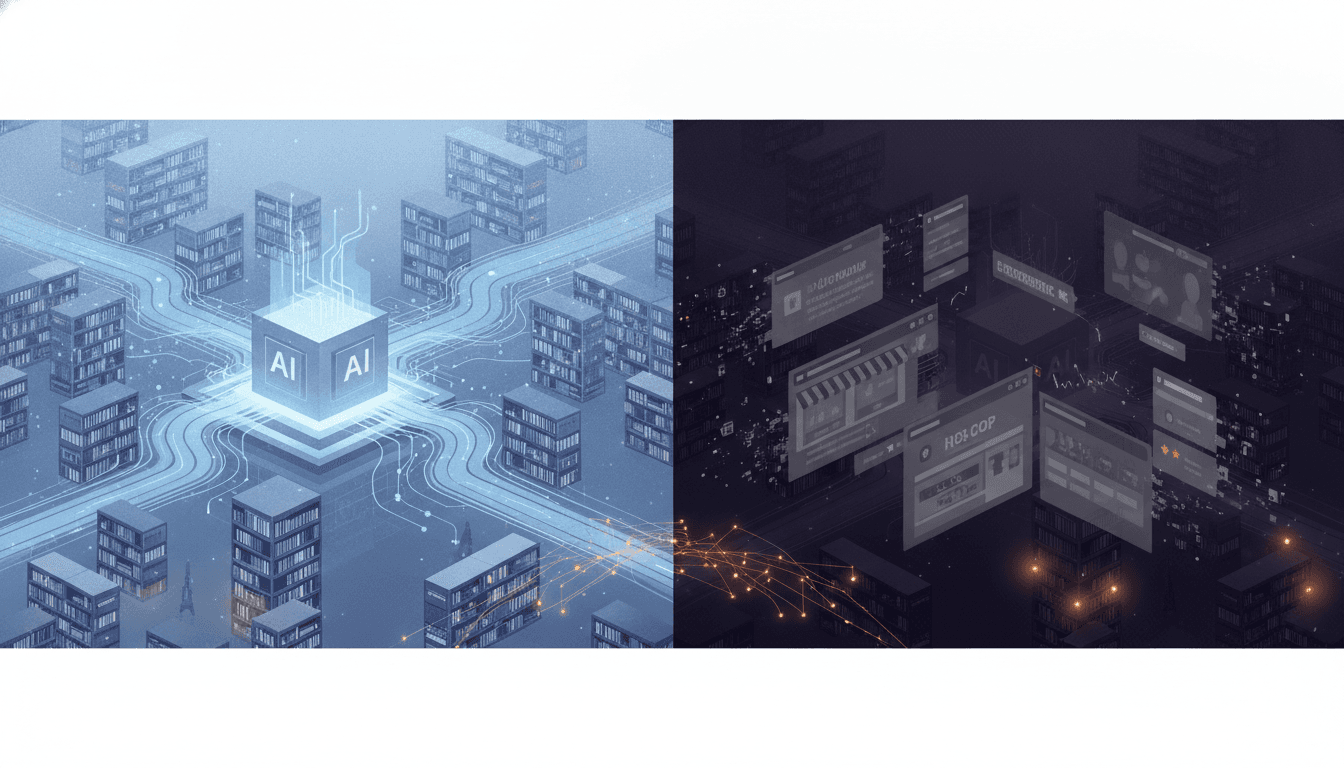
[IMG: Side-by-side comparison graphic showing a traditional Google SERP with 10 blue links vs. an AI search response with a single synthesized recommendation and 2-3 citations]

In 2022, fewer than 2% of U.S. adults used AI chatbots to search for products. Today, that number has climbed to 13%—and among younger consumers, it's nearly 27%. AI search engines don't work like Google. While Google ranks and links, AI engines synthesize and recommend.

That single difference changes everything about how brands get discovered. In a traditional search results page, a brand might compete with 10 or more rivals for visibility. In an AI response, the competition narrows to just 1–3 recommendation slots.

It's a winner-take-most game. Brands that aren't optimized for AI search are already falling behind competitors who are.


---


## The Fundamental Difference: Ranking vs. Synthesis

Traditional search engines like Google use a crawl-index-rank model. They crawl web pages, index content by keywords, and rank results using hundreds of algorithmic signals—backlinks, page authority, and on-page SEO among them. The result is a familiar list of blue links that users evaluate themselves.

AI search engines operate on an entirely different architecture. Platforms like ChatGPT and Perplexity use large language models trained on vast datasets to generate synthesized, conversational responses. Instead of showing options, they deliver a verdict.

Here's how that changes the competitive landscape: [ChatGPT receives approximately 100 million queries per day](https://openai.com), with an estimated 8–12% carrying commercial or product-discovery intent—roughly 8 million daily product queries answered by an AI recommending specific brands. [Perplexity AI reached 100 million monthly active users by mid-2024](https://techcrunch.com), growing over 400% year-over-year. Where Google surfaces 10+ organic results, AI engines typically surface just 1–3 recommendations per query.

Sridhar Ramaswamy, CEO of Snowflake and former SVP of Ads at Google, has observed that "Generative AI doesn't just change how search works—it changes what it means to be discovered. In traditional search, visibility is a spectrum. In AI search, it's often binary: you're the recommendation, or you're not mentioned at all."

This architectural difference has direct implications for optimization. Traditional SEO tactics—keyword density, meta descriptions, raw backlink counts—have limited impact on AI visibility. AI engines instead prioritize **entity authority**: how consistently and credibly a brand is described across trusted third-party sources, earned media, and the broader web.


---


## ChatGPT, Perplexity, Claude, and Google AI Overviews: Platform Breakdown

Not all AI search engines are built the same. Each platform has distinct recommendation mechanics, and effective optimization requires understanding the differences.

[IMG: Platform comparison table showing ChatGPT, Perplexity, Claude, and Google AI Overviews with columns for data source, citation model, and optimization priority]

**ChatGPT** is trained on data through April 2024, with optional real-time web browsing. Its default behavior favors brands encountered most frequently and positively across its training corpus—giving an inherent advantage to brands with strong digital footprints built before that cutoff. Historical brand authority matters here more than anywhere else.

**Perplexity** operates as a retrieval-augmented generation (RAG) engine, actively querying the live web at search time and citing sources inline. Fresh, statistics-rich content gets higher visibility in Perplexity responses. Brands mentioned in high-authority publications, Reddit threads, expert review sites, and structured product databases are significantly more likely to be surfaced.

**Claude** (by Anthropic) emphasizes safety and nuanced reasoning. It often delivers comparative, caveated recommendations rather than a single definitive answer—making it particularly influential for high-consideration purchases like electronics, health products, and B2B software. Brands with transparent, expert-backed claims rank higher than those using aggressive marketing language.

**Google AI Overviews** (formerly Search Generative Experience) now appear on an estimated [15–20% of all U.S. queries](https://www.brightedge.com), blending traditional link results with AI-generated summaries. This hybrid approach still rewards traditional SEO signals, making it a dual opportunity for brands already investing in search optimization.

Each platform demands a tailored approach. All four reward the same underlying foundation: genuine, documented brand authority across the web.


---


## Why Traditional SEO Tactics Fall Short in AI Search

Many e-commerce brands assume that strong Google rankings translate automatically into AI search visibility. They don't. The optimization targets are fundamentally different.

Here's how traditional tactics break down in an AI context:

- **Keyword optimization:** AI engines understand semantic meaning, not keyword density. Stuffing keywords into content can actually reduce visibility by signaling low-quality writing.
- **Meta descriptions:** AI engines analyze full text and entity signals—they don't rely on meta tags to understand a page's content.
- **Raw backlink counts:** Volume matters less than the authority and relevance of citing sources. A single mention in a respected industry publication outweighs dozens of low-quality links.
- **On-page technical SEO:** Necessary, but insufficient. AI engines prioritize content quality, expertise, and third-party validation above technical signals alone.

Rand Fishkin, co-founder of SparkToro, has framed the shift this way: "Search is undergoing its most significant transformation since the introduction of PageRank. When a consumer asks an AI 'what's the best running shoe for flat feet under $150,' they're not getting ten links—they're getting a verdict. Brands that aren't in that verdict don't exist for that buyer."

A [Princeton/Georgia Tech study on Generative Engine Optimization](https://arxiv.org/abs/2311.09735) quantified this gap directly: implementing GEO techniques—statistics, citations, and authoritative language—increased a source's visibility in AI-generated responses by up to 40%. The real predictors of AI visibility are entity authority, statistics-rich content, expert citations, FAQ structures, schema markup, and earned media mentions.

Brands optimizing only for Google are effectively invisible to the 13% of consumers who now use AI as their primary search tool.


---


## The Compression of Visibility: Why AI Search Is Winner-Take-Most

The shift from 10 blue links to 1–3 recommendations isn't just a cosmetic change—it's a structural compression of competitive visibility that has profound implications for e-commerce brands.

On a traditional Google SERP, users scan multiple options, compare snippets, and click through to several sites before making a decision. In an AI response, the engine has already done that evaluation. The user receives a recommendation, and most act on it.

[Gartner predicts that traditional search engine volume will drop 25% by 2026](https://www.gartner.com) as consumers shift to AI-powered search and virtual agents. The winner-take-most dynamic means the #1 recommended brand in an AI response may capture 50–70% of query-driven traffic, with #2 and #3 splitting the remainder.

The zero-click commerce trend makes this even more consequential. When an AI assistant answers a shopping query with a specific product recommendation, the user may purchase through an integrated checkout or act on the recommendation without ever visiting the brand's website. The AI response itself becomes the "above the fold" real estate.

Looking ahead, there is currently no pay-to-play mechanism in most AI engines. Unlike Google Ads, brands cannot buy their way into organic AI recommendations. The organic authority signals built today will compound as competition intensifies—making this an unusually high-ROI window for early movers.


---


## How AI Engines Recommend Products Differently Than Google

Google shows links ranked by relevance and authority. Users must evaluate the options themselves, weighing headlines, snippets, and brand familiarity before clicking. AI engines eliminate that friction entirely—they synthesize the evaluation and deliver a recommendation with a rationale.

This distinction creates a significant **trust premium**. According to the [Edelman Trust Barometer Special Report on AI & Commerce](https://www.edelman.com), 62% of consumers say they would trust a product recommendation from an AI assistant, compared to 49% who trust sponsored search ads. That 26% trust gap means a brand featured organically in an AI response may drive stronger purchase intent than a top-of-page Google ad.

[IMG: Bar chart comparing consumer trust levels: AI product recommendations (62%) vs. sponsored search ads (49%) vs. organic search results]

Here's how the recommendation dynamic works in practice:

- AI engines explain *why* they recommend a product—quality, price, reviews, features—not just that it ranks well
- Recommendations appear unsponsored, lending them the credibility of an impartial expert opinion
- The zero-click commerce trend means consumers increasingly act on AI recommendations without visiting brand websites, making brand recognition in AI responses critical

Lily Ray, VP of SEO Strategy at Amsive Digital, observes: "The brands that will win in AI search are those that have built genuine authority across the web—not through keyword stuffing or link schemes, but through being genuinely talked about, cited, and recommended by sources that AI models have learned to trust."


---


## Why E-Commerce Brands Should Care About AI Search Now

The adoption numbers are no longer speculative. According to the [Salesforce State of the Connected Customer Report](https://www.salesforce.com), 13% of U.S. adults now use AI chatbots as their primary search tool for product research—up from under 2% in 2022. Among 18–34 year olds, the demographic driving e-commerce growth, that figure rises to nearly 27%.

The scale of untapped opportunity is equally striking:

- ChatGPT alone processes an estimated **8 million daily product-related queries** (100M queries/day × 8–12% commercial intent)
- Most e-commerce brands have zero optimization strategy for AI search
- AI recommendations carry higher trust and conversion intent than paid search, making AI visibility a high-ROI discovery channel
- [Gartner forecasts](https://www.gartner.com) that 25% of traditional search volume will shift to AI by 2026—brands that wait will be playing catch-up in a crowded, competitive landscape

The structural advantage available today is rare. With no established pay-to-play mechanism in most AI engines, organic authority signals built now will compound as the channel matures. The window for early-mover advantage is open—but it won't stay open indefinitely.


---


## GEO (Generative Engine Optimization): The Framework for AI Visibility

GEO—Generative Engine Optimization—is the emerging discipline of optimizing content and brand presence specifically for AI search engines. It is distinct from traditional SEO in both its methods and its targets.

The [Princeton/Georgia Tech GEO study](https://arxiv.org/abs/2311.09735) established that statistics-rich content is 3–5x more likely to be cited in AI responses than generic marketing copy. FAQ structures and schema markup directly increase the likelihood of being included in AI-synthesized answers. Earned media—third-party mentions in reputable publications—is the strongest authority signal for AI engines, outperforming backlinks alone.

Core GEO tactics include:

- **Statistics-rich content:** Original research, data-backed guides, and quantified case studies that AI engines can cite
- **Expert citations:** Attributing claims to named experts or credible studies signals trustworthiness to AI models
- **FAQ structures:** Q&A formats align directly with how AI engines process and retrieve information
- **Schema markup:** Structured data (Product, Review, FAQ, Organization) helps AI engines understand content context
- **Entity authority:** Consistent brand narrative across Wikipedia, industry publications, and third-party review platforms
- **Earned media:** Pitching stories to industry publications and building a presence on trusted third-party platforms

Greg Finn, Partner at Cypress North, notes: "We're moving from a world where the question was 'how do I rank on Google?' to 'how does an AI decide to recommend me?' Those are fundamentally different problems. One is about technical signals and links. The other is about whether the AI has learned that a brand is the credible, trusted answer to a specific type of problem."

GEO techniques are measurable and repeatable. The Princeton study quantified a 40% visibility lift—making this a trackable investment, not a speculative one.


---


## Actionable Steps to Optimize for AI Search Today

[IMG: Step-by-step roadmap graphic illustrating the 7 GEO action steps from audit to monitoring]

Brands don't need to overhaul their entire marketing strategy to start building AI visibility. Here's how to begin:

- **Audit current AI visibility:** Search for top products and the brand name in ChatGPT, Perplexity, and Claude. Note which competitors are recommended and why.
- **Build entity authority:** Create or optimize Wikipedia entries, industry association profiles, and expert contributor pages to establish a consistent brand identity across trusted sources.
- **Create statistics-rich content:** Develop original research, data-backed guides, and case studies that AI engines are likely to cite. Generic marketing copy won't cut it.
- **Implement schema markup:** Add structured data—Product, Review, FAQ, Organization—to help AI engines accurately interpret and surface content.
- **Earn third-party mentions:** Pitch stories to industry publications, contribute expert commentary, and encourage user reviews on trusted platforms like G2, Trustpilot, and niche review sites.
- **Develop FAQ content:** AI engines favor Q&A formats. Comprehensive FAQs that address real customer questions are among the highest-value content investments for GEO.
- **Monitor AI recommendations:** Track brand mention frequency in AI responses, measure AI-driven traffic as a distinct channel, and iterate based on what's working.

Brands implementing GEO now will have 6–12 months of authority building before most competitors catch up. Unlike Google Ads, there is no way to buy AI visibility—organic authority is the only path, which means the time invested today creates a durable competitive moat.


---


## The Future of E-Commerce Discovery: AI Search as the New Normal

Gartner's prediction—25% of traditional search volume shifting to AI by 2026—is not a distant scenario. The adoption curve is already steep. What was 13% of U.S. adults in 2024 will likely be 25–30% by 2026, driven largely by the 18–34 demographic that is already at 27% adoption today.

Looking ahead, AI search will become as competitive as Google SEO within 2–3 years. The brands that build authority now will have a structural advantage that compounds over time—similar to the brands that invested in SEO in 2005 while competitors were still debating whether it mattered. The window for low-competition, high-impact organic authority building is open today, but it won't stay open forever.

The convergence of zero-click commerce, rising consumer trust in AI recommendations, and the absence of paid placement options means that **organic AI visibility is the most valuable untapped discovery channel in e-commerce right now**. Brands that treat AI search as a future concern rather than a present priority will find themselves playing catch-up in a landscape where early movers have already locked in their authority signals.


---


## Conclusion: The Verdict Is Already Being Written

AI search engines are not replacing Google overnight. But they are already reshaping how millions of consumers discover products—and the optimization rules are fundamentally different. Ranking for keywords is no longer enough. Brands must build the kind of genuine, documented, cross-web authority that AI engines have learned to trust.

The good news: the playbook exists, the results are measurable, and the competitive window is still open. The brands that act now will be the recommendations consumers receive tomorrow.

For example, brands that begin building GEO strategies today will establish authority signals that compound over time. The first-mover advantage in AI search is similar to the early advantage in Google SEO—substantial and durable.

**Ready to find out where a brand stands in AI search?** [Schedule a free 30-minute GEO strategy call with Hexagon](https://calendly.com/ramon-joinhexagon/30min) and get a clear picture of AI visibility, competitors' positioning, and the fastest path to becoming the recommendation—not the brand that didn't exist for that buyer.
H
Hexagon Team
Published May 22, 2026