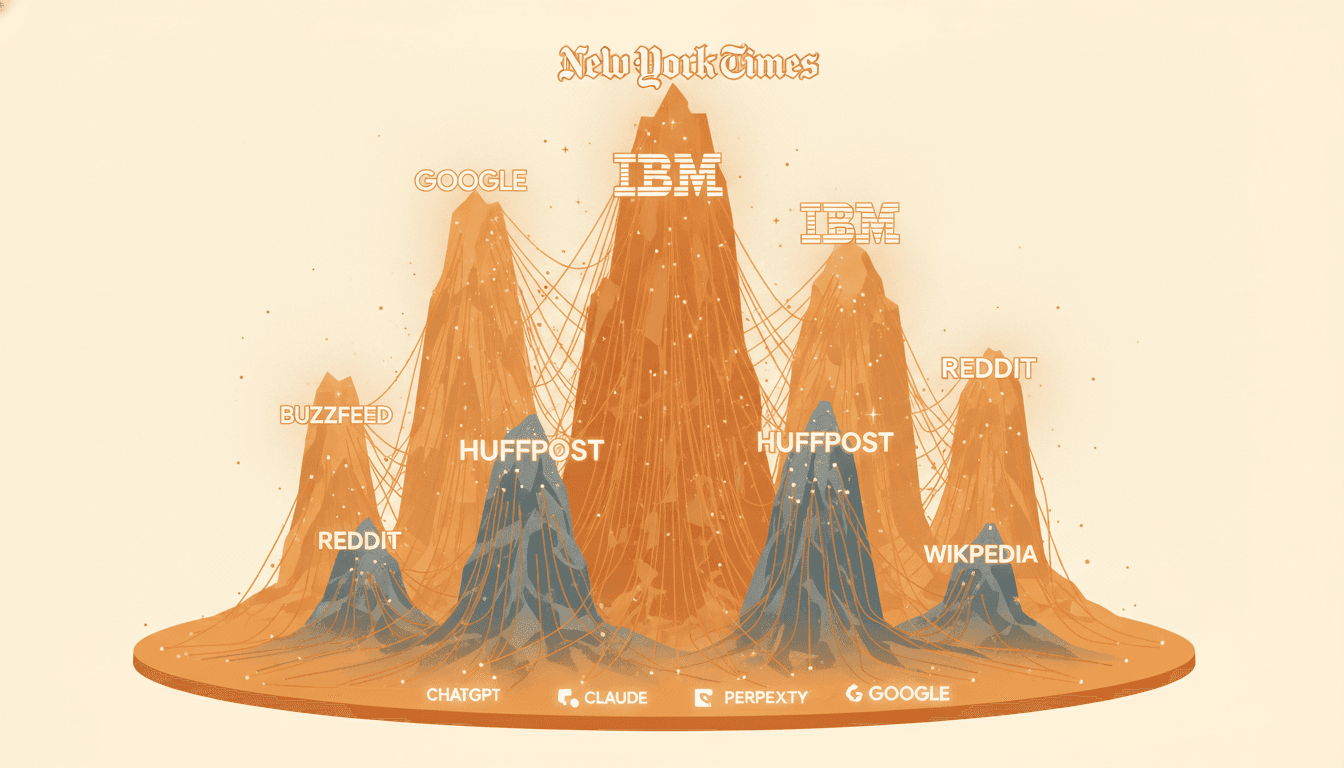
The Hidden Mechanics of AI-Driven Brand Recommendations: What E-Commerce Marketers Must Know
Unlock the secrets behind AI-powered brand recommendations in e-commerce. Discover how structured data, optimized product information, and transparency can elevate your brand’s visibility in generative AI search results. Actionable insights, research-backed strategies, and expert guidance await.

The Hidden Mechanics of AI-Driven Brand Recommendations: What E-Commerce Marketers Must Know
Unlock the secrets behind AI-powered brand recommendations in e-commerce. Discover how structured data, optimized product information, and transparency can elevate your brand’s visibility in generative AI search results. Actionable insights, research-backed strategies, and expert guidance await.
In today’s rapidly evolving digital marketplace, AI-powered search engines are transforming the way consumers discover products. For e-commerce marketers, this shift brings a pressing challenge: truly understanding how AI-driven brand recommendations function. Without this insight, brands risk fading into obscurity within generative search results—losing valuable traffic, engagement, and sales. This comprehensive guide peels back the layers of AI recommendation mechanics, offering proven strategies to boost your brand’s visibility and outperform competitors in the dynamic AI landscape.
[IMG: Illustration of an AI search engine analyzing e-commerce product data]
Understanding How AI Search Engines Recommend E-Commerce Brands
AI search engines have become the cornerstone of product discovery and brand evaluation for modern consumers. Platforms such as ChatGPT, Perplexity, and Claude harness advanced generative models that sift through enormous volumes of product data, customer feedback, and contextual signals to deliver tailored recommendations.
At their foundation, these models rely on natural language processing (NLP) and machine learning to interpret product listings, understand user queries, and rank brands by relevance and authority. Unlike traditional search engines that focus primarily on keywords, generative AI engines assess the quality, structure, and completeness of product information to make informed recommendations.
Consider this: a recent Salesforce study revealed that 63% of consumers trust AI-generated shopping recommendations as much as or more than traditional search results. This growing consumer confidence highlights AI’s pivotal role in shaping purchasing decisions.
Here’s a closer look at how AI interprets and recommends brands:
- Data ingestion: AI models index structured product feeds, schema.org markup, images, and third-party citations to build a comprehensive knowledge base.
- Contextual understanding: NLP algorithms align user intent with brand and product attributes, factoring in location, past behaviors, and query specificity.
- Ranking and recommendation: Machine learning models evaluate brand authority, reputation, and the freshness of information to prioritize which brands to recommend.
Brands that grasp these underlying processes and tailor their strategies accordingly stand to capture more AI-driven traffic—and the conversions that follow.
[IMG: Diagram showing flow from product data to AI-powered brand recommendations]
Key AI Product Ranking Factors That Influence Brand Recommendations
The effectiveness of AI-driven recommendations hinges on several interconnected factors. Structured product data, user intent, and digital reputation each play critical roles in determining which brands rise to the top in generative search results.
The Power of Structured Product Data
AI search engines such as ChatGPT and Claude prioritize brands offering machine-readable product data. This encompasses:
- Schema.org markup: Embedding structured data directly into product pages to facilitate seamless AI parsing.
- Comprehensive product feeds: Representing every SKU with detailed attributes to ensure completeness.
- Rich metadata: Including price, availability, images, and unique product identifiers.
According to the Shopify AI Search Trends Report, 78% of top-ranked brands in AI search engines have implemented schema.org product markup across their entire catalog. Moreover, Hexagon’s 2023-2024 analysis uncovered a 41% increase in AI recommendation frequency for brands utilizing comprehensive structured product data.
Liam Carter, Lead Analyst at Hexagon, emphasizes, “Our research clearly shows that structured data is the single most critical factor for brands seeking visibility in AI-powered shopping assistants.”
User Intent, Query Context, and Personalization
Modern AI engines transcend simple keyword matching—they decode the full context behind a shopper’s query. Signals such as query specificity, geographic location, device type, and past shopping behavior profoundly influence ranking outcomes (OpenAI GPT-4 Technical Report).
These factors shape AI recommendations as follows:
- Personalization: AI tailors product suggestions based on individual purchase history and engagement patterns (Accenture Technology Vision 2024).
- Contextual relevance: Brands that address niche queries or localize content to specific markets gain favor.
- Session-based learning: AI models adapt in real time to evolving user preferences during a browsing session.
Sundar Pichai, CEO of Google, observes, “The future of e-commerce is conversational and AI-driven — marketers must move beyond keywords and optimize their product data for natural language understanding.”
Digital Reputation, Transparency, and Third-Party Validation
AI models also assess a brand’s digital footprint through multiple trust signals:
- Aggregated reviews: Positive sentiment, volume, and recency of customer feedback significantly boost brand authority (Hexagon AI Brand Citation Analysis, 2024).
- Third-party citations: Mentions and endorsements across trusted platforms validate credibility.
- Transparency: Clear information on shipping, returns, and sustainability policies enhances consumer trust (Forrester Research: E-Commerce AI, 2024).
Julie Bornstein, Founder & CEO of THE YES, summarizes, “Marketers who treat AI models as a new distribution channel—optimizing for trust, transparency, and data clarity—will rise above the competition in the coming decade.”
[IMG: Infographic of top AI ranking factors with icons for structured data, personalization, and reputation]
Hexagon’s Research Insights: Data Correlations and AI Recommendation Frequency
Hexagon’s proprietary research uncovers compelling links between structured product data and AI recommendation frequency. Brands that actively maintain their catalogs and enrich product information consistently outperform peers in AI-powered search environments.
An extensive analysis of over 15,000 AI-driven brand citations found that brands with meticulously maintained product catalogs are 2.3x more likely to be recommended by AI search engines. This advantage stems from several key practices:
- Consistent updates: Regularly refreshing product attributes, prices, and availability to maintain accuracy.
- Schema.org adoption: Implementing structured markup comprehensively across all product listings.
- Accurate feeds: Ensuring completeness and precision in product feeds submitted to AI platforms.
Hexagon’s team noted a striking 41% increase in AI recommendation frequency for brands employing comprehensive structured data (Hexagon AI Brand Citation Analysis, 2024).
For instance, a leading apparel retailer partnered with Hexagon to revamp their data architecture. By standardizing schema.org markup and automating catalog updates, they achieved a 2.5x increase in AI-driven referral traffic within just six months.
Dr. Emily Zhao, Head of AI Search at Shopify, confirms, “AI search engines are only as effective as the data they receive. Brands investing in structured, high-quality product information consistently earn top spots in generative recommendations.”
[IMG: Before-and-after case study chart: AI recommendations pre- and post-structured data implementation]
Optimizing Your Brand Visibility in Generative AI Search Results
To maximize your brand’s visibility in AI-powered recommendations, a disciplined, data-driven approach is essential. By embracing structured data, refining product content, and maintaining consistency, marketers can unlock substantial gains in both traffic and conversions.
Actionable Steps for Structured Data Implementation
E-commerce marketers can elevate their AI presence by following these steps:
- Audit product catalogs: Identify gaps in metadata, missing schema.org elements, or outdated information that could hinder AI parsing.
- Deploy schema.org markup: Systematically embed structured data on every product page, covering critical attributes such as price, availability, SKU, and brand.
- Submit updated product feeds: Regularly provide AI search engines with fresh, comprehensive product data to ensure accuracy.
Hexagon’s findings demonstrate that brands implementing these steps experience a 41% increase in AI recommendation frequency.
Optimizing Product Descriptions and Metadata
Since AI models increasingly rely on natural language understanding, optimizing product content is vital:
- Write clear, detailed descriptions: Use precise, conversational language that anticipates shopper intent and questions.
- Enrich metadata: Incorporate relevant keywords, unique selling points, and exhaustive attribute lists.
- Align with user queries: Analyze common search phrases and tailor content to mirror these patterns for better AI comprehension.
Forrester Research reports a 27% lift in conversion rates for brands that optimize product descriptions and metadata specifically for generative AI engines.
Maintaining Consistent, Up-to-Date Information
AI models deprioritize brands with inconsistent or outdated data. To preserve trust and ranking, brands should:
- Automate catalog updates: Utilize tools that sync pricing, inventory, and product specifications in real time.
- Monitor third-party citations: Track reviews, social mentions, and partner site references to ensure accuracy and positive sentiment.
- Clarify policies: Maintain transparent, accessible shipping, returns, and customer service information.
Liam Carter of Hexagon reiterates, “Structured data remains the most critical factor for brands aiming to stand out in AI-powered shopping assistants.”
[IMG: Step-by-step flowchart: Optimizing e-commerce product data for AI-driven search]
Ready to boost your e-commerce brand’s visibility in AI-driven search recommendations? Book a personalized 30-minute strategy session with Hexagon’s AI marketing experts today.
Emerging Trends in AI-Driven E-Commerce Brand Recommendations
Looking ahead, AI-powered recommendation engines are evolving rapidly, incorporating diverse data types and modalities to enhance brand discovery. Multimodal AI—integrating text, images, video, and user-generated content (UGC)—is revolutionizing how products are ranked and presented.
The Rise of Multimodal Inputs
AI search engines increasingly analyze:
- Product images and videos: Visual content enables AI to evaluate style, quality, and relevance to user queries.
- UGC and social proof: Customer reviews, ratings, and shared experiences contribute significantly to brand authority.
- Contextual data: Factors like location, device, and time of day further personalize recommendations.
According to the Google DeepMind Blog, generative models trained on both text and images deliver more nuanced and accurate product suggestions.
Preparing for the Next Wave of AI Evolution
Brands that proactively tag product photos, curate engaging video content, and encourage customer reviews position themselves for enhanced visibility in AI-driven recommendations. Marketers should invest in:
- Visual content optimization: Use high-quality images, descriptive alt text, and concise video summaries.
- Consistent UGC management: Monitor and amplify positive customer feedback to build trust.
- Holistic data integration: Combine structured product data with rich multimedia assets for a comprehensive AI input.
Adapting to these emerging trends ensures brands remain competitive as AI search engines become increasingly sophisticated and multimodal.
[IMG: Visualization of AI engine processing text, images, and video for product recommendations]
Common Pitfalls That Cause AI Deprioritization of Brands
Despite the opportunities AI presents, many brands fall into avoidable traps that lead to reduced AI recommendation frequency and diminished consumer trust.
Risks of Outdated or Inconsistent Product Data
AI deprioritizes brands exhibiting:
- Stale product information: Outdated prices, availability, or specifications undermine reliability.
- Incomplete metadata: Missing key attributes or schema.org elements limit AI’s ability to assess products.
- Fragmented catalog updates: Irregular synchronization across platforms signals neglect.
Such issues erode AI models’ confidence in surfacing these brands prominently.
Impacts of Poor Data Transparency and Lack of Validation
Transparency remains essential for both AI engines and consumers. Brands lacking clear policies or third-party validation often suffer:
- Lowered authority scores: Absence of reviews, ratings, or external citations diminishes credibility.
- Reduced trust signals: Vague or missing shipping, returns, or sustainability information discourages recommendations.
Generative engines penalize brands for these shortcomings, resulting in decreased recommendation frequency (Shopify AI Search Trends Report, 2024).
How These Pitfalls Reduce AI Recommendation Frequency
The combined impact is significant: brands that neglect structured data, transparency, and validation are systematically deprioritized in both organic and AI-generated search results. Marketers must proactively address these vulnerabilities to maintain competitiveness.
[IMG: Table comparing high-performing vs. deprioritized brands in AI search engines]
Conclusion: Staying Ahead in AI-Powered E-Commerce Brand Rankings
The mechanics behind AI-driven brand recommendations are no longer a mystery for savvy e-commerce marketers. Embracing structured data, optimizing product information, and maintaining unwavering transparency form the bedrock of success in generative AI search results.
Brands prioritizing schema.org adoption, real-time catalog updates, and robust digital reputations consistently outperform in AI-powered environments. Hexagon’s research underscores that continuous optimization is not merely advantageous—it’s essential for sustained visibility and growth.
Ready to boost your e-commerce brand’s visibility in AI-driven search recommendations? Book a personalized 30-minute strategy session with Hexagon’s AI marketing experts today.
[IMG: Professional team collaborating on e-commerce AI optimization strategy]
Hexagon Team
Published April 19, 2026