brandsbrandproduct
Why AI Search Engines Ignore 80% of E-Commerce Brands: The Root Cause Analysis
AI assistants now influence billions in purchasing decisions—yet most e-commerce brands are completely invisible to them. Here's why the rules of discovery have changed, and what the data reveals about the brands winning in this new landscape.
15 min read

# Why AI Search Engines Ignore 80% of E-Commerce Brands: The Root Cause Analysis

*AI assistants now influence billions in purchasing decisions—yet most e-commerce brands are completely invisible to them. Here's how the rules of discovery have changed, and what the data reveals about the brands winning in this new landscape.*

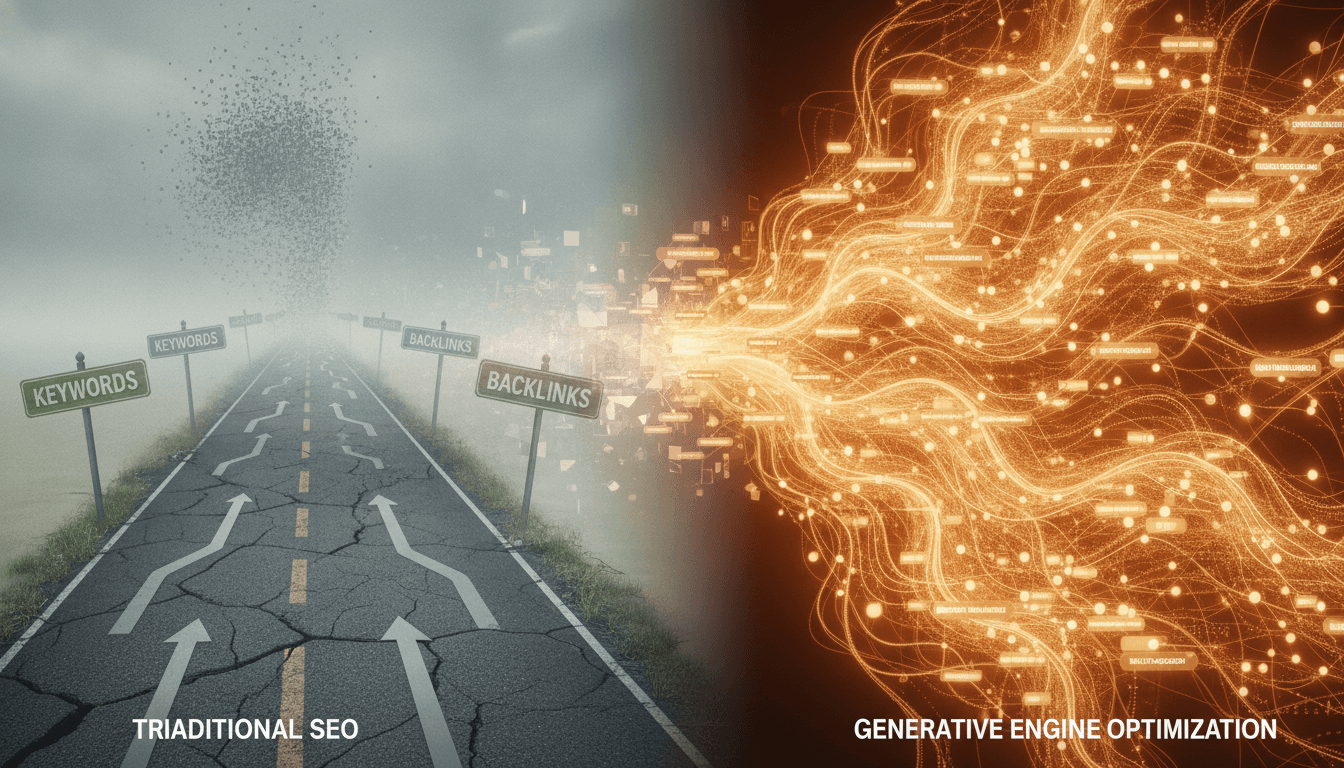
[IMG: Split-screen visualization showing a brand ranking #1 on Google but absent from an AI assistant product recommendation panel, illustrating the visibility gap between traditional SEO and AI search]


---


## What If Your Best-Ranking Pages Are Completely Invisible to the Fastest-Growing Discovery Channel in E-Commerce?

That is not a hypothetical. For the majority of e-commerce brands operating today, it is the current reality.

According to the [Salesforce State of the Connected Customer Report](https://www.salesforce.com/resources/research-reports/state-of-the-connected-customer/), **58% of U.S. consumers aged 18–44 have used an AI assistant**—ChatGPT, Perplexity, Google Gemini, or Claude—to research a product purchase in the past six months. More striking still, **31% say AI recommendations directly influenced their final purchase decision**. This is no longer an emerging trend reserved for early adopters.

AI-assisted product discovery has become a mainstream, high-intent channel. The brands that appear in those recommendations are capturing disproportionate market share. The problem is structural, not cosmetic.

Most e-commerce brands assume that strong Google rankings translate into AI visibility. They do not. AI assistants source product recommendations from a fundamentally different set of signals than traditional search engines—prioritizing third-party editorial citations, community consensus, and entity recognition over on-page SEO factors. A brand can hold the top position for dozens of high-value keywords and still be entirely absent from AI-generated product recommendations.

This invisibility is not random. According to [Hexagon's AI Visibility Benchmark Report](https://www.hexagon.com), only **19% of e-commerce brands with fewer than 500 third-party web mentions** ever appear in AI-generated product recommendation responses. In contrast, **81% of brands with 5,000 or more quality third-party mentions** achieve visibility. The gap is not about product quality or website performance.

It is about the signals that AI models are trained to trust. This post breaks down the root causes of AI invisibility, the specific deficiencies that keep brands out of AI recommendations, and the strategic framework required to close the gap.


---


## The Five Root Causes of AI Invisibility—and Why Traditional SEO Cannot Fix Them

[IMG: Diagnostic framework graphic showing five interconnected pillars: Third-Party Citation Volume, Entity Profile Completeness, Structured Data Implementation, Semantic Content Relevance, and Community Platform Presence, with a visibility score meter]

### AI Models Do Not See the Web the Way Google Does

The first and most important thing e-commerce brands must understand is how AI assistants actually construct product recommendations. Unlike Google, which crawls product listings in real time, AI assistants like ChatGPT, Perplexity, and Claude synthesize recommendations from pre-trained knowledge, indexed web content, and curated sources like Reddit, review platforms, and editorial publications. This means brands without a footprint in these sources are **structurally invisible**—regardless of their Google SEO performance.

As Amanda Natividad, VP of Marketing at SparkToro, explains: "What we found when we analyzed how ChatGPT and Claude construct product recommendations is that they're not browsing the web the way a consumer would. They're drawing on a deeply weighted understanding of which brands have been repeatedly validated by authoritative sources. A brand that has 50 high-quality editorial mentions in the right publications will consistently outperform a brand with 50,000 social media followers and a perfectly optimized product page."

According to Natividad, the currency of AI search is external validation, not internal optimization. This distinction reframes the entire problem. Traditional SEO metrics like domain authority and keyword ranking position show only a **0.31 correlation** with AI recommendation frequency, while third-party mention volume shows a **0.79 correlation**, according to [Hexagon's SEO vs. AI Visibility Correlation Study](https://www.hexagon.com).

This demonstrates that AI search visibility is a fundamentally different discipline requiring different investment strategies. In practice, this plays out dramatically. A mid-market apparel brand might invest hundreds of thousands of dollars in technical SEO, content production, and paid search—and still receive zero mentions across ChatGPT, Perplexity, and Claude.

Meanwhile, a smaller competitor with a fraction of the website traffic but consistent coverage in independent review publications and active Reddit communities captures the majority of AI-generated recommendations in the category. Here's how this competitive dynamic reshapes market opportunity.

### Root Cause #1: Insufficient Third-Party Citation Volume

The single strongest predictor of brand appearance in AI recommendations is the volume and quality of third-party citations—specifically mentions in editorial content, expert reviews, and user-generated discussions on high-authority platforms. According to [Hexagon's AI Source Attribution Study](https://www.hexagon.com), **73% of AI-generated product recommendations** analyzed across ChatGPT, Perplexity, and Claude cited brands that had been featured in at least one of five specific high-authority source types:

- Independent review publications (Wirecutter, RTINGS, Consumer Reports)
- Major media outlets (NYT, Forbes, Business Insider)
- Reddit community discussions in category-specific subreddits
- Verified customer review aggregators (Trustpilot, G2, Yelp)
- Industry-specific expert blogs with established domain authority

Rand Fishkin, Co-Founder and CEO of SparkToro, frames the underlying dynamic clearly: "The brands that win in AI search are not necessarily the brands with the best products or the best websites—they are the brands that the internet has collectively decided to trust. AI models are essentially synthesizing the consensus of thousands of editorial decisions made by journalists, reviewers, and community members."

If a brand is not part of that conversation, it does not exist in the AI's world, regardless of how much investment has been made in SEO or paid media. The format of citations matters as much as their volume. AI assistants disproportionately cite **long-form comparison content** (2,000+ words) published on third-party sites—not brand-owned content, not product pages, and not social media posts.

This reveals a fundamental truth: AI visibility is an earned media problem, not a paid or owned media problem. For example, a detailed review comparing five competing products in a category carries significantly more weight than a brand's own product description, even if the brand description is technically superior.

### Root Cause #2: Fragmented or Incomplete Entity Profiles

Brand entity recognition is one of the most underappreciated factors in AI visibility. This refers to the degree to which AI models can confidently identify a brand as a distinct, authoritative entity with specific, consistent attributes. Brands with fragmented digital identities—inconsistent naming conventions, missing Knowledge Graph entries, incomplete profiles on Crunchbase, LinkedIn, or Wikidata—are systematically underrepresented in AI outputs even when their products are objectively competitive.

The data from [Hexagon's Entity Recognition & AI Visibility Study](https://www.hexagon.com) is striking: e-commerce brands that invest in building a recognizable entity profile are **4.7x more likely** to be cited by name in AI product recommendations than brands with fragmented or inconsistent digital identities. A recognizable entity profile includes consistent representation across Wikipedia, Wikidata, Google's Knowledge Graph, LinkedIn, Crunchbase, and major review platforms.

Consider how this works in practice. When an AI model encounters a brand name, it must confidently resolve that name to a specific set of attributes: product category, founding date, headquarters, key differentiators, and verified reviews. When those signals are missing, inconsistent, or contradictory across sources, the model defaults to recommending brands it can resolve with confidence—typically larger, more established competitors with richer entity profiles.

### Root Cause #3: Missing or Incomplete Structured Data

Structured data implementation bridges brand-owned content and AI interpretability. Brands that appear in AI recommendations are **3.2x more likely** to have structured schema markup—including Product, Review, and Organization schema—correctly implemented across their entire product catalog, according to [Hexagon's Generative Engine Optimization Study](https://www.hexagon.com).

Here's how this matters: when a brand's product pages include properly implemented schema markup, AI systems that do retrieve web content can extract structured facts about products, aggregate ratings, price ranges, and brand attributes with higher confidence. Without schema, even a brand with reasonable editorial coverage may be misattributed or overlooked in AI responses.

Structured data alone is not sufficient, but its absence creates measurable drag on AI visibility that compounds the other deficiencies described here.

### Root Cause #4: Absence from AI-Indexed Community Platforms

Reddit represents a specific and often underestimated factor in AI recommendation visibility. Brands with active, substantive presence in Reddit communities—particularly subreddits dedicated to their product category—are significantly more likely to appear in AI recommendations. This is because Reddit content is heavily indexed by both training datasets and real-time retrieval systems used by AI assistants, according to [Hexagon's Reddit & AI Visibility Correlation Report](https://www.hexagon.com).

The reason is structural. AI training datasets have historically over-indexed on Reddit content because it represents high-volume, human-generated, opinion-rich discussion across virtually every product category. When a community of enthusiasts repeatedly recommends a brand in response to genuine purchase questions, that signal is weighted heavily by AI models as organic social proof.

Brands that have cultivated authentic community presence—not astroturfed promotion, but genuine product advocacy—benefit disproportionately. Lily Ray, VP of SEO Strategy and Research at Amsive Digital, captures the broader bifurcation this creates: "We're seeing a fundamental bifurcation in e-commerce brand visibility. There's a small group of brands—maybe 15 to 20 percent of any given category—that have built the kind of third-party authority signals that AI systems recognize and reward."

For the remaining brands, excellent organic search rankings may coexist with complete absence from AI-generated recommendations. These are two different games with two different rule sets.

### Root Cause #5: Lack of Semantic Content Relevance in Third-Party Sources

The fifth root cause is subtler but equally consequential. AI models do not simply count mentions—they evaluate the semantic context in which a brand is discussed. A brand mentioned briefly in a listicle carries far less weight than a brand that is the subject of a detailed, attribute-rich comparison review.

In an analysis of over 50,000 AI-generated product recommendation responses across ChatGPT, Perplexity, and Claude, [Hexagon's AI Visibility Benchmark Report](https://www.hexagon.com) found that **fewer than 20% of e-commerce brands with annual revenues under $50M** received any unprompted brand mentions. In contrast, **74% of brands with revenues over $500M** achieved visibility. The revenue gap is largely a proxy for earned media coverage and the depth of third-party content discussing those brands.

[IMG: Bar chart comparing AI recommendation appearance rates by third-party mention volume tiers, from under 500 mentions to over 5,000 mentions, with percentage visibility rates for each tier]

### The Retrieval vs. Static LLM Distinction—and Why It Matters for Strategy

Not all AI assistants work the same way, and understanding the distinction matters for how brands prioritize their generative engine optimization (GEO) investments. Perplexity AI performs real-time web retrieval, meaning it actively fetches and synthesizes current web content when generating recommendations. ChatGPT and Claude, in their standard configurations, draw primarily on pre-trained knowledge with periodic updates.

Both systems reward third-party authority, but Perplexity additionally requires real-time indexability from high-authority sources. This makes link acquisition from recognized publications doubly important for brands targeting Perplexity users specifically. Even so, Perplexity still heavily weights sources it has indexed as authoritative, meaning brands without backlinks from recognized editorial, review, or community sources are deprioritized even in retrieval-augmented AI search.

This finding from [Search Engine Journal's Perplexity Source Weighting Analysis](https://www.searchenginejournal.com) confirms that the authority-building imperative is universal across AI search architectures. For strategy purposes, brands should not segment their GEO efforts by AI platform. Building high-quality editorial citations, completing entity profiles, implementing structured data, and cultivating community presence benefits visibility across all AI assistants simultaneously.

### The Winner-Take-Most Dynamic—and Why Timing Matters

The competitive landscape in AI recommendations is not evenly distributed. Across 15 product categories analyzed—including apparel, home goods, beauty, electronics, fitness equipment, pet supplies, and kitchen products—the **top 3 brands recommended by AI assistants captured an average of 67% of all brand mentions**. The remaining market share was distributed among fewer than 8 additional brands per category, while thousands of legitimate competitors received no mentions at all, according to [Hexagon's AI Recommendation Concentration Study](https://www.hexagon.com).

This concentration effect has a direct strategic implication. The $2.3 trillion in global e-commerce transactions projected to be influenced by AI-assisted product discovery by 2027—per the [McKinsey Global Institute](https://www.mckinsey.com/mgi)—will not be distributed proportionally across the market. It will flow disproportionately to the small number of brands that AI assistants have learned to trust.

Early investment in AI visibility is not just a marketing optimization. It is the construction of a competitive moat. Neil Patel, Co-Founder of NP Digital, draws a sharp distinction between GEO and traditional SEO that underscores why this requires a different organizational posture: "Generative engine optimization is not SEO with a new name. The entire value chain is different."

In traditional SEO, an organization optimizes a page and a crawler evaluates it. In GEO, a brand builds a reputation across dozens of independent sources and an AI model synthesizes that reputation into a recommendation. Brands that treat GEO as a technical SEO project will fail. Brands that treat it as a long-term authority and PR strategy will win.

The timeline for achieving AI search visibility reflects this difference. The typical timeline for a mid-market e-commerce brand to achieve measurable AI search visibility after implementing a comprehensive GEO strategy is **6–12 months**, compared to 3–6 months for comparable traditional SEO improvements. This reflects the slower consensus-building nature of AI training data, as documented in [Gartner's Digital Marketing Research](https://www.gartner.com) and validated by Hexagon client outcome data.

This timeline has an important organizational implication. A 6–12 month authority-building campaign requires sustained investment, cross-functional coordination between marketing, PR, and content teams, and executive sponsorship. GEO is not a task that can be delegated to an SEO coordinator. It is a strategic initiative that must be resourced and owned at the VP or C-suite level to succeed.

[IMG: Timeline graphic showing a 12-month GEO roadmap with phases: Entity Profile Completion (months 1-2), Structured Data Audit and Implementation (months 1-3), Editorial Citation Campaign (months 2-8), Community Platform Activation (months 3-9), and AI Visibility Measurement (months 6-12)]

The conversion data adds urgency to this investment case. Early adopter DTC brands tracking AI-referred traffic report **3–5x higher conversion rates** from brands that appear organically in AI assistant product recommendations compared to brands discovered through paid search ads, according to [Klaviyo and Shopify DTC Brand Performance Benchmarks](https://www.klaviyo.com). AI recommendations carry a trust premium that paid placements cannot replicate—because consumers understand, implicitly, that AI recommendations reflect synthesized consensus rather than purchased placement.


---


## The Path Forward: Diagnosing and Closing the AI Visibility Gap

[IMG: Diagnostic dashboard mockup showing a brand's AI visibility score broken down by the five root cause factors, with benchmark comparisons against category leaders]

### What the Data Tells Brands to Do Next

The root causes of AI invisibility are measurable, which means they are diagnosable. Every e-commerce brand can assess its current standing across the five factors—third-party citation volume, entity profile completeness, structured data implementation, semantic content relevance, and community platform presence—and identify where the most significant gaps exist. That diagnostic is the logical starting point for any GEO strategy.

The brands that will capture the AI-driven e-commerce opportunity are not necessarily the largest or the most technically sophisticated. They are the brands that recognize the rule change early, invest in the right signals, and sustain that investment long enough for AI models to incorporate the consensus they have built.

Brands that continue treating GEO as an extension of traditional SEO will find themselves structurally excluded from the fastest-growing discovery channel in e-commerce. Here's how a prioritized action framework looks for a mid-market e-commerce brand starting from a low AI visibility baseline:

**Months 1–2: Foundation**
- Audit entity profile completeness across Wikipedia, Wikidata, Google's Knowledge Graph, LinkedIn, Crunchbase, and major review platforms
- Resolve all inconsistencies immediately

**Months 1–3: Technical Infrastructure**
- Implement Product, Review, and Organization schema markup across the full product catalog, not just top-selling SKUs
- Validate implementation through Google's Rich Results Test

**Months 2–8: Earned Media**
- Launch a sustained editorial citation campaign targeting the five high-authority source types: independent review publications, major media outlets, Reddit communities, verified review aggregators, and expert blogs
- Develop long-form comparison content in partnership with third-party publishers, positioning the brand in the context of category-level purchase decisions

**Months 3–9: Community Activation**
- Activate authentic community presence in relevant Reddit subreddits and other high-authority forums
- Prioritize genuine value contribution over promotional content

**Months 6–12: Measurement & Optimization**
- Measure AI visibility quarterly using structured prompt testing across ChatGPT, Perplexity, and Claude
- Track mention frequency, sentiment, and source attribution
- Adjust strategy based on performance data

Looking ahead, the competitive dynamics in AI-assisted product discovery will intensify as generative AI becomes more deeply embedded in search engines, social platforms, and retail applications. The brands that invest in GEO today are not just optimizing for current AI behavior—they are building the earned media foundation and entity authority that will determine their visibility as AI systems continue to evolve.

The window for establishing early-mover advantage in AI search is open. It will not remain open indefinitely. The brands that act with urgency and strategic clarity in the next 12–18 months will define the AI recommendation landscape in their categories for years to come.


---


*Is a brand among the 80% that AI assistants are ignoring? Hexagon's AI Visibility Diagnostic identifies exactly where a brand stands across all five root cause factors—and builds the GEO strategy to close the gap.* [**Learn how Hexagon can help.**](https://www.hexagon.com)
H
Hexagon Team
Published June 3, 2026