The Future of AI Search in E-Commerce: Key Trends Marketers Must Embrace by 2026
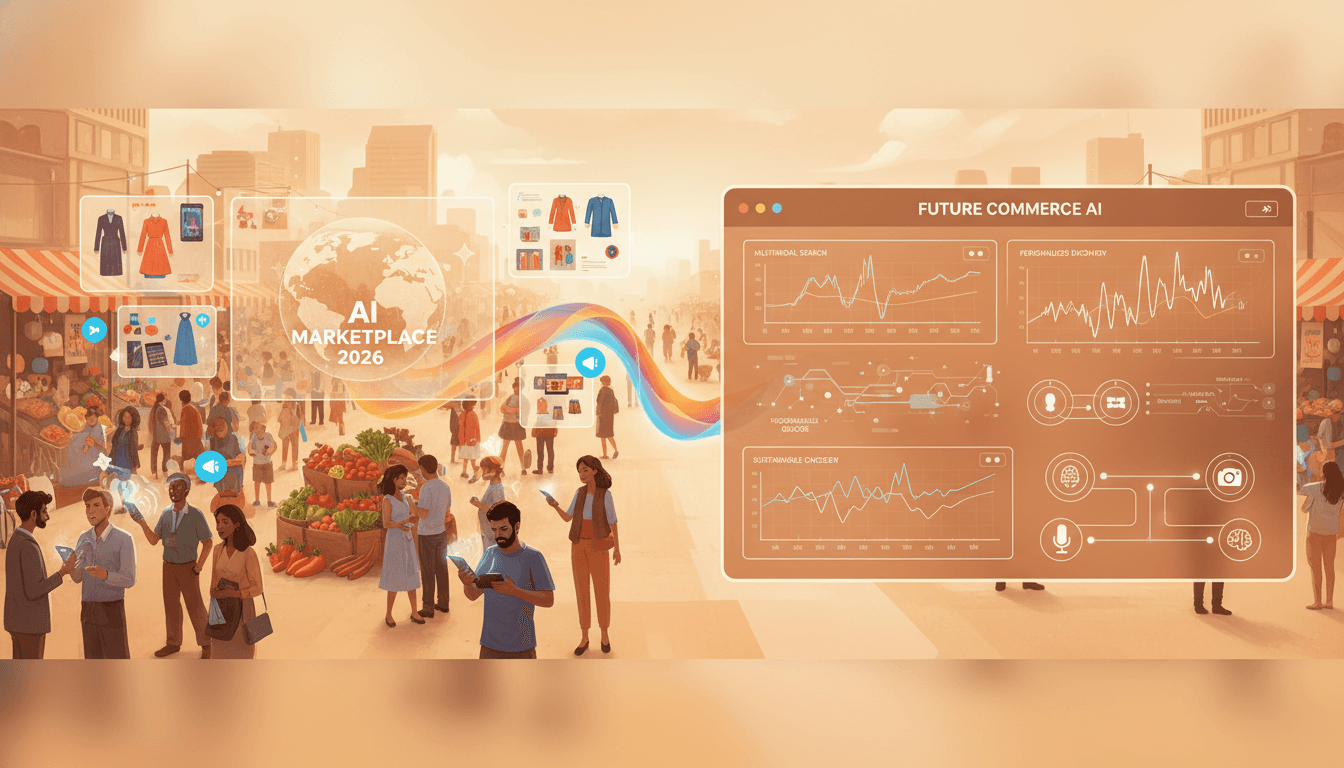
By 2026, AI-powered search will fundamentally reshape e-commerce. Discover the key trends marketers must embrace—from generative and voice AI to multimodal search—to thrive in the era of agentic commerce, ethical data, and GEO optimization.
The Future of AI Search in E-Commerce: Key Trends Marketers Must Embrace by 2026
By 2026, AI-powered search will fundamentally reshape e-commerce. Discover the key trends marketers must embrace—from generative and voice AI to multimodal search—to thrive in the era of agentic commerce, ethical data, and GEO optimization.
[IMG: Shoppers interacting with AI assistants via voice, chat, and visual search across multiple e-commerce devices]
Imagine a future where customers no longer type keywords but engage in seamless, natural conversations with AI assistants to effortlessly discover and purchase products. By 2026, generative AI and voice commerce will revolutionize e-commerce search, transforming how brands connect with buyers. Marketers who hesitate to adapt risk falling behind as AI-driven shopping experiences become the new standard—driving billions in sales and forever altering product discovery.
Ready to future-proof your e-commerce strategy with AI search optimization? Book a personalized 30-minute consultation with Hexagon’s AI marketing experts today.
1. The Rise of Generative AI and Conversational Search in E-Commerce
[IMG: Illustration of a shopper chatting with a generative AI assistant on an e-commerce platform]
E-commerce is undergoing a profound transformation fueled by generative AI and conversational search. Gone are the days of rigid keyword queries; today’s consumers expect intuitive, personalized interactions powered by sophisticated AI models. According to Forrester Research, generative AI adoption in e-commerce marketing is set to soar by 300% between 2023 and 2027—signaling a paradigm shift in product discovery.
Generative AI-powered search enables users to ask open-ended questions, describe preferences in their own words, and receive tailored recommendations—all through natural language. This change goes beyond technology; it reflects evolving consumer behavior. Gartner forecasts that by 2026, over 60% of online product searches will occur via AI-powered conversational interfaces, surpassing traditional search engines.
Sucharita Kodali, VP & Principal Analyst at Forrester, emphasizes the urgency:
“AI assistants are quickly becoming the new front door to e-commerce. Brands that fail to optimize for conversational and generative AI risk being invisible to tomorrow’s shoppers.”
The advantages for brands are compelling:
- According to the Salesforce State of Commerce Report 2024, brands optimized for AI search enjoy 20% higher conversion rates than those relying solely on traditional SEO.
- AI’s deeper understanding of customer intent and context enables far richer personalization beyond static keywords.
- Conversational experiences foster greater customer engagement and long-term loyalty.
To harness this trend, marketers should:
- Reimagine product content to align with natural language queries.
- Ensure data feeds are comprehensive and structured to help AI models interpret context and intent accurately.
- Experiment with AI-powered chatbots and shopping assistants to deepen customer interactions.
Early adopters using generative AI for product search are already outpacing competitors, setting new benchmarks for customer satisfaction and lifetime value. The era of generative search has arrived—adapt now or risk being left behind.
2. Voice Assistants and Agentic Commerce: The New Channels for E-Commerce
[IMG: Customer making a purchase via voice assistant on a smart speaker]
Voice commerce is skyrocketing, reshaping how consumers shop online. Juniper Research projects that voice commerce sales will surpass $40 billion by 2026, more than doubling since 2021. As smart speakers and voice assistants become household staples, their role extends beyond search—they are now completing transactions autonomously.
This evolution leads to agentic commerce: autonomous shopping agents that act on behalf of users. McKinsey & Company predicts that by 2026, 15% of e-commerce transactions will be conducted by these AI-powered agents, a significant jump from under 3% in 2023. These agents can search, compare, and purchase products independently, fundamentally altering the marketer’s role.
Kriti Sharma, Chief Product Officer at Thomson Reuters and AI ethicist, highlights the strategic imperative:
“As AI becomes more autonomous in commerce, marketers must prepare for agentic experiences—where AIs shop for users, not just with them. Feeding the right data to these agents is the next battleground.”
Key takeaways for marketers include:
- Voice assistants have become essential touchpoints throughout both discovery and purchase journeys.
- Product data must be optimized for voice search, emphasizing conversational phrasing and clear, structured details.
- Marketers should anticipate the types of queries and tasks autonomous shopping agents will perform and ensure their brand is prioritized in these agentic recommendations.
Imagine a consumer saying, “Find me a sustainable running shoe under $100 with great reviews,” and an AI agent delivering a curated list—rendering traditional keyword SEO obsolete in this context.
Brands embracing voice and agentic commerce today will capture early mindshare as these channels mature. The window to act is now; delay risks losing visibility—and sales—to AI-savvy competitors.
3. Multimodal and Visual Search: Combining Image, Text, and Voice for Seamless Discovery
[IMG: Shopper using smartphone to upload a product photo while speaking a query]
E-commerce search is expanding beyond typed queries. Multimodal search integrates images, text, and voice commands, enabling frictionless product discovery across platforms. As CB Insights highlights, visual and multimodal search capabilities are poised to become mainstream by 2026, allowing shoppers to search using photos, voice, and text interchangeably.
Lila Ibrahim, COO at Google DeepMind, explains the impact:
“The rise of multimodal search—combining voice, text, and imagery—is breaking down barriers in online shopping and creating new opportunities for brands to be discovered in ways that didn’t exist before.”
Consider these developments:
- Shoppers can snap a photo of a product in the real world and instantly find similar items online.
- Visual search leverages computer vision to connect customer images or screenshots directly to relevant product listings.
- Multimodal interfaces let users refine searches by combining spoken requests with uploaded images, boosting accuracy and satisfaction.
For marketers, optimizing for multimodal AI means:
- Providing high-quality product images tagged with detailed metadata and paired with descriptive alt text.
- Structuring product data so AI models can seamlessly interpret and link textual and visual information.
- Exploring innovative formats like shoppable videos and augmented reality experiences to capture attention in a visually driven search environment.
Supporting multimodal discovery translates into higher engagement, smoother buyer journeys, and increased conversion rates. The future of search is seamless, visual, and interactive—ensure your brand is ready.
4. From Traditional SEO to Generative Experience Optimization (GEO)
[IMG: Comparison chart of traditional SEO vs. GEO strategies]
Classic keyword-based SEO is losing ground as AI-powered search takes center stage. Conversational AI and chat-based assistants are becoming primary gateways to product discovery, prompting brands to shift from traditional SEO to Generative Experience Optimization (GEO).
Brian Roemmele, Voice Tech Pioneer and Founder of Multiplex, puts it plainly:
“By 2026, the majority of product discovery will happen through recommendation engines and AI agents rather than search bars. Marketers need to rethink SEO as GEO—Generative Experience Optimization.”
GEO involves:
- Optimizing content and product data for AI comprehension, not just for keywords.
- Structuring product feeds with rich attributes such as colors, materials, sustainability claims, and customer reviews.
- Employing natural, conversational language in product descriptions to enhance AI recommendation accuracy.
The benefits are clear:
- Brands optimized for AI search achieve 20% higher conversion rates compared to those relying solely on traditional SEO (Salesforce State of Commerce Report 2024).
- Early adopters report notable gains in customer engagement and sales.
To succeed with GEO, marketers should:
- Collaborate closely with AI and data teams to ensure product data is machine-readable.
- Implement structured data standards like schema.org markup to support AI assistants and recommendation engines.
- Continuously test and refine content for clarity, relevance, and conversational tone.
GEO is more than an acronym—it represents a strategic evolution. Stay ahead by investing in AI-ready content, leveraging analytics to monitor AI-driven recommendations, and iterating rapidly as generative interfaces evolve.
5. Privacy, Ethical AI, and Building Consumer Trust in AI-Driven E-Commerce
[IMG: Secure AI icon with trust badges and privacy shields]
As AI recommendations grow more sophisticated, concerns about privacy and ethics intensify. While increased data usage enables hyper-personalized shopping, it also raises critical questions about transparency, consent, and trust. Sustainable AI marketing depends on balancing personalization with privacy.
Consumers are increasingly vigilant:
- PwC’s Global Consumer Insights Pulse Survey 2024 reveals that 70% of consumers now prefer brands that prioritize ethical AI.
- Privacy-first AI models are reshaping how personal data is leveraged in product recommendations, making transparency a key competitive advantage.
For marketers, ethical AI is imperative:
- Clearly communicate how customer data is collected, stored, and utilized in AI-powered experiences.
- Adopt privacy-by-design principles to ensure personalization never compromises user trust.
- Regularly audit AI algorithms for bias, fairness, and explainability to maintain credibility.
Brands that build trust through transparent and ethical AI will foster long-term loyalty. Marketers must champion responsible data stewardship, making privacy a foundational pillar of their AI strategies.
6. How Marketers Should Adapt Their Strategies for Emerging AI Technologies
[IMG: Marketing team collaborating over AI-driven analytics dashboard]
The rapid pace of AI evolution demands a proactive and flexible approach. Marketers who embrace AI-optimized content and infrastructure will gain a lasting competitive edge. Here’s how to begin:
-
Invest in AI-optimized content and product data
Structure product feeds, descriptions, and attributes with detail and conversational language tailored for generative AI models. Anticipate natural queries from consumers and their AI agents. -
Integrate voice search optimization and prepare for agentic commerce
Develop content optimized for voice queries, focusing on clarity and brevity. Anticipate autonomous shopping agents’ decision-making scenarios and supply the necessary data to promote your products. -
Leverage analytics to track AI-driven customer interactions
Monitor how customers engage via AI assistants, chatbots, and voice interfaces. Use these insights to continuously refine content, offers, and recommendations. -
Future-proof your technology stack
Prioritize platforms and tools that facilitate rapid integration with emerging AI search and recommendation systems. Ensure your e-commerce infrastructure can scale alongside new AI capabilities and data demands.
The market is accelerating:
- In 2024, 35% of Gen Z consumers used AI chatbots for product discovery or purchase (Accenture Consumer Pulse Survey).
- Early adopters consistently report higher engagement and sales through AI-driven strategies.
Competitive advantage favors brands that recognize and act on these trends swiftly. To stay ahead:
- Build cross-functional teams combining marketing, data science, and AI expertise.
- Regularly update product data to keep AI models current.
- Experiment and iterate with new AI-driven touchpoints—from chat to voice to visual search.
Ready to future-proof your e-commerce strategy with AI search optimization? Book a personalized 30-minute consultation with Hexagon’s AI marketing experts today.
7. The Competitive Advantage: Why Early Adoption Matters
[IMG: Growth chart showing rising conversions for early AI adopters]
The evidence is unmistakable: brands embracing AI search optimization are already reaping tangible benefits. As AI-driven commerce reshapes market expectations, early movers set the industry’s pace.
Consider these facts:
- Brands optimized for AI search report 20% higher conversion rates (Salesforce State of Commerce Report 2024).
- Generative AI adoption in e-commerce has surged by 300% between 2023 and 2027, underscoring rapid, widespread transformation (Forrester Research).
Delaying adoption carries significant risks. As AI-powered discovery and agentic commerce become mainstream, latecomers may struggle to regain visibility and market share.
Early adopters pull ahead by:
- Building AI-ready infrastructures agile enough to adapt to new technologies.
- Cultivating customer trust through ethical AI and privacy-first practices.
- Leveraging advanced analytics to personalize and optimize every touchpoint.
Looking forward, the fastest movers won’t just survive—they will lead. Investing in AI optimization today secures relevance, growth, and market leadership for years to come.
Conclusion: Preparing for the AI-Powered E-Commerce Future
[IMG: Futuristic e-commerce storefront powered by AI]
AI search is reshaping how consumers discover and purchase products. Marketers who pivot to generative AI, voice commerce, and multimodal strategies will thrive as digital commerce enters a bold new era.
Privacy, ethical AI, and trust stand as cornerstones of sustainable AI marketing. The time to act is now—early adoption of AI-driven search and recommendation technologies will secure your competitive advantage amid this accelerating transformation.
Ready to seize your share of the AI-powered future? Book a personalized 30-minute strategy session with Hexagon’s AI marketing experts today.
Hexagon Team
Published April 11, 2026