healthenginesbrands
The E-E-A-T Framework for AI Search: Building Experience, Expertise, Authority, and Trust for Generative Engines
47% of health brands ranking on Google's first page are invisible to AI engines for the same queries. This guide reveals why traditional E-E-A-T fails in generative search—and the specific signals that will establish your brand as the authority AI engines recommend first.
14 min readRecently updated

---


# The E-E-A-T Framework for AI Search: Building Experience, Expertise, Authority, and Trust for Generative Engines

*Nearly half of health brands ranking on Google's first page vanish from AI search results entirely. This guide reveals why traditional E-E-A-T fails in generative search—and the specific signals that will establish a brand as the authority AI engines recommend first.*

[IMG: Split-screen visual showing a Google search results page on the left and an AI chatbot response on the right, with a health brand appearing in one but not the other, illustrating the divergence between traditional SEO and AI search visibility]

Health brands dominating Google's first page often find themselves invisible in ChatGPT or Perplexity responses to identical queries. This isn't coincidence. It's a warning sign that optimization strategies are targeting yesterday's search engine.

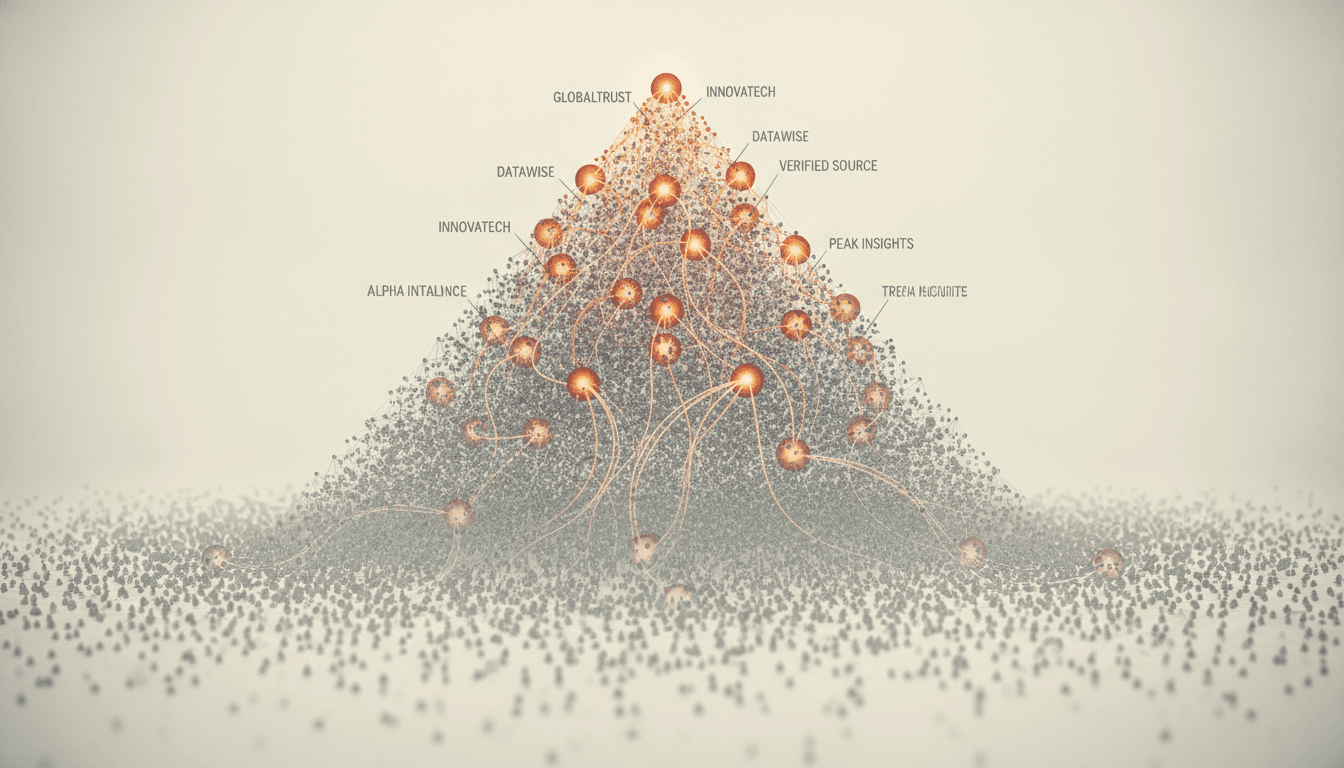
Google evaluates individual pages through relevance and authority. AI engines operate on an entirely different principle: they synthesize signals across the entire web to construct **brand-level credibility profiles**. E-E-A-T—the framework that transformed SEO—is now reshaping how generative engines decide which health brands deserve recommendation.

This guide reveals what AI engines actually measure, where traditional SEO E-E-A-T falls short, and the specific signals that establish brand authority in AI search.


---


## Why E-E-A-T for Traditional SEO Doesn't Work for AI Search

The gap between Google rankings and AI recommendations represents far more than a minor technical discrepancy. It's a paradigm shift in how authority itself is defined.

According to the [Profound AI Search Visibility Study](https://www.profound.com), **47% of health and wellness brands ranking on Google's first page receive zero recommendations from AI engines for identical queries**. That's nearly half of all top-ranking health brands effectively invisible to the fastest-growing search channel.

The fundamental difference lies in scope. Traditional SEO E-E-A-T focuses narrowly on page-level signals: content quality, author credentials, and on-site trust indicators. AI engines cast a much wider net.

They synthesize credibility signals from across the entire web—medical journals, news archives, Reddit communities, review platforms, clinical databases—to construct holistic brand authority profiles. A single strong page means little if the brand itself lacks broader credibility signals.

This creates a concentration effect. Research from [BrightEdge](https://www.brightedge.com) reveals that **68% of AI-generated health responses cite sources from just 15 domains**, including Mayo Clinic, WebMD, Healthline, NIH, and Cleveland Clinic. Brands that haven't earned coverage or citations from these specific domains are largely absent from AI recommendations, regardless of page rankings.

Off-site credibility signals—media mentions, clinical partnerships, third-party validation—are now as critical as on-site content quality. This isn't an incremental adjustment to existing SEO strategy. It's a fundamental redefinition of what authority means in health search.


---


## The Four Pillars of E-E-A-T for Generative Engines: What AI Actually Measures

[IMG: Four-pillar infographic showing Experience, Expertise, Authority, and Trust as interconnected pillars supporting an "AI Recommendation" arch, with specific signal examples beneath each pillar]

AI engines inherited Google's E-E-A-T framework but operationalized it in distinctly different ways. Lily Ray, VP of SEO Strategy & Research at Amsive Digital, explains that generative engines examine the entire digital footprint and ask whether the web, as a whole, agrees that a brand is an authority.

Here's how each pillar functions in generative search:

- **Experience:** Lived outcomes, patient testimonials, practitioner endorsements, and clinical case studies that demonstrate real-world impact beyond theoretical claims
- **Expertise:** Verifiable digital footprints across LinkedIn, publications, speaking engagements, and media mentions that AI engines can independently cross-reference
- **Authority:** Citation gravity from high-authority domains that positions a brand within the trusted health information ecosystem
- **Trust:** Proactive reputation management, transparent labeling, third-party testing, and FTC-compliant health claims

The evidence standard AI engines apply is measurably higher than traditional search. Research from NerdyData and Search Engine Land shows that **91% of AI-cited health content contains at least one verifiable external reference**—a clinical study, government source, or peer-reviewed journal—compared to just 43% of health content ranking in traditional Google search.

This gap reflects how AI engines prioritize verification. Consumer behavior reinforces the pattern: according to the [Edelman Trust Barometer Special Report](https://www.edelman.com/trust), **79% of consumers say they would trust an AI assistant's health recommendation more if the recommended brand had verifiable clinical credentials** or was endorsed by licensed healthcare professionals.


---


## Experience: The Underutilized Pillar That Differentiates Health Brands in AI Search

Google added the "Experience" pillar to E-E-A-T in 2022, yet most health brands have yet to integrate it meaningfully into AI search strategy. This represents one of the most significant untapped opportunities in generative engine optimization.

AI engines use lived-experience signals to distinguish genuinely helpful health brands from content farms producing generic information. Patient outcomes, clinical case studies, and practitioner endorsements function as primary sources that AI engines actively prioritize.

Experience is uniquely powerful because it's difficult to fabricate and verifiable through independent third parties. Brands that document and publish genuine patient and practitioner experiences—across multiple platforms where AI engines can independently verify them—consistently outperform brands relying solely on informational content.

Here's how health brands can build credible experience signals:

- **Patient testimonials** published on verified platforms such as Google Reviews, Healthgrades, or Trustpilot with measurable outcome data
- **Clinical case studies** featuring specific, quantifiable results with named practitioners and documented methodologies
- **Practitioner endorsements** from licensed healthcare professionals with verifiable credentials and active professional profiles
- **Real-world evidence (RWE)** that documents population-level outcomes from product or treatment use

Real-world evidence is becoming as valuable as clinical trials for AI recommendations. When brands document genuine patient and practitioner experiences across multiple platforms, they create a distributed credibility network that AI engines treat as a powerful authority signal.


---


## Expertise: Building Verifiable Digital Footprints That AI Engines Can Cross-Reference

In traditional SEO, claiming expertise through credentials on a page is often sufficient. In AI search, claimed expertise must be verifiable through an independent network of digital evidence. This distinction is critical.

AI engines cross-reference credential claims against verifiable digital evidence: LinkedIn profiles, academic publication databases, speaker directories, medical board registries, and media databases. A brand claiming content is reviewed by an MD but providing no verifiable digital trail for that physician will be treated with skepticism identical to anonymous staff-written content.

The citation data is unambiguous. According to [Semrush's State of AI Search Report](https://www.semrush.com), **health brands publishing content with named, credentialed authors—MDs, PhDs, RDs—receive 3.2 times more citations in AI-generated health responses** compared to brands publishing anonymous or staff-written content.

To build verifiable expertise networks, health brands should:

- Ensure every named expert maintains a complete, active **LinkedIn profile** with credentials, publications, and professional history
- Register experts in **academic publication databases** such as PubMed, Google Scholar, or ResearchGate
- Secure **speaking engagements** at recognized industry conferences and ensure those appearances are documented in speaker directories
- Pursue **media coverage** that quotes or features experts by name and credential in health publications
- Maintain **consistent credential representation** across all platforms—website, social profiles, press releases, and third-party directories

The risk of claiming expertise without supporting digital evidence extends beyond ineffectiveness. AI engines that cannot verify claimed credentials may surface that absence as a negative signal, actively damaging credibility.


---


## Authority: Citation Gravity and the 15-Domain Hierarchy in AI Health Search

[IMG: Network diagram showing the 15 dominant health authority domains at the center, with arrows indicating citation flow to smaller health brands, visualizing citation gravity in AI search]

Authority in AI search is not built through link volume—it's built through **citation gravity**. This means earning mentions, references, and citations from the specific high-authority domains that AI engines treat as foundational health information sources.

The concentration is striking. BrightEdge research confirms that 68% of AI-generated health responses draw from just 15 domains, with Mayo Clinic, WebMD, Healthline, NIH, and Cleveland Clinic dominating the hierarchy. These domains dominate because AI language models are trained on data that heavily weights their content.

Citations from these sources don't merely signal authority; they directly influence how AI engines construct health answers. Traditional link building is insufficient for this challenge. Brands must earn substantive coverage, partnerships, or expert contributions from these specific authority domains.

Amanda Natividad, VP of Marketing at SparkToro, notes that a brand optimizing its website while neglecting its third-party presence is essentially invisible to these systems.

To build citation gravity, pursue these specific tactics:

- **Earned media** from health journalists at publications that are themselves cited by authority domains
- **Expert contributions** to Healthline, WebMD, or Verywell Health through their contributor programs
- **Clinical research partnerships** with academic medical centers whose publications appear in PubMed and NIH databases
- **PR campaigns** targeting health journalists at outlets that cross-reference authority domain content
- **Co-authored studies** with credentialed researchers at recognized institutions

Brands that delay building authority signals face compounding disadvantages. As AI search adoption accelerates, the citation hierarchy becomes more entrenched and exponentially more expensive to penetrate.


---


## Trust: Reputation Management and the High Evidence Standard in AI Search

AI engines surface negative signals with the same efficiency as positive ones. FTC warning letters, retracted health claims, Better Business Bureau complaints, and class action lawsuits are indexed and weighted by AI engines evaluating YMYL brands. For health brands, unresolved compliance issues are not merely a legal risk—they are an AI visibility risk.

The evidence standard for AI-cited health content reinforces why trust hygiene is non-negotiable. That 91% vs. 43% gap in verifiable external references demonstrates that generative engines apply a categorically higher bar. Marie Haynes, Founder of Marie Haynes Consulting, observes that AI engines effectively apply a "first, do no harm" heuristic—they are far more conservative about recommending health brands they cannot verify through multiple independent authoritative sources.

Proactive reputation management is not optional in an AI-driven landscape. Brands must actively monitor their digital footprint across news archives, review platforms, regulatory databases, and social channels to ensure AI engines construct accurate, positive credibility profiles.

Here's how health brands build and protect trust signals for AI search:

- **Transparent ingredient sourcing** documented publicly and referenced in product descriptions
- **Third-party testing certifications** from recognized bodies such as NSF International, USP, or Informed Sport
- **FTC-compliant health claims** with appropriate disclaimers and supporting evidence citations
- **Clinical study publication** in peer-reviewed journals or preprint servers with accessible DOIs
- **Regular web audits** to identify and address negative brand mentions before they compound


---


## The Technical Foundation: Structured Data, Entity Establishment, and Knowledge Panel Optimization

Technical infrastructure is the foundation that enables AI engines to recognize and validate brand authority. Without it, even strong E-E-A-T signals may fail to coalesce into a coherent, trustworthy entity that AI engines can confidently recommend.

Research from Kalicube demonstrates the magnitude of this advantage: **health brands with Wikipedia pages, Wikidata entries, and consistent Knowledge Panel information are 5.8 times more likely to be recommended by name in AI assistant responses**. Entity establishment in structured knowledge bases is one of the highest-ROI technical investments available to health brands targeting AI search.

To build the technical foundation, implement these priorities:

- **Medical schema markup** using MedicalOrganization, Physician, MedicalCondition, and Drug schema types to help AI engines parse and verify expertise claims
- **Wikipedia and Wikidata establishment** following notability guidelines, with citations from third-party sources that AI engines already recognize as authoritative
- **Knowledge Panel optimization** through consistent brand information submission and ongoing monitoring
- **NAP consistency audits** to ensure Name, Address, and Phone information is identical across all platforms, directories, and citations
- **Semantic consistency** in content—AI engines demonstrate measurable preference for brands that clearly and repeatedly define their core health topics and expertise areas

Knowledge Panels serve as the bridge between brand authority and AI recommendations. Brands investing in entity establishment create a structured, machine-readable identity that AI engines can recognize, validate, and confidently cite.


---


## Original Research and Proprietary Data: The Highest-Value E-E-A-T Investment

AI engines treat primary sources fundamentally differently than secondary sources. A brand publishing original clinical research, proprietary efficacy data, or population health studies becomes a source that AI engines cite directly—not merely a brand referencing sources others cite.

Health brands publishing original research, clinical trials, or proprietary data studies are significantly more likely to be cited by AI engines, as these sources provide the novel, verifiable information that LLMs prioritize when constructing authoritative answers. Original research also creates compounding advantages: each citation from an authority domain referencing a brand's study increases the brand's citation gravity for future AI responses.

Specific original research investments with strong AI E-E-A-T ROI include:

- **Clinical efficacy studies** for products or ingredients, published in peer-reviewed journals with accessible DOIs
- **Consumer outcome surveys** with statistically significant sample sizes and transparent methodology
- **Ingredient testing data** from accredited third-party laboratories with published certificates of analysis
- **Population health research** conducted in partnership with academic institutions

The competitive advantage window is real. Brands establishing original research programs now will build citation advantages that competitors who delay will find increasingly difficult and expensive to replicate.


---


## Building an AI E-E-A-T Strategy: A Roadmap for Health Brands

[IMG: Roadmap graphic showing a 12-month timeline with quarterly milestones for E-E-A-T building, including audit phase, entity establishment, authority building, and measurement checkpoints]

Building AI E-E-A-T authority is a 6-12 month investment with compounding returns—not a quick-fix campaign. Brands approaching it with a structured roadmap will outpace competitors treating it as an afterthought.

Here's how to build a prioritized AI E-E-A-T strategy:

**Phase 1: Audit (Month 1-2)**
- Map current signals across all four E-E-A-T pillars to identify gaps
- Audit brand mentions across news archives, review platforms, and regulatory databases for reputation risks
- Assess named author credentials and their verifiable digital footprints

**Phase 2: Foundation (Month 2-4)**
- Implement medical schema markup across owned properties
- Establish Wikipedia, Wikidata, and Knowledge Panel presence
- Conduct NAP consistency audit across all directories and platforms

**Phase 3: Authority Building (Month 3-9)**
- Launch PR and partnership outreach targeting the 15-20 authority domains
- Build credentialed author program with verifiable digital footprints on LinkedIn and academic databases
- Initiate original research or proprietary data initiatives

**Phase 4: Measurement (Ongoing)**
- Track AI recommendations using tools such as Profound, Semrush AI toolkit, or BrightEdge Generative Parser
- Monitor citation growth from authority domains
- Audit reputation signals quarterly


---


## The Competitive Advantage Window: Why Health Brands Must Act Now

AI search adoption is not a future trend—it's reshaping how consumers discover health information and make purchasing decisions today. The divergence between Google rankings and AI recommendations will only widen as generative engines become the default interface for health queries.

Early movers in AI E-E-A-T will establish citation advantages that compound over time. Wil Reynolds, Founder & CEO of Seer Interactive, frames it this way: trust in the context of generative AI is a network property that emerges from the relationships between a brand and the authoritative nodes in an industry's information graph. Brands building those relationships now are creating network advantages that late movers will find exponentially more expensive to replicate.

Looking ahead, brands building comprehensive authority signals now are projected to hold **3-5x citation advantages within 18-24 months** compared to brands that delay. The authority hierarchy in AI health search is consolidating around early movers. The question for health brands is not whether to invest in AI E-E-A-T—it's whether to invest before or after the competitive window closes.


---


## Next Steps

Health brands ready to build AI E-E-A-T authority should schedule a strategy consultation to audit current signals, identify highest-ROI opportunities, and build a roadmap that positions the brand as the authority AI engines recommend first. [Book Your AI E-E-A-T Strategy Call](https://calendly.com/ramon-joinhexagon/30min)


---


*Hexagon is an AI-powered marketing company helping health and wellness brands build the authority signals that generative engines recognize, trust, and recommend. Hexagon's GEO specialists work at the intersection of content strategy, technical optimization, and brand authority to position health brands as the first recommendation in AI search.*
H
Hexagon Team
Published October 15, 2026