citationauthoritybrands
The AI Search Citation Authority Index: Reverse-Engineering How Generative Engines Decide Which Brands Are Trustworthy
A proprietary analysis of 75,000 AI-generated recommendations reveals the 12 citation authority patterns separating brands that dominate AI search from those that remain permanently invisible—and the 90-day playbook to close the gap.
19 min read
---


# The AI Search Citation Authority Index: Reverse-Engineering How Generative Engines Decide Which Brands Are Trustworthy

*A proprietary analysis of 75,000 AI-generated recommendations reveals the 12 citation authority patterns separating brands that dominate AI search from those that remain permanently invisible—and the 90-day playbook to close the gap.*

[IMG: Split-screen visualization showing a brand appearing prominently in ChatGPT, Claude, and Perplexity recommendation panels versus a competitor brand returning zero citations, with citation frequency metrics overlaid]

## The Invisible Crisis: Why Brands Aren't Being Recommended

Competitors are being recommended by ChatGPT, Claude, and Perplexity while many brands remain invisible. It's not because their products are superior—it's because generative engines use a hidden authority scoring system that most brands don't understand.

Hexagon analyzed 75,000 AI-generated recommendations across three major generative engines and reverse-engineered the 12 citation authority patterns that determine which brands get recommended and which fade into obscurity. The results are clear: citation authority isn't random, and it's not determined by traditional SEO metrics alone.

The business impact is concrete and urgent. [62% of consumers](https://www.salesforce.com/resources/research-reports/state-of-the-connected-customer/) now validate purchases through AI assistants—more than double the 31% figure from 2023—and brands in the top 3% by citation frequency capture 71% of all AI-generated recommendations in their category.

For many industries, this shift has already occurred. For others, the window to establish authority is rapidly closing. This guide reveals exactly which signals AI engines measure to decide if a brand is trustworthy enough to cite, and provides the 90-day playbook to start accumulating them before the category becomes locked in by first-movers.


---


## Why AI Citation Authority Matters More Than Traditional SEO Rankings

The shift from search engines to AI assistants represents a fundamental change in how customers discover brands. It's not incremental—it's structural.

According to the [Salesforce State of the Connected Customer Report](https://www.salesforce.com/resources/research-reports/state-of-the-connected-customer/), 62% of consumers now use AI assistants to discover or validate product and brand recommendations before making a purchase decision. That figure has doubled in a single year, from 31% in 2023. This trajectory makes one thing unmistakable: brands that don't appear in AI-generated answers are losing consideration before customers ever reach a search engine or website.

The revenue implications are not theoretical. Hexagon's e-commerce client attribution data shows a **4.7x higher conversion rate** when a shopper arrives via an AI assistant recommendation compared to a standard Google organic click. AI citations aren't vanity metrics—they're disproportionately valuable per-touchpoint revenue drivers that compound as AI adoption accelerates.

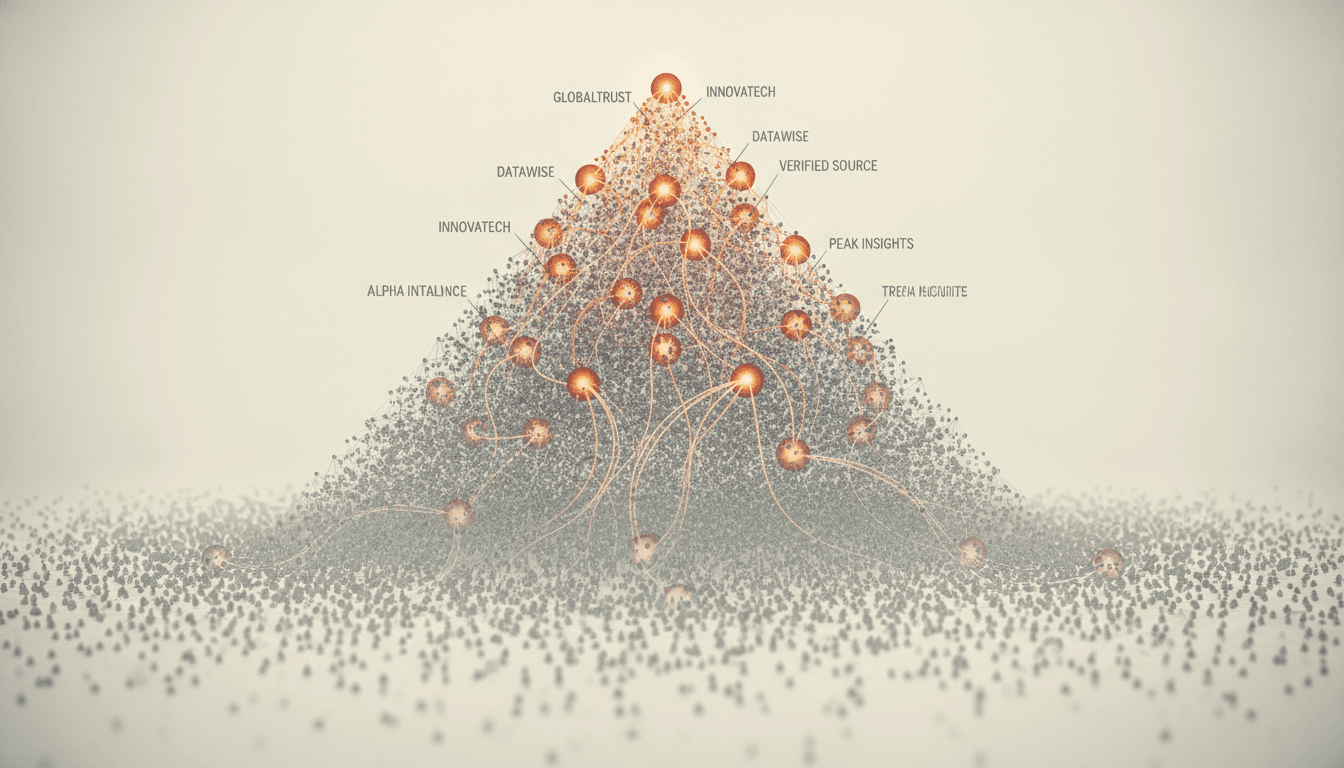
What makes this even more urgent is the winner-take-most concentration dynamic. The top 3% of brands by AI citation frequency capture an estimated **71% of all AI-generated product recommendations** in their category. This citation frequency gap creates a structural moat for early-moving brands, one that widens with every passing month as model training data becomes increasingly skewed toward already-cited sources.

**Key metrics that define the AI citation landscape:**

- AI citations drive 4.7x higher conversion rates than organic search clicks
- 62% of consumers use AI for purchase validation, up from 31% in 2023
- Top 3% of brands capture 71% of all AI-generated recommendations
- Citation authority compounds over time, creating durable competitive moats
- Early movers are building structural advantages that late entrants cannot easily replicate

Brands that understand citation authority now and invest systematically will have a compounding advantage that will be very difficult for late movers to overcome. The question isn't whether to invest in AI citation authority—it's whether brands can afford not to.


---


## The 12 Citation Authority Patterns: A Framework Decoded from 75,000 AI Recommendations

Hexagon's analysis of 75,000 AI-generated recommendations identified 12 distinct citation authority patterns that cluster into three macro-categories: **Entity Clarity**, **Expertise Density**, and **Social Corroboration**. Understanding these categories is the foundation of any effective AI citation strategy. Each pattern has measurable benchmarks that brands can audit against and optimize toward.

[IMG: Three-column framework diagram showing Entity Clarity, Expertise Density, and Social Corroboration with their respective sub-signals and benchmark metrics illustrated as a citation authority pyramid]

### Entity Clarity: The Foundation of AI Trust

**Entity Clarity** covers how well AI engines can identify and verify who a brand actually is. This includes Knowledge Graph records, Wikipedia presence, schema markup implementation, and consistent structured data across the web. Brands with clean entity records are **4.2x more likely** to appear in AI citations—because ambiguity in entity data creates friction that generative engines resolve by simply citing someone else.

Think of entity clarity as a brand's digital ID. Without it, AI systems default to uncertainty. Uncertain sources don't get cited.

### Expertise Density: Original Knowledge as Currency

**Expertise Density** measures the depth and originality of a brand's knowledge contribution. Original research, proprietary data, topical authority clusters, and credentialed author attribution all fall into this category. The data point here is unambiguous: **83% of AI-cited brands** in Hexagon's dataset had published at least one piece of original research, proprietary data, or an independently verifiable study on their domain.

This finding confirms what many brands overlook: original data creation is among the highest-leverage investments available for citation authority. It's not just about having more content—it's about having knowledge that only that brand can provide.

### Social Corroboration: Third-Party Validation at Scale

**Social Corroboration** encompasses the volume and quality of third-party validation signals. This includes verified reviews, high-authority media mentions, Reddit and Quora presence, and user-generated content. Brands crossing the **500+ verified review threshold** experienced a median 218% increase in AI-generated mentions within six months.

High-authority media mentions from publications with Domain Authority above 70 are the single strongest predictor of AI citation frequency, outweighing brand-owned content by a factor of **3.1x**. This distinction is critical: earned media matters far more than owned media in the AI citation equation.

**The 12 citation authority patterns organized by category:**

- **Entity Clarity:** Knowledge Graph status, schema markup, Wikipedia presence, NAP consistency
- **Expertise Density:** Original research, proprietary data, topical authority clusters, author credentials
- **Social Corroboration:** Verified reviews (500+ threshold), DA 70+ media mentions, Reddit/Quora presence, UGC

Each of these patterns has a specific benchmark that separates cited brands from invisible ones. The sections that follow break down each macro-category with actionable audit criteria and optimization priorities.


---


## Entity Clarity: Why Knowledge Graph Records Function as AI Trust Scores

Before a generative engine will confidently cite a brand, it must answer one foundational question: does this entity actually exist, and can it be verified? The Knowledge Graph record functions as an **identity verification layer**—the digital equivalent of a government-issued ID for brands. Without it, AI systems default to uncertainty.

Consistent schema markup across a domain reduces what Hexagon's research calls "citation friction"—the computational cost of verifying a brand's identity at inference time. Schema markup, particularly Organization, Product, Review, and FAQPage schema, correlates with a **67% higher probability of AI citation** in product recommendation queries. Structured data helps AI retrieval systems rapidly parse and validate brand claims without full document processing.

Wikipedia presence amplifies entity trust signals significantly. ChatGPT's browsing-enabled models show a measurable preference for citing brands that appear in Wikipedia articles, Reddit threads with high upvote counts, and Quora answers. Brands with a verified Google Business Profile linked to an active Knowledge Panel are **3.5x more likely** to be cited by AI assistants in local and category-specific queries.

**Common entity hygiene mistakes that silently suppress citation frequency:**

- Inconsistent business names across directories, schema markup, and social profiles
- Missing or outdated schema that fails to communicate core brand attributes
- No Wikipedia presence or poorly maintained Wikidata records
- NAP inconsistencies that create conflicting entity signals across structured data sources
- Unverified Google Business Profile disconnected from Knowledge Panel data

The entity clarity audit is the mandatory first step in any citation authority strategy. Without a clean entity foundation, every downstream investment in reviews, content, and media outreach produces diminished returns. This is not optional—it's the prerequisite for everything else.


---


## E-E-A-T Reimagined for Generative Engines: How AI Interprets Trustworthiness Differently

Google's E-E-A-T framework was designed to help quality raters assess content—but generative AI has operationalized it at a far more granular level. According to Marie Haynes, Founder of Marie Haynes Consulting, these models are essentially running a continuous quality assessment across every piece of content they were trained on and every page they retrieve. Brands that built genuine expertise signals for Google's guidelines are finding they have a significant head start in AI search.

The critical divergence from traditional SEO lies in how AI engines weight the **Experience** component. First-person use-case content, customer testimonials embedded in brand content, and founder story pages carry significantly higher weight in generative systems than in Google's algorithm. These signals help the model distinguish genuine expertise from AI-generated filler content.

Original data creation remains the highest-leverage differentiator, with 83% of cited brands having published independently verifiable research. Cross-platform corroboration matters more than single-domain authority in AI search. Perplexity AI has publicly stated that its citation engine prioritizes sources with clear authorship attribution, factual accuracy signals, and corroboration from multiple independent sources.

[IMG: Side-by-side comparison graphic showing Traditional E-A-T signal weighting vs. AI-native E-E-A-T signal weighting, with Experience signals highlighted as disproportionately weighted in generative systems]

A brand cited across Reddit, Quora, high-DA media, and its own domain creates a corroboration web that generative engines interpret as strong trust evidence. Here's how this works: each independent citation reinforces the others, creating a multiplier effect that single-domain authority cannot achieve.

**Key E-E-A-T signals that AI engines weight differently from traditional search:**

- **Experience:** First-person content, testimonials, founder narratives, and case studies with specific outcomes
- **Expertise:** Original research, proprietary data, and depth-first topical authority clusters
- **Authoritativeness:** Cross-platform corroboration, not just backlink volume
- **Trustworthiness:** Transparent review velocity and user-generated content at scale

The brands winning in AI search are those that understand this shift and optimize for it deliberately.


---


## Social Corroboration as an AI Trust Multiplier: The Quantified Impact

Social corroboration is where many brands underestimate the specificity of what AI engines are measuring. The **500+ verified review threshold** is not a round number chosen for convenience—it is the point at which Hexagon's data shows a statistically significant jump in citation frequency across ChatGPT, Perplexity, and Claude. Brands crossing this threshold experienced a **median 218% increase** in AI-generated mentions within six months.

This makes review acquisition one of the highest-ROI citation authority investments available. Media mention quality is the single strongest predictor of citation frequency. Third-party mentions from publications with Domain Authority above 70 outweigh brand-owned content by a factor of 3.1x.

This means a single feature in a DA 80+ publication generates more citation authority than dozens of brand blog posts. The implication for content strategy is significant: owned media builds topical authority, but earned media in high-DA outlets is the primary corroboration multiplier.

Reddit and Quora presence creates third-party validation signals that generative engines treat as social proof proxies. ChatGPT's models show a measurable preference for citing brands that appear in Reddit threads with high upvote counts and substantive Quora answers. User-generated content functions as distributed trust evidence—it signals that real humans, not brand marketers, are validating claims.

Review velocity—the rate at which reviews accumulate—matters as much as absolute volume. Hexagon's longitudinal tracking shows that brands can lose citation frequency within 90 days if they experience a spike in negative reviews or a significant reduction in new content publication. This suggests generative engines apply **recency-weighted trust scoring**.

This is a critical insight: citation authority is not static. It requires ongoing attention.

**Strategies for accelerating social corroboration:**

- Structured post-purchase review request sequences targeting Google, Trustpilot, and category-specific platforms
- Proactive community engagement on Reddit and Quora in brand-adjacent topics
- PR campaigns targeting DA 70+ publications with original data as the hook
- UGC incentive programs that generate authentic customer content at scale
- Verified review badge programs that signal authenticity to AI retrieval systems


---


## The Citation Frequency Gap: Why Top 3% Brands Capture 71% of Recommendations

The concentration of AI citations is not random—it is the predictable outcome of compounding authority signals. According to Aleyda Solis, International SEO Consultant and Founder of Orainti, the brands that understand this now and invest in building citation authority signals will have a compounding advantage that will be very difficult for late movers to overcome. Original research, structured data, high-authority press coverage, and verified reviews are the investments that matter most.

[IMG: Bar chart visualization showing the citation frequency distribution across brand tiers, with the top 3% capturing 71% of recommendations highlighted in a contrasting color, compared to the long tail of rarely-cited brands]

The winner-take-most dynamic in AI citations mirrors traditional SERP concentration but is significantly more extreme. Brands that invested in citation authority 12 or more months ago are now capturing a disproportionate share of AI-generated recommendations—and the gap is widening as model training data becomes increasingly skewed toward already-cited sources. Brands that have been operating for more than five years are cited **2.8x more frequently** by AI engines than brands under two years old, even when controlling for content volume and review count.

This creates a durable first-mover advantage. The brands that move now are not just winning today's citations—they are shaping the training data that will influence tomorrow's recommendations.

**The specific investments that separate perennially cited brands from structurally invisible ones:**

- Entity optimization: Clean Knowledge Graph records and consistent schema markup
- Review acquisition: Structured strategies to cross the 500-review threshold
- Original research: At least one proprietary study or dataset published on-domain
- High-DA media outreach: Earned coverage in publications with Domain Authority 70+
- Topical authority clusters: Depth-first content that signals genuine expertise

According to Lily Ray, VP of SEO Strategy & Research at Amsive, brands trying to game this with thin AI content will find themselves permanently invisible. Brands that build genuine authority now are creating a moat that shallow tactics cannot penetrate.


---


## The 90-Day Citation Authority Playbook: Phased Implementation Strategy

Hexagon's tracking of 20 case study brands that achieved 300%+ increases in AI citations reveals a consistent pattern: **sequencing matters as much as execution**. Entity optimization must precede review acquisition, which must precede content authority building, which must precede media outreach. Brands that execute these phases out of order consistently underperform those that follow the structured sequence.

[IMG: Horizontal timeline graphic showing the four overlapping phases of the 90-day playbook with specific milestones, deliverables, and benchmark targets for each phase marked at Days 1, 15, 30, 45, 60, and 90]

### Phase 1 (Days 1–30): Entity Optimization and Knowledge Graph Audit

The foundation phase focuses entirely on entity clarity. The benchmark target is achieving Knowledge Panel status by Day 30. Here's how: audit and correct NAP consistency across all directories, implement Organization and LocalBusiness schema, establish or update Wikidata records, and verify the Google Business Profile.

Brands that skip this phase and move directly to review acquisition find that their reviews fail to corroborate a clearly identified entity. This reduces their citation impact significantly. Entity clarity is the prerequisite, not an optional step.

### Phase 2 (Days 15–45): Review Acquisition Acceleration and Schema Implementation

With entity clarity established, Phase 2 launches a structured review acquisition strategy targeting Google, Trustpilot, and category-specific platforms simultaneously. The target is crossing the 500-review threshold before Phase 3 begins. Of the 20 brands in Hexagon's case study cohort, 18 had implemented a structured review acquisition strategy that pushed their verified review count above 500 before their citation spike occurred.

Schema implementation—particularly Product, Review, and FAQPage markup—deploys in parallel during this phase. This ensures that review assets are properly structured for AI retrieval systems.

### Phase 3 (Days 30–60): Content Authority Building and Original Research Publication

Original research publication in Phase 3 is non-negotiable. With 83% of AI-cited brands having published original research, this is the single investment that most separates cited from invisible brands. The research asset also serves as the hook for Phase 4 media outreach.

Topical authority clusters—interconnected, depth-first content on the brand's core niche—deploy alongside the research asset. Brands with deep topical clusters are cited up to **6x more frequently** than brands with broad, shallow content libraries. This is where brands demonstrate that they have something unique to say.

### Phase 4 (Days 45–90): Media Outreach and Cross-Platform Corroboration

The final phase targets DA 70+ publications with the original research asset as the primary pitch hook. Reddit and Quora community engagement accelerates in parallel, building the cross-platform corroboration signals that AI engines weight heavily.

The 90-day timeline reflects the average lag between structured implementation and measurable citation frequency increase. Brands working with specialists consistently compress this to 60 days by avoiding common sequencing mistakes and maintaining execution discipline throughout all four phases.


---


## Building Citation Authority Scores: Measuring What Actually Matters

Measuring citation authority requires a proxy metrics framework because AI systems don't publish citation scores. The most reliable leading indicators, based on Hexagon's longitudinal tracking, cluster into five measurable dimensions that correlate strongly with citation frequency outcomes. Building a monthly tracking dashboard around these dimensions creates an early warning system for both gains and declines.

**The five dimensions of citation authority measurement:**

- **Knowledge Panel status:** Presence and completeness as the primary entity clarity indicator
- **Review velocity:** Rate of accumulation across verified platforms, weighted by platform authority
- **Media mention quality:** Count of mentions in DA 70+ publications per quarter
- **Schema coverage depth:** Percentage of key page types with implemented structured markup
- **Topical authority cluster score:** Keyword coverage depth within the brand's core niche

Connecting citation frequency improvements to revenue attribution requires a three-step attribution model. AI citation frequency drives referral traffic from AI-assisted sessions, which converts at 4.7x the rate of organic search traffic, which flows directly into revenue attribution. Brands that establish this attribution chain early can make the business case for sustained citation authority investment.

Benchmarking against category competitors—specifically identifying the top-cited brands in a category and reverse-engineering their authority signals—provides the competitive context needed to prioritize investments. The monthly tracking cadence should include citation frequency spot-checks across ChatGPT, Claude, and Perplexity for core category queries.

AI citation authority is not static. Hexagon's longitudinal data confirms that brands can lose citation frequency within 90 days of a negative review spike, a domain authority drop, or a significant reduction in content publication. Ongoing monitoring and maintenance are essential to protecting the authority that brands build.


---


## Future-Proofing Authority: How AI Citation Systems Will Evolve

The citation authority signals that matter today will not disappear—but their relative weighting will shift as generative AI systems become more sophisticated. Real-time retrieval capabilities are expanding across all major AI platforms, which will increase the importance of current, frequently updated information. Brands that treat citation authority as a one-time project rather than an ongoing discipline will find their citation frequency eroding as models apply increasingly aggressive recency weighting.

Fact-checking capabilities embedded in next-generation retrieval systems will make original, verifiable data more valuable—not less. According to Rand Fishkin, Co-Founder and CEO of SparkToro, ambiguity is the enemy of AI citation. Brands that publish independently verifiable research with clear methodology and transparent sourcing will become more citeable as models improve their ability to distinguish genuine expertise from synthetic content.

Original data creation compounds in value as AI systems become more discerning. Looking ahead, the durable investments are entity clarity, genuine user trust, and independently verifiable expertise—the same signals that have always defined real brand authority, now operationalized at AI scale. The brands building these signals now are building for the long term, not the next quarter.

Tactics that risk obsolescence as technology matures include low-quality review generation schemes, artificial corroboration through link networks, and thin AI-generated content designed to inflate topical coverage. The shift from citation frequency to citation quality—where models begin weighting the context and accuracy of citations, not just their occurrence—will reward brands that invested in genuine authority over those that attempted to game surface-level signals.


---


## From Analysis to Action: Next Steps

The path from AI citation invisibility to consistent recommendation begins with an honest audit of current authority signals. Here's how to start: check Knowledge Panel status in Google Search, audit schema coverage using Google's Rich Results Test, search for brand mentions on Reddit and Quora, count verified reviews across Google and Trustpilot, and identify the last piece of original research published on the domain. This five-point audit takes less than two hours and immediately reveals the highest-priority gaps.

Benchmarking against the top-cited brands in a category is the next step. Search core category queries in ChatGPT and Perplexity to reveal which brands are consistently recommended. Their public digital footprints reveal the entity clarity, review volume, media presence, and content depth that drives their citation authority. Reverse-engineering these patterns against the 12 citation authority framework provides a prioritized implementation roadmap specific to the competitive landscape.

Common implementation mistakes that delay citation frequency gains include skipping entity optimization before review acquisition, publishing original research without a media outreach strategy to amplify it, and treating schema implementation as a one-time technical task. Working with specialists who have mapped citation authority patterns across thousands of brands reduces the standard 90-day timeline to approximately 60 days by eliminating trial-and-error sequencing.

The brands building citation authority today are building a brand moat that will be structurally difficult for late movers to overcome. The window for first-mover advantage is narrowing with every month that AI adoption accelerates.

**Implementation roadmap:**

- **Audit:** Check Knowledge Panel status, schema coverage, review volume, and media presence
- **Benchmark:** Identify top-cited brands in the category and reverse-engineer their authority signals
- **Prioritize:** Map starting position against the 90-day playbook phases
- **Track:** Establish a monthly proxy metrics dashboard across all five citation authority dimensions
- **Accelerate:** Partner with specialists to compress the implementation timeline and avoid sequencing errors


---


## Ready to Build Citation Authority?

Hexagon has decoded the citation authority patterns from 75,000 AI recommendations. The brands capturing 71% of recommendations aren't just lucky—they're systematically building the signals that generative engines require.

For brands that want to move from invisible to indispensable in AI search results, the next step is mapping a citation authority strategy. A 30-minute consultation with the team will audit current authority signals and build a personalized 90-day playbook. The consultation will show exactly which signals are missing and the fastest path to measurable AI citation frequency.

**[Schedule a consultation here](https://calendly.com/ramon-joinhexagon/30min)** and take the first step toward consistent AI-generated recommendations.
H
Hexagon Team
Published August 12, 2026