searchbrandscommerce
The AI Search Market Shift 2026: Why Generative Engines Are Replacing Google for E-Commerce Discovery
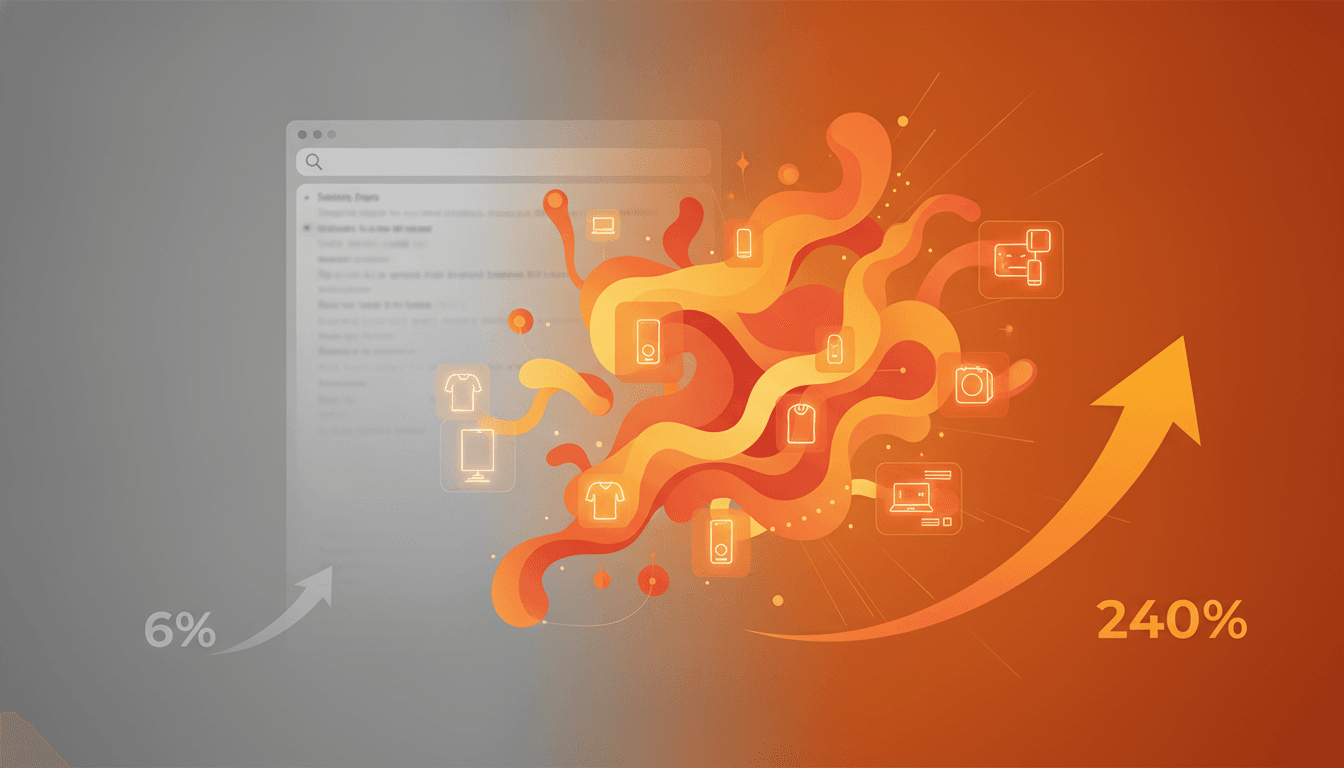
Between Q1 2024 and Q1 2025, e-commerce brands tracked across 5,000+ retailers saw AI-referred traffic surge 240% year-over-year. Google organic traffic grew 6%. This is what a structural market shift looks like—and most brands are still optimizing for the channel that's losing.
11 min readRecently updated
---


# The AI Search Market Shift 2026: Why Generative Engines Are Replacing Google for E-Commerce Discovery

*Between Q1 2024 and Q1 2025, e-commerce brands tracked across 5,000+ retailers saw AI-referred traffic surge 240% year-over-year. Google organic traffic grew 6%. This is what a structural market shift looks like—and most brands are still optimizing for the channel that's losing.*

[IMG: Split-screen visualization showing a declining Google search traffic trend line versus a sharply rising AI search traffic trend line, with 2024–2026 timeline, clean data visualization style]

A structural market shift is happening in real time. Between Q1 2024 and Q1 2025, e-commerce brands experienced a **240% year-over-year surge in traffic from AI search engines**—while Google organic traffic grew just 6%. This isn't a niche phenomenon or early-adopter behavior. It's a fundamental reshaping of how consumers discover products.

Consider the scale: **34% of U.S. shoppers now start their product discovery with ChatGPT, Perplexity, or Claude instead of Google.** That's one in three consumers. The inflection point hasn't even arrived yet.

By 2026, Gartner projects that nearly one in three browsing sessions will be AI agent-mediated—meaning an AI will be making recommendations on behalf of consumers before they ever see a traditional search result. If e-commerce strategies still treat AI search as optional, competitive market share erosion is already underway. The window to build authority in this channel is narrow, and it's closing.


---


## The Data Is Clear: AI Search Has Already Replaced Google for a Third of Shoppers

The numbers are no longer ambiguous. A [Hexagon E-Commerce AI Traffic Report](https://joinhexagon.com) tracking AI referral traffic across 5,000+ e-commerce brands found that AI search-driven sessions grew **240% year-over-year** between Q1 2024 and Q1 2025, while organic Google traffic to the same brands grew only 6%. That gap is not a rounding error—it's a channel inversion.

Consumer behavior is driving this shift from the bottom up. According to the [Hexagon Consumer Shopping Behavior Survey, Q4 2024](https://joinhexagon.com), **34% of U.S. e-commerce shoppers** now begin their product discovery journey by querying an AI assistant. Compare that to just 9% in 2022, and the magnitude of change becomes clear: a near 4x increase in two years signals a generational shift in how purchase decisions are initiated.

The shift is even more pronounced among high-value buyers. [Morning Consult's Digital Consumer Trends Report 2025](https://morningconsult.com) found that **52% of consumers aged 18–34** use an AI assistant as their primary starting point when researching purchases over $100. Only 28% start with Google, and just 14% begin on Amazon.

This demographic cohort represents the most commercially active and highest lifetime value consumer segment in e-commerce—and they've already moved on from traditional search. The scale of the AI search ecosystem is no longer hypothetical. [ChatGPT surpassed 300 million weekly active users](https://openai.com) by early 2025—the fastest-growing consumer application in internet history.

[Perplexity AI reported processing over 500 million queries per month](https://www.theinformation.com) by Q4 2024, with a significant share attributed to product research and comparison shopping. These are mature, high-traffic discovery channels, not experimental platforms.

[IMG: Infographic showing consumer discovery channel breakdown: 34% AI assistants, 28% Google, 14% Amazon, remainder other channels, with demographic overlay for 18–34 age group]


---


## What's Happening to Google: Why Even #1 Rankings Deliver Less Traffic

Google is not losing the search war to competitors—it is cannibalizing its own organic channel. According to [BrightEdge's AI Search Impact Study 2024](https://brightedge.com), **47% of U.S. Google search queries** now trigger an AI Overview response. For e-commerce brands that have invested years climbing to the #1 organic position, the consequences are measurable and damaging.

Here's how the math works: AI Overviews reduce organic click-through rates by an **average of 34%** for top-ranked pages. Winning the #1 spot on Google today delivers materially less traffic than the same position delivered two years ago. The investment required to rank hasn't decreased—but the return has.

[Google's own share of the global search market fell below 90%](https://gs.statcounter.com) for the first time in over a decade in 2024, with AI-powered alternatives absorbing a meaningful share of informational and product-research queries. The implication is direct: brands optimizing exclusively for traditional SEO are experiencing a silent traffic decline that will accelerate through 2026.

The channel isn't dying—but it's being structurally reshaped by the same company that built it. Brands should recognize this shift as a fundamental change in discovery mechanics, not a temporary fluctuation.


---


## The Nature of Discovery Has Fundamentally Changed

Traditional SEO competed for clicks. Generative Engine Optimization (GEO) competes for something far more valuable: **AI recommendations and trusted endorsements**. The distinction matters because it changes the entire competitive dynamic of e-commerce discovery.

AI search engines synthesize, evaluate, and recommend products before users ever visit a website. The decision-making layer has shifted upstream—from the consumer's browser to the AI assistant's response. A brand that appears in an AI recommendation has already been pre-screened and endorsed before the user takes a single action.

This pre-endorsement effect is reflected in conversion data. According to [Gartner Digital Commerce Research 2024](https://gartner.com), **AI-referred shoppers convert at 2–3x the rate** of standard organic search visitors. They arrive having already received a curated recommendation rather than a list of options to evaluate.

The traffic volume is smaller than Google organic, but the commercial intent is dramatically higher. The ranking factors have also fundamentally changed. Citation credibility and brand authority now drive AI recommendation share, not backlink profiles and keyword density.

[Research from Search Engine Journal and Semrush's GEO Study 2024](https://searchenginejournal.com) found that **71% of AI product recommendations** favor brands with structured, authoritative, and consistently cited online content ecosystems. As Rand Fishkin, Co-founder of SparkToro and founder of Moz, observed: "The brands that will win in AI-mediated commerce are the ones building authority and trustworthiness into every layer of their digital presence—not just optimizing title tags. Generative engines reward credibility, specificity, and consistent expert positioning. That's a fundamentally different game than ranking for keywords."

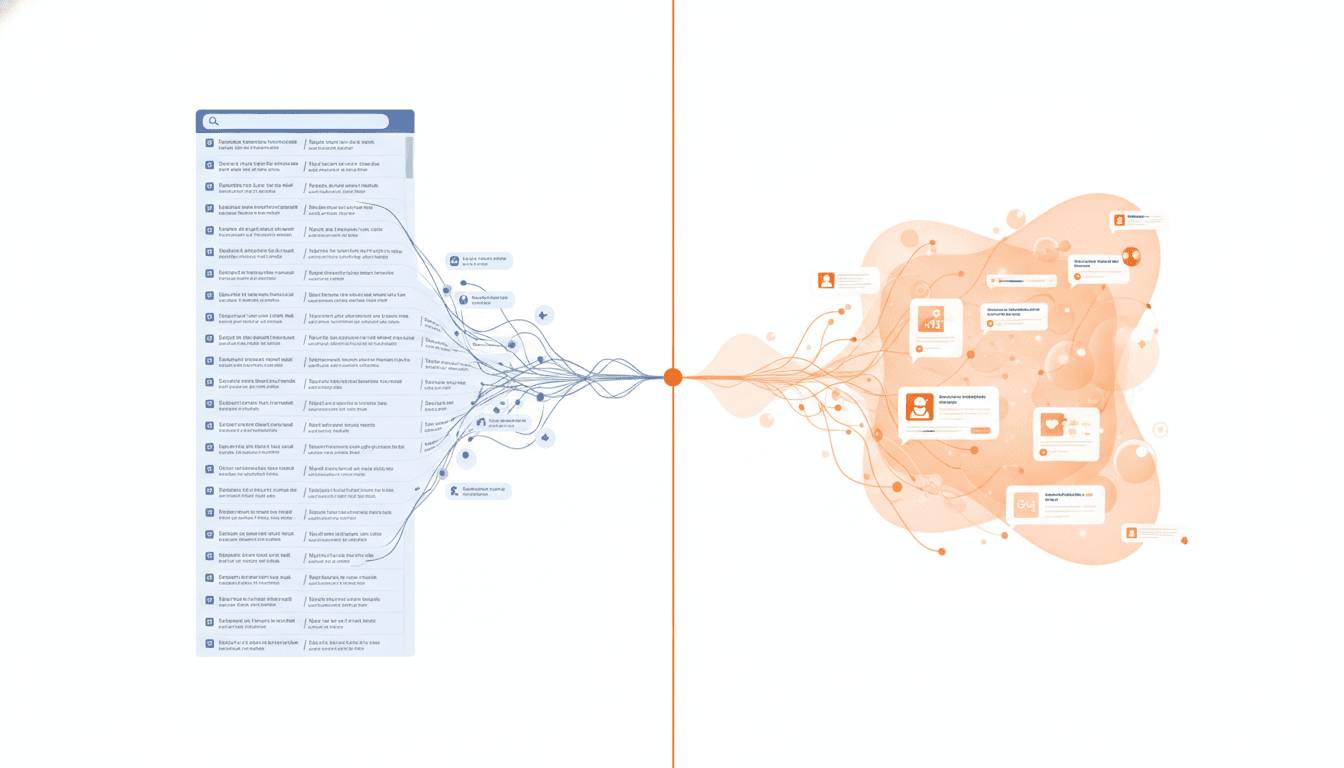
[IMG: Side-by-side comparison diagram: Traditional SEO funnel (search → SERP → click → website) vs. GEO funnel (AI query → AI synthesis → AI recommendation → high-intent visit), with conversion rate callouts]


---


## Is Traditional SEO Dead? No—But It's No Longer Sufficient

The uncomfortable reality for brands with significant SEO infrastructure: **traditional SEO is not dead, but it is no longer sufficient as a standalone strategy**. Google still processes an estimated [8.5 billion searches per day](https://www.internetlivestats.com), and organic authority remains foundational. The marginal return on SEO-only investment, however, is declining as zero-click AI answers cannibalize organic traffic.

The relationship between the two channels is complementary. SEO builds the foundational authority that feeds into GEO rankings. AI engines prioritize well-optimized, authoritative content when synthesizing recommendations—meaning a strong SEO foundation remains an asset, just not a complete strategy.

The dual SEO + GEO approach is now the baseline for competitive e-commerce brands, not an advanced tactic. The market access argument is straightforward: with **34% of shoppers now starting with AI search**, brands optimizing only for Google are structurally invisible to one-third of their addressable market.

As Katrina Lake, Founder and Executive Chairwoman of Stitch Fix, observed: "We're seeing a clear bifurcation in e-commerce performance data. Brands that have invested in structured content, third-party reviews, and authoritative product information are capturing disproportionate AI recommendation share. Those relying solely on paid search and traditional SEO are experiencing a slow but accelerating erosion of organic discovery."


---


## The 2026 Inflection Point: Why Waiting Is a Competitive Liability

The urgency is not speculative—it is structural and time-bounded. [Gartner projects that 30% of all web browsing sessions will be AI agent-mediated by 2026](https://gartner.com), meaning nearly one in three consumer internet interactions will bypass traditional search results entirely. Agentic AI will autonomously execute purchase research on behalf of consumers, further reducing human-driven search behavior.

The critical distinction is the nature of the shift: **sudden inflection, not gradual decline**. Brands without established GEO authority by 2026 won't experience a slow fade—they'll face rapid, dramatic visibility loss as AI agents begin mediating discovery at scale. The window to build GEO leadership before that inflection point is narrow.

2025–2026 are the defining years. The financial stakes are significant. The [global AI in e-commerce market is projected to reach $45.7 billion by 2032](https://www.alliedmarketresearch.com), growing from $6.6 billion in 2023 at a CAGR of 24.3%—with AI-powered search and discovery tools representing the single fastest-growing investment category.

Andrew Ng, Founder of DeepLearning.AI and Managing General Partner of AI Fund, framed the CMO imperative directly: "By 2026, I expect that the majority of high-consideration purchase journeys will begin with a conversation, not a search query. The implication for CMOs is stark: a brand's discoverability in AI-generated responses is becoming as strategically important as domain authority was in 2015."

Early movers will entrench competitive advantages that become increasingly difficult to dislodge as AI search behavior normalizes. The brands establishing GEO authority in 2025 are building the equivalent of early PageRank dominance—structural advantages that compound over time.

[IMG: Timeline graphic showing AI search adoption curve 2022–2026, with key milestones: 9% AI discovery (2022), 34% (2024), projected 50%+ (2026), with Gartner's 30% agent-mediated browsing marker]


---


## How to Build a GEO Strategy: The Practical Playbook for 2025–2026

Building GEO authority requires a deliberate, systematic approach. Here's how e-commerce brands should structure their 2025–2026 GEO investment:

**Audit current AI search visibility.**

Brands should query ChatGPT, Perplexity, and Gemini with core product category terms and evaluate whether their brand appears in recommendations. Identify which competitors are being cited and what content or authority signals are driving their inclusion. Check AI referral traffic in analytics to understand which platforms are already sending visitors—this data reveals which engines to prioritize.

**Optimize for citation credibility.**

Build authority through expert-authored content, third-party editorial mentions, and verifiable product data that AI engines can trust and cite. Pursue coverage in publications, review platforms, and industry sources that AI models treat as authoritative signals. Ensure brand narrative is consistent, specific, and expert-positioned across all digital touchpoints.

**Develop content that feeds both SEO and GEO simultaneously.**

Long-form, authoritative content ranks in Google and gets cited by AI engines—it's the highest-leverage content investment available. Answer the specific questions AI engines use to synthesize product recommendations: comparisons, use cases, specifications, and expert positioning. Prioritize depth and credibility over keyword volume in content planning.

**Create product data that AI engines can parse and recommend.**

Structured data markup, detailed product specifications, transparent pricing, and verifiable claims are essential inputs for AI recommendation engines. Brands appearing in AI recommendations without a deliberate GEO strategy are largely there by accident—and that accident is not repeatable or scalable.

**Monitor AI search referral traffic and double down on what's working.**

Track which AI engines refer the most qualified traffic and allocate optimization effort accordingly. Conversion rate data from AI referrals—estimated at 2–3x organic search—should inform how aggressively to invest in GEO relative to traditional channels.

**Build toward direct platform relationships as AI search matures.**

Looking ahead, as platforms like Perplexity and ChatGPT develop brand partnership and data feed programs, early relationships will create preferential access to recommendation surfaces. Getting ahead of this evolution positions brands for the next wave of AI search evolution.


---


## The Bottom Line: Dual-Channel Strategy Is Now Mandatory

The strategic question has shifted. It is no longer "Should organizations invest in AI search?" It is "**How much of discovery strategy should be allocated to AI search, and how quickly can authority be built there?**" The data answers the urgency question unambiguously.

The numbers are not speculative projections—they are current market realities. A **240% year-over-year growth** in AI-referred e-commerce traffic. **34% of shoppers** already starting product discovery with AI assistants. **30% of browsing sessions** projected to be AI agent-mediated by 2026.

Each of these figures represents a structural inflection point, not a trend line that brands can monitor from a distance. Brands that establish GEO leadership in 2025–2026 will entrench advantages that become increasingly difficult to dislodge as AI search behavior matures.

As Sundar Pichai, CEO of Alphabet, framed the stakes: "We are witnessing the most significant disruption to search-driven commerce since the invention of PageRank. AI assistants don't just surface links—they make recommendations. And if a brand isn't in the training data, the citations, and the authoritative content ecosystem that these models draw from, it simply doesn't exist in that moment of decision."

The competitive liability is not investing in GEO. The competitive advantage is building it before competitors do. CMOs who treat AI search as optional are making a strategic error with measurable consequences in market share and customer acquisition cost—consequences that will become impossible to ignore by the time the 2026 inflection point arrives.


---


**The 2026 inflection point is not a warning—it's a deadline.** Hexagon helps e-commerce brands establish GEO authority before the window closes. The firm audits current AI search visibility, identifies the generative engines already referring traffic to competitors, and builds the dual SEO + GEO strategy that captures the 34% of shoppers most strategies are missing. [Book a 30-minute strategy call](https://calendly.com/ramon-joinhexagon/30min) to see where a brand stands. Or visit [joinhexagon.com](https://joinhexagon.com) to learn how Hexagon is helping e-commerce brands build defensible AI search authority before the market locks in.
H
Hexagon Team
Published July 28, 2026