Step-by-Step Guide to Integrating Hexagon with Your Marketing Stack for AI Buyer Capture
Struggling to capture high-intent AI shoppers in an increasingly complex marketing landscape? Discover how integrating Hexagon's GEO platform delivers a 35% conversion lift and nearly halves acquisition costs. This comprehensive guide breaks down every step to seamlessly connect Hexagon with your CRM, paid media, and analytics tools—empowering you to maximize ROI and unlock the full potential of AI buyer capture.
Step-by-Step Guide to Integrating Hexagon with Your Marketing Stack for AI Buyer Capture
Struggling to capture high-intent AI shoppers in an increasingly complex marketing landscape? Discover how integrating Hexagon’s GEO platform can boost your conversion rates by 35% while slashing acquisition costs nearly in half. This comprehensive guide walks you through every step needed to seamlessly connect Hexagon with your CRM, paid media, and analytics tools—empowering you to maximize ROI and unlock AI buyer capture’s full potential.
[IMG: Marketer reviewing a dashboard displaying AI-influenced conversions and integrations]
Hook: The Challenge and the Game-Changing Solution
Today’s e-commerce marketers confront an unprecedented challenge: capturing high-intent buyers amid a landscape where over 60% of online purchase journeys are shaped by AI-driven search and recommendation engines (McKinsey & Company). Traditional marketing stacks often fall short, resulting in missed opportunities and soaring acquisition costs.
Enter Hexagon’s GEO platform—a proven AI-powered solution that delivers an average 35% lift in conversions and cuts acquisition costs by 48% for brands that fully integrate AI-driven buyer capture into their marketing ecosystem (Hexagon Internal Analysis, Gartner Digital Commerce Report). This guide provides a clear, step-by-step roadmap to connect Hexagon with your existing tools so you can engage high-intent AI shoppers at every stage and drive measurable ROI.
Ready to unleash Hexagon’s full power in your marketing stack? Book a free 30-minute integration strategy session with our experts today.
Understanding Hexagon’s GEO Platform and Its Role in AI Buyer Capture
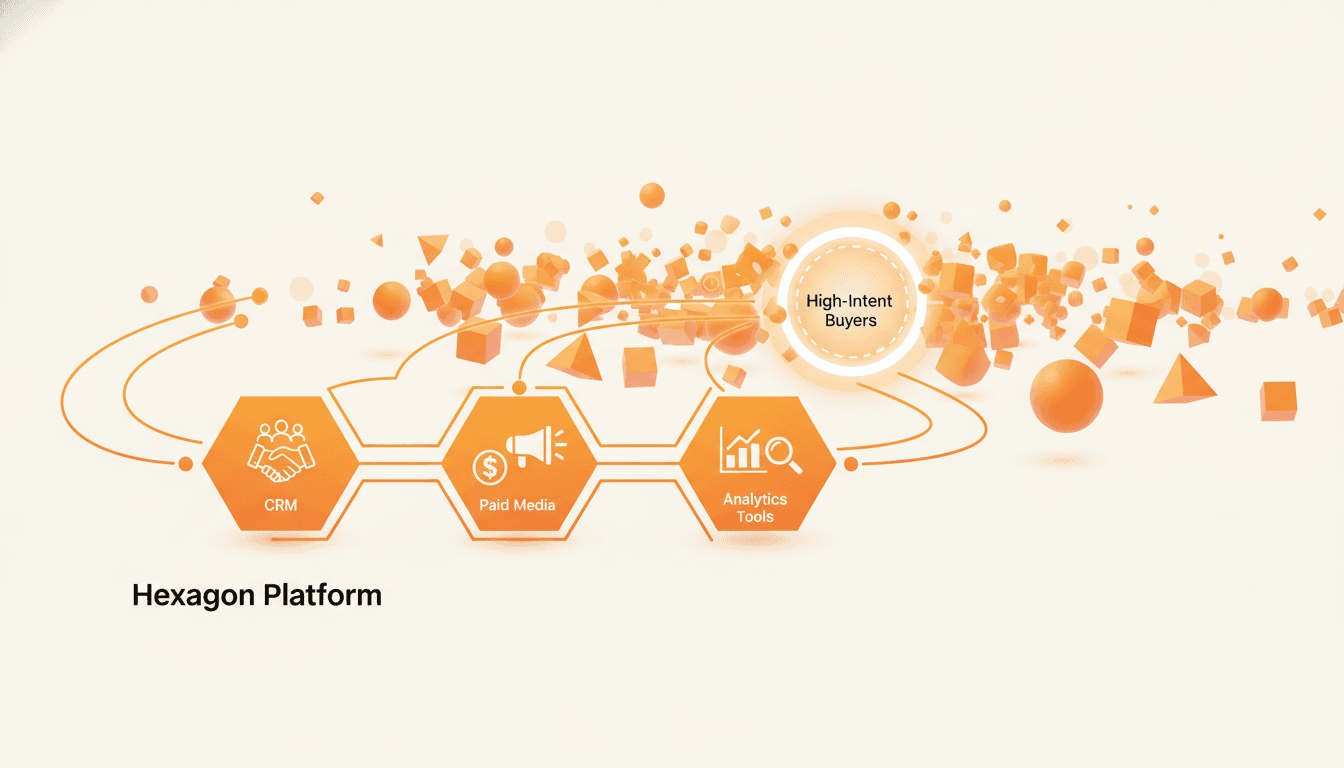
[IMG: Illustration of Hexagon GEO platform connecting to CRM, paid media, and analytics tools]
Hexagon’s GEO (Generative Engine Optimization) platform is engineered specifically for the modern AI-driven commerce environment. At its core, GEO leverages sophisticated generative algorithms to optimize product feeds and amplify your offerings across AI-powered search engines and recommendation platforms.
Here’s how Hexagon powers AI buyer capture throughout the customer journey:
- Identifies High-Intent Buyers: By analyzing real-time behavioral and contextual signals, Hexagon accurately pinpoints shoppers most likely to convert.
- Engages Across Channels: Through seamless integrations, high-intent buyers are engaged via CRM, paid media, and on-site experiences.
- Automates Continuous Optimization: The platform dynamically refines product data and audience segments, ensuring all systems stay in sync with AI-driven insights.
Integrating AI search marketing tools like Hexagon offers strategic advantages:
- Expanded Reach: With over 60% of online purchase journeys influenced by AI-powered discovery (McKinsey & Company), optimizing for AI visibility is critical.
- Real-Time Data Synchronization: Hexagon automates audience syncing and product feed optimization to keep AI platforms updated with accurate, timely information.
- Unified Buyer View: Connecting Hexagon with your CRM and analytics tools provides a holistic understanding of the AI-influenced customer journey.
As Priya Patel, VP of Digital Strategy at CommerceNext, emphasizes, “AI-powered product discovery is the next frontier for e-commerce brands. Integrating solutions like Hexagon into your marketing stack unlocks unprecedented levels of buyer intent capture.”
Looking forward, integrating Hexagon’s GEO platform is not merely a tactical upgrade—it’s a strategic imperative for brands aiming for sustained growth and operational efficiency.
Step-by-Step Technical Integration Guide: Connecting Hexagon with Your Marketing Stack
[IMG: Flowchart of Hexagon GEO integration process with major marketing platforms]
Unlocking AI-driven buyer capture at scale hinges on integrating Hexagon with your marketing stack. This detailed guide ensures your CRM, paid media, and analytics platforms operate in perfect harmony with Hexagon’s GEO capabilities.
1. Preparing Your Existing Stack
Begin by auditing your current marketing technology landscape to lay a strong foundation for integration:
- CRM Systems: Platforms like Salesforce and HubSpot store essential buyer profiles and engagement histories.
- Paid Media Platforms: Google Ads, Meta Ads, and others drive targeted traffic and enable retargeting efforts.
- Analytics Tools: GA4, Mixpanel, and attribution platforms track performance across multiple touchpoints.
A thorough audit ensures seamless data flow and maximizes Hexagon’s AI optimization impact.
2. Connecting Hexagon via API and Webhooks
Hexagon supports powerful API and webhook integrations designed for real-time data exchange and customizable workflows.
To connect:
- API Integration: Access Hexagon’s developer portal to generate secure API keys. Follow the documentation to link Hexagon with your CRM, ad platforms, and analytics tools.
- Webhook Setup: Configure event-based triggers to synchronize audience segments, conversion events, and product feed updates between Hexagon and your marketing stack.
Zachary Klein, CTO of Hexagon, states, “To maximize high-intent conversions, brands must connect their AI search platforms to CRM and analytics tools—this unified view is essential for capturing the AI-influenced buyer journey.”
Key Fact: 90% of Hexagon clients integrate the GEO platform with at least two major marketing tools—most commonly Salesforce, HubSpot, and Google Analytics (Hexagon Customer Success Data).
3. Configuring Product Feed Optimization
One of Hexagon’s core strengths is optimizing product feeds for AI-powered search and recommendation engines.
Follow these steps:
- Feed Mapping: Accurately map all relevant product attributes (titles, descriptions, images, pricing) to platforms like Google Shopping and Meta Commerce.
- Real-Time Updates: Enable automatic syncing so inventory, pricing, and availability remain current across AI assistants and discovery platforms.
- AI Recommendation Sync: Connect Hexagon’s feed to AI-driven recommendation engines to ensure high-intent shoppers see the most relevant products.
Fact: Hexagon’s GEO platform powers real-time product feed optimization, ensuring AI assistants and search engines receive the freshest, most relevant recommendations (Hexagon Product Overview).
4. Setting Up Automated Audience Syncing
Hexagon automates syncing of audience segments identified as high-intent by its AI models.
Implementation steps:
- Audience Segmentation: Define high-value audience criteria within GEO based on AI-inferred intent signals.
- Sync with Paid Media: Automatically push these segments to Google Ads, Meta Ads, and other platforms for precise retargeting.
- Cross-Channel Engagement: Deliver consistent messaging and offers to high-intent shoppers across every channel.
Automated audience syncing is essential to retarget AI-identified shoppers exactly when they’re most likely to convert (Hexagon Integration Guide).
5. Troubleshooting Common Integration Challenges
Even with leading platforms, integration hurdles can occur. Here’s how to tackle frequent issues:
- Data Mapping Errors: Verify attribute mappings between Hexagon, your product catalog, and ad platforms.
- API Rate Limits: Monitor for throttling and adjust synchronization schedules accordingly.
- Data Accuracy: Regularly audit audience segments and product feeds for discrepancies using Hexagon’s validation tools.
Tip: Hexagon’s support team provides custom integration assistance—tap into their expertise for complex marketing environments or advanced automation needs.
Key Statistic: A 90% integration rate among Hexagon clients with at least two major marketing platforms strongly correlates with improved marketing outcomes (Hexagon Customer Success Data).
Excited to experience Hexagon’s capabilities firsthand? Book your free 30-minute integration strategy session now.
Which Marketing Platforms Best Complement Hexagon’s GEO Capabilities?
[IMG: Comparison chart of top CRM, paid media, and analytics platforms connected to Hexagon]
Choosing the right platforms to integrate with Hexagon is crucial for unlocking AI-driven buyer capture and maximizing campaign effectiveness. Below is how leading marketing tools enhance Hexagon’s GEO platform:
Top CRM Platforms for Enhanced Buyer Profiling
- Salesforce: Seamlessly syncs AI-inferred intent data for advanced segmentation and personalized customer journeys.
- HubSpot: Integrates buyer signals from Hexagon into automated workflows and lead scoring models.
- Klaviyo and Iterable: Enable customized messaging based on real-time AI engagement insights.
Salesforce and HubSpot are the most popular CRM integrations among Hexagon clients, facilitating unified buyer views and precise targeting (Hexagon Integration Documentation).
Paid Media Tools for AI-Driven Targeting
- Google Ads: Leverage Hexagon’s high-intent segments for smarter bidding and improved spend efficiency.
- Meta Ads: Automate retargeting of AI-identified shoppers with personalized creatives.
- TikTok and Pinterest Ads: Expand AI-powered reach into emerging discovery platforms.
Brands using AI search marketing tools report an average 48% reduction in customer acquisition costs (Gartner Digital Commerce Report).
Analytics and Attribution Platforms for Tracking AI Shoppers
- Google Analytics 4 (GA4): Tracks conversions triggered by AI-driven discovery and retargeting campaigns.
- Mixpanel: Offers granular insights into customer journeys influenced by generative engine optimization.
- Triple Whale and Rockerbox: Enhance multi-touch attribution using Hexagon’s event data.
Unified event tagging and consistent UTM parameter mapping across platforms are best practices for tracking high-intent AI shoppers post-integration (Hexagon Technical Whitepaper).
How to Evaluate and Select the Right Platforms
When choosing which tools to integrate, consider:
- Alignment with Business Goals: Prioritize platforms that support your growth objectives and target audience.
- Integration Compatibility: Confirm API and webhook support with Hexagon.
- Scalability: Choose tools that can evolve alongside your AI optimization strategy.
Looking ahead, over 70% of e-commerce marketers plan to increase investment in AI optimization tools in 2025 (Shopify Future of Commerce Report). Integrating Hexagon with best-in-class platforms positions your brand for long-term success.
Tracking and Attributing High-Intent AI Shopper Conversions After Integration
[IMG: Analytics dashboard highlighting AI-driven conversions and cost metrics]
Measuring the impact of AI-driven buyer capture demands a robust tracking and attribution framework. Here’s how to accurately capture and optimize AI-influenced conversions:
Setting Up Conversion Tracking Frameworks
- Unified Event Tags: Deploy Hexagon-supported event tags across your website and marketing channels to record key conversion actions.
- UTM Parameter Mapping: Use consistent UTM structures to attribute traffic and conversions to AI-influenced touchpoints.
- Cross-Platform Synchronization: Link conversion events from Hexagon to your analytics and CRM tools for a unified data set.
Fact: Hexagon integration delivers an average 35% conversion lift, underscoring its impact on high-intent buyer capture (Hexagon Internal Analysis).
Refining Attribution Modeling
- Integrate Hexagon Data Outputs: Incorporate AI-driven conversion data into your analytics suite to enhance multi-touch and last-click attribution models.
- Custom Attribution Windows: Adjust analysis timeframes to reflect accelerated buyer journeys driven by AI-powered discovery.
- Monitor Assisted Conversions: Evaluate how Hexagon influences both direct and indirect conversion pathways.
Samantha Lee, Principal Analyst at Gartner, notes, “Retailers who successfully integrate AI-driven GEO platforms gain a competitive edge by surfacing products at the precise moments shoppers are ready to buy.”
Best Practices for Monitoring Conversion Lift and Cost Efficiencies
- Establish Benchmarks: Compare conversion rates and acquisition costs before and after integration.
- Track Trends Over Time: Analyze monthly and quarterly data to identify sustained improvements.
- Leverage Cohort Analysis: Pinpoint audience segments that exhibit the greatest lift from AI-powered marketing.
Leveraging Benchmarks and Case Studies
- Average Results: Hexagon clients experience a 35% conversion lift and a 48% reduction in acquisition costs after full integration (Hexagon Internal Analysis, Gartner Digital Commerce Report).
- Industry Insights: Case studies demonstrate consistent ROI gains across fashion, home goods, and electronics sectors.
Brands implementing unified tracking and attribution frameworks with Hexagon report both immediate conversion improvements and ongoing cost efficiencies.
Advanced Tips: Maximizing Your Hexagon Integration for E-Commerce AI Optimization
[IMG: Marketer configuring advanced settings in Hexagon’s dashboard]
With your initial integration complete, advanced strategies can help you unlock even greater benefits from Hexagon’s GEO platform.
Optimizing Product Feeds with Real-Time Data Sync
- Automated Updates: Schedule frequent product feed refreshes to align with changing inventory and pricing.
- AI-Driven Categorization: Utilize Hexagon’s machine learning to improve product taxonomy for better search and recommendation placement.
- Content Enrichment: Add attributes like sustainability certifications or detailed size guides that AI assistants prioritize.
Fact: Hexagon’s real-time optimization capabilities inspire over 70% of e-commerce marketers to plan increased AI investments in the coming year (Shopify Future of Commerce Report).
Utilizing API and Webhook Capabilities for Custom Workflows
- Custom Triggers: Set webhooks for specific buyer behaviors such as cart abandonment or high-value product views.
- Real-Time Alerts: Notify your marketing team instantly when AI identifies new high-intent segments.
- Third-Party Integrations: Connect loyalty programs, shipping platforms, or chatbots for a cohesive customer experience.
Leveraging Automated Audience Syncing for Retargeting
- Dynamic Audience Building: Use Hexagon’s AI to continuously create and refresh retargeting pools based on real-time intent signals.
- Cross-Platform Activation: Deploy these segments instantly across all paid media platforms.
- Sequential Messaging: Deliver personalized ad sequences tailored to each shopper’s position within the AI-powered journey.
Future-Proofing with Scalable AI Marketing Tools
- Continuous Optimization: Regularly review integration performance and update settings as AI capabilities evolve.
- Modular Stack: Build a tech stack that can easily incorporate emerging AI-driven tools and platforms.
- Client Insights: Learn from Hexagon clients who have achieved year-over-year conversion growth and cost efficiencies by embracing ongoing optimization.
These advanced integration strategies future-proof your marketing stack and position your brand at the forefront of AI commerce.
Real-World Success: Case Studies and Benchmarks
[IMG: Montage of brand logos and performance metrics after integrating Hexagon]
The true power of Hexagon’s GEO platform shines through client success stories and industry benchmarks.
Key Client Case Studies
- Fashion Retailer: Achieved a 37% conversion lift by integrating Hexagon with Salesforce and Google Ads, enabling real-time audience syncing and dynamic creative optimization.
- Home Goods Brand: Realized a 44% reduction in acquisition costs through feed optimization and advanced cohort tracking with Hexagon and GA4.
- Electronics E-Commerce: Increased ROI by 52% after linking Hexagon with HubSpot and Meta Ads for automated high-intent retargeting.
Benchmark Data
- 35% Average Conversion Lift: Observed across e-commerce brands after Hexagon integration (Hexagon Internal Analysis).
- 48% Reduction in Acquisition Costs: Brands consistently report nearly halved CAC leveraging AI-powered buyer capture (Gartner Digital Commerce Report).
- 90% Integration Rate: The vast majority of Hexagon clients connect with at least two major marketing platforms, correlating with superior outcomes (Hexagon Customer Success Data).
Industry Insights
Different verticals apply Hexagon’s GEO platform uniquely:
- Fashion: Emphasize dynamic creatives and personalized retargeting.
- Home Goods: Focus on product feed enrichment and AI-driven categorization.
- Electronics: Prioritize real-time inventory syncing and rapid retargeting.
Lessons Learned and Actionable Takeaways
- Seamless Integration Drives Results: Investing in robust technical integration correlates with the highest conversion and ROI gains.
- Continuous Optimization is Essential: Top performers review Hexagon settings and stack configurations quarterly.
- Unified Measurement Unlocks Growth: Brands aligning tracking and attribution across platforms gain the clearest insights—and the biggest wins.
For marketers at any stage, adopting Hexagon’s GEO platform and following best practices opens a clear path to AI-driven buyer capture and sustainable growth.
Conclusion: Unlock the Full Potential of AI Buyer Capture
AI-powered search and recommendations now shape the majority of online purchase journeys. Integrating Hexagon’s GEO platform with your marketing stack positions your brand to capitalize on this transformation—delivering a 35% conversion lift and nearly halving acquisition costs, as demonstrated by hundreds of e-commerce brands.
Whether you’re embarking on your first integration or optimizing an advanced setup, the steps outlined here will help you:
- Seamlessly connect Hexagon with CRM, paid media, and analytics tools
- Activate real-time product feed and audience optimization
- Accurately track and attribute AI-driven conversions for maximum ROI
As David Marcus, Co-founder of the AI Commerce Alliance, observes, “The future of e-commerce marketing will be defined by how well brands adapt to the emerging AI search ecosystem—but success depends on seamless technical integration.”
Ready to unlock Hexagon’s full potential in your marketing stack? Book a free 30-minute integration strategy session with our experts today.
[IMG: Marketer celebrating successful AI-driven campaign results on Hexagon dashboard]
Hexagon Team
Published April 14, 2026