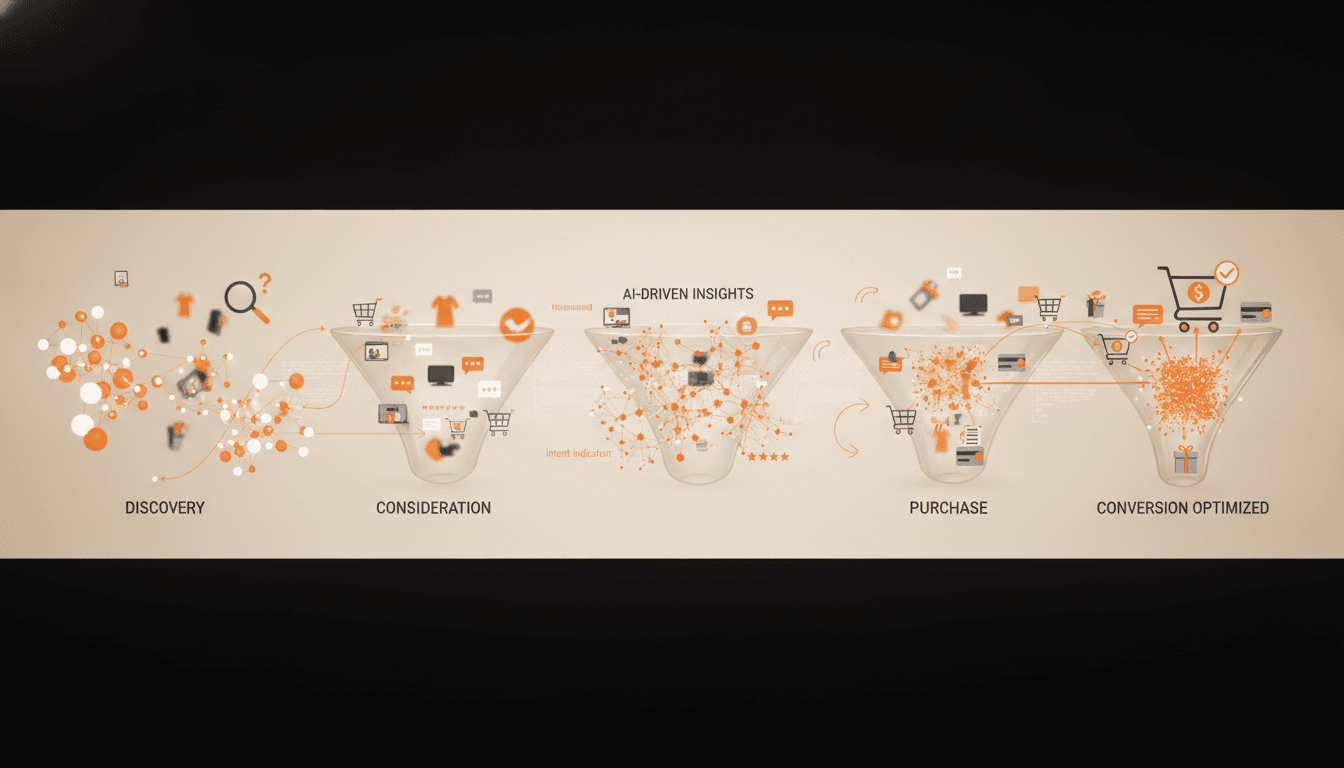
Navigating Medium-Intent AI Search in Health & Wellness: Proven GEO Content & Technical Strategies
As AI assistants become essential to wellness shopping journeys, health brands must master medium-intent AI search. Discover actionable GEO content and technical strategies that boost discoverability, trust, and sales—positioning your brand for leadership in the evolving AI landscape.

Navigating Medium-Intent AI Search in Health & Wellness: Proven GEO Content & Technical Strategies
As AI assistants increasingly shape wellness shopping journeys, health brands must master medium-intent AI search to thrive. Explore actionable GEO content and technical strategies that enhance your brand’s discoverability, build trust, and drive sales—positioning you as a leader in the rapidly evolving AI landscape.
Nearly half of wellness shoppers now rely on AI assistants during their product research, making medium-intent AI search queries a pivotal battleground for health and wellness brands. But how can you ensure your products don’t just get found, but also earn trust and convert shoppers? In this comprehensive guide, we reveal proven content and technical GEO best practices that elevate your AI search visibility, boost conversions, and establish your brand as a dominant player in this dynamic space.
[IMG: Consumers using AI assistants while shopping for wellness products on various devices]
Understanding Medium-Intent AI Health Search Queries and Their Importance
Medium-intent AI health search queries occupy the critical middle ground between purely informational and highly transactional searches. These queries signal that a consumer is actively exploring a product category but hasn’t yet settled on a specific brand or item. For instance, a shopper might ask, “What are the safest probiotics for women?” or “Which vegan protein powders support muscle recovery?”
According to Gartner’s 2024 report, medium-intent AI search queries now constitute over 60% of health & wellness product research on AI-driven platforms. Unlike purely informational searches such as “What is magnesium?” or transactional queries like “Buy magnesium supplement near me,” medium-intent queries reveal shoppers who are ready to evaluate and compare options—making this segment especially valuable for e-commerce brands.
Here’s how AI assistants process these queries:
- They analyze up-to-date, structured product data alongside clear, benefit-focused messaging.
- They prioritize brands that transparently communicate efficacy, safety, and trust factors both on-page and within technical code.
- They utilize schema markup and comprehensive FAQ content to surface highly relevant product recommendations.
“AI-powered search is revolutionizing how consumers discover and evaluate health & wellness products. Brands that combine structured data with user-centric content will lead this new frontier.” — Lily Ray, Senior Director of SEO, Amsive Digital
The opportunity is unmistakable: capturing medium-intent traffic demands a strategic blend of technical precision and compelling storytelling. Brands that master this balance can significantly expand their reach and conversion rates in the AI-driven search era.
Optimizing Product Page Structure for Medium-Intent AI Search
Winning medium-intent AI queries requires product pages that do more than just look appealing—they must establish trust and relevance for both human visitors and AI algorithms.
To structure your product pages for optimal AI discoverability, consider these tactics:
- Highlight product benefits clearly: Include dedicated sections like “How it Works” and “Who It’s For” to directly address common medium-intent questions. Hexagon’s research shows pages featuring these sections are twice as likely to be cited by AI search engines.
- Feature certifications and safety info prominently: Display trust signals such as “USDA Organic,” “GMP Certified,” and allergy warnings above the fold and embed them within structured data.
- Create scannable, user-friendly layouts: Utilize bullet points, tables, and concise summaries to improve both AI parsing and user experience.
- Incorporate keyword-rich, natural language headings: Align your headers and copy with the phrases consumers use in medium-intent queries (e.g., “Best Probiotics for Gut Health”).
For example, AI assistants like ChatGPT and Perplexity prioritize current, structured product information when recommending health & wellness products [OpenAI API Documentation, 2024]. Clear labeling of certifications and allergy details has become essential—not only for regulatory compliance but also for AI-driven search visibility [FDA Digital Health Guidelines, 2024].
Looking forward, brands that consistently tailor their product content to how AI parses and surfaces information will capture a disproportionate share of medium-intent traffic and conversions.
[IMG: Example of a well-structured wellness product page with highlighted benefits, certifications, and FAQs]
Leveraging User-Centric FAQs and FAQ Schema for AI Snippet Inclusion
Medium-intent shoppers often seek reassurance and clarity before committing to a purchase. Strategically crafted user-centric FAQs, enhanced with FAQ Schema markup, have emerged as a powerful tool for surfacing authoritative answers within AI search snippets.
Maximize your FAQ impact with these steps:
- Identify common medium-intent questions: Analyze search logs, customer reviews, and AI assistant outputs to uncover the precise questions shoppers ask (e.g., “Is this supplement safe during pregnancy?”).
- Craft concise, authoritative answers: Provide fact-based, clear, and direct responses that address shoppers’ concerns.
- Implement FAQ Schema markup: Structured data enables AI assistants to recognize and elevate your answers—brands integrating FAQ Schema see up to a 35% increase in snippet inclusion [Search Engine Journal, 2023].
- Monitor and refine snippet performance: Track which FAQs appear in AI results and continuously optimize your content.
The benefits are substantial. Health and wellness brands employing FAQ Schema report a 35% rise in AI assistant snippet inclusion, driving more shoppers directly to their product pages [Search Engine Journal, FAQ Schema in Health & Wellness, 2023].
For instance, a supplement brand answering “Is your protein powder third-party tested?” with a clear FAQ response and corresponding FAQ Schema often finds their answer prominently featured in AI assistant recommendations. This visibility boosts credibility and directly influences consumer purchase decisions.
[IMG: Screenshot showing an FAQ snippet from a wellness brand in an AI assistant search result]
Implementing Advanced Product and Certification Schema for Trust and Eligibility Signals
Structured data forms the foundation of how AI assistants assess, trust, and recommend health & wellness products. By adopting advanced product and certification schema, brands can explicitly communicate critical eligibility and trust factors to AI engines.
To implement this effectively:
- Use relevant health product schema types: Mark up attributes such as “ProductBenefit,” “HealthClaim,” and “DosageForm” using Schema.org vocabulary [Schema.org Documentation, 2024].
- Incorporate certification schema: Highlight certifications like “USDA Organic,” “Non-GMO,” or “GMP Certified” both within visible content and structured data. Brands leveraging certification schema have reported a 28% increase in trust-driven conversions [BrightEdge, Health E-Commerce Schema Impact Study, 2024].
- Ensure technical accuracy: Validate your schema with tools like Google’s Rich Results Test to prevent errors and misinterpretations.
- Example schema markup:
{
  "@context": "https://schema.org/",
  "@type": "Product",
  "name": "Organic Vegan Protein Powder",
  "description": "A plant-based protein powder supporting muscle recovery.",
  "brand": "WellFit",
  "offers": {
    "@type": "Offer",
    "price": "39.99",
    "priceCurrency": "USD"
  },
  "certification": [
    "USDA Organic",
    "Non-GMO"
  ],
  "productBenefit": [
    "Supports muscle recovery",
    "Easy to digest"
  ],
  "healthClaim": [
    "Promotes muscle health",
    "Boosts energy"
  ]
}
The impact is clear. Hexagon’s case studies reveal a 40% uplift in AI-driven sales after implementing advanced schema markup on product pages [Hexagon Case Study, 2024]. Furthermore, schema markup significantly increases the likelihood that AI assistants recommend your products by providing structured, machine-readable data [Google Search Central, Structured Data for Product Pages, 2024].
“Schema markup isn’t just a technical upgrade—it’s a direct line to AI assistants, enabling them to accurately represent your brand and products to high-intent shoppers.” — Barry Schwartz, Editor, Search Engine Roundtable
As AI assistants grow more sophisticated, their reliance on structured eligibility and trust signals will only intensify, making advanced schema implementation essential for wellness brands aiming for growth.
[IMG: Illustration of structured data flow from a wellness product page to various AI assistants]
Addressing Geo-Specific Search Needs with Localized Schema and Content Attributes
AI-driven health & wellness searches are increasingly geo-specific. Local regulations, ingredient preferences, and certification standards vary widely, compelling brands to customize both content and structured data for distinct regions.
To effectively address geo-specific needs:
- Implement localized schema markup: Use structured data such as
localBusinessand region-specific certification properties to ensure AI recognizes your products’ local compliance and eligibility [Local Search Association, AI and Local Health Search, 2024]. - Tailor content to regional nuances: Adapt product descriptions, FAQs, and trust signals to reflect local health concerns, permitted ingredients, and consumer preferences.
- Highlight location-based availability: Clearly communicate shipping zones, local retail partners, and regional compliance within both content and schema.
For example, a probiotic supplement compliant with EU health directives should prominently display this information for European shoppers—in both copy and localized schema. Doing so increases the chances that AI assistants will recommend your brand for geo-specific queries.
By proactively addressing geo-specific search requirements, brands maintain discoverability and relevance regardless of the shopper’s location.
[IMG: Map showing regional schema attributes and content variations for a wellness brand]
Aligning Content and Technical SEO for Holistic AI Search Optimization
Achieving success in AI-driven health & wellness search demands a seamless integration of content strategy and technical SEO. When these teams collaborate effectively, brands experience significant gains in AI visibility and engagement.
To foster holistic optimization:
- Incorporate medium-intent keyword research: Identify the natural language questions and phrases shoppers use with AI assistants.
- Balance conversational content with technical rigor: Develop benefit-focused, easy-to-understand copy while ensuring all technical GEO requirements—such as schema, meta tags, and canonical URLs—are meticulously implemented.
- Optimize for speed and mobile: Deliver fast load times and responsive design, as AI indexing increasingly favors mobile-first, high-performance sites.
- Encourage cross-team collaboration: Promote ongoing alignment between content creators, SEO engineers, and product managers.
The results speak volumes. A Moz/Hexagon Collaborative Study found a 37% increase in AI visibility for wellness brands that synchronized technical and content optimization efforts. “Brands winning in AI-driven health commerce are those who clearly communicate product benefits, safety, and certifications—both on the page and in the code,” observes Dr. Karen DeSalvo, Chief Health Officer at Google.
Looking ahead, as AI search engines evolve, only brands that break down silos between content and SEO will sustain a competitive advantage.
[IMG: Workflow diagram showing collaboration between content, SEO, and technical teams for AI search optimization]
Measuring Success and Iterating Using AI Search Analytics and Sales Attribution
Optimizing for AI search is an ongoing journey, not a one-time project. Continuous measurement and iteration are vital to maintaining and growing your brand’s AI-driven performance.
Key metrics to monitor include:
- AI-driven traffic: Track the percentage of visitors arriving via AI assistant referrals and featured snippets.
- Conversion rates and sales: Attribute sales growth to specific schema, FAQ, and GEO content enhancements.
- Snippet and recommendation inclusion: Measure how frequently your products and answers appear in AI search results.
- Engagement metrics: Analyze bounce rates, time on page, and interaction depth from AI-referred users.
To establish an effective measurement cycle:
- Utilize analytics platforms such as Google Analytics and Google Search Console alongside specialized AI search reporting tools.
- Apply multi-touch attribution models to connect technical and content improvements with sales outcomes.
- Regularly test, analyze, and refine your strategies based on AI search performance data.
By adopting a data-driven, iterative approach, health & wellness brands can adapt swiftly to evolving AI search algorithms and shopper behaviors—maximizing both visibility and return on investment.
[IMG: Analytics dashboard showing AI-driven traffic, snippet inclusion, and sales attribution for a wellness brand]
Hexagon Case Study: Achieving a 40% Uplift in AI-Driven Sales Through Schema Implementation
A leading wellness supplement client approached Hexagon facing challenges with AI discoverability and stagnant online sales. Their product pages lacked advanced schema markup, clear trust signals, and regionally tailored content. Consequently, they experienced low inclusion in AI-powered search snippets and limited visibility for medium-intent queries.
Hexagon’s approach included:
- A comprehensive content overhaul emphasizing clear product benefits, safety assurances, and certifications.
- Implementation of advanced schema markup covering Product, ProductBenefit, HealthClaim, and region-specific certification attributes.
- Addition of user-focused FAQs structured with FAQ Schema and localized content targeting key markets.
The impact was dramatic:
- A 40% uplift in AI-driven sales within three months post-implementation [Hexagon Case Study, 2024].
- Marked increase in AI assistant recommendations and snippet appearances.
- Enhanced consumer trust, reflected in a 28% rise in trust-based conversions following certification schema integration.
The key takeaway? “Schema markup isn’t just a technical upgrade—it’s a direct line to AI assistants, enabling accurate representation of your brand and products to high-intent shoppers,” as Barry Schwartz emphasizes. Brands that combine structured data, clear content, and geo-targeted strategies consistently outperform competitors in AI-driven health commerce.
[IMG: Before-and-after graph showing uplift in AI-driven sales and snippet inclusion for Hexagon’s client]
Conclusion & CTA
The health & wellness shopping landscape is undergoing a profound transformation driven by AI assistants and medium-intent search queries. Brands that excel in this environment skillfully blend authoritative, user-focused content with advanced technical and GEO SEO tactics—ensuring their products are found, trusted, and purchased in every AI-powered interaction.
Ready to elevate your health & wellness brand’s AI search visibility and sales?
Book a personalized 30-minute strategy session with Hexagon today: https://calendly.com/ramon-joinhexagon/30min
Want to stay ahead of AI search trends in wellness? Follow Hexagon for more actionable insights and the latest in AI-powered e-commerce strategies.
Hexagon Team
Published April 29, 2026