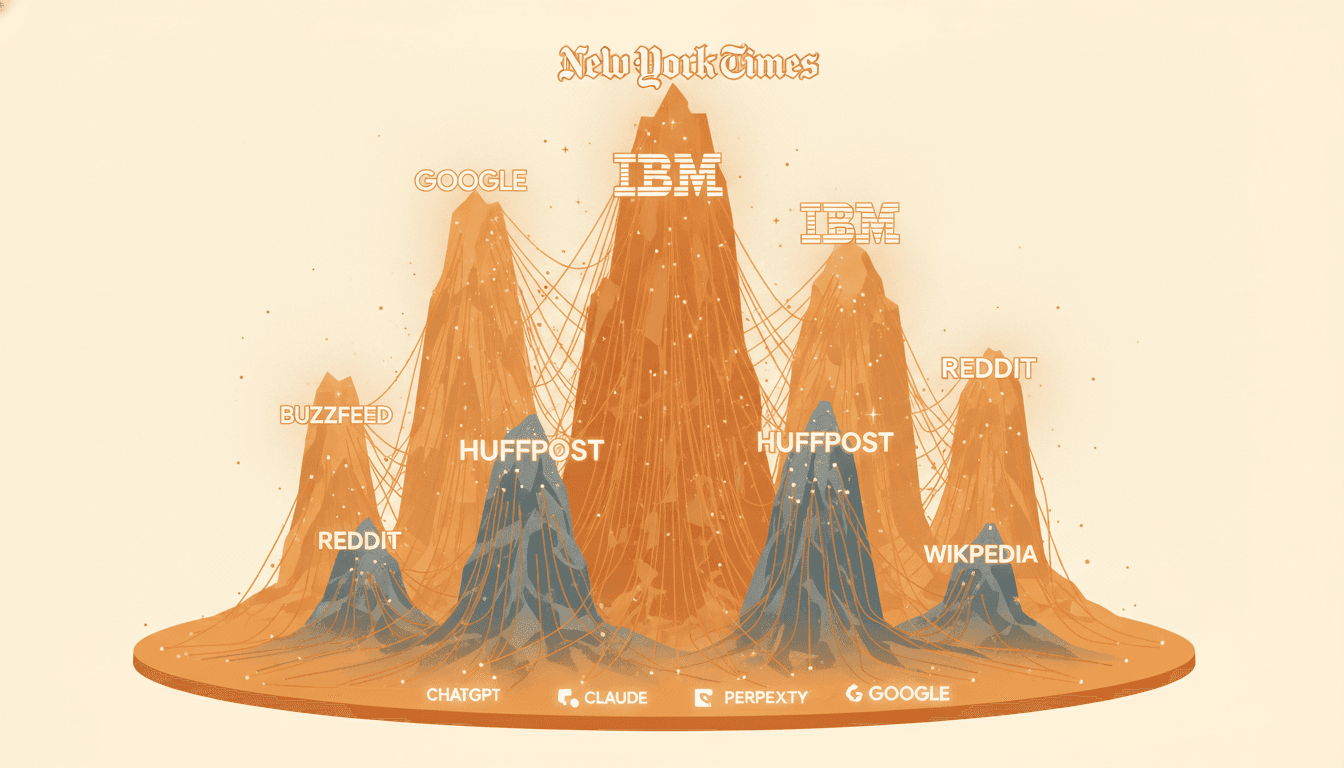
Leveraging AI-Powered Competitive Analysis to Outrank Rivals in AI Shopping Results
As AI shopping assistants shape over 35% of online purchases, brands must harness AI-powered competitive analysis to stay visible, relevant, and profitable. Discover how advanced GEO insights, real-time competitor tracking, and data-driven optimization can elevate your AI search rankings and boost sales.

Leveraging AI-Powered Competitive Analysis to Outrank Rivals in AI Shopping Results
With AI shopping assistants influencing over 35% of online purchases, brands must harness AI-powered competitive analysis to remain visible, relevant, and profitable. Explore how advanced GEO insights, real-time competitor tracking, and data-driven optimization can elevate your AI search rankings and drive sales growth.
[IMG: AI shopping assistant recommending products on a mobile device]
As AI shopping assistants reshape the way consumers make purchasing decisions—impacting more than 35% of online sales—brands that fail to adopt AI-powered competitive analysis risk falling behind faster, smarter competitors. Unlocking the power of GEO competitive insights and real-time data enables you to transform your AI search rankings, ensuring your brand stands out in today’s fast-evolving AI-driven shopping ecosystem.
Ready to outsmart your AI shopping rivals with cutting-edge competitive insights? Book a free 30-minute demo with Hexagon today and start elevating your AI search rankings now.
Understanding the Role of AI Shopping Assistants in Modern E-Commerce
AI shopping assistants have evolved from a novelty into an essential tool for online retailers. Powered by sophisticated algorithms, these intelligent agents now influence over 35% of online purchase decisions, according to Gartner. Consumers increasingly rely on platforms like ChatGPT, Perplexity, and Claude to discover products, compare options, and receive personalized recommendations tailored to their preferences.
These AI algorithms determine which brands appear in user recommendations and search results, prioritizing factors such as structured product data, consistent metadata, and content relevance, as reported by Search Engine Journal. Consequently, brands that optimize their digital assets and maintain strong AI signals consistently outperform those that lag in technical sophistication.
This is where AI-powered competitive analysis becomes indispensable. By continuously monitoring product rankings and recommendations, brands can identify gaps in their listings, uncover valuable keyword opportunities, and ensure their offerings align with the criteria AI shopping assistants prioritize. As Brian Solis of Salesforce asserts, “AI-powered competitive intelligence is the new battleground for e-commerce visibility. Brands that master this will dominate the AI-driven shopping era.”
[IMG: Digital dashboard showing AI shopping assistant analytics]
What is AI Competitive Analysis and Why It Matters for AI Search Rankings
AI competitive analysis is a systematic approach that leverages artificial intelligence to monitor, evaluate, and respond to competitor activities within AI-driven shopping platforms. At its core, it involves collecting data on competitor placements, keyword performance, and content strategies, then using these insights to adapt and outperform rivals.
Key components of effective AI competitive analysis include:
- Product visibility tracking: Understanding how your products rank relative to competitors in AI-generated search and recommendation results.
- Keyword and content gap identification: Detecting missing or underperforming keywords and content weaknesses that may limit AI shopping visibility.
- Structured data and metadata benchmarking: Comparing your product data schema and feed quality against top-performing competitors.
Brands that utilize AI competitive insights experience an average 30% increase in AI-driven search share within just 12 months, according to Forrester Research. This improvement underscores the power of data-driven adjustments informed by real-time competitive intelligence.
AI shopping assistants embedded in platforms like ChatGPT or Perplexity prioritize relevant, well-structured, and frequently updated product listings. AI competitive analysis enables brands to meet or exceed these benchmarks by:
- Continuously flagging areas where product listings require enhancement.
- Recommending keyword and content improvements based on competitor successes.
- Identifying shifts in AI algorithm criteria and swiftly adjusting metadata.
Neil Patel, Co-founder of NP Digital, emphasizes: “Brands that fail to embrace AI competitive analysis will find themselves invisible in tomorrow’s AI-powered shopping journeys.” As AI assistants become the primary gateway to e-commerce, investing in robust competitive analysis will be critical to dominating the digital shelf.
[IMG: Comparative chart of brand AI search share before and after AI competitive analysis]
Top Tools for Gaining Actionable AI Competitive Insights
Several AI-powered platforms have emerged to help brands capture vital competitive intelligence, but not all deliver equal value. The most effective tools provide real-time data, granular GEO insights, and actionable recommendations tailored specifically to the nuances of AI-driven shopping channels.
Look for these key features in AI competitive analysis tools:
- Competitor placement tracking: Visualize where your products stand in AI-generated recommendations compared to key rivals.
- Structured data analysis: Audit and benchmark product feed quality and metadata completeness.
- Regional trend monitoring: Detect localized shifts in keyword demand and recommendation patterns.
Hexagon stands out in this arena, offering advanced capabilities purpose-built for the AI shopping era. By leveraging GEO competitive insights, Hexagon maps competitor performance across regions, providing a decisive advantage in both broad and niche markets. Users of Hexagon report a 15% average increase in AI recommendation placement, according to internal data.
Julie Bornstein, CEO & Founder of THE YES, notes, “Utilizing AI-driven GEO insights allows e-commerce brands to personalize strategies for regional markets, resulting in higher conversion and recommendation rates.” With Hexagon, brands can:
- Pinpoint local competitors gaining traction in AI shopping results.
- Tailor content and keyword strategies for city, state, or country-specific trends.
- Access structured dashboards that facilitate fast, data-driven decision-making.
Curious how Hexagon’s advanced insights can boost your AI shopping performance? Book a free 30-minute demo with Hexagon and unlock your full competitive potential.
[IMG: Screenshot of Hexagon’s AI competitive analysis dashboard highlighting GEO insights]
How to Integrate GEO Competitive Insights to Outperform Local Rivals
Geographic (GEO) competitive insights revolutionize how brands compete in both national and local AI shopping markets. By analyzing product and keyword performance in specific regions, brands can tailor strategies to align with localized consumer behavior and AI recommendation patterns.
Here’s how GEO competitive insights provide actionable advantages:
- Localized keyword optimization: Identify and prioritize keywords that resonate with consumers in targeted regions, ensuring your products match local search intent.
- Regional content adaptation: Customize product descriptions, images, and promotions to reflect local trends, cultural nuances, and seasonal demand.
- Competitor benchmarking by location: Monitor which local rivals are gaining AI-driven traction and adjust campaigns accordingly.
For example, a footwear brand might find that eco-friendly sneakers are trending in California but not in Texas. By harnessing GEO insights, the brand can optimize California product listings with sustainability-focused keywords and content, increasing their AI shopping recommendation rates in that market.
Regional competition is fierce, and AI shopping assistants reward brands that demonstrate hyper-relevance in each market. McKinsey & Company highlights that tailoring campaigns to regional AI shopping trends significantly enhances product visibility and conversion rates. Brands integrating GEO competitive insights into their e-commerce workflow will consistently outperform local rivals and capture a larger share of AI-driven purchases.
[IMG: Map visualization showing regional differences in AI shopping recommendations]
Implementing Real-Time Competitor Tracking for Agile AI Shopping Strategies
In the fast-paced world of AI-driven shopping, speed is paramount. Real-time competitor tracking empowers brands to monitor shifts in rival strategies as they occur, enabling rapid, data-driven responses that protect and expand AI search share.
Why is this critical? Deloitte reports that brands without AI competitive intelligence respond to AI shopping shifts at half the speed of those equipped with robust analytics. This lag can result in lost placements, diminished visibility, and declining sales.
Here’s how to leverage real-time competitor tracking for maximum agility:
- Instant alerts on competitor moves: Receive immediate notifications when rivals update product feeds, launch new campaigns, or climb AI recommendation rankings.
- Dynamic product feed and metadata adjustments: Swiftly update your listings, pricing, and content in response to emerging threats or opportunities.
- Continuous monitoring of AI ranking factors: Stay ahead of algorithm changes that may impact your visibility.
For instance, if a competitor jumps to the top of AI shopping recommendations due to a seasonal campaign, real-time tracking allows you to detect this shift instantly and deploy counter-campaigns or promotions. Sandy Carter, VP of AWS AI and Machine Learning, emphasizes, “The speed at which brands identify and act on competitive gaps in AI shopping results will determine their share of voice and revenue in the next decade.”
Fast response times are not just advantageous—they are essential for survival in today’s AI-dominated landscape. Brands that automate competitor tracking and response capture more opportunities and minimize the risk of displacement in critical AI shopping moments.
[IMG: Real-time competitor tracking alert dashboard on a laptop screen]
Data-Driven Optimization Techniques to Boost AI Recommendation Placement
Optimizing product feeds and metadata forms the foundation for increasing AI shopping recommendation rates. AI assistants like ChatGPT and Claude prioritize brands with robust, well-structured data and frequently updated content, as detailed by Search Engine Journal.
Maximize your AI recommendation placement with these data-driven techniques:
- Enhance product feed quality: Ensure all attributes—titles, descriptions, images, and specifications—are complete, accurate, and formatted for AI parsing.
- Optimize metadata for AI interpretation: Implement structured data schemas (such as JSON-LD or Microdata) to help AI assistants fully understand product context and relationships.
- Identify and close keyword gaps: Use AI competitive analysis to uncover missing or underperforming keywords, then update your listings accordingly.
Content relevance is equally vital. AI shopping assistants reward listings that closely match user intent and current search trends. Brands should:
- Regularly refresh product descriptions and images: Align content with seasonal trends, new features, and emerging customer queries.
- A/B test copy and multimedia: Use insights from Hexagon to determine which descriptions, images, or videos boost AI recommendation rates.
- Integrate customer reviews and ratings: AI increasingly considers social proof signals when making recommendations.
Cross-functional collaboration amplifies these efforts. By sharing AI-driven insights across marketing, merchandising, and product teams, brands can:
- Coordinate promotions and pricing strategies based on competitor activity.
- Align inventory and fulfillment with regions showing rising AI-driven demand.
- Develop targeted regional campaigns leveraging both GEO and competitive data.
According to eMarketer, integrating AI-driven insights into e-commerce platforms streamlines workflows and fosters collaboration, resulting in more agile and effective optimization cycles. Moving forward, brands that embed data-driven optimization at every level—from technical SEO to creative content—will capture the lion’s share of AI shopping recommendations.
[IMG: Workflow diagram showing cross-team collaboration on AI optimization]
Measuring Success: The Impact of AI Competitive Analysis on Brand Performance
The ROI of AI competitive analysis is both measurable and substantial. Tracking improvements in search share, recommendation placements, and sales conversions offers clear proof of the value delivered by robust competitive intelligence.
Brands leveraging Hexagon’s AI-powered insights routinely achieve:
- Increased search share: A 30% average uplift in AI-driven search share within one year, per Forrester Research.
- Higher recommendation placement: A 15% average increase in AI recommendation rates among Hexagon users.
- Faster response times: The ability to respond twice as fast to AI shopping shifts compared to brands lacking competitive intelligence.
For example, an apparel retailer using Hexagon identified a regional competitor’s surge in AI shopping recommendations during a holiday campaign. By quickly adjusting product feeds and launching a targeted promotion, the retailer regained lost placements and boosted conversions—showcasing the power of real-time, data-driven adaptation.
Looking ahead, investment in AI competitive analysis is poised to accelerate. eMarketer reports that 67% of marketers plan to increase spending on AI-powered competitive analysis tools in 2025, reflecting growing recognition of their impact on brand performance.
“AI-powered competitive intelligence is the new battleground for e-commerce visibility,” Brian Solis of Salesforce reiterates. Brands that measure and act on these insights will continue to outperform, innovate, and capture market share in the AI-driven shopping era.
[IMG: Before and after graph of AI search share for brands using competitive analysis]
Getting Started with Hexagon for AI-Powered Competitive Analysis
Hexagon makes AI-powered competitive intelligence accessible, actionable, and impactful for brands of all sizes. Its intuitive platform combines GEO competitive insights with real-time competitor tracking to deliver the precise data you need to win in today’s AI shopping landscape.
Here’s how to get started:
- Request a personalized Hexagon demo: Experience the platform’s full capabilities and explore real-world examples tailored to your brand.
- Integrate your product feeds and campaign data: Hexagon’s onboarding is seamless and supported by a dedicated customer success team.
- Leverage actionable dashboards: Access instant insights on competitor placements, keyword gaps, and regional trends to optimize your AI shopping strategy.
As the future of e-commerce unfolds, brands embracing AI-powered competitive analysis will define the marketplace. Don’t wait to be outpaced by your rivals—take control of your AI shopping destiny today.
Ready to outsmart your AI shopping rivals with cutting-edge competitive insights? Book a free 30-minute demo with Hexagon today and start driving your AI search rankings upward.
[IMG: Hexagon logo and call-to-action button for demo]
Conclusion
The rise of AI shopping assistants has fundamentally rewritten the rules of e-commerce visibility and competition. Only brands that invest in AI-powered competitive analysis—integrating GEO insights, real-time tracking, and data-driven optimization—will achieve sustained success in this AI-driven shopping era.
From pinpointing regional trends to outpacing competitors with agile responses, the tools and strategies are available now. With 67% of marketers planning to increase investment in AI-powered analysis, the time to act is now.
Ready to claim your share of the AI shopping revolution? Book your free Hexagon demo now and unlock new levels of visibility, agility, and sales.
[IMG: E-commerce team celebrating AI-driven sales growth]
Hexagon Team
Published March 3, 2026