brandscitationauthority
How We Analyzed 50,000 AI Product Citations to Discover the Hidden Patterns Behind Brand Authority in Generative Search
Fifty-eight percent of consumers under 45 now use AI assistants to discover products before buying—yet only 14% of brands have a documented strategy to get cited by these engines. Hexagon analyzed 50,000 real AI product citations to understand why. What we found challenges everything marketers thought they knew about search visibility.
13 min readRecently updated

---


# How Hexagon Analyzed 50,000 AI Product Citations to Discover the Hidden Patterns Behind Brand Authority in Generative Search

*Fifty-eight percent of consumers under 45 now use AI assistants to discover products before buying—yet only 14% of brands have a documented strategy to get cited by these engines. Hexagon analyzed 50,000 real AI product citations to understand why. The findings challenge everything marketers thought they knew about search visibility.*

[IMG: Data visualization showing AI citation analysis dashboard with brand authority signals across ChatGPT, Perplexity, and Claude]


---


## The AI Citation Opportunity: Why This Matters Now

AI-assisted product discovery is the fastest-growing consumer research channel alive today. The brands winning in this space operate from an entirely different playbook than their competitors. The scale of this shift demands immediate strategic attention.

According to the Salesforce State of the Connected Customer Report, 58% of U.S. consumers aged 18–44 have used an AI assistant to research or discover a product before making a purchase, up from just 31% in 2023. That near-doubling in a single year reflects an accelerating trajectory that shows no signs of slowing.

The commercial stakes match the velocity. The McKinsey Global Institute projects that $1.2 trillion in global e-commerce revenue will be influenced by AI-assisted product discovery and recommendation by 2027—representing approximately 18% of total projected global e-commerce GMV. Brands that aren't appearing in AI-generated recommendations will be invisible to a growing share of purchase-ready consumers at the exact moment they're making buying decisions.

Here's what should concern every marketing leader: while 67% of marketing directors report that AI-driven discovery is a top-three priority for 2025, only 14% have a documented strategy for improving their AI citation rates. That 53-point gap between awareness and action is both a warning for laggards and a significant first-mover opportunity for brands willing to move decisively.


---


## The Fundamental Difference: AI Search Isn't Traditional SEO

Keyword optimization does not drive AI citations. This is the single most important distinction between traditional SEO and AI-driven discovery.

Traditional SEO rewards brands that structure content around specific search terms, optimize meta tags, and build backlinks. AI engines operate on an entirely different logic, evaluating brands through a **multi-signal credibility model** that weighs third-party editorial coverage, community discussion, structured data, and cross-platform presence. Paid visibility and keyword density are irrelevant to AI citation outcomes.

In Hexagon's analysis of 50,000 citations, zero came from brands whose primary digital presence was paid advertising with minimal organic content footprint. Not a single citation originated from this pattern.

Lily Ray, VP of SEO Strategy & Research at Amsive, explains the paradigm shift: "Large language models have been trained on the entire fabric of the web, and they've essentially learned what trustworthy brands look like based on how the internet talks about them. If the internet isn't talking about a brand in credible contexts, that brand simply doesn't exist in AI search."

This shift demands a fundamentally new strategic orientation—from keyword-centric to **authority-centric**. The brands that will dominate AI-driven discovery are those that have built genuine, distributed authority across the web.


---


## What Gets Brands Cited: The Data-Driven Authority Signals

[IMG: Infographic showing the five core authority signals for AI citation: editorial coverage, review trust band, cross-platform density, structured data, and community presence]

Hexagon's analysis identified a clear hierarchy of signals that predict AI citation likelihood. Understanding this hierarchy is critical because not all authority signals carry equal weight.

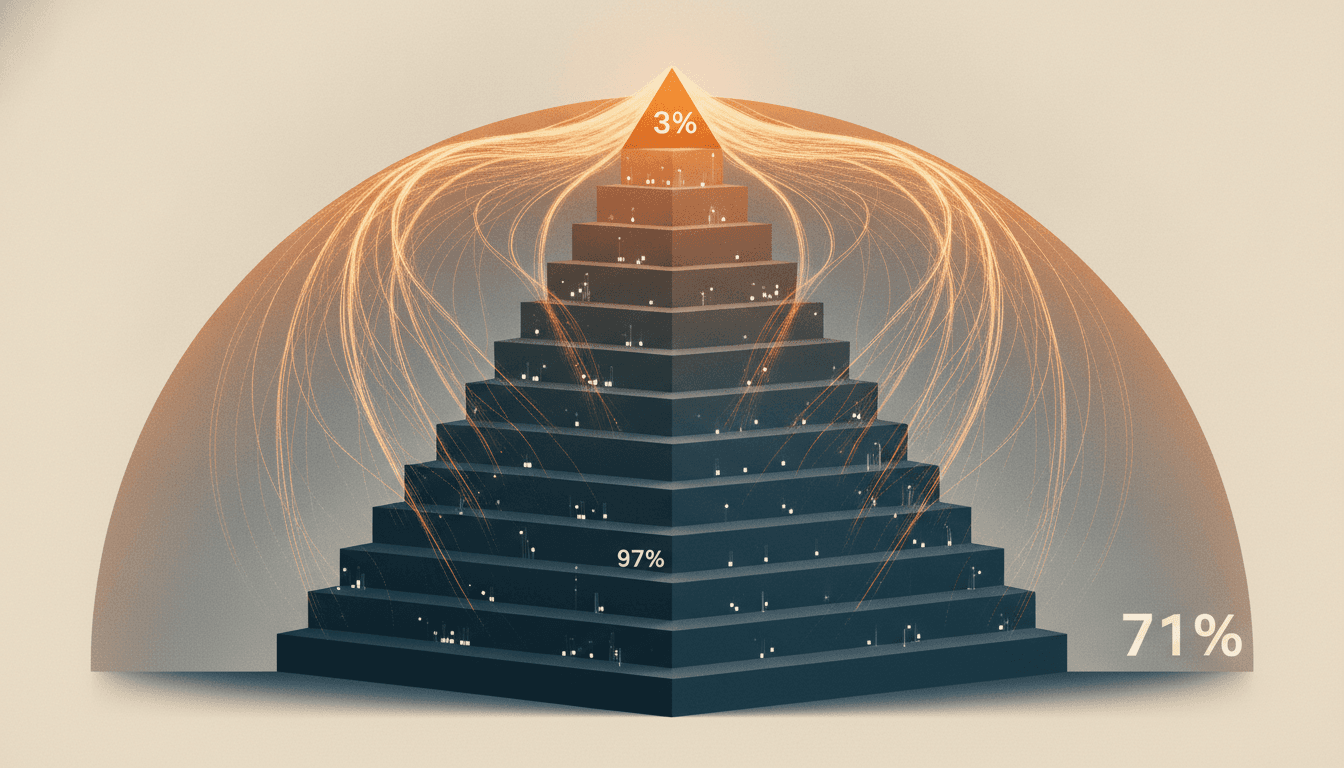
**Editorial Coverage** sits at the top of the hierarchy. Brands with verified third-party editorial coverage from three or more independent publications were cited **4.7x more frequently** than brands relying solely on owned and paid media channels. More specifically, 84% of all 50,000 citations came from brands featured in at least one "best of" or "top products" editorial roundup from a publication with Domain Authority above 60.

This single metric—high-authority editorial placement—is the strongest individual predictor of AI citation likelihood in the entire dataset. The concentration of citations around editorial coverage is striking and actionable.

**Review Signals** matter enormously, but not in the way most brands assume. Brands in the top citation quartile maintained an average review volume of 2,300+ verified customer reviews with a rating consistency window of **4.2–4.7 stars**. Brands outside this "trust band"—either too few reviews or suspiciously perfect scores—were cited at rates 61% lower.

AI models appear to flag both insufficient social proof and implausible perfection as credibility red flags. The sweet spot exists in the middle: genuine, substantial, and realistically distributed customer feedback.

Perhaps the most powerful predictor in the entire dataset is **cross-platform mention density**. The numbers are striking:

- Brands mentioned across **5+ distinct platform types** (news, forums, video, podcasts, social) appeared in 91% of top-cited brands
- Only 22% of uncited brands achieved this level of cross-platform presence
- This single metric was the **strongest predictor of AI citation likelihood** across the entire dataset

Channel diversification is now a core AI discoverability requirement. The brands winning in AI search aren't concentrated on a single platform—they're distributed across the entire digital ecosystem.

Rand Fishkin, Co-Founder & CEO of SparkToro, captures the broader implication: "The brands that will win in AI search are not necessarily the ones spending the most on Google Ads or even the ones with the best SEO. They're the ones that have built genuine authority across the web—the kind that gets written about, discussed, and referenced by real people and real publications."


---


## The Vertical Variation: Why Industry Baseline Matters

Not all industries compete on the same playing field when it comes to AI citation rates. Hexagon's dataset revealed meaningful variation across e-commerce verticals:

- **Beauty & Skincare:** 8.2% citation rate
- **Food & Beverage:** 7.1% citation rate
- **Fashion & Apparel:** 6.5% citation rate

These differences aren't random—they're tied to category-specific transparency norms. Beauty and food brands are more accustomed to publishing detailed ingredient lists, formulation data, and sourcing information. That structured, verifiable content is exactly what AI engines treat as trust signals.

Fashion brands, by contrast, have historically led with visual and lifestyle content that generates less machine-readable authority data. For example, a fashion brand benchmarking its AI citation performance against a beauty brand's 8.2% rate will consistently feel like it's underperforming—even if it's leading its own vertical.

Industry benchmarking against vertical peers, not global averages, is critical for realistic goal-setting and competitive analysis. A one-size-fits-all AI citation strategy will systematically underperform because it ignores the category-specific dynamics that shape AI model training data.


---


## Platform-Specific Strategies: ChatGPT vs. Perplexity vs. Claude

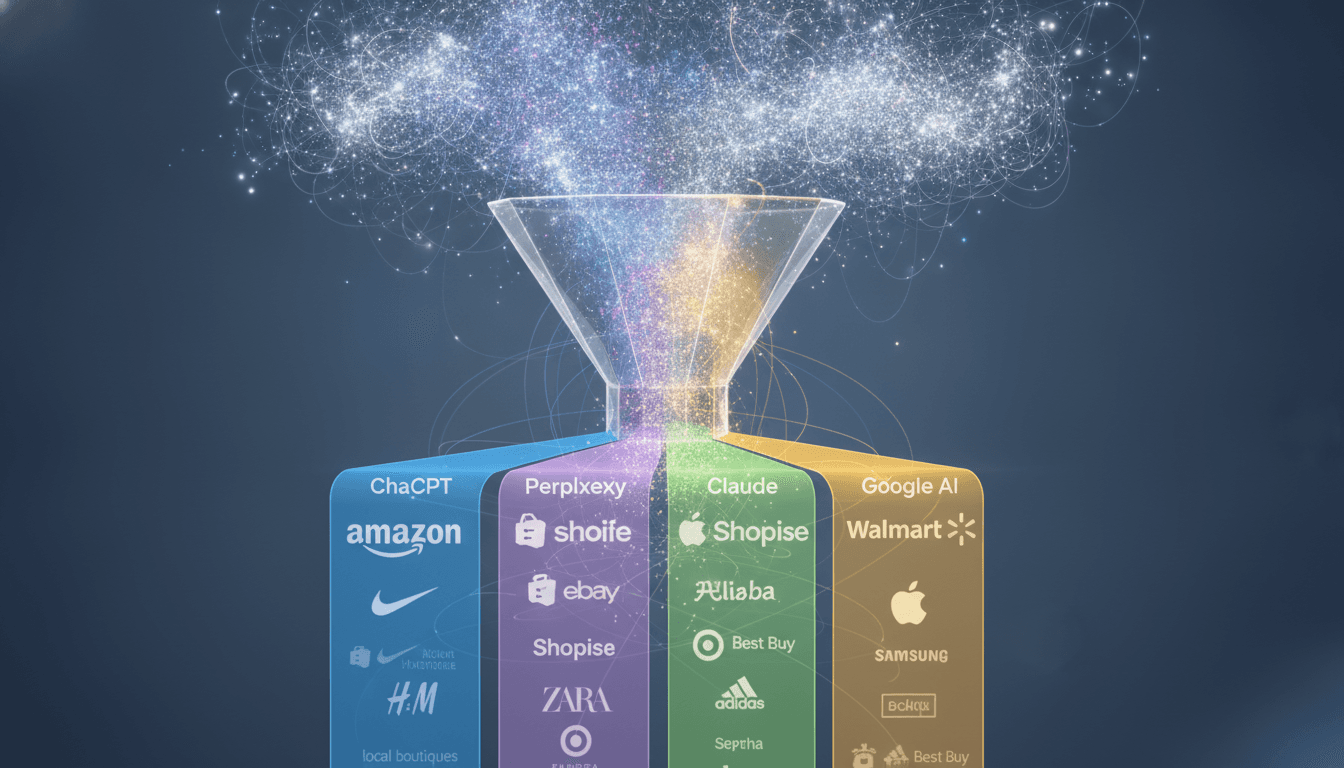
[IMG: Side-by-side comparison graphic showing the primary citation signals for ChatGPT, Perplexity, and Claude with brand examples]

One of the most actionable findings from Hexagon's analysis is that AI engines are not monolithic. Each platform prioritizes meaningfully different signals, and treating them as identical will leave significant citation opportunity on the table.

**Perplexity** operates differently from the others. It heavily weights real-time community content, drawing extensively from Reddit, Quora, and industry forums. In the dataset, 73% of Perplexity-cited brands had substantive community discussion threads on at least one major forum platform, compared to just 18% of uncited brands. For Perplexity visibility, brands must invest in genuine community presence and user-generated discussion.

**ChatGPT** shows the strongest correlation with long-form editorial content from established publishers. Brands appearing in detailed reviews, expert roundups, and in-depth feature articles from recognized media outlets earn disproportionate weight in ChatGPT's recommendation outputs. The emphasis shifts from community volume to editorial depth and publisher authority.

**Claude** demonstrates a strong preference for structured knowledge graph sources. Brands with a Wikipedia page or a Wikidata entry were cited by Claude at a rate **3.2x higher** than brands without one—reflecting Claude's documented reliance on structured knowledge graph sources during training. Each engine requires a distinct optimization strategy.

The implication is clear: a brand pursuing maximum AI citation visibility needs three distinct strategies, not one.


---


## The Highest-Leverage Intervention: Structured Data Implementation

Among all technical interventions available to brands, one stands out as the single highest-leverage action with the clearest ROI: **Schema.org markup implementation**. The adoption gap between cited and uncited brands is stark—78% of AI-cited brand pages had structured data in place, compared to just 31% of uncited brand pages. That 47-point differential is one of the most actionable binary differentiators in the entire dataset.

Schema.org Product, Review, and Organization markup makes brand information machine-readable in a format that AI engines are built to recognize and trust. Structured data essentially translates a brand's credibility signals into a language that AI models are optimized to parse. Without it, even genuinely authoritative brands may be leaving significant citation potential unrealized.

Here's how this translates to immediate action:

- Implement **Product schema** on all e-commerce product pages
- Add **Review schema** to aggregate customer ratings and surface social proof
- Deploy **Organization schema** to establish brand identity and entity recognition
- Prioritize pages with the highest organic traffic and purchase intent

The implementation is technical but not complex. For brands not yet optimizing for AI, this represents the clearest low-hanging fruit in the entire citation strategy—a quick win with outsized, measurable impact on long-term AI discoverability.


---


## The Timeline Reality: Why AI Citation Is a Long Game

Hexagon's analysis found a **median lag of 4.3 months** between a brand's first high-authority editorial mention and its first appearance in AI product citations. This "trust accumulation period" reflects how AI models require time to incorporate new authority signals into their recommendation patterns.

This timeline has a critical strategic implication: brands must begin building their citation foundation now, ahead of the AI discovery wave's continued acceleration. Looking ahead, the brands that invest in editorial coverage, structured data, and community presence today will be the ones appearing in AI recommendations when consumer adoption peaks.

The planning horizon for AI citation strategy should extend a minimum of **6–12 months**. This is not a quick-win channel—it is a long-term authority-building program that compounds over time. Amanda Natividad, VP of Marketing at SparkToro, observes: "What's fascinating about AI citation patterns is that they expose a fundamental truth about digital authority that SEO has been dancing around for years: the web's most trusted sources agree on what's good, and AI models have learned to recognize that consensus."


---


## The Competitive Gap: The Window to Act

[IMG: Bar chart visualizing the 53-point gap between marketing director awareness (67%) and documented AI citation strategy adoption (14%)]

The competitive landscape for AI citation is, at this moment, remarkably open. Despite 67% of marketing directors citing AI search as a top-three priority for 2025, only 14% have a documented strategy for improving their AI citation rates. That 53-point gap between awareness and action represents one of the most significant competitive opportunities available in digital marketing today.

For brands with a documented strategy, this gap is an authority moat waiting to be built. Early movers establishing editorial coverage, structured data, and cross-platform presence now will accumulate the trust signals that AI engines require—before competitors recognize the urgency and begin competing for the same placements.

The competitive advantage will compress as market awareness increases and more brands develop formal citation strategies. The window is open, but it is closing.


---


## Building an AI Citation Strategy: The Actionable Framework

Building a documented AI citation strategy doesn't require reinventing the marketing function—it requires redirecting existing resources toward the signals that AI engines actually weight. Here's how to structure the approach:

**Step 1 — Audit Current Authority Signals.** Assess existing editorial coverage, community presence, review volume and rating distribution, structured data implementation, and cross-platform mention density against vertical benchmarks. This baseline tells organizations where they stand relative to competitors.

**Step 2 — Implement Schema.org Markup Immediately.** This is the highest-leverage quick win. Prioritize Product, Review, and Organization schema across key pages (78% vs. 31% adoption gap). Implementation can be executed in weeks, not months.

**Step 3 — Build a High-Authority Editorial Strategy.** Target placements in DA 60+ publications and industry-specific vertical media. Focus on "best of" and "top products" roundup formats where 84% of citations originate. This is where editorial ROI compounds most dramatically.

**Step 4 — Develop Platform-Specific Community Strategies.** Invest in Reddit and Quora presence for Perplexity visibility; pursue long-form publisher coverage for ChatGPT; build Wikipedia and Wikidata entries for Claude. One-size-fits-all approaches won't work.

**Step 5 — Expand Cross-Platform Mention Density.** Systematically establish brand presence across news, forums, video, podcasts, and social to reach the 5+ platform type threshold that predicts top-citation performance. This is about distribution, not concentration.

**Step 6 — Set Realistic Timelines.** Plan for a minimum 4.3-month lag before editorial coverage translates to citation appearances; build a 6–12 month roadmap with quarterly milestones. Patience compounds here.

Industry vertical benchmarks should inform targets throughout: beauty brands should target the 8.2% citation rate baseline, food and beverage at 7.1%, and fashion at 6.5%.


---


## What the Analysis Revealed: Key Takeaways from 50,000 Citations

Hexagon's analysis of 50,000 AI product citations across ChatGPT, Perplexity, and Claude surfaces a consistent and actionable picture of how brand authority is built in the generative search era. The findings cut against years of keyword-centric marketing assumptions and point toward a fundamentally different model of digital visibility.

The core takeaways are:

- **Multi-signal credibility, not keyword optimization, drives AI citations.** Paid visibility and meta tag optimization have zero correlation with citation outcomes. Authority is what matters.

- **Editorial coverage is the single strongest predictor.** 84% of cited brands appeared in high-authority roundups; brands with 3+ independent editorial sources earned 4.7x higher citation frequency. This is the primary lever.

- **Structured data is the highest-leverage technical intervention.** The 78% vs. 31% adoption gap represents immediate, implementable ROI. This is the quick win.

- **Platform-specific strategies outperform generic approaches.** Perplexity rewards community presence (73% citation correlation); ChatGPT rewards editorial depth; Claude rewards knowledge graph entries (3.2x citation rate lift). One strategy won't work across all three.

- **The timeline is longer than most brands expect.** The 4.3-month median lag demands immediate action for results within a 6–12 month horizon. Starting now, not later, is critical.

- **The competitive gap is a time-limited opportunity.** The 53-point awareness-to-action gap will compress as market maturity increases—early movers will establish durable authority advantages. This window won't stay open forever.

- **Cross-platform mention density across 5+ content types is non-negotiable.** Present in 91% of top-cited brands, it is the single strongest predictor in the dataset. Distribution beats concentration.

Katrina Lake, Founder of Stitch Fix, frames the broader strategic shift: "The shift from keyword-based search to intent-based AI recommendations fundamentally changes the ROI calculation for brand marketing. Editorial coverage, community presence, and structured data—things that were always 'nice to have'—are now directly tied to whether a product gets recommended to a consumer at the exact moment they're ready to buy."

The brands that treat AI citation as a long-term authority-building program—starting now, building systematically, and measuring against vertical benchmarks—will be the ones that own AI-driven discovery as it scales toward that $1.2 trillion revenue influence threshold by 2027.

The opportunity is real. The window is open. The brands that move now will be the ones consumers discover first when they ask an AI assistant for a product recommendation.
H
Hexagon Team
Published September 15, 2026