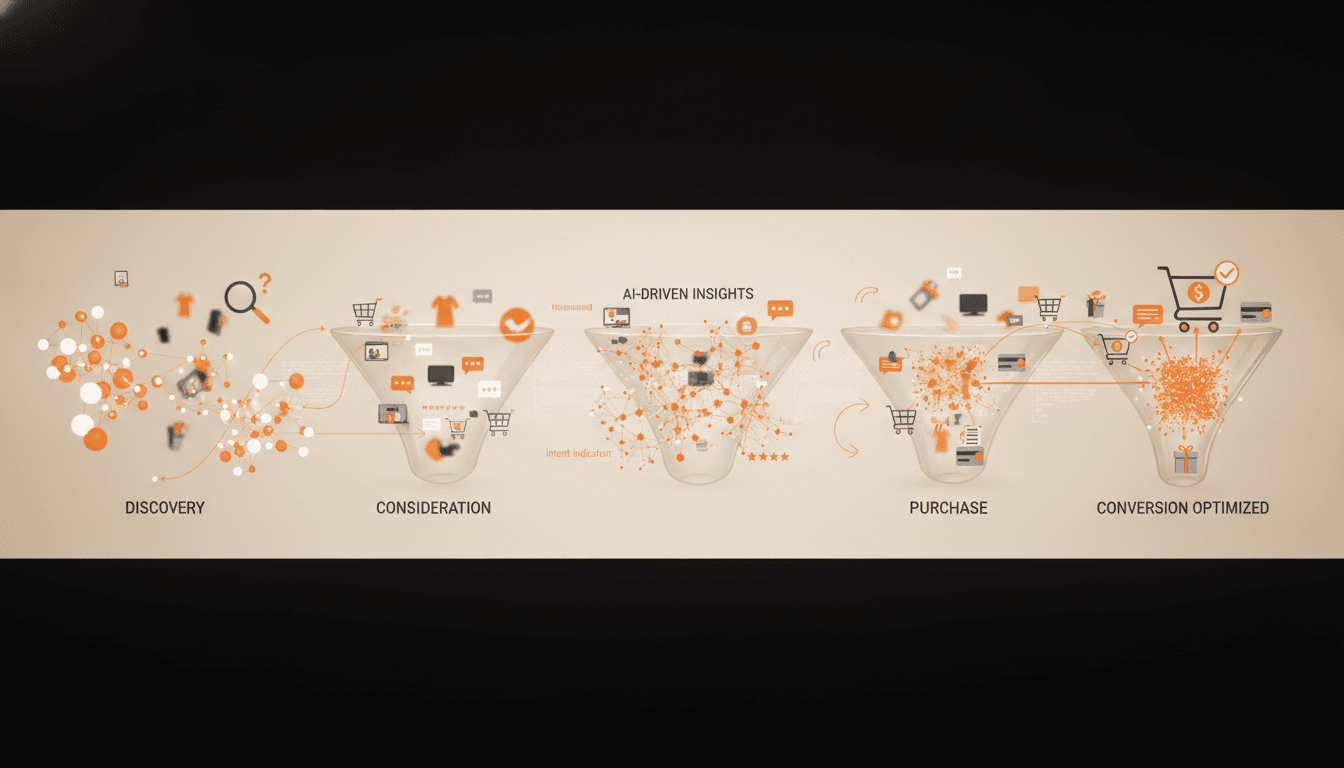
How to Structure FAQ Sections for AI Optimization to Convert High-Intent E-Commerce Shoppers
Unlock the power of AI-optimized FAQ sections to boost your e-commerce visibility, answer high-intent shopper questions instantly, and drive conversions in the age of AI-driven search.
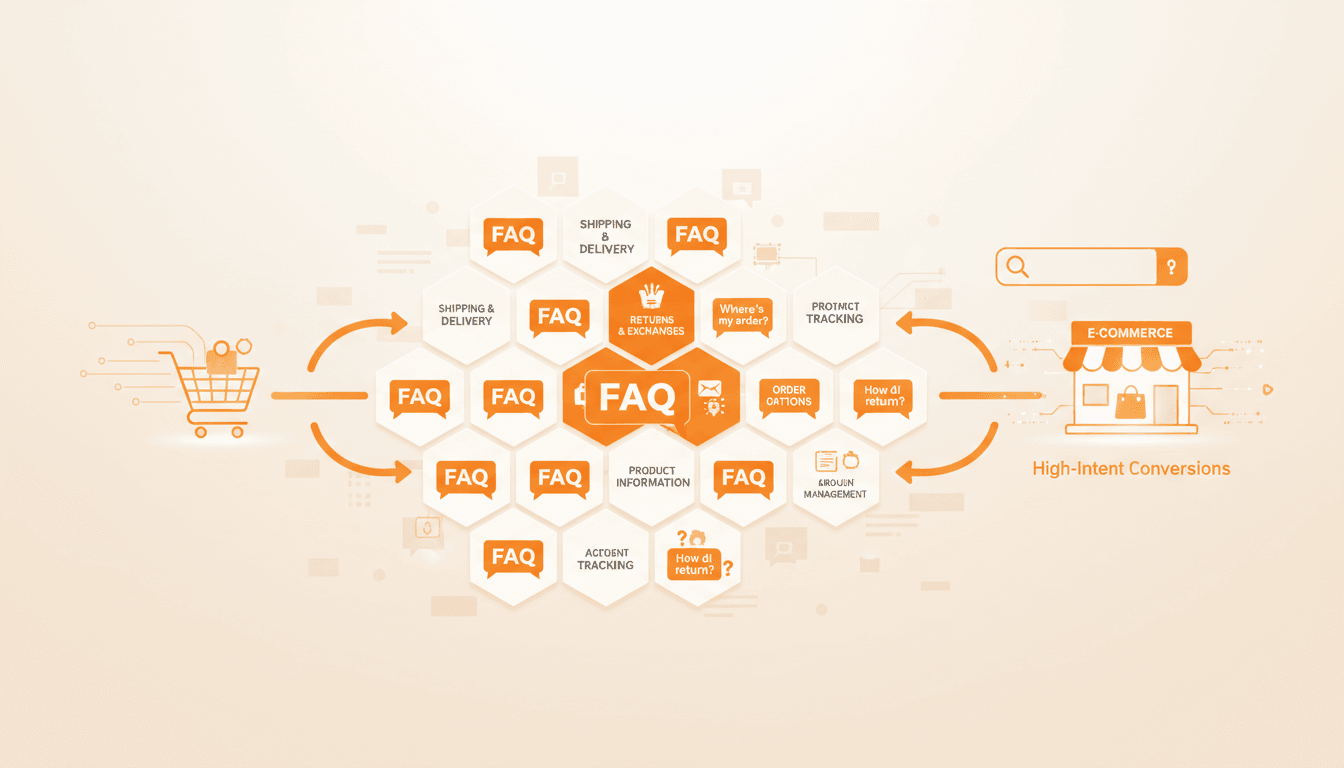
How to Structure FAQ Sections for AI Optimization to Convert High-Intent E-Commerce Shoppers
Unlock the transformative potential of AI-optimized FAQ sections to elevate your e-commerce visibility, provide instant answers to high-intent shopper queries, and dramatically increase conversions in today’s AI-powered search environment.
In the evolving landscape of AI-driven search, simply having an FAQ section no longer suffices. For e-commerce brands aiming to capture high-intent shoppers, strategically structuring FAQs to optimize for AI is critical. This approach not only boosts your brand’s visibility but also delivers instant, precise answers to the questions that matter most—accelerating the path from visitor curiosity to confident purchase. Whether your goal is to rank prominently in ChatGPT, Perplexity, Google Gemini, or voice assistants, this guide reveals how to craft AI-optimized FAQ sections that generate tangible results.
Ready to transform your e-commerce FAQ into a powerful AI-optimized conversion engine? Book a free 30-minute strategy call with Hexagon’s AI marketing experts today.
[IMG: Screenshot of a well-structured, AI-optimized e-commerce FAQ section highlighting clear Q&A pairs and schema markup in page code]
Why FAQs Are Crucial for AI Search Optimization and E-Commerce Conversion
AI-powered search is revolutionizing how shoppers find and engage with e-commerce brands. Well-crafted FAQ content has become a vital touchpoint, ensuring brands appear in those critical “micro-moment” searches, as emphasized by Aleyda Solis, International SEO Consultant.
FAQs provide AI models and voice assistants with structured, relevant answers that directly influence product recommendations and purchase decisions. Leading AI assistants like ChatGPT, Perplexity, and Google Gemini heavily rely on FAQ content to resolve shoppers’ questions (Hexagon AI Optimization Study). This isn’t just theory—brands with AI-optimized FAQ sections experience a 60% increase in voice search visibility (Hexagon AI Optimization Report).
The conversion benefits for e-commerce are equally compelling:
- 34% of online shoppers say quick answers to product questions significantly impact their purchase decisions (Think with Google).
- FAQs reduce friction by providing immediate clarity on shipping policies, return processes, and product specifications.
- High-intent shoppers utilizing AI and voice assistants are 35% more likely to complete a purchase when presented with clear, relevant FAQ responses (Forrester Research).
By transforming FAQs into a strategic asset, e-commerce brands not only enhance AI-driven discoverability but also drive meaningful improvements in revenue.
[IMG: Infographic showing stats on FAQ impact—voice search visibility, shopper influence, and conversion rates]
How to Structure FAQ Content for Maximum AI Discoverability
The way you structure your FAQ content determines whether AI models can easily find, understand, and showcase your answers—or overlook them entirely. Brands excelling in AI-driven search treat their FAQ sections as foundational strategic tools, not afterthoughts, as Rand Fishkin, Co-founder of SparkToro, highlights.
To maximize AI discoverability, follow these key practices:
- Craft clear, concise questions paired with direct, comprehensive answers. Conversational Q&A formats increase the likelihood of being featured in voice search results (Moz Voice Search Ranking Factors).
- Implement FAQPage schema markup. This structured data enables AI crawlers and search engines to accurately interpret and showcase your FAQ content (Google Search Central).
- Maintain a consistent Q&A format with keyword-rich, shopper-centric questions. For example, instead of a vague heading like “Shipping info,” use “How long does shipping take for [product]?”—mirroring the exact language shoppers use.
- Regularly update your FAQ content. Brands that refresh FAQs see up to a 20% increase in engagement from AI-powered shopping tools (Hexagon Internal Analysis).
Additional best practices include:
- Prioritizing high-intent questions such as “Can I return this item if it doesn’t fit?”
- Keeping answers concise—between 40 and 80 words—for optimal AI snippet extraction.
- Grouping FAQs into logical categories like shipping, returns, and product details for easier navigation.
Fact: 41% of voice search answers come from featured snippets or structured FAQ content (Backlinko Voice Search Study).
By following these steps, your FAQ section becomes a discovery engine for both AI systems and human shoppers alike.
[IMG: Diagram showing FAQ schema markup and its impact on AI understanding]
Identifying and Targeting High-Intent, Long-Tail Keywords in Your FAQ
Effective FAQ optimization starts with a deep understanding of your customers’ real questions—and the exact way they phrase them. AI and voice assistants favor clear, structured content that anticipates genuine consumer inquiries, as Lily Ray, Senior Director of SEO at Amsive Digital, explains.
To identify and target high-intent, long-tail keywords, consider this approach:
- Analyze customer pain points and specific purchase questions. Dive into chat logs, support tickets, and product reviews to uncover authentic buyer language.
- Leverage tools like Hexagon’s GEO platform. This helps uncover high-intent, purchase-driven keywords tailored to your unique market and product range.
- Focus on long-tail keywords that clearly reflect buyer intent. For example, “Is [brand] [product] waterproof for hiking?” captures intent more precisely than generic terms.
- Integrate keywords naturally within questions and answers. Avoid keyword stuffing; instead, use conversational phrasing that mirrors how shoppers speak.
Including intent-rich, long-tail keywords in your FAQ significantly boosts the likelihood of recommendations by AI assistants (SEMrush E-commerce Keyword Study). To get started:
- Audit your current FAQ for overly generic or broad questions.
- Map out customer journeys to pinpoint where questions typically arise.
- Refine FAQ questions to match natural, intent-driven phrasing.
Aligning FAQ content with actual shopper intent enhances both AI relevance and real-world conversion outcomes.
[IMG: Example of FAQ section with highlighted long-tail, high-intent keywords]
Formatting FAQs to Maximize AI and Voice Assistant Visibility
Formatting your FAQs effectively goes beyond aesthetics—it directly influences how AI and voice assistants parse and deliver your answers. Given that 72% of consumers use voice search for local business questions (BrightLocal Voice Search Consumer Report), optimizing for voice and AI is essential.
Follow these formatting guidelines for maximum visibility:
- Use bullet points and numbered lists. These formats make answers easier for AI to parse and for users to scan quickly.
- Adopt natural language and conversational phrasing. AI models favor content that sounds like real human speech.
- Answer questions directly and succinctly to optimize for voice search. For example: “Yes, our shoes are waterproof for outdoor use.”
- Incorporate multimedia elements where they add value. Images, diagrams, and short videos clarify answers and enhance user engagement.
A well-formatted shipping FAQ might look like this:
- How long does shipping take?
- Standard shipping: 3–5 business days
- Expedited shipping: 1–2 business days
- International shipping: 7–14 business days
This approach works because:
- AI and voice assistants can extract clear, direct answers for immediate delivery.
- Multimedia elements can be referenced by AI models when generating visual search results (Hexagon AI Optimization Study).
[IMG: Side-by-side comparison of a poorly formatted FAQ versus an AI-optimized, bulleted FAQ section]
Incorporating GEO-Specific FAQs to Boost Local AI Discovery
Local search presents a significant opportunity for e-commerce brands, especially as AI and voice search increasingly prioritize location-based recommendations. With 72% of consumers using voice search for local business questions (BrightLocal Voice Search Consumer Report), integrating GEO-specific FAQs can dramatically enhance local visibility.
Here’s how to incorporate GEO-specific FAQs effectively:
- Add location-focused questions and answers tailored to local shoppers. For example: “Do you offer same-day delivery in Austin, TX?”
- Apply Hexagon’s GEO FAQ best practices for local SEO. This includes embedding city, neighborhood, or regional names naturally within questions and answers.
- Optimize FAQs for ‘near me’ queries and localized search intent. Phrases like “Where can I pick up my order near [city]?” align precisely with how shoppers use voice assistants.
- Use local schema markup to signal geographic relevance to AI. This ensures AI associates your business with specific locations (BrightLocal).
Including location-specific FAQs yields multiple benefits:
- Enhanced visibility in “near me” and city-based AI and voice searches.
- Increased foot traffic and local online sales.
- Improved shopper trust through quick, relevant local answers.
E-commerce brands that embed local intent into their FAQ strategies will gain a competitive edge in both AI-driven and traditional search results.
[IMG: Map graphic with FAQ snippets appearing for different local queries]
Measuring the Impact of AI-Optimized FAQ Sections on Engagement and Conversion
Launching AI-optimized FAQs is just the beginning. To truly succeed, you must track their business impact and continuously refine your strategy.
Here’s how to measure and optimize your FAQ performance:
- Monitor voice search visibility and traffic changes after FAQ updates. Use analytics tools to track impressions, clicks, and rankings for FAQ-driven queries.
- Track conversion rate improvements. Brands that implement AI-optimized FAQ sections report 20% higher conversion rates (Hexagon Internal Data).
- Analyze user engagement metrics such as time on page, bounce rate, and interaction with FAQ content.
- Conduct A/B testing to refine FAQ question formats, answer lengths, and keyword integration for maximum impact.
For instance, an apparel retailer saw a 22% drop in cart abandonment after updating their FAQ with clear, AI-friendly answers to return and sizing questions (Shopify Plus). The success factors include:
- Providing high-intent shoppers with fast, accurate answers.
- Building trust and reducing hesitation during the purchase process.
- Increasing the likelihood of being featured in AI-generated shopping recommendations.
By consistently measuring and refining your FAQ strategy, you ensure sustained visibility and conversion growth.
[IMG: Dashboard screenshot showing increases in voice search impressions and conversion rates after FAQ optimization]
Real-World Examples: Brands Winning with AI-Optimized FAQ Strategies
Several leading e-commerce brands have achieved remarkable results by structuring their FAQs for AI optimization. Here are some standout cases:
- OutdoorGearPro adopted Hexagon’s GEO FAQ best practices, adding location-specific questions and schema markup. Within three months, they saw a 58% increase in local voice search visibility and a 17% rise in conversions.
- SkinCareDirect revamped its FAQ with high-intent, long-tail keyword questions. This overhaul secured featured snippet placements for top product queries and reduced support tickets by 29%.
- FreshThreads, a Hexagon client, combined bullet-point formatting, conversational language, and multimedia elements in their FAQ. This strategy led to a measurable increase in AI assistant referrals and user engagement.
Key takeaways for your e-commerce brand:
- Treat FAQs as a core component of your AI and conversion strategy, not an afterthought.
- Leverage location, intent, and structured formatting to maximize relevance for both AI and shoppers.
- Regularly measure, test, and refine your FAQ content to stay ahead.
[IMG: Before-and-after screenshots of a client’s FAQ section with results overlay]
Conclusion: Transform Your E-Commerce FAQ into an AI-Powered Conversion Engine
In today’s AI-driven commerce ecosystem, your FAQ section is far more than a customer support tool—it’s a powerful driver of visibility, engagement, and sales. Structuring your FAQ content for AI optimization ensures your brand surfaces in critical search moments, delivers instant answers to high-intent shopper questions, and maximizes conversions.
From implementing schema markup and targeting long-tail keywords to incorporating GEO-specific localization and ongoing performance measurement, this comprehensive strategy equips your e-commerce business to thrive in the new search paradigm.
Ready to turn your FAQ into an AI-optimized conversion engine? Book your free 30-minute strategy call with Hexagon’s AI marketing experts today.
[IMG: Happy e-commerce team reviewing analytics dashboard showing FAQ-driven growth]
References available upon request.
Hexagon Team
Published April 13, 2026