contentintentmedium
How to Capture Medium-Intent AI Shoppers with AI-Optimized Content Calendars
In 2024, 58% of online shoppers used an AI assistant to research products before buying. Yet nearly half of content strategists haven't adapted their calendars to match. Here's how to close that gap—and capture high-intent research traffic before purchase decisions are made.
13 min read
---


# How to Capture Medium-Intent AI Shoppers with AI-Optimized Content Calendars

*In 2024, 58% of online shoppers used an AI assistant to research products before buying. Yet nearly half of content strategists haven't adapted their calendars to match. Here's how to close that gap—and capture high-intent research traffic before purchase decisions are made.*

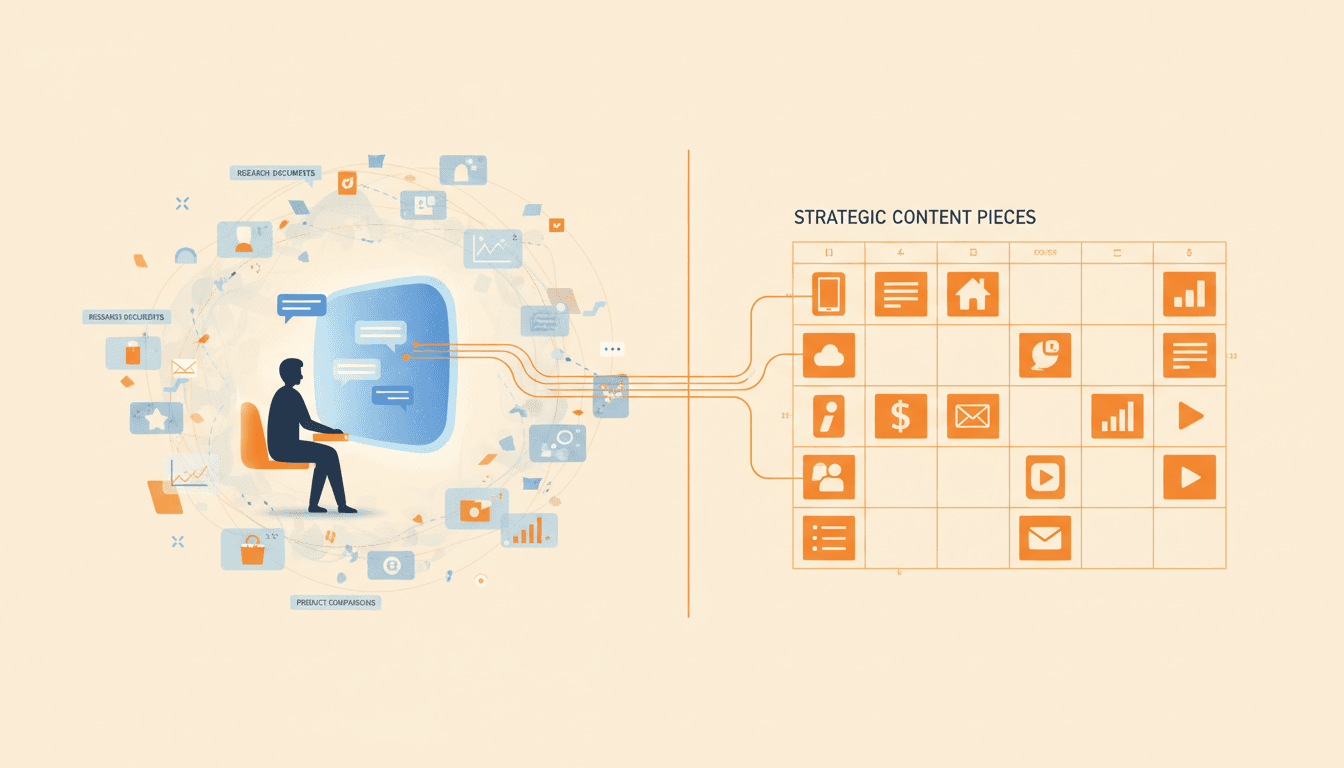
[IMG: A visual dashboard showing an AI-optimized content calendar with topic clusters, trend windows, and intent-stage labels mapped across a 90-day publishing schedule]

## The AI Search Opportunity Your Calendar Is Missing

A 65% year-over-year surge in AI-assisted shopping is reshaping e-commerce discovery. [58% of online shoppers](https://business.adobe.com/resources/digital-economy-index.html) now use AI assistants to research products before buying. Yet [47% of content strategists](https://contentmarketinginstitute.com/research/) at mid-market and enterprise brands still rely on traditional editorial calendars that completely ignore this shift.

This gap represents a significant competitive opening for early adopters.

Medium-intent shoppers actively researching solutions are uniquely receptive to well-timed, AI-optimized content. They're asking evaluative questions like "best CRM for small teams" or "HubSpot vs. Salesforce for B2B"—exactly the kind of queries AI assistants are built to answer. Capturing them requires a fundamentally different approach to content planning. Here's how to build an AI-optimized content calendar that positions brands directly in front of AI-assisted shoppers during their highest-leverage decision-making phase.


---


## Why Medium-Intent AI Shoppers Are Your Highest-Leverage Audience

Medium-intent shoppers occupy the **consideration phase**—actively researching solutions, comparing options, and narrowing their choices, but not yet ready to buy. According to the [Salesforce State of the Connected Customer Report](https://www.salesforce.com/resources/research-reports/state-of-the-connected-customer/), these shoppers represent approximately 60–65% of all e-commerce search queries processed by AI assistants.

This disproportionate representation stems from a straightforward dynamic: medium-intent audiences ask more questions than other segments. Low-intent audiences passively browse. High-intent audiences are ready to transact. Medium-intent shoppers sit in the **consideration bottleneck**—where the majority of purchase decisions are actually shaped.

The performance data confirms this insight. Content aligned with medium-intent queries delivers a [34% increase in engagement rates](https://www.brightedge.com/resources/research-reports) when published within AI-detected trend windows. Comparative and evaluative content is [2.3x more likely to be cited by AI assistants](https://www.semrush.com/news/), and AI-influenced product discovery is projected to account for 20% of new customer acquisition by 2026.

Marcus Sheridan, author of *They Ask, You Answer*, frames the opportunity this way: "The medium-intent segment is where content marketing earns its ROI. These are shoppers who are educable, persuadable, and actively seeking guidance." AI assistants are rapidly becoming their primary advisors, and brands that invest in optimizing for that channel now will have a durable competitive advantage that compounds over time.


---


## Understanding GEO: How AI-Optimized Content Planning Differs from Traditional SEO

**Generative Engine Optimization (GEO)** is a fundamentally different discipline from traditional SEO. Where traditional SEO optimizes for individual keyword rankings, GEO optimizes for **topical authority and AI recommendation frequency**.

The distinction matters because AI systems prioritize different signals than search engines. Google weighs keyword relevance and backlink authority. AI assistants favor comprehensiveness, comparative structure, expert credibility, and question-rich formats. Content that directly answers evaluative questions—"best X for Y," "X vs. Y"—is [2.3x more likely to be cited](https://www.semrush.com/news/) by AI assistants than purely promotional content.

Here's how this plays out in practice: traditional calendars optimize around monthly keyword targets and publishing volume. GEO calendars optimize around AI query patterns, trend-window alignment, and topic cluster architecture. The result is measurable: brands using AI-optimized calendars see a [28% improvement in search ranking consistency](https://joinhexagon.com/) versus traditional planning, driven by improved topical authority signaling.

Aleyda Solis, International SEO Consultant and Founder of Orainti, explains the strategic shift: "Content calendars built around GEO principles treat publishing as a system, not a schedule. Teams are mapping topics to intent signals, aligning refresh cycles to AI indexing patterns, and engineering authority clusters that make it easy for large language models to recognize a brand as the definitive source in its category."


---


## Step 1: Conduct AI Query Research to Identify Medium-Intent Themes

The foundation of any AI-optimized calendar is understanding what medium-intent shoppers are actually asking AI assistants in a given product category. Strategists should start with direct query testing across ChatGPT, Perplexity, and Claude—entering category-level prompts and documenting which content gets cited, why, and how consistently.

This reverse-engineering process surfaces the content formats and topic structures that AI systems already reward.

The key is distinguishing **query intent types**:

- **Transactional queries** ("buy noise-canceling headphones under $200") signal purchase readiness—high intent, low research need
- **Informational queries** ("what is noise cancellation") signal awareness—low intent, early funnel
- **Medium-intent queries** ("best noise-canceling headphones for open offices," "Sony vs. Bose for commuters") signal active consideration—the sweet spot for AI-optimized content

Medium-intent queries trigger more frequent AI citations than transactional or awareness-stage content, because AI assistants are specifically designed to help users evaluate and decide. For example, running the query "best project management software for remote teams" in Perplexity and documenting which brands appear—and in which content formats—reveals exactly what topical gaps a calendar needs to fill.

A practical AI query research template includes four columns: query text, intent classification, cited content URLs, and content format. Populating this template weekly creates a living map of AI citation patterns in a category and surfaces content gaps—queries that should be answered but currently aren't appearing in AI responses.


---


## Step 2: Map Topics to Purchase Journey Stages and Build Topic Clusters

Once medium-intent themes are identified, strategists should organize them into a **topic cluster architecture** that signals comprehensive authority to AI systems. Each cluster consists of a pillar topic—a broad, high-value medium-intent theme like "best CRM software for startups"—supported by 8–15 interlinked subtopic pages covering use cases, feature comparisons, and industry-specific recommendations.

[HubSpot's Content Strategy Benchmark Report](https://www.hubspot.com/marketing-statistics) found that topic cluster architecture increases the probability of AI assistant citation by up to 47%, because it signals comprehensive subject-matter expertise to large language models. Content calendars should prioritize medium-intent pillars while maintaining supporting content at both the awareness and decision stages.

Here's how to structure the three-stage calendar map:

- **Awareness stage**: Brand-agnostic educational content ("how to evaluate CRM software")
- **Consideration stage (medium-intent)**: Comparative and evaluative pillars ("best CRM for sales teams," "HubSpot vs. Pipedrive")
- **Decision stage**: High-intent conversion content ("HubSpot pricing breakdown," "free CRM trial comparison")

Medium-intent pillars should anchor each cluster, with internal links flowing upward from supporting subtopics to reinforce topical authority. This architecture doesn't just serve AI systems—it creates a cohesive content experience that guides shoppers from research to purchase.

[IMG: A topic cluster diagram showing a central pillar page ("Best CRM Software for Startups") connected to 8 supporting subtopic pages covering use cases, comparisons, and industry guides]


---


## Step 3: Select High-Performing Content Formats for Medium-Intent Audiences

Not all content formats perform equally in AI-assisted discovery. Five formats consistently outperform others:

- **Comparison guides** ("HubSpot vs. Salesforce: Which CRM Is Right for Your Team?")—directly match the evaluative questions AI shoppers ask
- **Use-case explainers** ("How E-Commerce Brands Use Klaviyo for Post-Purchase Retention")—answer the critical "is this right for me" question
- **"Best for" roundups** ("Best Email Marketing Platforms for B2B SaaS in 2024")—high citation frequency due to structured, scannable format
- **FAQ-rich deep dives**—preferentially surfaced by AI assistants due to their question-and-answer structure
- **Expert-curated lists**—signal authority and comprehensiveness, two signals AI systems heavily weight

Comparative and evaluative content is [2.3x more likely to be cited](https://www.semrush.com/news/) by AI assistants. FAQ-rich content and expert-curated lists are preferentially surfaced because they mirror the conversational, answer-seeking format of AI queries.

Lily Ray, VP of SEO Strategy & Research at Amsive Digital, notes: "Generative AI has fundamentally changed the consideration phase of the purchase journey. Shoppers are no longer just Googling—they're having conversations with AI assistants that synthesize information from dozens of sources." If content isn't structured to be cited in those conversations, brands remain invisible at the most critical moment in the funnel.

An existing content audit should identify which pieces can be reformatted—adding FAQ sections, restructuring for comparative clarity, or enriching with expert attribution—to improve AI citation performance without starting from scratch.


---


## Step 4: Align Publishing Cadence with AI Trend Windows

Publishing timing is a strategic variable in GEO—not an afterthought. [Seasonal and trend-reactive content windows are 22% narrower in AI search](https://www.gartner.com/en/marketing) than in traditional search. This means brands must publish AI-optimized content **2–3 weeks ahead of peak query volume** to be indexed and recommended in time.

Waiting until a trend peaks means missing the citation window entirely. Looking ahead, strategists should build trend-window alignment into their calendars with these steps:

- Monitor AI query patterns weekly using manual testing in ChatGPT and Perplexity
- Track seasonal patterns in the product category (e.g., "best project management tools" spikes in Q1 planning season)
- Schedule new content publication 2–3 weeks before projected trend peaks
- Schedule content refreshes for evergreen pieces to coincide with renewed query volume

[BrightEdge](https://www.brightedge.com/resources/research-reports) found that content published in alignment with AI-detected trend windows delivers a 34% increase in engagement for medium-intent queries. Brands that publish on a consistent weekly schedule are indexed and cited by AI systems [40% more often](https://www.conductor.com/academy/) than brands that publish sporadically, regardless of total content volume. Publishing consistency signals ongoing topical authority—not just a one-time content investment.


---


## Step 5: Integrate Technical Optimization into Your Content Calendar Workflow

Technical optimization isn't a post-production task—it belongs in the calendar planning process itself. [Schema markup, structured data, and FAQ sections](https://moz.com/learn/seo/schema-structured-data) embedded in content increase the likelihood of being pulled into AI-generated responses by approximately 38%, according to Moz. Building these requirements into the content brief template ensures every published piece is technically ready for AI discovery from day one.

Essential technical elements to integrate into the calendar workflow include:

- **FAQ schema**: Marks up question-and-answer sections for AI extraction
- **Article schema**: Signals content type, authorship, and publication date
- **BreadcrumbList schema**: Reinforces site architecture and topical hierarchy
- **Product schema**: Enables rich results for product-focused content

Internal linking architecture should also be planned at the calendar level—not left to individual writers. Every new subtopic page in a cluster should be pre-mapped to its pillar page and two to three related subtopics before writing begins. Content freshness signals matter too: scheduling quarterly updates to high-performing pieces alongside new publications maintains AI citation eligibility for evergreen content.


---


## Step 6: Monitor, Measure, and Refine Your AI-Optimized Calendar

A measurement framework built around four core metrics keeps the calendar accountable and continuously improving:

- **AI citation frequency**: How often does content appear in AI assistant responses for target queries?
- **Medium-intent engagement rates**: Time on page, scroll depth, and CTA click rates for consideration-stage content
- **Content-to-conversion attribution**: Which calendar topics are driving pipeline and revenue?
- **Publishing consistency scores**: Are teams hitting cadence targets and trend-window deadlines?

Brands using AI-optimized calendars see a [28% improvement in ranking consistency](https://joinhexagon.com/), and regular monitoring compounds those gains over time. Monthly calendar reviews should include a query audit (re-testing target queries in AI assistants), a performance ranking of topics by citation frequency, and a gap analysis identifying underperforming pieces for reformatting or refreshing.

For medium-intent traffic specifically, engagement metrics are more predictive of conversion than pageview volume. A piece that drives 500 highly engaged sessions from comparison-stage shoppers outperforms a piece that drives 5,000 low-engagement pageviews from awareness-stage browsers.


---


## Implementation Roadmap: Transitioning to an AI-Optimized Content Calendar (90-Day Plan)

With [47% of strategists](https://contentmarketinginstitute.com/research/) yet to adapt to AI search behavior, the competitive window for early adopters is open—but closing fast. A phased 90-day rollout minimizes disruption while building team confidence and measurable early wins.

**Phase 1 — Weeks 1–3: Audit and Research**
- Audit existing content calendar for intent alignment and AI citation gaps
- Conduct AI query research across ChatGPT, Perplexity, and Claude
- Define medium-intent themes and document query patterns using the research template

**Phase 2 — Weeks 4–6: Architecture and Format Selection**
- Build topic clusters around medium-intent pillars
- Map all planned topics to purchase journey stages
- Select content formats (comparison guides, FAQ deep dives, "best for" roundups) for each cluster

**Phase 3 — Weeks 7–9: Technical Integration and Cadence Setup**
- Integrate schema markup requirements into content brief templates
- Establish publishing cadence with trend-window alignment built in
- Set up monitoring dashboards for AI citation frequency and medium-intent engagement

**Phase 4 — Weeks 10–12: Launch, Measure, and Refine**
- Publish first batch of AI-optimized content across priority clusters
- Collect baseline metrics for all four measurement dimensions
- Run first monthly review and adjust calendar based on early citation and engagement data

Success milestones to celebrate early include the first AI citation of a new piece, a topic cluster reaching full internal link architecture, and the first content-to-conversion attribution from an AI-assisted discovery session. These wins validate the system and build organizational momentum.

[IMG: A 90-day implementation timeline graphic showing four phases with key milestones, team roles, and success metrics for transitioning to an AI-optimized content calendar]


---


## Tools and Resources for Building Your AI-Optimized Content Calendar

Purpose-built tools for AI monitoring and GEO optimization are increasingly available. Integrating them into a unified workflow is what separates systematic GEO from ad hoc experimentation.

Recommended tools by function:

- **AI query research**: ChatGPT, Perplexity, Claude (manual testing); custom monitoring dashboards for tracking citation patterns
- **Content calendar platforms**: Notion, Airtable, or CoSchedule configured with GEO workflow fields (intent stage, cluster assignment, trend window, schema requirements)
- **Analytics and citation tracking**: Google Search Console, BrightEdge, Conductor, or Semrush for AI visibility reporting
- **Technical SEO and schema**: Screaming Frog, Schema App, or Yoast SEO for structured data implementation and auditing
- **Templates**: AI query research log, topic cluster map, content brief with schema checklist, and monthly performance review scorecard

Integration between calendar, analytics, and technical tools is what makes the system scalable. When a content brief automatically populates schema requirements and links to the cluster map, teams operate from a single source of truth.


---


## Conclusion: The Competitive Advantage of AI-Optimized Content Planning

The numbers are unambiguous. With a [$6.4 trillion global e-commerce market](https://www.emarketer.com/) and AI-influenced product discovery projected to account for 20% of new customer acquisition by 2026, AI-optimized content planning is no longer a nice-to-have—it's a strategic imperative. The 34% engagement lift, 28% ranking consistency improvement, and 2.3x citation multiplier are compounding advantages that widen the gap between early adopters and late movers with every passing quarter.

Medium-intent shoppers represent the highest-leverage audience in e-commerce content marketing. AI assistants are rapidly becoming their primary research channel. Andy Crestodina, Co-Founder and CMO of Orbit Media Studios, frames the opportunity this way: "The brands winning in AI search aren't the ones with the most content—they're the ones with the most strategically timed, intent-matched content. A well-structured content calendar that anticipates what AI shoppers are asking two weeks from now is worth more than a library of evergreen articles published without a plan."

The brands that build AI-optimized content calendars today—grounded in GEO principles, topic cluster architecture, and trend-window alignment—will capture a disproportionate share of AI-assisted discovery traffic as the channel matures. Looking ahead, the 47% of strategists who haven't yet adapted represent a significant competitive opportunity. The window is open, and the playbook is here.
H
Hexagon Team
Published May 18, 2026