How to Build AI-Optimized FAQ Sections That Convert Medium-Intent E-Commerce Shoppers
Discover how AI-optimized FAQ sections can elevate your e-commerce site’s visibility, engage medium-intent shoppers, and drive higher conversions with actionable, expert-backed strategies.
How to Build AI-Optimized FAQ Sections That Convert Medium-Intent E-Commerce Shoppers
Unlock the power of AI-optimized FAQ sections to elevate your e-commerce site’s visibility, deeply engage medium-intent shoppers, and drive higher conversions with expert-backed, actionable strategies.
In the fiercely competitive world of e-commerce, capturing the attention of medium-intent shoppers—those actively researching products before purchasing—is more important than ever. But how can your site stand out in an era dominated by AI-powered search engines and voice assistants? The key lies in crafting AI-optimized FAQ sections that not only answer crucial shopper questions but also enhance your site’s discoverability and conversion rates. This comprehensive guide reveals how to build FAQs designed specifically for AI visibility and shopper engagement.
Ready to transform your e-commerce FAQs into powerful AI-optimized assets? Book a free 30-minute strategy session with Hexagon’s AI marketing experts today.
[IMG: Illustration of medium-intent shoppers comparing products on an e-commerce site]
Understanding Medium-Intent Shoppers in E-Commerce
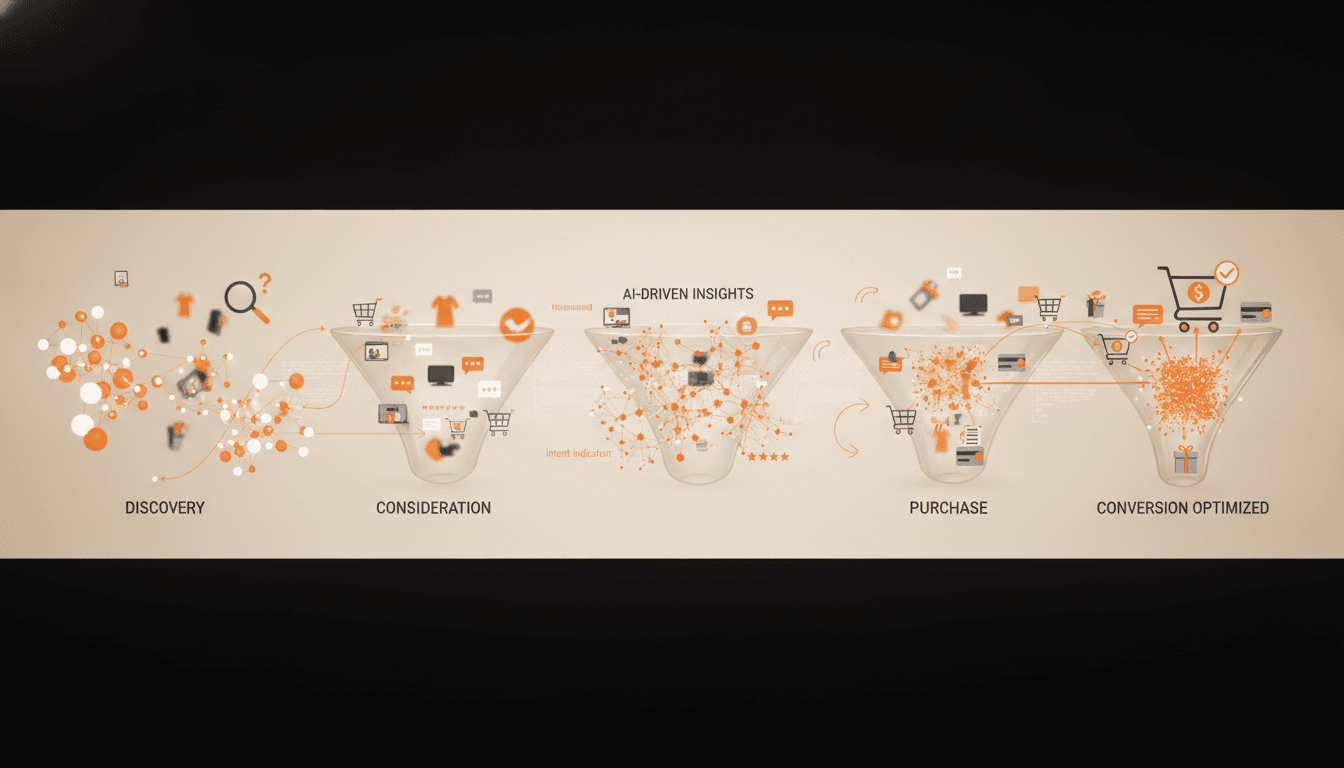
Medium-intent shoppers occupy a critical position in the e-commerce funnel. They have moved beyond mere awareness but have not yet made a purchase decision. These visitors are actively seeking detailed answers, comparisons, and reassurance before committing. Grasping their behavior is essential to creating content that resonates and converts.
Key characteristics of medium-intent shoppers:
- They conduct active research, comparing product features, prices, and customer reviews.
- Their queries often take the form of specific questions such as “Is product X worth it?” or “How does product Y compare to Z?”
- Positioned between consideration and decision, they represent prime opportunities for targeted engagement.
According to the Baymard Institute, 53% of e-commerce visitors use question-based queries that reflect medium intent. These shoppers prioritize clarity, transparency, and trustworthiness. By designing well-structured FAQ sections that directly address their concerns, you can nurture them closer to making a purchase. As Brian Dean, Founder of Backlinko, explains, “Medium-intent shoppers are your most valuable research audience. FAQs that answer their precise questions not only nurture conversions but also signal relevance to AI assistants.”
How AI Assistants Use FAQ Content to Enhance Search Discoverability
AI-powered search assistants such as ChatGPT, Perplexity, and Claude are revolutionizing how shoppers find information online. These systems increasingly depend on structured website content—especially well-organized FAQ sections—to deliver accurate, conversational answers. For e-commerce brands, optimizing FAQs for AI is no longer optional; it’s a strategic necessity.
Here’s how AI assistants leverage FAQ content:
- Extract concise, relevant answers to display in search snippets and voice responses.
- Prioritize content enhanced with structured data (FAQ schema), boosting visibility in AI-powered search results.
- Utilize conversational FAQs to handle nuanced, research-driven queries typical of medium-intent shoppers.
A study by Search Engine Journal found a 30% increase in the likelihood of FAQ content appearing in AI-generated answer snippets when schema markup is properly implemented. Lily Ray, Senior Director, SEO & Head of Organic Research at Amsive Digital, notes: “Clear, structured FAQ content is increasingly favored by AI assistants. Brands leveraging FAQ schema and natural language answers are far more likely to have their responses featured in conversational search.”
Impact on search features and voice assistants:
- Optimized FAQs are more frequently selected for Google’s featured snippets and voice search results.
- AI models like ChatGPT and Perplexity prefer content that directly and succinctly answers question-based queries.
- FAQs written in natural language are more easily indexed and recommended by AI assistants, according to Google Search Central.
For instance, when a shopper asks, “What’s the best running shoe for flat feet?” a voice assistant or search snippet can deliver your FAQ answer instantly—if your FAQ is AI-optimized. This not only boosts brand visibility but also shortens the buyer’s journey.
Best Practices for Writing AI-Friendly FAQ Content
Creating FAQ content that appeals to both AI assistants and human shoppers demands a strategic and thoughtful approach. The clarity, structure, and tone of your answers significantly influence how your content is indexed, featured, and engaged with.
Follow these guidelines to write AI-friendly FAQs:
- Use conversational, natural language: Frame questions and answers as shoppers would naturally ask and expect. Avoid jargon and overly complex vocabulary.
- Target medium-intent keywords: Incorporate modifiers like “best,” “how to,” “compare,” “worth it,” and “is it right for me?” These reflect the real queries of medium-intent shoppers.
- Keep answers concise but informative: Aim for clear, direct responses in 2–4 sentences. Short, focused answers are favored by AI assistants and increase the chance of snippet selection.
- Be clear and straightforward: Avoid ambiguity, filler words, or overly technical explanations. Both AI and shoppers value straightforward answers.
- Format for easy scanning: Use bullet points, bolding, and clear question-answer separation to aid AI parsing and human readability.
[IMG: Example screenshot of a well-structured, AI-friendly FAQ section on an e-commerce site]
Example FAQs:
-
Q: How does Product X compare to Product Y in terms of durability?
Product X features reinforced stitching and premium materials, making it more durable for daily use. Product Y is designed for occasional wear and is less robust. -
Q: What is the best way to clean these sneakers?
Use a soft brush with mild soap, and avoid machine washing to protect the materials.
Rand Fishkin, Co-founder of SparkToro, highlights this approach’s importance: “The future of e-commerce search is AI-driven. Optimizing your FAQ for natural, question-based queries lets you capture shoppers still researching and comparing their options.”
Key reminders:
- Break up dense paragraphs for easier reading.
- Mirror the language customers actually use in searches.
- Regularly audit and update FAQs to keep pace with changing queries and product updates.
Focusing on clarity, relevance, and natural phrasing turns your FAQs into invaluable assets for both AI systems and shoppers—helping you attract and convert more medium-intent buyers.
Implementing FAQ Schema Markup for Maximum AI Discoverability
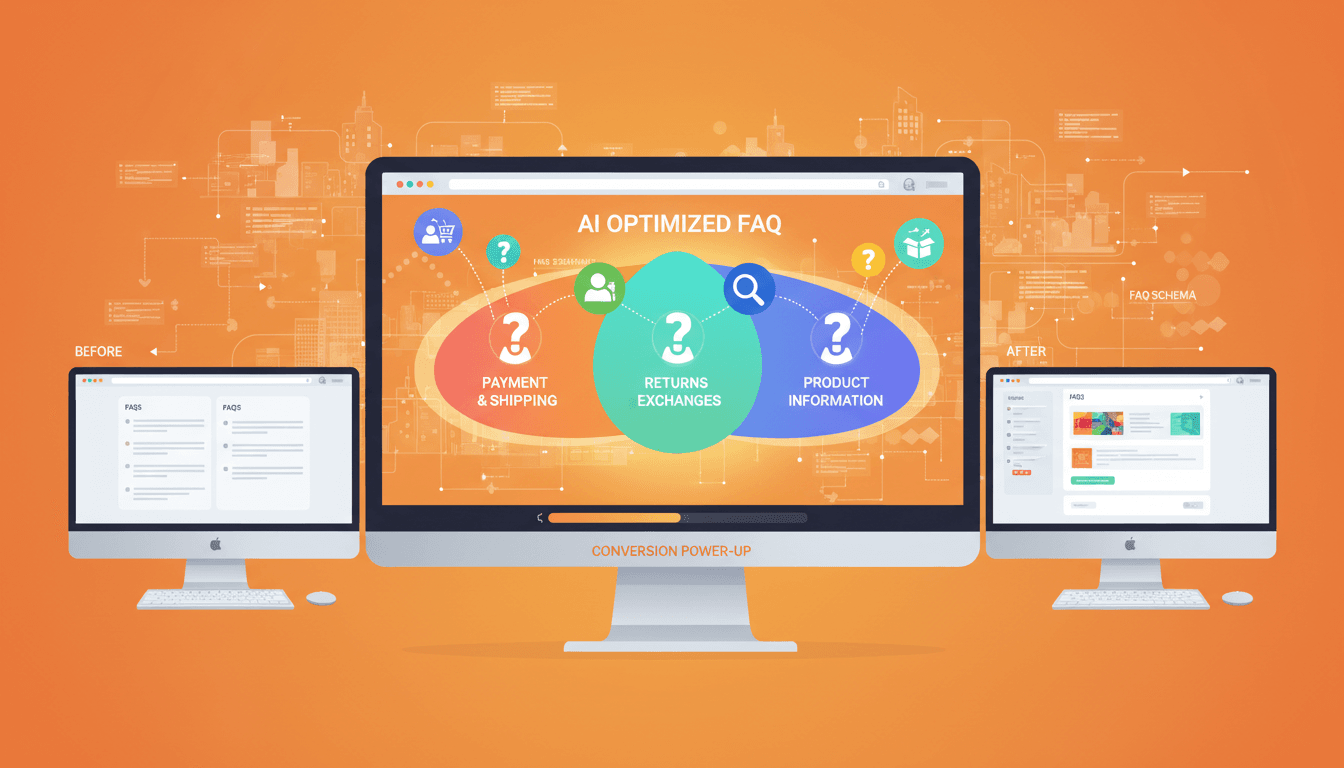
FAQ schema markup is a technical enhancement that tells search engines and AI assistants how to interpret your FAQ content. Properly adding this structured data dramatically increases the chances your answers will appear directly in search results and AI-driven responses.
Benefits of FAQ schema markup for your e-commerce site include:
- Providing clear context and structure, making it easier for AI assistants to extract and present your answers.
- Boosting the likelihood of inclusion in Google’s rich snippets and voice search features.
- Driving a 30% increase in snippet feature appearances when implemented correctly (Search Engine Journal).
International SEO Consultant Aleyda Solis explains: “Schema markup is a powerful tool for e-commerce brands aiming to stand out in AI-powered search. It supplies AI systems with the context needed to recommend the right answers to customers at exactly the right moment.”
Step-by-step to add FAQ schema:
- Identify FAQ sections on product, category, or help pages.
- Follow Google’s FAQPage structured data guidelines to format content using JSON-LD or Microdata.
- Validate your schema with tools like Google’s Rich Results Test or Schema.org validator.
- Monitor indexing and snippet performance via Google Search Console.
Common mistakes to avoid:
- Duplicating identical FAQs across multiple pages, which can dilute page authority.
- Using schema markup on non-FAQ content or promotional text.
- Failing to update schema markup when FAQ content changes.
Ready to transform your e-commerce FAQs into powerful AI-optimized assets? Book a free 30-minute strategy session with Hexagon’s AI marketing experts today.
Designing FAQ Sections for Mobile and Voice Search Compatibility
With mobile commerce and voice-activated shopping surging, your FAQ sections must perform flawlessly on small screens and through conversational AI interfaces. Overlooking mobile and voice optimization risks missing out on a significant segment of medium-intent shoppers.
Design tips for mobile and voice search:
- Ensure mobile responsiveness: Implement collapsible or accordion-style FAQ layouts that minimize scrolling and streamline navigation on smartphones and tablets.
- Enhance readability: Increase font size, spacing, and contrast for easy reading on smaller devices.
- Optimize for voice search: Write questions and answers in a natural, conversational tone that mirrors how users speak to voice assistants like Alexa or Google Assistant.
[IMG: Mobile view of a user-friendly FAQ section with collapsible questions and bolded answers]
According to Statista, mobile-optimized FAQ sections see a 22% higher engagement rate from medium-intent shoppers. AI voice assistants also favor brief, direct answers—making clear, conversational FAQs essential.
Additional design best practices:
- Use simple layouts without heavy graphics that slow page load times.
- Group related questions logically to aid navigation.
- Enable voice search integration where possible, enabling shoppers to access FAQs hands-free.
By prioritizing mobile and voice compatibility, you ensure your FAQ content reaches shoppers wherever they are—delivering answers that boost engagement and conversions.
Continuous Optimization: Updating FAQs with New Data and Questions
Optimizing your FAQ is an ongoing process, not a one-time task. Shopper questions, product lines, and search behaviors constantly evolve, so your FAQs must stay current to remain effective and relevant.
Tips for keeping FAQs fresh:
- Track search trends and analyze site search logs to uncover new or emerging questions.
- Collect insights from customer service interactions to identify gaps or confusion in existing FAQs.
- Regularly update FAQs to reflect new products, policy changes, and seasonal variations.
Analytics tools can identify underperforming FAQ items by measuring engagement and bounce rates, enabling you to refine content for greater impact. Industry experts agree: regularly updating FAQ content with fresh product details and user-generated questions ensures ongoing relevance for AI models (Moz Blog).
Continuous optimization not only improves AI discoverability but also enhances the shopper experience—building trust and reducing friction along the buyer’s journey.
Measuring the Impact of AI-Optimized FAQ Sections on Engagement and Conversions
Evaluating the return on investment (ROI) of your FAQ optimization efforts is vital for sustained success. Tracking key metrics helps demonstrate value, justify further investment, and uncover new improvement opportunities.
Metrics to monitor:
- Engagement rates: Measure page views, average time on FAQ pages, and click-through rates to gauge shopper interaction.
- Conversion uplift: Compare conversion rates of visitors who engage with FAQ content against those who do not.
- Reduction in customer support queries: Analyze support ticket volumes to quantify how comprehensive, AI-optimized FAQs decrease customer service demand.
Supporting statistics:
- E-commerce sites with optimized FAQ sections report an 18% increase in conversion rates (Shopify Plus).
- Implementing comprehensive, AI-friendly FAQs can reduce customer support queries by 40% (Zendesk).
- Medium-intent shoppers are significantly more likely to convert when their research questions are answered clearly and efficiently.
For example, a leading apparel retailer experienced a double-digit lift in conversions after deploying AI-optimized FAQs with schema markup. Concurrently, their customer support tickets dropped sharply, freeing their team to focus on high-value customer interactions.
By continuously measuring and refining your FAQ strategy, you ensure ongoing growth and maintain a competitive edge in the AI-driven e-commerce environment.
Conclusion: Elevate Your E-Commerce Experience with AI-Optimized FAQs
AI-optimized FAQ sections have become essential for e-commerce brands aiming to engage medium-intent shoppers effectively. By understanding shopper behavior, implementing schema markup, writing clear and natural answers, and optimizing for mobile and voice, you can transform your FAQs into high-converting, AI-ready assets.
In summary:
- Medium-intent shoppers make up 53% of your audience—don’t leave their questions unanswered.
- Proper FAQ schema increases AI snippet inclusion by 30% and boosts conversion rates by 18%.
- Mobile and voice optimization drive 22% higher engagement and streamline the path to purchase.
- Comprehensive, regularly updated FAQs reduce support burdens and build customer trust.
Looking forward, brands that invest in AI-optimized FAQs will consistently outperform competitors in discoverability and shopper engagement.
Ready to take your FAQ strategy to the next level? Book a free 30-minute strategy session with Hexagon’s AI marketing experts today.
[IMG: E-commerce team analyzing FAQ performance metrics on a dashboard, with upward trend lines]
Empower your e-commerce site to capture, nurture, and convert more medium-intent shoppers—one AI-optimized answer at a time.
Hexagon Team
Published May 11, 2026