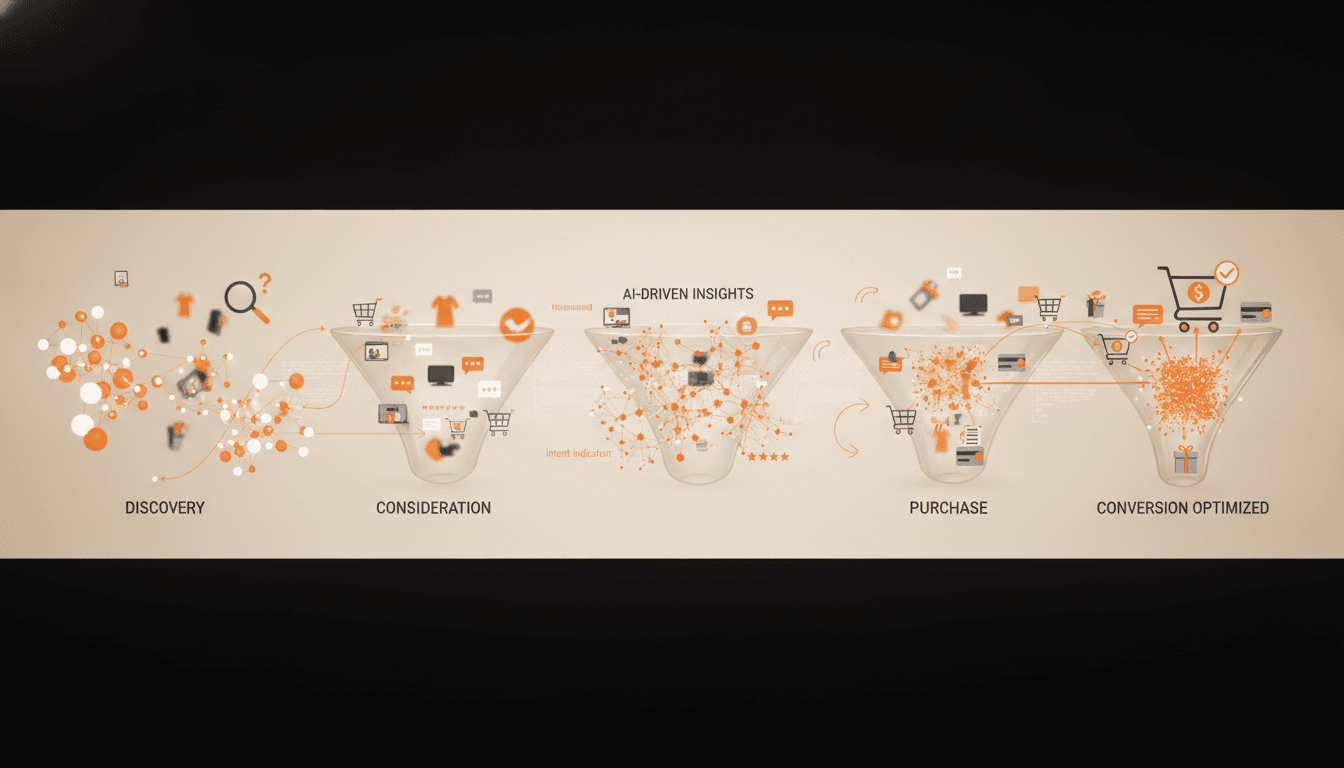
How Medium-Intent AI Search Queries Shape E-Commerce Product Research
Medium-intent AI search queries now drive 45% of e-commerce product research, offering brands a prime opportunity to capture high-quality traffic, boost conversions, and lead in the AI-powered shopping revolution. Discover actionable strategies to optimize your product data for generative AI and stay ahead of the curve.

How Medium-Intent AI Search Queries Shape E-Commerce Product Research
Medium-intent AI search queries now drive 45% of e-commerce product research, presenting brands with a golden opportunity to capture high-quality traffic, boost conversions, and lead the AI-powered shopping revolution. Explore actionable strategies to optimize your product data for generative AI and stay ahead of the curve.
Did you know that in 2024, 45% of AI shopping queries reflect medium intent? This segment represents a pivotal moment for e-commerce brands aiming to attract engaged shoppers. By understanding and optimizing for these queries, brands can achieve a 30% increase in AI-driven traffic and potentially double their conversion rates—securing a competitive edge in the rapidly evolving AI-powered shopping landscape. As consumer research shifts increasingly toward AI assistants and conversational search platforms, capturing the medium-intent audience has become not just advantageous, but essential.
[IMG: Illustration of a shopper using an AI assistant to research product options on a mobile device]
Understanding Medium-Intent AI Search Queries
AI search queries are revolutionizing how consumers discover and evaluate products. These queries fall into three broad intent categories:
- Low intent: General information gathering (e.g., “what is a smartwatch?”)
- Medium intent: Evaluation and comparison, signaling purchase consideration (e.g., “best running shoes for flat feet”)
- High intent: Ready to buy (e.g., “buy Apple Watch Series 9 now”)
Among these, medium-intent queries occupy the critical middle ground of the purchase journey. According to Hexagon Research, ‘AI Shopping Intent Taxonomy’, 2024, 45% of AI shopping queries in 2024 are medium intent, making this the largest and most actionable segment for e-commerce brands.
For instance, a shopper might ask an AI assistant:
- “Compare smartwatches under $200”
- “Best laptops for college students”
- “Which electric toothbrush has the longest battery life?”
These queries reveal a shopper actively weighing options and seeking detailed, trustworthy recommendations—not just learning basics or ready to buy immediately. As Dr. Emily Chen, Lead Analyst at Forrester Research, explains: “Medium-intent queries are the sweet spot for e-commerce brands—these shoppers are actively comparing and highly receptive to persuasive content and recommendations.”
Brands that master this phase can influence decisions by providing clear, informative, and engaging content that builds trust and guides shoppers toward their products. Medium-intent queries offer a crucial window where well-crafted content can tip the scales before commitment.
[IMG: Diagram illustrating the spectrum of search intent: low, medium, high—with examples for each]
Behavior and Needs of Medium-Intent Shoppers in E-Commerce
Shoppers with medium intent are highly engaged and discerning during their research phase. Their behavior typically includes:
- Comparing multiple products or brands side-by-side
- Seeking detailed specifications, expert reviews, and authentic user testimonials
- Utilizing AI assistants to refine options and request personalized recommendations
Research from Gartner, ‘AI and the Consumer Purchase Journey’, 2024 shows that 58% of consumers use AI assistants to research products before purchase, with this trend even stronger among Gen Z buyers—nearly 60% rely on AI to compare brands prior to buying.
Medium-intent shoppers prioritize:
- Rich, comparative product information: Side-by-side feature breakdowns, pros and cons, and price comparisons
- Contextual guidance: Recommendations tailored to their specific needs, budgets, or use cases
- Trust signals: Verified reviews, expert endorsements, and transparent product details
Their interactions with e-commerce sites and AI platforms often involve:
- Asking nuanced, natural language questions
- Returning multiple times to refine their research before deciding
- Being influenced by authoritative content, detailed guides, and current product data
Building trust and engagement at this stage is vital. As Samantha Lee, VP, E-Commerce Insights at Gartner observes: “The rise of AI shopping assistants is fundamentally reshaping how consumers research and evaluate products online.”
[IMG: Screenshot of a conversational AI interface comparing two products side by side]
The Role of AI in E-Commerce Product Research: Current Trends
AI-powered search and conversational assistants have transformed product discovery. Platforms like ChatGPT and Perplexity now drive over 40% of all e-commerce product discovery sessions (McKinsey & Company, ‘AI in Retail: The New Consumer Journey’, 2024).
Emerging trends shaping AI-driven product research include:
- Natural language queries: Shoppers pose complex, conversational questions instead of keyword strings
- Contextual recommendations: AI tailors results based on user preferences, history, and comparative needs
- Generative engines: AI not only finds products but creates summaries, comparisons, and personalized advice
In response, brands are significantly increasing their AI optimization efforts. According to eMarketer, ‘E-Commerce Marketing Trends 2025’, 62% of e-commerce brands plan to boost investment in AI search optimization in 2025.
Brands are leveraging AI to:
- Personalize product recommendations using real-time data and user profiles
- Streamline discovery through conversational interfaces and chatbots
- Optimize content and product data for AI-driven ranking and recommendation algorithms
Looking forward, conversational AI and generative search will become even more integral, making it imperative for brands to adapt their strategies proactively.
[IMG: Flowchart showing how a shopper interacts with an AI assistant during product research]
Why Optimizing for Medium-Intent Queries Drives Impactful Results
Focusing on medium-intent AI search queries is a proven strategy to boost traffic and conversions. Brands optimizing content and product feeds for these queries can experience up to a 30% increase in AI-driven traffic (Hexagon Internal Case Study, 2024), especially through AI recommendation engines.
This success stems from:
- Higher engagement: Medium-intent queries signal shoppers’ willingness to explore and compare, leading to longer site visits and more interaction points
- Increased conversions: Optimized product feeds for medium-intent queries yield 2x higher conversion rates from AI-referred traffic (Forrester, ‘Optimizing for AI Shopping Behavior’, 2024)
- Influence at a critical stage: Providing precise information and tailored recommendations can sway purchase decisions before shoppers commit
For example, a leading electronics retailer optimized structured, context-rich product feeds targeting medium-intent phrases like “compare noise-cancelling headphones under $300.” Within three months, they recorded a 30% uplift in AI-driven traffic and doubled conversion rates.
Marcus Green, Director of E-Commerce at Shopify, emphasizes: “Optimizing for medium-intent AI search is no longer optional—it’s critical for maintaining visibility and influence in the evolving purchase journey.”
Ignoring medium-intent optimization carries significant risks. As conversational AI becomes mainstream, brands that fail to adapt risk losing visibility in lucrative recommendation flows (eMarketer, ‘Conversational Commerce and the AI Search Revolution’, 2024).
[IMG: Case study infographic showing uplift in traffic and conversions from medium-intent optimization]
Actionable GEO Strategies to Capture Medium-Intent AI Search Traffic
To thrive in the AI-driven search landscape, brands must adopt Generative Engine Optimization (GEO) strategies tailored specifically for medium-intent queries. GEO aligns product data, content, and metadata with the needs of conversational, comparative, and research-focused AI queries (Forrester, ‘Generative Experience Optimization’, 2024).
Here’s how to get started:
1. Optimize Structured Product Data
- Implement schema.org markup and rich snippets to clearly define product attributes, specifications, and relationships
- Ensure product feeds are complete, accurate, and updated in real-time
- Include vital comparison details: sizes, colors, materials, ratings, prices, and shipping options
2. Create Context-Rich, Natural Language Content
- Develop product descriptions and guides that directly answer research-driven questions (e.g., “best for…”, “compare…”, “pros and cons”)
- Use natural, conversational phrasing to align with how shoppers interact with AI assistants
- Incorporate expert reviews and user testimonials to build credibility and trust
3. Tune Metadata and Attributes for AI Understanding
- Optimize titles, meta descriptions, and product attributes with medium-intent keywords (e.g., “compare”, “best”, “review”, “top pick”)
- Add structured comparison tables and detailed feature lists for easy parsing by AI engines
- Use descriptive alt text for images to enhance AI comprehension
4. Leverage Conversational AI Insights
- Analyze logs from onsite chatbots and AI search queries to identify trending medium-intent phrases
- Update content and FAQs to address real user questions and concerns
- Regularly test how your products appear in AI-generated recommendations and refine accordingly
5. Continuously Monitor and Iterate
- Use AI search analytics to track query trends, user engagement, and conversion rates from medium-intent traffic
- Experiment with new content formats such as buying guides and interactive comparison tools
- Iterate quickly based on performance data and evolving AI behaviors
Raj Patel, Head of Search at Hexagon, notes: “Brands structuring their product data for AI-driven research queries are seeing significant gains in discovery and engagement on conversational platforms.”
Ready to seize the growing medium-intent AI search traffic and boost your e-commerce conversions? Book a free 30-minute strategy session with Hexagon’s AI marketing experts today: https://calendly.com/ramon-joinhexagon/30min
[IMG: Screenshot of a well-structured product feed with rich schema markup and comparison data]
Importance of Structured, Context-Rich Product Data for AI Ranking
Structured, context-rich product data forms the foundation of successful AI search optimization. AI search algorithms prioritize brands that provide structured, up-to-date, and detailed product feeds tailored for medium-intent queries (Google Search Central, ‘How AI Search Ranks E-Commerce Content’, 2024).
Why is this crucial?
- Structured data (e.g., schema.org, rich snippets): Enables AI engines to accurately interpret product attributes, availability, pricing, and ratings
- Context-rich descriptions: Help AI deliver relevant recommendations and surface products in response to nuanced, comparative queries
- High-quality product feeds: Enhance the AI shopping experience by ensuring users receive complete, accurate, and timely information
For example, a product feed enriched with detailed schema.org markup, comparison tables, and expert reviews is far more likely to be recommended by AI assistants when a shopper asks, “Which noise-cancelling headphones are best for travel?”
To align your data with AI-generated queries:
- Map product attributes to common comparative and research-driven questions
- Regularly update feeds to reflect inventory changes, pricing, and new features
- Test how your products rank in AI-driven search results and adjust as needed
Remember, optimizing structured data is an ongoing process, essential to maintaining visibility and competitiveness as AI reshapes product research and discovery.
[IMG: Example of a product page with rich structured data, pros/cons, and expert review highlights]
Future Outlook and Expert Recommendations for E-Commerce Marketers
Medium-intent AI search optimization is poised to define the next era of e-commerce marketing. With 62% of brands planning to increase investment in AI search optimization by 2025 (eMarketer, ‘E-Commerce Marketing Trends 2025’), those who act now will gain a decisive advantage.
Key takeaways include:
- Medium-intent queries are rapidly growing, forming the largest and most actionable segment of AI-driven product research
- Optimizing for these queries yields outsized results, with proven uplifts in traffic and conversions
- GEO strategies and structured data are vital for capturing attention within conversational and generative AI platforms
Looking ahead, expect:
- Deeper integration of AI assistants throughout the entire shopping journey
- More sophisticated AI ranking algorithms that favor brands with complete, context-rich, and frequently updated product data
- Greater reliance on natural language content and interactive, comparative shopping experiences
For e-commerce marketers, the path forward is clear:
- Invest in AI-driven content optimization and data structuring capabilities
- Build internal expertise in GEO and AI search trends
- Continuously monitor AI shopping behaviors and refine strategies accordingly
As Marcus Green, Director of E-Commerce at Shopify, affirms: “Optimizing for medium-intent AI search is no longer optional—it’s critical for maintaining visibility and influence in the evolving purchase journey.”
Hexagon stands at the forefront of this transformation, empowering brands with the tools, expertise, and strategies needed to thrive in the AI shopping era. From structured data audits to generative content frameworks and advanced analytics, Hexagon supports e-commerce leaders every step of the way.
Conclusion
The rise of medium-intent AI search queries is fundamentally reshaping e-commerce product research and conversions. Brands that invest in GEO strategies, structured data, and context-rich content will secure prime visibility and influence during this critical evaluation phase. As AI-driven shopping becomes mainstream, now is the moment to future-proof your strategy and claim your place in the next wave of e-commerce growth.
Ready to capture the growing medium-intent AI search traffic and boost your e-commerce conversions? Book a free 30-minute strategy session with Hexagon’s AI marketing experts today.
[IMG: Hero image of a diverse e-commerce team analyzing AI search data and optimizing product feeds]
Hexagon Team
Published May 2, 2026