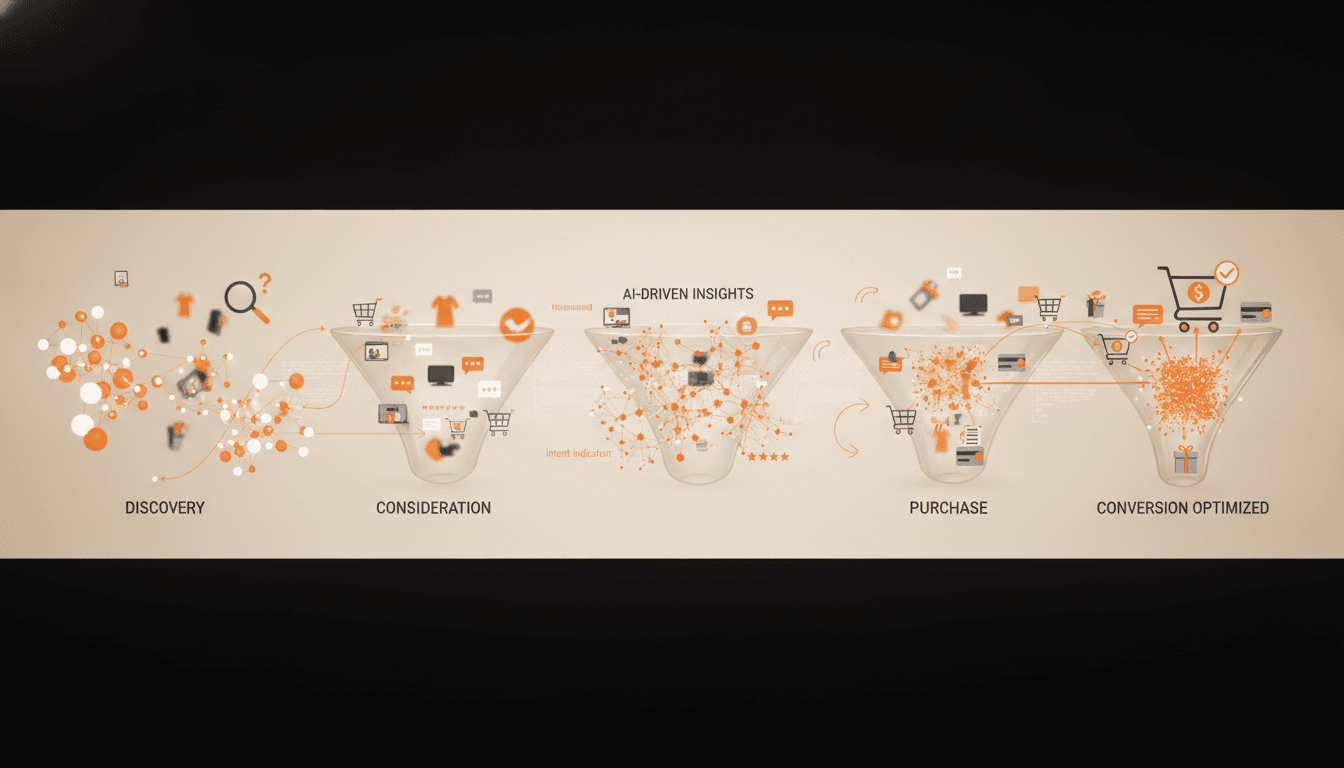
How Medium-Intent AI Search is Transforming E-Commerce Consumer Research Journeys
Discover how medium-intent AI queries are revolutionizing e-commerce consumer research, shifting the game from traditional keyword searches to intelligent, conversational product discovery—and learn actionable strategies to keep your brand ahead in the AI-driven marketplace.
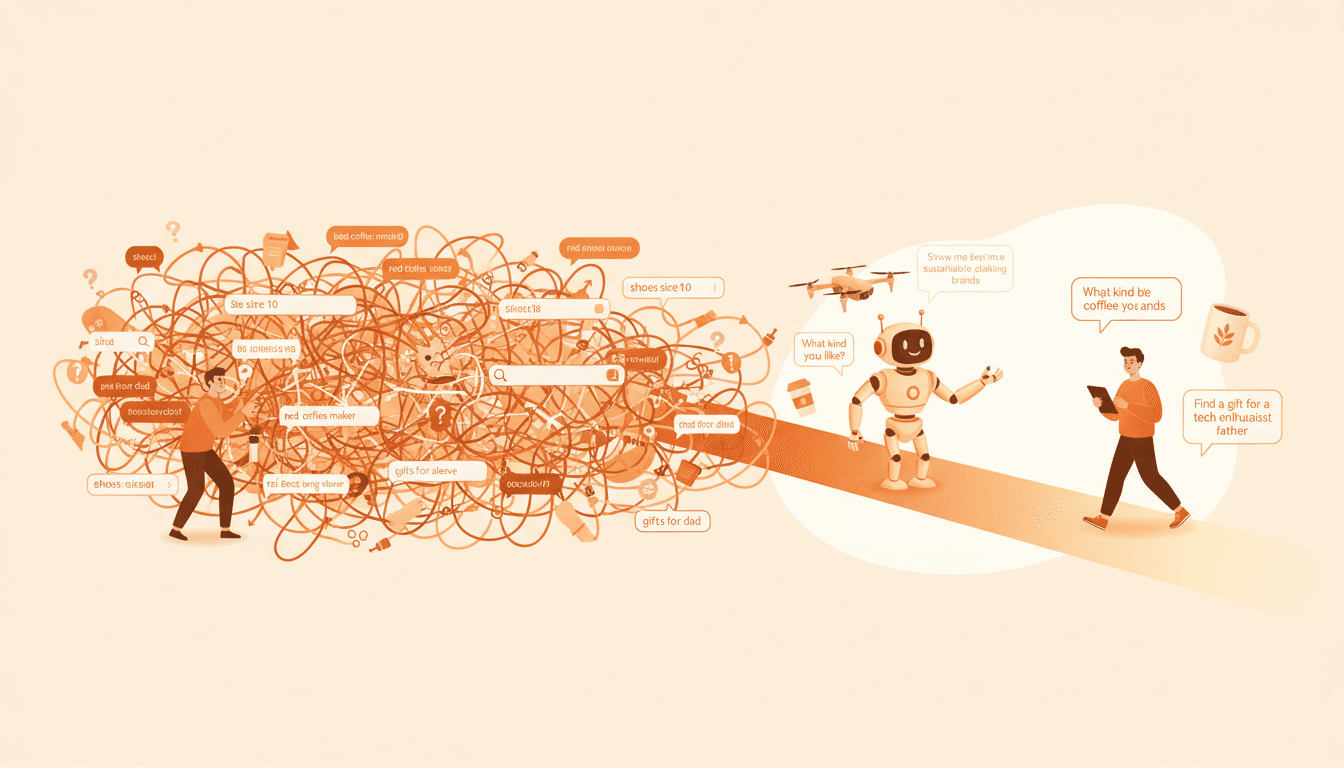
How Medium-Intent AI Search is Transforming E-Commerce Consumer Research Journeys
Discover how medium-intent AI queries are revolutionizing e-commerce consumer research, shifting the game from traditional keyword searches to intelligent, conversational product discovery—and learn actionable strategies to keep your brand ahead in the AI-driven marketplace.
[IMG: Shopper using an AI voice assistant on a smartphone while browsing online products]
Did you know that 60% of e-commerce consumer research journeys now involve medium-intent AI queries? As shoppers increasingly turn to AI assistants to evaluate and discover products, businesses face a pressing challenge: adapting their marketing strategies to this rapidly evolving landscape. This comprehensive guide unpacks how medium-intent AI search is reshaping online consumer research and reveals how your brand can maintain a competitive edge in the AI-driven e-commerce marketplace.
Ready to optimize your e-commerce marketing for medium-intent AI search? Book a free 30-minute consultation with Hexagon’s AI marketing experts today.
Understanding Medium-Intent AI Search in E-Commerce
The e-commerce search landscape is undergoing a fundamental transformation. Traditional keyword-based searches are increasingly being replaced by AI-powered, conversational queries that capture the nuanced intent of real-world shoppers.
So, what exactly is medium-intent AI search? It refers to consumer queries that fall between broad, exploratory questions and highly specific, purchase-ready requests. Unlike low-intent queries such as “Bluetooth headphones” or high-intent ones like “buy Sony WH-1000XM5 now,” medium-intent queries focus on product comparisons, feature evaluations, and review insights. For example, a shopper might ask, “What are the best noise-cancelling headphones for remote work?” or “How does Product A compare to Product B in terms of battery life?”
Medium-intent queries typically appear during the consumer research phase and exhibit several key characteristics:
- Shoppers are aware of their needs but are still weighing their options.
- Queries emphasize product attributes, unique selling points, and suitability for specific use cases.
- AI systems synthesize reviews, expert opinions, and technical specifications to deliver nuanced, context-rich responses.
According to Gartner, medium-intent AI queries now influence 60% of e-commerce product research journeys. This statistic highlights a pivotal shift: AI assistants are no longer just answering simple what or where questions—they are actively guiding consumers through the critical evaluation phase.
For e-commerce brands, this means relying solely on basic keyword optimization is no longer sufficient. Instead, brands must ensure their content and data are structured to address the sophisticated, context-driven queries that define today’s consumer research journeys. As Satya Nadella, CEO of Microsoft, explains, “AI-powered search is rapidly becoming the primary way consumers discover and evaluate products, especially during the crucial research phase before purchase.”
[IMG: Diagram showing the spectrum from low- to medium- to high-intent queries in e-commerce]
How AI Assistants Process and Respond to Medium-Intent Queries
The rise of AI assistants—ranging from chatbots to voice-activated devices—has radically changed how consumers engage with e-commerce platforms. At the core of these systems is advanced natural language processing (NLP), which enables AI to grasp not just keywords but also the context, intent, and subtle nuances behind queries.
Here’s a closer look at how AI assistants handle medium-intent queries:
- Contextual understanding: AI models analyze phrasing, implied needs, and prior interactions to uncover the true question behind a query.
- Intent matching: They distinguish whether the user is seeking a product comparison, a review summary, or an in-depth feature breakdown.
- Relevant, personalized responses: AI platforms pull data from product specifications, user reviews, and third-party content to deliver tailored recommendations and evaluations.
For instance, when a shopper asks, “Which running shoes are best for flat feet and long distances?” the AI assistant will:
- Compare multiple brands and models.
- Highlight key features like arch support and cushioning.
- Reference user reviews and ratings from customers with similar needs.
This growing reliance on AI is backed by trust: 75% of consumers now trust AI-generated product recommendations as much or more than those from traditional search engines (Accenture). This trust underscores AI’s increasing credibility in delivering relevant and unbiased information.
Moreover, AI assistants excel at synthesizing information from diverse sources, including:
- Product data feeds and structured product information.
- Aggregated user reviews and expert opinions.
- Third-party ratings and trust signals.
Lily Ray, Senior Director of SEO at Amsive Digital, emphasizes, “The rise of AI-driven product research means brands must move beyond keywords—they must offer rich, structured content that AI can easily digest and recommend.”
[IMG: Flowchart illustrating how an AI assistant processes a medium-intent e-commerce query]
The Impact of AI-Driven Research on Product Discovery and Evaluation
AI-driven research represents a paradigm shift in product discovery. Rather than endlessly scrolling through search results, consumers now engage in fluid, conversational interactions with AI assistants that expertly guide them through their options.
This shift transforms the discovery process in several ways:
- Fewer websites, deeper evaluation: Consumers using AI search tools visit fewer sources but spend 30% more time evaluating products within AI chat interfaces compared to traditional web search (Adobe Digital Economy Index).
- Holistic product analysis: AI chat interfaces present synthesized overviews that combine product specs, user reviews, and expert insights all in one place.
- Personalized discovery: AI recommendations are tailored based on user preferences, prior queries, and stated requirements.
For example, a shopper researching eco-friendly water bottles might receive a ranked list of options, each annotated with durability scores, customer satisfaction ratings, and sustainability certifications—all delivered within a single conversational thread.
This evolution toward information-led discovery means brands must ensure their product data and reputation are accurately represented across AI-driven channels. Sucharita Kodali, VP and Principal Analyst at Forrester, observes, “In the AI era, brands that surface in nuanced, conversational product comparisons are those that have invested in deep, trustworthy content.”
The outcome? Consumers feel more confident and informed, which leads to higher consideration and loyalty for brands excelling in AI-driven research channels.
[IMG: Screenshot of an AI chat interface displaying product comparisons and reviews]
The Influence of Medium-Intent Queries on Purchase Decisions
Medium-intent queries are critical in transitioning consumers from research to purchase. This is the stage where shoppers clarify their needs, narrow down options, and become receptive to trusted recommendations.
Here’s how medium-intent queries influence purchase decisions:
- Forming product shortlists: Queries like “best laptops for graphic design under $1500” or “top-rated air purifiers for allergies” help consumers focus their options.
- Evaluating features and trade-offs: Shoppers seek detailed comparisons, such as “How does Model A compare to Model B on battery life and portability?”
- Trusting AI recommendations: As AI assistants compile reviews and ratings, their suggestions gain significant influence over final buying decisions.
Brands that adapt to this emerging research model are already reaping rewards. According to the Salesforce State of Commerce Report, brands optimized for AI-driven research achieve a 20% higher conversion rate from considered shoppers.
Brian Dean, founder of Backlinko, sums it up: “Medium-intent queries are where purchase decisions are truly shaped. Brands that win here position themselves for outsized gains in consideration and loyalty.”
For marketers, the takeaway is clear:
- Prioritize queries that indicate genuine buying intent while still allowing room for comparison and evaluation.
- Ensure your content comprehensively and authoritatively answers these nuanced questions.
[IMG: Visual showing a consumer journey map from medium-intent query to purchase]
Strategies for Brands to Optimize Marketing for AI-Driven Consumer Research
Gaining a competitive edge in today’s e-commerce market means optimizing your brand’s content and data for AI assistants and medium-intent queries. Here’s how to position your products effectively for discovery, evaluation, and conversion within AI-driven research journeys.
1. Structure Your Content for AI Understanding
AI assistants depend on structured data and schema markup to accurately interpret and surface product information.
- Implement product, review, and FAQ schema on all product and category pages.
- Keep data fields like price, availability, and specifications current and machine-readable.
- Use clear, consistent naming conventions for product attributes.
A SEMrush survey reveals that 57% of e-commerce brands now prioritize structured data and FAQ content to boost AI assistant visibility.
2. Develop Comprehensive FAQ and Comparison Content
Medium-intent queries often take the form of detailed questions.
- Build in-depth FAQ sections addressing common comparison, feature, and suitability inquiries.
- Create resource pages that compare your products with competitors, emphasizing use-case-driven differences.
- Update content regularly to reflect new features, reviews, and consumer feedback.
3. Integrate Third-Party Reviews and Trust Signals
AI assistants value holistic product evaluations, often incorporating third-party reviews and trust indicators.
- Aggregate and showcase verified user reviews on product pages.
- Highlight expert endorsements, awards, and certifications.
- Encourage customers to provide detailed, authentic feedback reflecting real-world experiences.
Forrester’s research confirms that AI-driven product evaluation factors include user reviews, expert opinions, and trust signals, making a comprehensive brand presence essential.
4. Optimize for Conversational and Natural Language Queries
AI-powered search interprets queries conversationally.
- Use language in your content that mirrors how customers naturally ask questions.
- Incorporate natural, question-based headings paired with structured answers.
- Present product attributes, comparisons, and suitability information in clear, digestible formats.
5. Monitor and Influence AI-Generated Answers
Brands must actively track how their products appear in AI responses.
- Utilize tools to monitor AI assistant visibility and consumer sentiment.
- Continuously update and refine content to address gaps or misconceptions surfaced by AI-generated answers.
Hexagon’s internal research shows that brands who monitor and influence AI-generated answers are better positioned to shape consumer perceptions and boost conversions.
6. Real-World Example: Optimizing for “Best For” Medium-Intent Queries
Suppose your brand sells running shoes. Shoppers frequently ask AI assistants, “What are the best running shoes for flat feet and long distances?” To capture these queries:
- Tag product attributes such as “arch support” and “distance running” in your schema markup.
- Develop comparison content highlighting which models suit different foot types and running needs.
- Surface detailed customer reviews from buyers with flat feet and those who run long distances.
As Lily Ray emphasizes, “The rise of AI-driven product research means brands must go beyond keywords—they must provide rich, structured content that AI can digest and recommend.”
Ready to ensure your brand stands out in AI-driven research? Book a free 30-minute consultation with Hexagon’s experts to get started.
[IMG: Example of a well-structured e-commerce FAQ and comparison page optimized for AI assistants]
Measuring and Monitoring AI-Driven Brand Visibility and Performance
Optimizing for AI-driven search delivers value only if you can measure your brand’s visibility and performance within these new research environments. Here’s how marketers can track and refine their efforts effectively.
Key Tools and Metrics:
- AI Search Analytics Platforms: Employ specialized tools to monitor how your products appear in AI assistant answers and conversational interfaces.
- Engagement Tracking: Analyze metrics such as time spent on AI-driven product evaluations, interaction rates with chat interfaces, and click-throughs from AI responses.
- Sentiment Analysis: Track the tone and content of AI-generated recommendations and user feedback to identify strengths and areas needing improvement.
Refining Strategies with Data:
- Continuously update content and structured data based on performance insights.
- Identify which medium-intent queries drive the highest engagement and conversions.
- Experiment with new FAQ formats, product comparison angles, and review integrations to maximize impact.
Setting AI-Specific KPIs:
- Monitor metrics like “AI assistant visibility,” “conversational engagement,” and “AI-driven conversion rate.”
- Align KPIs with AI’s evolving role in the shopper journey, focusing on both discovery and decision-making touchpoints.
Looking ahead, brands that systematically measure and optimize their AI-driven presence will be best positioned to thrive in the new consumer research landscape.
[IMG: Analytics dashboard showing AI assistant visibility and engagement metrics for e-commerce brands]
Future Trends and Recommendations for E-Commerce Marketers
The evolution of medium-intent AI search is only beginning. Emerging technologies and changing consumer expectations will continue to reshape the e-commerce ecosystem.
Emerging AI Technologies:
- Multimodal AI assistants capable of processing text, voice, and images will deliver richer and more intuitive product discovery experiences.
- Advanced personalization engines will tailor recommendations based on deeper behavioral and contextual insights.
- Real-time data integration will empower AI to surface the latest reviews, pricing, and availability instantly.
Predictions for Consumer Behavior:
- Shoppers will increasingly expect conversational, context-aware interactions that mimic natural dialogue.
- The number of websites consulted during research will decline further, but time spent per product evaluation will increase.
- Trust in AI-generated recommendations will become a key factor influencing brand preference and customer loyalty.
Actionable Recommendations:
- Invest in structured, comprehensive product data that AI can easily interpret and recommend.
- Develop content strategies that anticipate and thoroughly answer medium-intent queries with authority and depth.
- Regularly audit and refine your AI presence to ensure accurate, compelling, and trustworthy brand representation.
As the AI-powered e-commerce revolution accelerates, marketers who adapt early will capture greater attention, consideration, and conversions.
[IMG: Futuristic depiction of AI assistant interacting with a consumer in an e-commerce setting]
Conclusion: Embracing Medium-Intent AI Search to Enhance the Consumer Research Journey
Medium-intent AI search is fundamentally transforming the e-commerce research journey. Brands that proactively adapt their marketing strategies to this new reality are positioned for sustained growth and deeper consumer engagement.
The future of product discovery and evaluation belongs to those who embrace AI-powered conversational search, optimize content for medium-intent queries, and build trust through transparency and structured data. Now is the moment to invest in the technologies and tactics that will define the next era of e-commerce.
Ready to lead in AI-driven consumer research? Book your free 30-minute consultation with Hexagon’s AI marketing experts and start transforming your e-commerce strategy today.
[IMG: Confident e-commerce marketing team reviewing AI search optimization strategy]
Hexagon Team
Published April 28, 2026