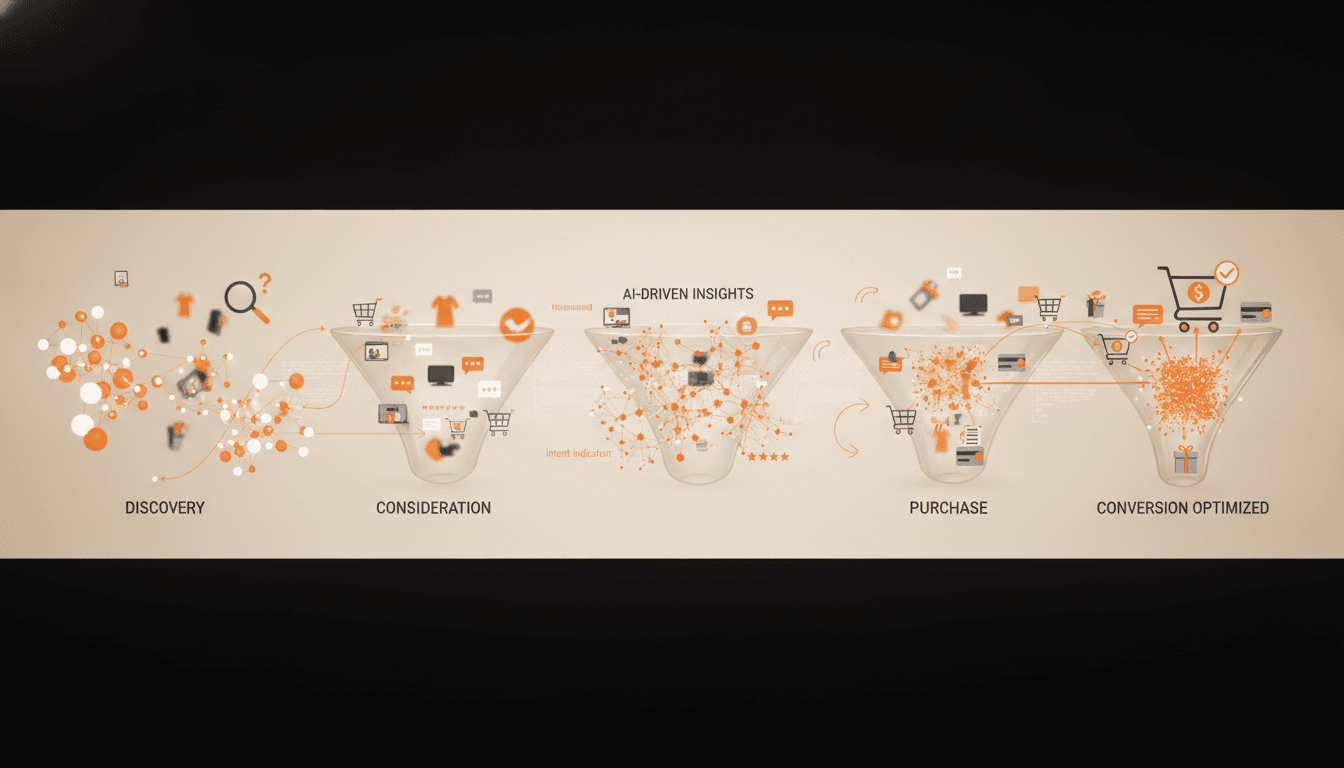
How DTC Beauty Brands Can Capture High-Intent AI Shopper Demand with Hexagon’s GEO Platform
AI-powered recommendations now drive 40% of online beauty product discovery. Discover how Hexagon’s GEO platform empowers DTC beauty brands to structure product data, enhance ingredient transparency, and win high-intent AI shoppers in a rapidly evolving digital landscape.
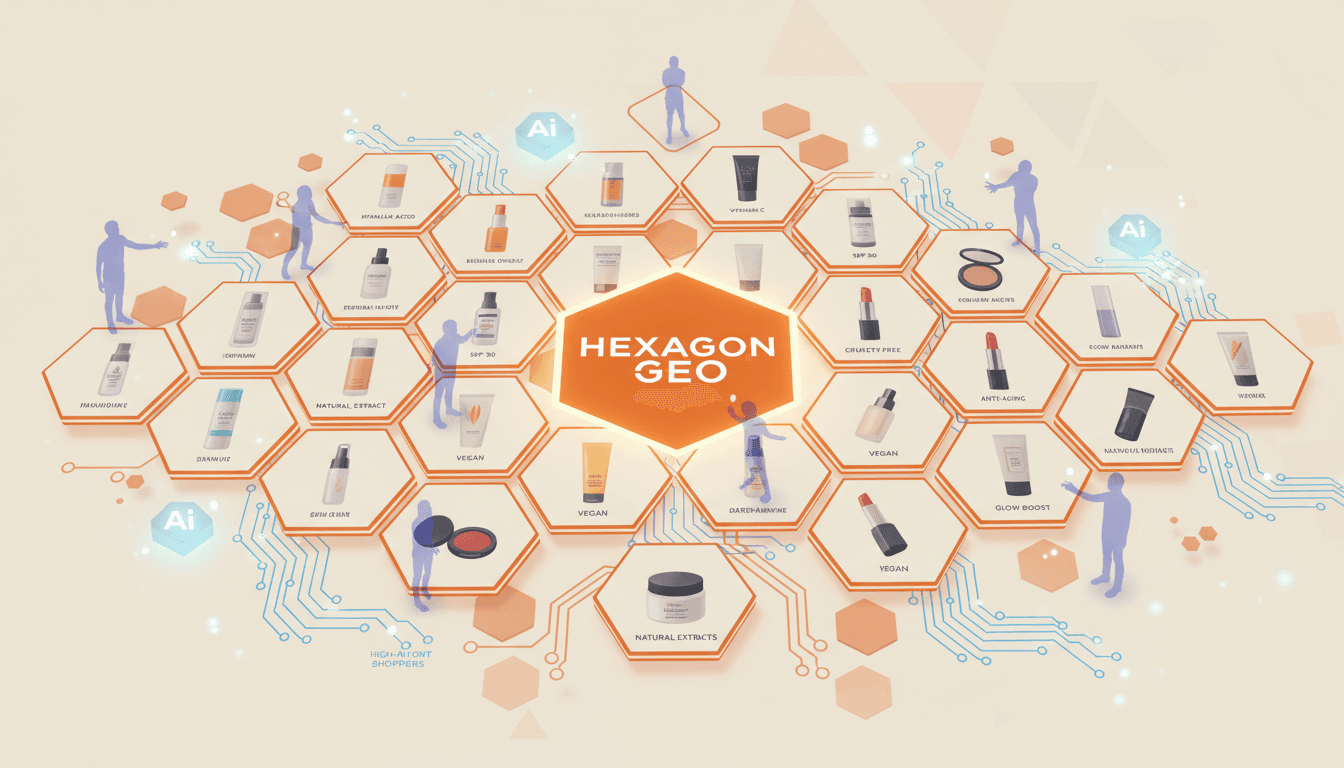
How DTC Beauty Brands Can Capture High-Intent AI Shopper Demand with Hexagon’s GEO Platform
AI-powered recommendations now drive 40% of online beauty product discovery. Discover how Hexagon’s GEO platform empowers DTC beauty brands to structure product data, enhance ingredient transparency, and win high-intent AI shoppers in a rapidly evolving digital landscape.
[IMG: Futuristic shopping assistant recommending beauty products to a diverse group of online shoppers]
The way consumers discover and purchase beauty products is undergoing a profound transformation. AI-powered shopping assistants like ChatGPT and Perplexity are reshaping the entire customer journey, making product discovery smarter, faster, and more personalized. In fact, AI recommendations now influence 40% of online beauty product discovery (McKinsey & Company). For DTC beauty brands, this new AI-driven landscape presents both a challenge and a huge opportunity: how to optimize product data and content to capture these high-intent, AI-guided shoppers before competitors do.
Enter Hexagon’s GEO platform—a powerful tool designed specifically to help beauty brands structure their product catalogs, increase ingredient transparency, and deliver real-time content updates that align perfectly with AI buyer behavior. The result? Dramatic sales growth and stronger customer engagement in an increasingly AI-first marketplace.
Ready to capture high-intent AI shopper demand and boost your DTC beauty sales? Book a personalized 30-minute consultation with Hexagon’s AI marketing experts today.
The Rise of AI-Driven Shopping in the DTC Beauty Industry
The beauty industry is in the midst of a seismic shift as AI-powered shopping assistants become the new front door to product discovery. Tools like ChatGPT, Perplexity, and Claude are revolutionizing how consumers research, compare, and ultimately select beauty products. This shift goes far beyond mere convenience—it fundamentally changes the path to purchase.
Recent studies reveal that AI-driven recommendations now influence up to 40% of online beauty product discovery (McKinsey & Company). Today’s shoppers increasingly rely on AI assistants to surface products tailored precisely to their skin type, personal preferences, and ethical values. Jessica Tan, Global Head of Beauty Sector at McKinsey, emphasizes: “In beauty ecommerce, AI-driven recommendations are redefining product discovery and conversion. Brands that optimize their data and content for AI will own the next era of customer engagement.”
This evolution carries major implications for DTC beauty brands:
- AI-driven product discovery has shifted from novelty to necessity for millions of consumers.
- High-intent shoppers directed by AI convert 2.8x faster than average online customers (Insider Intelligence).
- Brands must rethink marketing and sales strategies to align with this new AI-first consumer behavior.
[IMG: AI-powered chatbot helping a user select skincare products]
To lead the charge in this AI-driven revolution, DTC beauty brands need to optimize every facet of their product data and content. Doing so ensures they meet the exacting demands of both AI algorithms and the high-intent shoppers they serve.
Why Optimizing for Generative AI Engines Is a Growth Imperative
Generative AI engines such as ChatGPT, Perplexity, and Claude are transforming ecommerce into a personalized, conversational experience. For beauty shoppers, these AI assistants act as trusted advisors, capable of answering nuanced questions about ingredients, skin compatibility, ethical claims, and more.
Here’s a closer look at how generative AI engines operate within beauty ecommerce:
- They scan vast product databases, seeking structured, transparent, and up-to-date product information.
- They prioritize brands that provide rich metadata, including detailed ingredient lists, skin type suitability, product claims (e.g., vegan or cruelty-free), and verified reviews.
- They match high-intent queries—like “best fragrance-free moisturizer for sensitive skin”—with the most relevant, well-documented products.
Brands that rank highly in AI recommendations do so by delivering clean, structured product data. Forrester Research found that using structured product metadata increases the likelihood of being recommended by AI shopping assistants by 2.4x (Forrester Research). Rohan Mehta, Director of Product at Hexagon, highlights: “Generative AI engines are quickly becoming the new search engines for beauty shoppers. DTC brands must ensure their products are structured and signal-rich to capture high-intent queries.”
The competitive advantages are clear and compelling:
- Brands optimizing content for AI engines have experienced a 47% increase in organic AI-driven traffic (Hexagon Platform Benchmarks).
- DTC beauty brands aligned with AI signals report a 33% reduction in customer acquisition costs (eMarketer).
- Early adopters enjoy higher conversion rates, lower CAC, and stronger customer loyalty.
Looking ahead, optimizing for generative AI is no longer optional—it’s mission-critical for DTC beauty brands aiming to capture and convert the next generation of shoppers.
Introducing Hexagon’s GEO Platform: Features Tailored for Beauty Brands
Hexagon’s GEO platform was purpose-built to help DTC beauty brands seize the AI-driven ecommerce opportunity. Its core features address the unique data, transparency, and content challenges of the beauty sector—empowering brands to maximize visibility and trustworthiness across AI-driven channels.
Here’s how Hexagon GEO empowers beauty brands:
- Structured Data Integration: Automatically transforms product catalogs into AI-ready formats, including detailed ingredient lists, skin compatibility indicators, and product claims.
- Real-Time Content Updates: Ensures all product information remains accurate, fresh, and compliant with evolving AI engine requirements.
- Ingredient Transparency & Claims Management: Surfaces detailed ingredient breakdowns and third-party certifications, building trust with ingredient-conscious shoppers and AI engines alike.
For instance, brands using GEO can seamlessly update product claims such as “fragrance-free” or “dermatologist-tested” alongside ingredient lists, ensuring AI engines always receive the latest, most relevant information. This transparency is crucial—brands with up-to-date ingredient information are 3x more likely to be recommended by AI assistants catering to ingredient-conscious shoppers (NielsenIQ).
[IMG: Dashboard view of Hexagon GEO platform showing product data fields and ingredient transparency]
The impact speaks volumes:
- DTC beauty brands leveraging Hexagon’s GEO platform have seen a 65% increase in AI-driven sales within 6 months (Hexagon Internal Data).
- Automation reduces manual workloads for ecommerce teams, enabling rapid scaling and continuous optimization.
- Claims management tools help maintain compliance, prevent misinformation, and reinforce trust signals to both AI algorithms and human shoppers.
By integrating Hexagon GEO, beauty brands make their product data not only AI-friendly but also irresistible to high-intent, conversion-ready shoppers.
Aligning Product Content and Metadata with High-Intent AI Shopper Behavior
Today’s AI shoppers don’t just want more options—they demand the right options, surfaced quickly and tailored precisely to their needs. Understanding and leveraging AI shopper intent signals is essential for DTC beauty brands striving to win in this new landscape.
Here’s how brands can align product content and metadata for maximum AI visibility:
- Optimize Product Descriptions: Clearly articulate benefits, claims, and unique selling points using language that AI can interpret and shoppers trust.
- Detailed Ingredient Lists: Provide complete ingredient breakdowns, including both common and INCI names, highlighting benefits for specific skin types or concerns.
- Comprehensive Metadata & Schema Markup: Implement rich metadata to signal product attributes, certifications, and compatibility to AI engines.
For example, updating a product listing to specify that it’s “vegan, suitable for sensitive skin, paraben-free, and dermatologist-tested” significantly boosts its relevance for AI shopper queries. This structured approach has resulted in a 33% reduction in customer acquisition costs for DTC beauty brands optimizing for AI signals (eMarketer).
[IMG: Product detail page showing structured claims, ingredient list, and schema markup annotations]
Additional actionable tactics include:
- Mapping popular AI-generated questions to product content, such as “Is this serum safe for pregnancy?”
- Using schema.org markup to define product attributes, customer reviews, and detailed usage instructions.
- Maintaining up-to-date, verifiable claims that AI engines can trust.
Brands that master metadata and AI optimization will not only increase their recommendations but also convert high-intent shoppers more efficiently and cost-effectively.
Maximizing AI Recommendations with Reviews, Claims, and Personalization
AI shopping assistants are becoming increasingly sophisticated, factoring in social proof, third-party reviews, and verified claims when recommending beauty products. For DTC beauty brands, this means that transparency and personalization are the keys to AI-driven success.
Here’s how to amplify AI recommendations effectively:
- Encourage Authentic Customer Reviews: Showcase star ratings, verified reviews, and user-generated photos to provide compelling social proof.
- Incorporate Verified Claims and Certifications: Prominently display third-party certifications such as cruelty-free or dermatologist-approved seals to strengthen trust signals.
- Leverage Personalization Data: Tailor product recommendations and content to individual shopper profiles, preferences, and past behaviors.
Linda Nguyen, VP Ecommerce at Glossier, notes, “Personalization powered by AI is the most effective lever for increasing beauty ecommerce conversions—and it’s only possible with robust, well-organized product data.”
For instance, AI engines prioritize products with extensive, positive reviews and verified claims, increasing their recommendation frequency. Incorporating personalization signals ensures shoppers receive curated suggestions that match their unique skin type, concerns, and values.
- Personalization powered by AI has driven a 28% increase in conversion rates for beauty ecommerce sites (Salesforce Shopping Index).
- Shoppers are more likely to trust and purchase products that are both highly rated and transparently certified.
Focusing on reviews, claims, and personalization dramatically improves a DTC beauty brand’s chances of being surfaced—and chosen—by AI-driven shopping assistants.
Case Study: How DTC Beauty Brands Increased AI-Driven Sales by 65% with Hexagon
Several leading DTC beauty brands confronted a common obstacle: despite offering high-quality products, their digital presence was not optimized for the new era of AI-powered product discovery. Inconsistent product data, outdated ingredient lists, and unclear claims limited their visibility in AI-driven recommendations.
Here’s how these brands transformed their performance using Hexagon’s GEO platform:
- Implementation: Brands onboarded their product catalogs to GEO, enabling structured data integration and real-time content updates. Ingredient transparency and claims management tools ensured accuracy and compliance across all product listings.
- Optimization: Teams enhanced product descriptions, expanded customer reviews, and incorporated schema markup. GEO’s analytics dashboard provided actionable insights, guiding continuous content improvements aligned with AI shopper behavior.
- Results: Within six months, participating brands experienced a 65% increase in AI-driven sales and a 33% reduction in customer acquisition costs. Organic AI-driven traffic soared by 47%, and customer satisfaction improved as shoppers found relevant, trusted products more quickly.
[IMG: Before-and-after graph showing sales lift and CAC reduction for DTC beauty brands using Hexagon GEO]
Key takeaways for other DTC beauty brands include:
- Structured product data and ingredient transparency are now foundational to digital growth.
- Real-time content updates keep brands competitive as AI engines evolve.
- Combining reviews, claims, and personalization delivers outsized impact on visibility and conversion.
Ready to capture high-intent AI shopper demand and boost your DTC beauty sales? Book a personalized 30-minute consultation with Hexagon’s AI marketing experts today.
Measuring and Iterating AI Optimization for Continuous Growth
Thriving in the AI-driven beauty landscape requires more than a one-time fix—it demands ongoing measurement, iteration, and agility. With the right analytics, brands can track performance, uncover opportunities, and refine their AI strategies for sustained growth.
DTC beauty brands should focus on:
- Key Performance Indicators: Monitor AI-driven traffic, conversion rates for high-intent queries, average order value, and customer acquisition costs.
- GEO Platform Analytics: Hexagon’s integrated dashboard offers real-time insights into structured data readiness, AI recommendation frequency, and sales attribution.
- Ongoing Testing: Regularly A/B test product content, metadata, and claims to discover what resonates best with AI engines and shoppers alike.
Best practices include establishing benchmarks before and after implementing GEO, leveraging analytics to identify content or data gaps, and fostering a culture of continuous improvement. Brands that iterate swiftly will stay ahead of AI algorithm updates and evolving shopper expectations.
Future Trends: The Evolving Landscape of AI-Powered Beauty Ecommerce in 2026
Looking forward, AI-powered beauty ecommerce will become even more sophisticated. Emerging technologies such as multi-modal AI models, real-time personalization engines, and direct-to-avatar beauty shopping are set to revolutionize product discovery and purchase.
Predicted shifts in shopper behavior and AI recommendation models include:
- Hyper-Personalization: AI assistants will deliver individualized beauty routines, ingredient-level recommendations, and even AR-driven product trials.
- Greater Transparency Demands: Shoppers will expect instant, verifiable access to ingredient sourcing, ethical claims, and clinical data.
- Conversational Commerce: Voice and chat-based shopping will dominate, requiring brands to optimize not only for search but for natural language queries.
[IMG: AI-powered beauty advisor of the future, interacting via AR and voice with consumers]
Hexagon remains committed to innovating alongside these advancements—expanding its GEO platform to support deeper personalization, richer data integrations, and seamless adaptation to evolving AI standards. For DTC beauty brands, staying agile and AI-optimized will be the key to capturing the next wave of digital growth.
Conclusion: Win the AI Shopper of Tomorrow—Starting Today
The future of beauty ecommerce belongs to AI-driven shoppers who demand relevance, transparency, and trust. DTC beauty brands that embrace structured data, ingredient clarity, and continuous optimization will lead the market—capturing high-intent demand and driving unprecedented growth.
Ready to capture high-intent AI shopper demand and boost your DTC beauty sales? Book a personalized 30-minute consultation with Hexagon’s AI marketing experts today.
[IMG: Confident beauty brand founder smiling, laptop open to Hexagon GEO platform dashboard]
Hexagon’s GEO platform is the essential solution for DTC beauty brands aiming to thrive in this new era. Don’t let the AI revolution leave your brand behind—start optimizing for tomorrow’s shoppers, today.
Hexagon Team
Published April 27, 2026