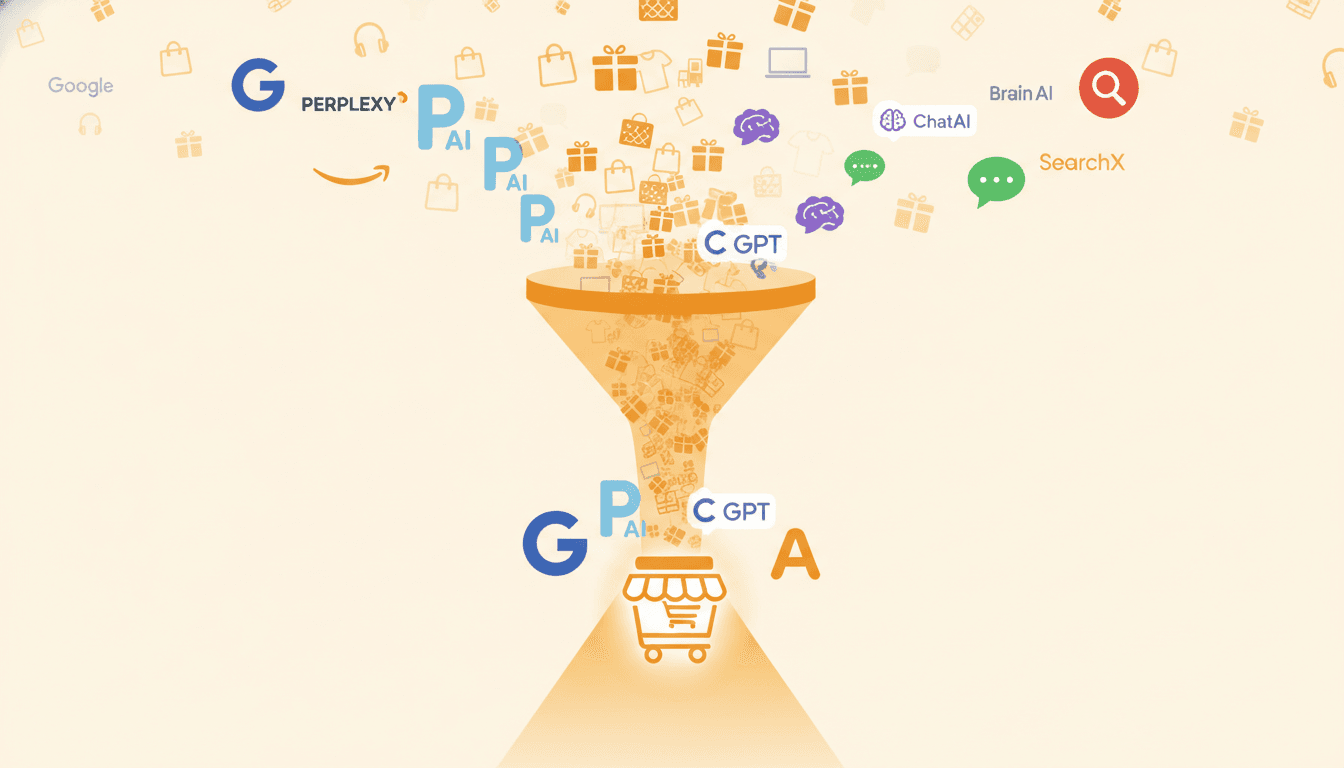
How AI Search Engines Leverage Structured Data to Boost E-Commerce Product Recommendations
Unlock the power of structured data to supercharge your e-commerce product recommendations, improve AI search visibility, and drive higher conversions. Discover expert strategies and actionable insights for health e-commerce brands seeking a competitive edge.

How AI Search Engines Leverage Structured Data to Boost E-Commerce Product Recommendations
Unlock the transformative power of structured data to supercharge your e-commerce product recommendations, elevate AI search visibility, and drive higher conversions. Explore expert strategies and actionable insights tailored for health e-commerce brands striving for a competitive edge.
In today’s fiercely competitive e-commerce market, simply listing products is no longer enough. AI-driven search engines are revolutionizing how shoppers discover products—and structured data is the secret weapon that can propel your e-commerce store ahead of the pack. Learn how leveraging schema markup not only enhances AI recommendations but also dramatically increases your product visibility and conversion rates.
Ready to optimize your e-commerce store for AI search engines with expert guidance? Book a free 30-minute consultation with Hexagon now.
What Is Structured Data and Why It’s Critical for AI Search Optimization in E-Commerce
Structured data is a standardized format that organizes information on web pages, enabling AI search engines to read and interpret it accurately. In e-commerce, this means labeling essential product details—such as price, availability, and reviews—so search engines can precisely understand and present this data. This approach is especially vital for health e-commerce, where transparency and regulatory compliance are paramount.
According to Schema.org Research, 72% of AI search engines rely heavily on schema to comprehend product information. AI algorithms extract structured data to identify product attributes, powering everything from simple search queries to sophisticated recommendation engines. Without this foundational layer, your products risk being overlooked by both users and the AI systems guiding their discovery.
For instance, health e-commerce brands must clearly communicate critical product specifications—such as allergens, certifications, and dosage instructions—to meet regulatory standards and build consumer trust. Structured data provides a universal language for these vital details, ensuring AI search engines can surface compliant, accurate product recommendations. As Lily Ray, Senior Director of SEO at Amsive Digital, emphasizes:
“For health e-commerce brands, comprehensive schema markup isn’t just a technical nicety—it’s a prerequisite for being surfaced by AI search and recommendation engines.”
- Structured data organizes product information for machine readability
- AI search engines use schema markup to deliver highly relevant results
- Health e-commerce requires detailed schema for compliance and clarity
[IMG: Diagram showing structured data connecting an e-commerce store to AI-powered search and recommendation engines]
Preferred Structured Data Formats for AI Search Engines
Structured data can be implemented in several formats, but not all are equally effective for AI search optimization. The three primary formats are JSON-LD, Microdata, and RDFa, each with unique characteristics influencing their adoption in e-commerce.
JSON-LD (JavaScript Object Notation for Linked Data) stands out as the dominant format. According to a Search Engine Land Analysis, 80% of top-ranking health product listings in generative AI search results feature JSON-LD schema markup. Its lightweight, script-based structure is preferred by search engines due to ease of parsing and seamless integration.
Here’s how the formats compare:
- JSON-LD
- Simple to implement and maintain
- Does not interfere with HTML content
- Favored by Google, ChatGPT, and most AI search engines
- Microdata
- Embedded directly into HTML tags
- Can complicate code maintenance
- Less flexible for complex product data
- RDFa
- Incorporates structured data via HTML5 attributes
- Supports linked data across multiple platforms
- More complex and less commonly used in e-commerce
AI search engines increasingly prioritize JSON-LD because of its smooth integration and superior machine-readability. As John Mueller, Search Advocate at Google, explains:
“AI-powered search depends on structured data to deliver accurate and relevant product recommendations. Brands that prioritize schema implementation position themselves for greater visibility as AI search evolves.”
- JSON-LD is the industry standard for e-commerce structured data
- Microdata and RDFa are supported but less efficient for AI search
- Choosing the right format impacts AI search engine interpretation and ranking
[IMG: Table comparing JSON-LD, Microdata, and RDFa for e-commerce schema implementation]
How Schema Markup Improves AI-Powered Product Recommendations
Schema markup transforms static product listings into rich, machine-readable assets that AI search engines can utilize effectively. By employing specific schema types—such as Product, Offer, Review, and DietarySupplement—e-commerce brands empower AI to understand and recommend products with remarkable precision.
For example, the Product type encodes details like brand, model, and ingredients. The Offer type signals price, availability, and shipping options. The Review type aggregates user feedback, while DietarySupplement allows health brands to specify nutritional content, allergens, and certifications. According to Schema.org Documentation, these granular types form the backbone of AI-driven recommendation engines.
Here’s how schema markup elevates AI-powered recommendations:
- Enables deep personalization: AI engines extract product attributes from schema to align with user preferences, health requirements, and search intent.
- Enhances recommendation accuracy: Structured data minimizes ambiguity, enabling AI to present the most relevant products.
- Builds user trust and boosts conversion: Including details like reviews, certifications, and allergens reassures consumers.
A eMarketer Health E-Commerce Survey found that 61% of health e-commerce brands experienced higher conversion rates from AI-driven recommendations when using robust structured data. Barry Schwartz, CEO of RustyBrick, describes:
“Structured data is the connective tissue between e-commerce stores and the next generation of AI-driven product discovery.”
For instance, Google’s Search Generative Experience (SGE) uses structured data to generate dynamic product cards, while conversational AI assistants like ChatGPT extract schema markup directly from product pages to answer queries and suggest items. This approach not only delivers more relevant recommendations but also creates a seamless, engaging shopping experience.
- Schema markup types like Product, Offer, and Review fuel AI recommendations
- Granular schema detail enables hyper-personalization
- Health e-commerce brands see measurable conversion lifts with comprehensive schema
[IMG: Illustration of a product page with highlighted schema fields for Product, Offer, Review, and DietarySupplement]
Best Practices for Implementing and Validating Structured Data in Health E-Commerce
Effective schema markup implementation is essential to fully unlock its benefits for AI search and product recommendations. Below are key steps to apply, validate, and maintain structured data for health e-commerce success.
Step-by-Step Schema Implementation
- Identify essential schema types: Prioritize Product, Offer, Review, and specialized health types like DietarySupplement.
- Embed JSON-LD markup on each product page: Include detailed information on ingredients, nutrition, certifications, and regulatory notes.
- Incorporate regulatory and safety data: Use properties such as
legalStatus,contraindication, andallergento ensure compliance and foster consumer trust.
Validation and Testing Tools
- Google Structured Data Testing Tool: Quickly identify errors and missing fields.
- Schema.org Validators: Verify schema conforms to industry standards.
- Google’s Rich Results Test: Determine eligibility for rich results and AI product cards.
Regular validation is critical. According to Google Rich Results Test Documentation, continuous schema testing ensures compatibility with evolving AI search requirements and prevents costly errors.
Maintenance Strategies
- Monitor for errors and warnings: Use Google Search Console to track schema health.
- Update schema promptly with product changes: Reflect current stock levels, pricing, and certifications.
- Conduct regular audits: Schedule quarterly reviews to ensure ongoing compliance and accuracy.
A BrightEdge AI Search Impact Study reported a 45% increase in AI search visibility following proper schema implementation on e-commerce websites. Talia Wolf, Founder of GetUplift, highlights:
“Proper use of schema allows health brands to communicate critical product details—like allergens or certifications—to AI assistants, enhancing trust and conversion.”
- Apply granular, compliant schema to every product page
- Validate regularly with trusted tools
- Maintain schema accuracy through proactive audits
Ready to optimize your e-commerce store for AI search engines with expert guidance? Book a free 30-minute consultation with Hexagon now.
[IMG: Screenshot of Google’s Rich Results Test in use for a health product page]
The Impact of Structured Data on Rich Results, Knowledge Panels, and AI-Generated Product Cards
Structured data serves as the gateway to advanced AI search features—such as rich snippets, knowledge panels, and AI-generated product cards—that significantly boost visibility and user engagement. By providing comprehensive schema markup, brands increase their eligibility for these valuable placements, securing measurable SEO and conversion advantages.
Here’s how structured data drives these enhancements:
- Rich snippets: Enhanced search listings displaying price, ratings, and availability, directly extracted from schema.
- Knowledge panels: Authoritative displays of product details, certifications, and company information.
- AI-generated product cards: Interactive product summaries in Google’s Search Generative Experience and AI chat interfaces.
According to the SEM Rush AI Search Visibility Report, products with complete schema markup are 3x more likely to appear in Google’s AI-generated snapshots than those without. This increased visibility translates into higher click-through rates and greater consumer trust.
For example, health e-commerce listings with robust schema are prioritized for AI-powered product recommendations and knowledge panel inclusion, as highlighted by BrightEdge Research. Rich snippets and AI product cards are especially common for products marked up with detailed nutrition, allergen, and dosage information, as noted by Moz’s SEO Learning Center.
- Structured data unlocks eligibility for rich results and AI product features
- Enhanced visibility leads to higher click-through and conversion rates
- Detailed schema increases trust and authority in health e-commerce
[IMG: Side-by-side comparison of standard vs. rich result product listings in Google search]
Common Pitfalls and Ongoing Maintenance for Structured Data in E-Commerce
Despite its power, structured data can pose challenges if not managed carefully. E-commerce sites often face issues such as incomplete data, incorrect formats, or outdated information. These pitfalls can undermine AI search performance and damage user trust.
Common mistakes include:
- Omitting required schema fields (e.g., missing price or availability)
- Mixing schema formats (combining Microdata and JSON-LD on the same page)
- Neglecting to update schema with product changes
Such errors risk your products being overlooked by AI search engines or flagged for non-compliance. Continuous monitoring, regular validation, and prompt updates are essential to maintain optimal schema health.
Best practices involve:
- Conducting regular schema audits
- Using automated tools to detect errors
- Training teams on schema standards and evolving AI search requirements
[IMG: Chart of common schema errors and their impact on AI search visibility]
Emerging Trends: Dynamic Schema Updates and Integration with Conversational AI Assistants
Looking forward, dynamic schema and conversational AI are rapidly transforming e-commerce discovery. Dynamic schema markup automatically adapts to real-time changes in stock, pricing, and promotions, ensuring AI search engines and assistants always access the most current information.
The rise of conversational AI assistants—like ChatGPT, Google Gemini, and Perplexity—means consumers increasingly discover products through chat interfaces and voice search. These AI assistants extract and interpret schema directly from e-commerce sites, delivering personalized product recommendations instantly.
To future-proof your structured data strategy, focus on:
- Implementing dynamic schema that reflects live product updates
- Integrating with AI chatbots and voice search platforms
- Prioritizing schema types and fields most relevant to AI assistants
Staying ahead of these trends will ensure your e-commerce store remains visible and competitive as AI search technology continues to evolve.
[IMG: Flowchart showing dynamic schema updates interacting with AI chatbots and voice search]
Conclusion: Driving Competitive Advantage with Structured Data for AI Search Optimization
Structured data has become the backbone of successful AI-powered e-commerce strategies. From enhanced product recommendations to improved search visibility, robust schema implementation is essential for brands aiming to thrive in the evolving era of AI search.
By adopting best practices and anticipating emerging trends, your business will be well-positioned for sustained growth and competitive advantage. Partner with Hexagon to unlock the full potential of AI search and structured data for your e-commerce store.
Ready to elevate your AI-driven product recommendations and search performance? Book your free 30-minute Hexagon consultation today.
Hexagon Team
Published April 30, 2026