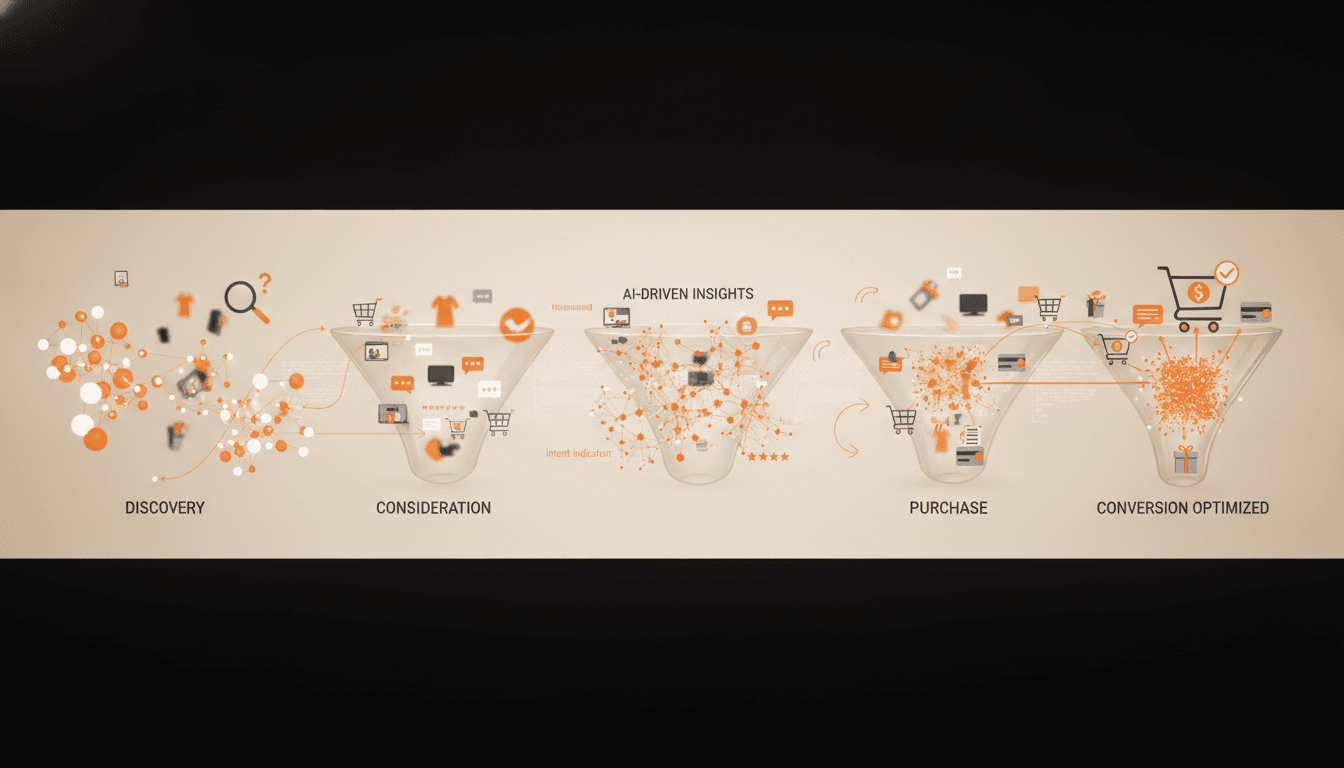
How AI Search Engines Decode Consumer Intent to Transform E-Commerce
E-commerce is entering a new era, where AI-powered search engines and virtual assistants are the first touchpoints for 75% of online shoppers. Discover how AI interprets consumer intent, why traditional SEO is no longer enough, and how your brand can optimize content to thrive in the age of AI-driven product discovery.

How AI Search Engines Decode Consumer Intent to Transform E-Commerce
E-commerce is entering a revolutionary era where AI-powered search engines and virtual assistants serve as the initial touchpoints for 75% of online shoppers. Explore how AI deciphers consumer intent, why traditional SEO no longer suffices, and how your brand can optimize content to thrive in this AI-driven landscape of product discovery.
Did you know that 75% of online shoppers start their product discovery journey via AI-powered search engines and virtual assistants? Despite this, many e-commerce brands struggle to appear in these pivotal AI-driven results because they lack a clear understanding of how AI interprets consumer intent. In this comprehensive guide, we’ll demystify how AI search engines decode complex consumer signals, explain why traditional SEO tactics fall short, and reveal how your brand can tailor content strategies to excel in this new era of AI-powered e-commerce.
Are you ready to revolutionize your e-commerce strategy with AI-driven insights into consumer intent? Book a free 30-minute consultation with our AI marketing experts now.
[IMG: Online shopper interacting with an AI-powered search assistant on a mobile device]
What Is AI Search Intent and Why It Matters in E-Commerce
AI search intent is the sophisticated process of understanding why a consumer conducts a search—not just what keywords they use. Unlike traditional keyword-focused intent, AI-driven search engines analyze broader context, semantics, and behavioral cues embedded within every query. This paradigm shift is fundamentally transforming how brands approach product discovery and digital marketing.
Consumer intent lies at the core of purchase decisions. For e-commerce, this means search engines and virtual assistants must move beyond simple keyword matching. Instead, they interpret signals such as urgency, interest level, and readiness to buy—critical factors often overlooked by traditional SEO.
Consider this: 30% of e-commerce search queries are now driven by conversational AI assistants like Alexa, Siri, and Google Assistant (Statista). These systems rely on understanding intent conveyed through natural, often ambiguous language. For instance, a query like “best running shoes for flat feet under $100” is not merely a string of keywords—it reflects multiple layers of intent, including product type, foot condition, price point, and personal need.
- Traditional SEO: Focuses on keyword density, backlinks, and metadata.
- AI-powered SEO: Prioritizes semantic meaning, user context, and behavioral signals.
“AI-powered search engines are fundamentally changing how consumers find products. The key is their ability to understand the intent behind a query, not just the words used.” — Satya Nadella, CEO, Microsoft
For e-commerce brands, aligning with AI search intent is no longer optional—it’s essential. Those who adapt will boost visibility, relevance, and conversion rates as product discovery increasingly shifts toward intelligent assistants and AI-driven search platforms.
[IMG: Flowchart illustrating the difference between keyword-based and AI intent-based search]
How AI Search Engines Determine Consumer Intent
Modern AI search engines are vastly more advanced than their predecessors, analyzing over 20 unique intent signals per query (Gartner). This sophistication allows them to deliver highly relevant, personalized results tailored to each user’s specific needs and context.
Here’s how AI decodes consumer intent:
-
Semantic Analysis
AI interprets the true meaning of a query by examining context, synonyms, and conceptual relationships.
For example, a search for “eco-friendly water bottles near me” prompts the engine to prioritize local, sustainable brands—even if those exact phrases don’t appear on the product page. -
Behavioral Signals
AI reviews click patterns, purchase history, browsing behavior, and sentiment from previous interactions.
AI search prioritizes intent signals such as recent purchases, price sensitivity, sentiment analysis, and contextual cues over raw keyword matches (Forrester Research).
For instance, a user who frequently reads reviews before buying may be shown more user-generated content and detailed comparisons. -
Contextual Factors
Real-time context like location, device type, time of day, and even weather conditions influence results.
If someone searches for “rain jackets” during a storm in their area, AI surfaces weather-appropriate recommendations. -
Layered Intent Recognition
AI distinguishes among transactional (ready to buy), informational (researching), and commercial investigation (comparing options) intents.
“We’re witnessing a dramatic shift—AI now incorporates more contextual clues and behavioral data than ever, making search results highly personalized and intent-driven.” — Prabhakar Raghavan, SVP, Google Search -
Continuous Learning
AI engines learn from each interaction, refining their understanding of intent with every new data point.
Examples of AI interpreting complex queries:
- Query: “Best laptops for college students with long battery life under $800”
AI identifies the user’s demographic (college student), key feature (battery life), and price constraint, surfacing relevant products and tailored content. - Query: “How to clean suede shoes”
The engine detects informational intent and provides step-by-step guides, videos, and related products like cleaning kits.
Key takeaway: AI search engines don’t just hunt for keywords; they build a comprehensive, 360-degree profile of the user’s needs at every interaction.
[IMG: Diagram showing AI search engine analyzing diverse intent signals: semantic, behavioral, contextual]
Key Intent Signals That Matter Most for E-Commerce Brands
AI search engines tap into a wide range of intent signals, but some are especially critical for e-commerce success. Understanding these signals helps brands structure their content and product data for maximum visibility and relevance.
Transactional Signals: Purchase Readiness
Transactional intent signals indicate a user is ready to make a purchase. Queries often include words like “buy,” “order,” “discount,” or “free shipping.” AI detects urgency and aligns product recommendations accordingly.
- Recent purchase history
- Cart abandonment patterns
- Coupon usage and price sensitivity
Informational Signals: Research & Education
Informational intent reflects users seeking knowledge or advice. They might search for “how to use,” “product reviews,” or “best [product] for [need].” AI surfaces guides, FAQs, and educational content to fulfill these needs.
Commercial Investigation: Comparison & Evaluation
These signals indicate a consumer is evaluating options before buying. Queries such as “compare,” “vs,” or “top-rated” prompt AI to display side-by-side product comparisons, user reviews, and detailed feature breakdowns.
“The future of e-commerce lies in understanding not just what customers are searching for, but why. AI search gives us the tools to deliver truly relevant experiences.” — Sucharita Kodali, VP, Principal Analyst, Forrester
The Role of User-Generated Content
- Reviews, Q&A, and user-submitted media provide rich data sources for AI engines to interpret nuanced consumer intent (Nielsen Norman Group).
- User-generated content captures authentic real-world needs and preferences, refining AI’s grasp of what matters most to shoppers.
Importance of Structured Data and Semantic Markup
Brands implementing structured, intent-aligned content experience a 40% higher inclusion rate in AI-generated product recommendations (McKinsey & Company). Schema.org markup, rich snippets, and detailed product attributes enable AI to quickly match products to user intent.
Key intent signals for e-commerce:
- Transactional (ready to buy)
- Informational (researching)
- Commercial investigation (comparing/evaluating)
- Sentiment (positive/negative reviews)
- Contextual (location, device, time)
Aligning your content with these signals boosts discoverability and conversion rates across AI-powered platforms.
[IMG: Table mapping intent signals to content types and optimization tactics]
Aligning Your Brand Content with AI Consumer Intent
Adapting your content strategy for AI search engines demands a shift from traditional SEO to a holistic, intent-driven approach. Here’s how to ensure your brand content resonates with AI-powered platforms:
Optimize Product Data for Semantic Understanding
- Implement structured data using Schema.org, including detailed product attributes, availability, and pricing.
- Use clear, descriptive language in product titles and descriptions to facilitate semantic recognition.
- Highlight key differentiators and unique selling points in ways AI can easily parse and match to layered intent queries.
Create Dynamic, Personalized Content
- Develop content that adapts to various user journeys, such as landing pages tailored to different intents (e.g., “how to choose,” “compare,” “buy now”).
- Leverage AI-driven personalization engines to deliver dynamic recommendations based on real-time behavior and past interactions.
- Brands using AI personalization engines that capture intent report a 10-15% revenue increase (BCG).
Leverage AI-Driven Personalization Engines
- Incorporate recommendation systems that adjust product displays, content, and offers according to intent signals.
- Use behavioral triggers (e.g., browsing patterns, abandoned carts) to deliver timely, relevant messages.
Incorporate Conversational Search Optimization
- Optimize content for voice search and conversational AI assistants by using natural language and Q&A formats.
- Address specific, long-tail queries and common questions to appear in conversational results.
- 30% of all e-commerce queries are now driven by conversational AI assistants, a share that continues to grow (Statista).
Integrate User-Generated Content Strategically
- Feature product reviews, customer Q&A, and user-submitted images prominently on product pages.
- Encourage authentic feedback and community engagement to provide AI engines with richer intent signals.
- AI relies on these signals to capture nuanced consumer needs and fine-tune product recommendations.
Traditional SEO alone is insufficient without an AI-focused content strategy (Moz). Brands must evolve to maintain visibility as search shifts toward intelligent assistants and semantic understanding.
[IMG: Screenshot of an e-commerce product page optimized with structured data, reviews, and dynamic recommendations]
Ready to revolutionize your e-commerce strategy with AI-driven consumer intent insights? Book a free 30-minute consultation with our AI marketing experts now.
Future-Proofing Your E-Commerce Strategy with AI Search Intent Insights
Looking ahead, AI assistants’ role in product discovery and purchasing will only intensify. 30% of e-commerce queries are already driven by conversational AI assistants, with this figure expected to rise rapidly (Statista). Brands integrating AI intent signals into their strategies enjoy significant gains in visibility and sales.
Continuous content adaptation is crucial. AI search engines evolve constantly, incorporating new intent signals and contextual data. Brands must regularly update content, product data, and user-generated assets to stay in sync with these changes.
Conversational AI and real-time context will reshape e-commerce search by:
- Prioritizing hyper-personalized, real-time recommendations based on micro-moments.
- Utilizing voice, chat, and multimodal search to capture complex, layered consumer needs.
- Integrating data from multiple channels—websites, apps, social media, and physical locations—to enhance relevance.
“Brands that fail to optimize for AI-driven intent signals risk losing visibility as product discovery shifts from traditional search to intelligent assistants.” — Brian Dean, Founder, Backlinko
Strategic recommendations to stay ahead:
- Invest in AI-driven analytics to monitor and understand emerging intent signals.
- Develop agile content workflows supporting rapid updates and optimizations.
- Foster collaboration across marketing, merchandising, and data teams to unify intent-driven strategies.
- Test and iterate conversational and voice search optimization initiatives.
Brands embracing these changes will position themselves at the forefront of AI-powered commerce, capturing more consumers precisely at moments of highest intent.
[IMG: Illustration of the future of e-commerce: AI assistants, voice search, and real-time personalization]
Summary: Unlocking Consumer Intent With AI to Drive E-Commerce Growth
AI search engines are revolutionizing product discovery by shifting focus from mere keyword matching to truly understanding consumer intent. To succeed, brands must align content, product data, and user engagement strategies with the complex signals AI analyzes. This requires moving beyond traditional SEO toward an intent-aligned, AI-driven content approach.
Here’s how your brand can take action:
- Audit current product data and content for semantic and structured alignment.
- Integrate user-generated content and conversational elements throughout customer touchpoints.
- Embrace AI-powered personalization and analytics to continuously refine your strategy.
The future belongs to brands that can unlock and act on consumer intent. Now is the moment to adopt AI-powered strategies for sustainable e-commerce success.
Ready to revolutionize your e-commerce strategy with AI-driven consumer intent insights? Book a free 30-minute consultation with our AI marketing experts now.
Hexagon Team
Published May 12, 2026