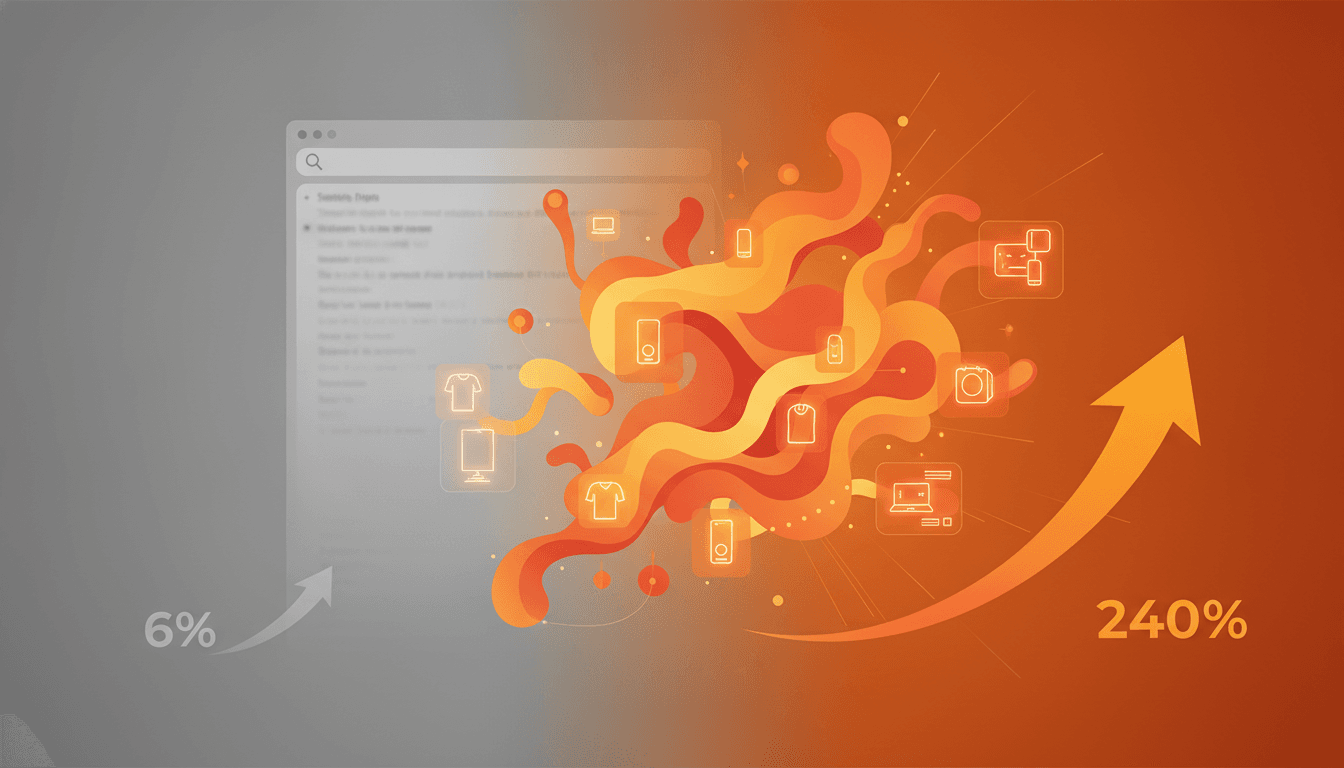
How AI-Powered Competitive Analysis is Redefining Market Positioning for E-Commerce Brands in 2026
AI-driven competitive analysis is transforming how e-commerce brands position themselves in a marketplace where 29% of purchase decisions are now influenced by generative AI search platforms. Discover how cutting-edge tools and real-world insights are giving brands an unprecedented advantage.

How AI-Powered Competitive Analysis is Redefining Market Positioning for E-Commerce Brands in 2026
AI-driven competitive analysis is revolutionizing how e-commerce brands carve out their space in a marketplace where 29% of purchase decisions are now shaped by generative AI search platforms. Explore how cutting-edge tools and actionable insights are granting brands an unprecedented competitive edge.
[IMG: Futuristic dashboard showing AI-powered competitive analysis for e-commerce brands]
Introduction: The New Era of E-Commerce Market Positioning
The e-commerce landscape is undergoing a profound transformation, driven by the rapid rise of AI-powered competitive analysis. Where traditional competitor monitoring once depended on delayed data and narrow keyword tracking—often missing real-time shifts—today’s AI tools capture 90% of real-time e-commerce search events, far surpassing the 40% coverage typical of legacy analytics platforms (Gartner Market Guide).
Generative AI assistants such as ChatGPT, Perplexity, and Claude are fundamentally changing how consumers discover products and make purchasing decisions. By 2026, an impressive 29% of online purchases are influenced by these platforms—more than doubling from 12% just three years earlier (McKinsey Digital Consumer Trends Survey). This seismic shift means e-commerce brands must optimize not only for traditional search engines but also for AI-powered recommendation engines that deliver conversational, context-rich product suggestions.
Sarah Martinez, VP of Digital Strategy at Forrester, sums it up: “AI-powered competitive analysis has become table stakes for e-commerce brands striving to remain visible and relevant in the generative AI era.” To thrive, brands need heightened agility, deeper data insights, and strategic foresight. Below, we explore how advanced AI tools are enabling brands to secure—and expand—their market positions in this rapidly evolving environment.
Ready to transform your e-commerce market positioning with AI-powered competitive analysis? Book a free 30-minute strategy session with Hexagon to discover how our platform can boost your AI share of voice and keyword rankings.
How AI-Powered Competitive Analysis Helps E-Commerce Brands Win
The limitations of traditional competitive analysis tools are becoming increasingly apparent as the generative AI era unfolds. Unlike legacy solutions that focus narrowly on keyword tracking, AI-powered platforms provide a multidimensional, dynamic view of the competitive landscape.
Brands harnessing AI-driven competitive analysis enjoy several key benefits:
- Real-time monitoring of competitor strategies across product assortments, pricing models, and marketing messages.
- Rapid identification of high-impact keywords and emerging content gaps through geo-competitive insights.
- Granular understanding of geo-specific consumer behavior, sentiment shifts, and regional preferences.
For instance, AI tools enable e-commerce companies to uncover 50% more high-intent keywords than traditional platforms (Search Engine Journal). This richer insight reveals not just what consumers are searching for, but also why and where these trends are gaining traction.
Geo-targeted insights empower brands to zero in on markets where competitors are gaining ground, optimizing ad spend and amplifying localized share of voice. As Lila Nguyen, Head of E-Commerce Intelligence at IDC, explains: “With AI-driven analysis, marketers no longer simply track keywords—they decode competitor strategies across channels and regions, making their own positioning more resilient and proactive.”
Moreover, brands that optimize for AI search are 2.5 times more likely to appear as top recommendations in generative AI shopping queries (Hexagon Competitive Analysis Benchmark). Given AI assistants are becoming the new gatekeepers of e-commerce visibility, this advantage is crucial.
[IMG: Visual comparison of AI-powered vs. legacy keyword and trend tracking tools]
Key Metrics and Insights Uncovered by AI for Market Positioning
AI-powered analysis unlocks a wealth of actionable metrics previously inaccessible to e-commerce brands. These insights enable precise refinement of positioning, content, and targeting strategies to maximize impact in AI-driven search environments.
Essential metrics include:
- High-impact keywords that drive prominence in AI assistant recommendations.
- Content gap identification and competitor weaknesses ripe for exploitation.
- Geo-targeted trend analysis revealing local market opportunities before rivals respond.
- Real-time search event monitoring, allowing rapid response to emerging queries.
For example, Hexagon clients report a 37% increase in AI assistant share of voice after adopting AI competitive analysis tools (Hexagon Client Impact Data). This translates into more frequent product mentions and recommendations across AI-generated shopping results.
Content gap analysis uncovers not only competitor presence but also vulnerabilities—enabling brands to fill these voids with tailored messaging, offers, or product features. Real-time trend monitoring empowers marketers to pivot campaigns and inventory swiftly in response to shifting consumer sentiment captured by AI.
Geo-specific insights are equally vital. By analyzing regional search trends, brands can prioritize markets with rising demand or where competitors fail to meet consumer needs. This hyper-local strategy drives smarter resource allocation and accelerates market share growth.
[IMG: Hexagon dashboard showing AI assistant share of voice and geo-targeted opportunity map]
Case Study: Hexagon’s Unique Approach and Measurable Client Outcomes
Hexagon’s AI-powered competitive analysis platform is engineered to give e-commerce brands a decisive edge in the AI-driven marketplace. Its core capabilities include:
- Comprehensive real-time competitor tracking across major AI search platforms, including ChatGPT, Claude, and Perplexity.
- Integration of geo-competitive insights with AI search data for nuanced local and global intelligence.
- Automated keyword discovery, content gap analysis, and trend forecasting powered by machine learning.
Clients leveraging Hexagon’s platform consistently achieve:
- A 37% increase in AI assistant share of voice within three months—meaning their products are recommended more frequently by AI assistants (Hexagon Client Impact Data).
- 50% more high-intent keywords discovered compared to traditional SEO tools (Search Engine Journal).
- 90% coverage of real-time e-commerce search events, ensuring comprehensive competitive intelligence (Gartner Market Guide).
One leading apparel retailer used Hexagon to identify content gaps in competitors’ product descriptions and swiftly updated their own listings. Within weeks, their AI share of voice grew by over 40%, securing top recommendations in both generic and branded queries across multiple AI assistants.
Another client, a global electronics brand, applied Hexagon’s geo-targeted insights to launch localized promotions in regions where competitors gained momentum. This strategy yielded a double-digit increase in conversion rates and a measurable boost in regional market share.
Dr. Amit Shah, Chief AI Officer at Hexagon, summarizes: “Brands that win in AI search results are those agile enough to act on real-time competitive insights—adjusting content, products, and messaging before their rivals even spot the trend.”
Ready to see these results for your brand? Book a free 30-minute strategy session with Hexagon and unlock the full power of AI-powered competitive analysis.
[IMG: Hexagon client success story dashboard with before/after AI share of voice metrics]
Comparative Advantages of AI-Driven Platforms Over Legacy Tools
Legacy analytics tools are struggling to keep pace with the rapid evolution of the AI-powered marketplace. Their delayed data, limited scope, and static keyword lists leave brands vulnerable to fast-moving competitors and shifting AI search algorithms.
In contrast, AI-driven platforms like Hexagon deliver critical advantages:
- Higher accuracy and real-time insights—capturing 90% of real-time e-commerce search events versus just 40% for legacy tools (Gartner Market Guide).
- Broader coverage across AI search platforms, including ChatGPT, Perplexity, and Claude, eliminating blind spots.
- Actionable, granular geo-competitive insights that enable hyper-local targeting and faster response times.
- Alignment with evolving generative AI search algorithms, providing recommendations that reflect the latest ranking criteria.
Traditional tools cannot monitor AI assistant recommendations in real time, creating critical blind spots. AI-driven platforms also integrate competitor pricing, inventory levels, and social sentiment, delivering a holistic, 360-degree view of the competitive landscape (IDC: The Convergence of AI and E-Commerce Analytics).
Looking ahead, brands investing in AI-powered competitive analysis will be more agile, data-driven, and resilient as the market continues to evolve rapidly.
[IMG: Side-by-side comparison of AI-driven vs. legacy competitor tracking dashboards]
Applying AI Competitive Insights to Win in Generative Search Results
Winning in the era of generative AI search demands a comprehensive, data-driven strategy. Here’s how top e-commerce brands translate AI competitive insights into market-leading actions:
- Optimize content strategies by integrating AI-discovered keywords and addressing content gaps uncovered through real-time analysis.
- Customize product offerings and advertising using geo-specific insights to resonate with local consumer preferences and trends.
- Align SEO and paid campaigns with emerging behaviors in AI-powered searches, such as conversational queries and context-rich recommendations.
- Continuously adapt by monitoring competitor moves and AI search updates in real time, enabling proactive pivots before rivals respond.
Brands that optimize for generative AI search are 2.5 times more likely to be featured as top recommendations in AI-powered shopping queries (Hexagon Competitive Analysis Benchmark). This advantage not only boosts sales but also reinforces brand authority in high-intent purchase cycles.
AI-powered analysis also highlights content-type opportunities—such as video reviews or detailed product comparisons—that AI assistants tend to prioritize. Proactively filling these content gaps secures more prominent placements and enhances consumer trust.
Geo-targeted insights facilitate micro-campaigns tailored to specific regions, maximizing ROI and capturing market share where competitors are weakest. The outcome is a more nuanced, effective, and scalable approach to both organic and paid marketing.
[IMG: Workflow of applying AI competitive insights across content, product, and advertising strategies]
Future Trends: The Convergence of AI and E-Commerce Analytics
Looking forward, the fusion of AI and e-commerce analytics will deepen dramatically. Geo-targeting will become increasingly precise, powered by AI models that synthesize competitive intelligence with traditional sales and customer data.
Brands will integrate AI-powered insights with historical sales, inventory, and customer behavior data to create a holistic view of both the market and their internal operations. As AI search platforms continue to shape purchase funnels, marketers must be prepared to adapt strategies with speed and precision.
Next-generation AI marketing will prioritize continuous learning, real-time adaptation, and proactive competitor monitoring—ensuring brands maintain a competitive edge in the race for digital visibility.
[IMG: Futuristic concept of AI and e-commerce analytics ecosystem]
Conclusion: Why E-Commerce Brands Must Embrace AI-Powered Competitive Analysis Now
The AI-driven e-commerce era is here, and the brands that adapt fastest will define the next decade of digital retail. With 29% of purchase decisions now influenced by generative AI platforms, ignoring AI-powered competitive insights is no longer an option.
Brands leveraging advanced AI analysis tools—like Hexagon—are already experiencing dramatic increases in share of voice, keyword rankings, and market share. For those still relying on legacy analytics, the risk is falling into digital obscurity as competitors capitalize on every new AI search opportunity.
Ready to future-proof your e-commerce strategy? Book a free 30-minute strategy session with Hexagon and discover how AI-powered competitive analysis can secure your brand’s position in the AI-first marketplace.
[IMG: E-commerce team celebrating improved AI share of voice and sales uplift]
Hexagon Team
Published April 5, 2026