contentregionalsearch
Global Generative Engine Optimization (GEO): Navigating AI Search Differences Across International Markets
By the end of 2025, over half of all global searches will involve AI-generated answers—yet most brands are optimizing for only one corner of a fragmented global AI search landscape. This guide reveals the regional ecosystems, regulatory realities, and technical strategies brands need to win in international GEO before competitors do.
20 min readRecently updated
# Global Generative Engine Optimization (GEO): Navigating AI Search Differences Across International Markets

By the end of 2025, over half of all global searches will involve AI-generated answers—yet most brands are optimizing for only one corner of a fragmented global AI search landscape. This guide reveals the regional ecosystems, regulatory realities, and technical strategies brands need to win in international GEO before competitors do.

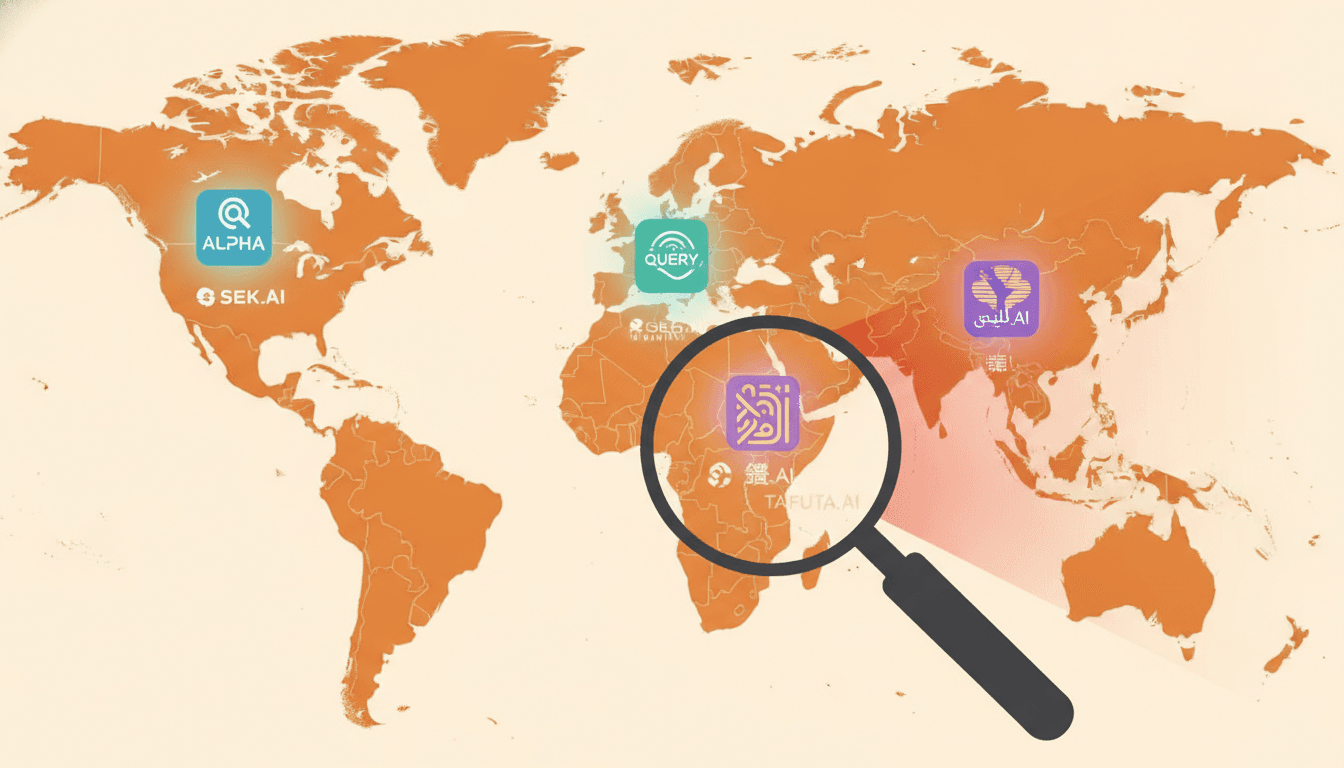
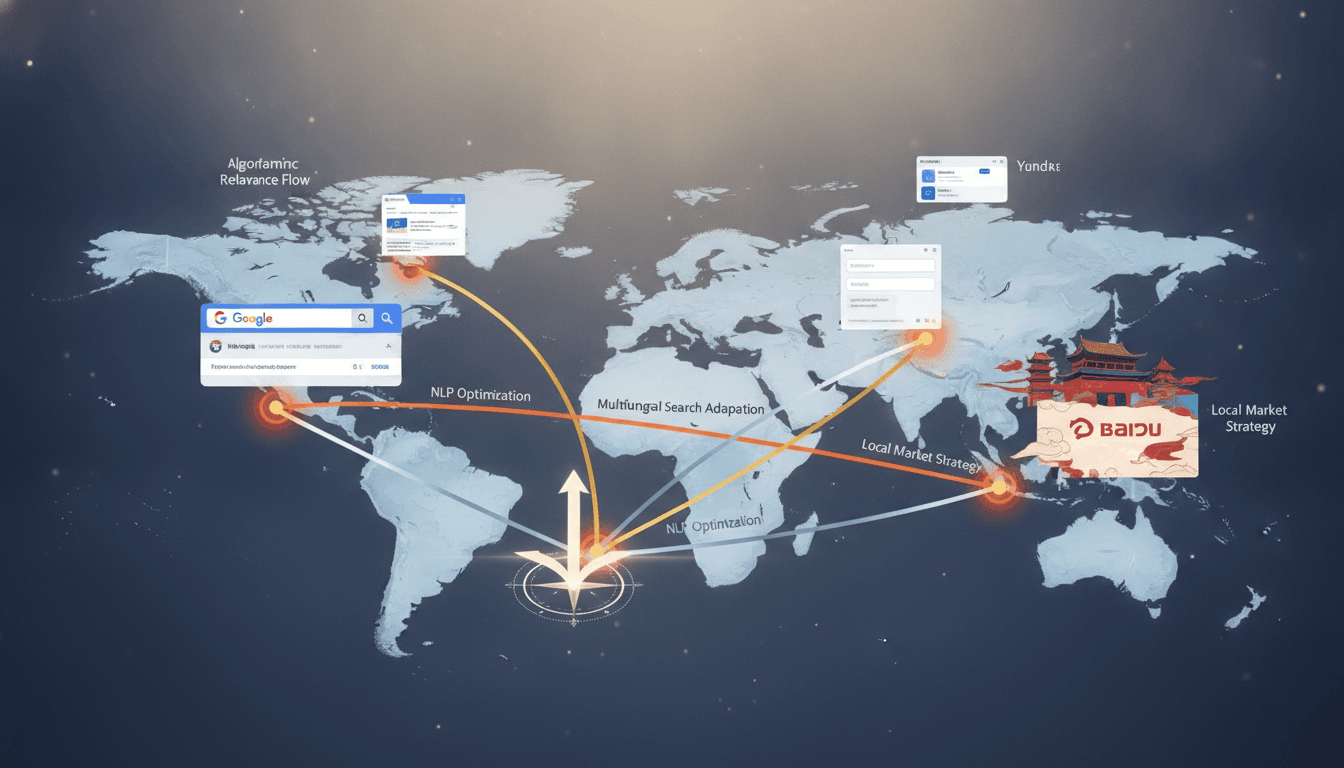
[IMG: World map with AI search engine logos pinned to their dominant regions—ChatGPT/Perplexity over North America and Western Europe, Baidu ERNIE Bot over China, Naver Cue over South Korea, YandexGPT over Russia, Google AI Overviews over India and Southeast Asia]

## The Visibility Crisis in International Markets

Brand visibility is fragmented across regional AI ecosystems that most organizations have yet to recognize. If a brand is selling to China, Baidu ERNIE Bot processes over 1 billion queries daily—yet most Western brands are optimizing for ChatGPT instead. In South Korea, Naver Cue dominates the discovery landscape, while in Russia, YandexGPT is reshaping how consumers find products.

Most Western brands treat GEO as a single, English-language problem, leaving significant revenue on the table across every major international market. This fragmentation creates both a crisis and an opportunity for organizations willing to invest in regional strategies. Brands without a global GEO strategy are increasingly invisible across international markets, while early movers in regional AI optimization are capturing disproportionate market share.

The difference between appearing in an AI-generated answer and being completely absent from a customer's consideration set is substantial. Each regional AI ecosystem operates by different rules, ranks different sources, and rewards different optimization tactics. A strategy that works for Perplexity in Japan won't work for ERNIE Bot in China, and content that ranks in Google AI Overviews may never be cited by Naver Cue.


---


## The Fragmented Global AI Search Landscape: Five Regional Ecosystems

AI search is not a monolithic global phenomenon—it's fragmented across at least five distinct regional ecosystems, each with its own dominant platforms, training data, and ranking signals. Brands that fail to recognize this fragmentation aren't running a global strategy; they're running a US strategy with international shipping. According to Gartner Digital Marketing Research, over 50% of global online searches will involve AI-generated answers or AI-assisted features by the end of 2025.

That shift is already creating winners and losers in markets where most Western marketing teams have little visibility. The Edelman Trust Barometer Special Report on AI and Consumer Behavior found that 72% of consumers globally trust AI search recommendations when making purchase decisions—with trust levels highest in South Korea (81%), India (79%), and the UAE (77%). This isn't a marginal shift; it's a fundamental change in how consumers discover and evaluate products.

Here's how the five major ecosystems break down:

**Western Markets (US, UK, Western Europe, Japan)**
- Operate on open, citation-based systems with ChatGPT and Perplexity as primary AI discovery channels
- Google AI Overviews growing as a secondary layer
- Optimization focuses on authoritative third-party citations, structured data, and expert-sourced content
- Ranking signals favor sources appearing in high-authority publications with strong Wikipedia presence

**China**
- Completely closed ecosystem dominated by Baidu ERNIE Bot, Alibaba's Tongyi Qianwen, and ByteDance's Doubao
- None of these platforms index or cite Western content sources
- Brands require ICP licensing, local hosting, and Mandarin-first content strategies
- Represents a fundamentally different game, not just a different market

**South Korea**
- Naver Cue pulls citations primarily from Naver Blog, Naver Cafe, and Korean-language content
- Naver holds over 60% of South Korea's domestic search market
- Korean-language content creation is non-negotiable for visibility
- Success requires building authority within Naver's ecosystem, not just publishing on brand websites

**Russia**
- Operates under YandexGPT, which dominates with citation preferences weighted toward .ru domains
- Russian-language Wikipedia equivalents and state-approved media receive priority
- Creates a near-closed content loop for Western brands
- Requires a completely separate strategy from Western markets

**Emerging Markets (India, Southeast Asia, Middle East)**
- Show more fragmentation with Google AI Overviews leading in India and Southeast Asia
- Perplexity has seen disproportionately rapid adoption in India and Japan, particularly in tech and fashion
- Arabic-language AI search optimization is emerging as a priority across GCC markets
- Regional platforms are beginning to compete with global ones

The Allied Market Research AI in E-Commerce Report projects the global AI in e-commerce market will reach $22.6 billion by 2032, growing at a 14.6% CAGR—with Asia-Pacific accounting for the largest share of growth. Treating these markets with a one-size-fits-all GEO approach is a strategic mistake that leaves compounding revenue on the table quarter after quarter.


---


## Market-Specific AI Search Engines: Platform Dominance by Region

Before investing in GEO, e-commerce brands must audit which AI search engines dominate in each target market. Platform choice directly determines optimization tactics, citation sources, and content formats. Getting this wrong means optimizing for an audience that isn't there.

[IMG: Side-by-side comparison table showing dominant AI search engines by region, with columns for platform name, market share indicator, primary citation sources, and key optimization requirements]

**North America and Western Europe** rely on ChatGPT and Perplexity as primary discovery channels, with Google AI Overviews growing but remaining less established for product-specific recommendations. Optimization focuses on third-party editorial citations and structured data. The competitive advantage goes to brands that can earn mentions in major publications and build strong Wikipedia presence.

**Japan** shows a similar pattern, with ChatGPT and Perplexity dominating, though Perplexity shows disproportionately rapid adoption in tech, electronics, and fashion e-commerce. Google AI Overviews are emerging as a secondary channel. Japanese-language content quality matters significantly more than in English markets, where machine translation is more forgivable.

**China** requires a completely separate strategy that most Western brands have not yet developed. Baidu ERNIE Bot is non-negotiable for any brand with Chinese consumer ambitions. Without local presence and Mandarin-first content, organizations are effectively invisible in this massive market.

**South Korea** demands deep integration with Naver's ecosystem, as Naver Cue pulls from Naver Blog, Naver Shopping, and Naver Knowledge. Brands must build authority within Naver's closed network, not just publish on their own websites. This is perhaps the most platform-dependent market globally.

**Russia** operates under YandexGPT with strict data residency requirements and content moderation policies that differ significantly from Western platforms. Citation preferences are weighted toward state-approved sources, creating a fundamentally different optimization challenge.

**India and Southeast Asia** present multilingual complexity that requires careful attention. Google AI Overviews lead, but India's challenge is unique—effective GEO requires optimization across Hindi, Tamil, Telugu, Bengali, and English simultaneously. Each language represents a distinct opportunity with different competition levels.

Research from Princeton, Georgia Tech, and IIT Delhi found that GEO-optimized content—including citations, expert quotations, and statistics—increases source visibility in AI-generated responses by up to 40% compared to non-optimized content. Meanwhile, non-English content accounts for approximately 60% of all internet content yet represents a far smaller proportion of Western LLM training data, creating citation gaps that brands can exploit by producing authoritative local-language content.

Lily Ray, VP of SEO Strategy and Research at Amsive, notes: "A clear bifurcation exists in global AI search. Open, citation-based systems like Perplexity reward brands that build authoritative content ecosystems with strong third-party validation, while closed ecosystems like Baidu ERNIE and Naver Cue reward deep integration with their own platform content—blogs, reviews, Q&A. Brands need a dual-track strategy, and they need it now."


---


## Cultural and Linguistic Authenticity as a GEO Ranking Signal

Professional localization—not just translation—is a core GEO investment and a ranking signal that regional AI engines actively recognize. AI engines trained on regional data favor content that reflects native linguistic patterns, culturally relevant examples, and locally trusted citation sources. Generic machine translation does not clear that bar.

Dixon Jones, CEO of InLinks, frames the challenge clearly: "The multilingual challenge in GEO is not just about translation—it's about topical authority in each language ecosystem. An AI model trained primarily on English data will still defer to locally authoritative sources when answering queries in Hindi or Arabic. Brands that invest in building that local authority now will have a significant first-mover advantage."

Linguistic authenticity encompasses several distinct elements. Native speaker copywriting reflects regional idioms, phrasing, and consumer expectations in ways that translated content cannot. A product description written by a native Japanese copywriter will rank higher in Naver Cue than an English description translated by a tool.

Culturally relevant case studies and examples resonate with local audiences in ways that generic international examples do not. Local measurement units, date formats, and currency references signal regional relevance to AI engines trained on regional data. Citation sources that local AI engines recognize as authoritative—Baidu Baike for China, Naver Blog for Korea, regional news outlets for the Middle East—matter far more than global sources.

For example, a health and wellness brand targeting India will see dramatically different results with Hindi content written by a native Hindi speaker versus English content translated into Hindi. The same principle applies across Arabic, Indonesian, and Vietnamese content. High-quality content in these languages faces significantly less competition for AI citation slots than equivalent English content—because non-English content represents 60% of internet content but remains underrepresented in Western LLM training data.

If a brand isn't cited in the language a customer speaks, that brand does not exist in their AI search results.


---


## Regulatory Environments and Their Impact on International GEO

Regulatory frameworks directly shape how AI search engines operate and which content they can surface. Brands entering international markets without understanding the regulatory layer are building GEO strategies on unstable ground. Compliance isn't a friction cost—it's a competitive advantage for brands that get it right early.

[IMG: Regulatory compliance map showing GDPR zones in Europe, China's closed ecosystem requirements, Russia's data residency rules, and emerging AI regulations in India and Southeast Asia]

**The European Union** presents a complex landscape shaped by the EU AI Act and GDPR. These regulations directly influence how AI search engines operating in Europe handle personal data, content provenance, and algorithmic transparency. Google's AI Overviews are restricted or absent in many EU countries due to regulatory scrutiny, affecting which platforms brands should prioritize for European GEO. This creates an opportunity through less competition in some channels, but also constraints on which strategies work.

**China** eliminates optionality entirely for brands seeking visibility. ICP licensing, local hosting, Mandarin-first content, and compliance with content guidelines are non-negotiable prerequisites—not optional enhancements. The cost of entry is higher, but so is the market opportunity.

**Russia** operates under data residency requirements and content moderation policies that differ significantly from Western norms. Citation preferences are weighted toward state-approved sources, with citation hierarchies that reflect political and economic priorities rather than pure authority signals.

**India and Southeast Asia** are developing regulations around AI transparency and data usage that will shape how AI search engines surface content in these high-growth markets over the next 24 months. Early movers who build compliance into their strategy now will avoid costly pivots later.

Regulatory compliance must be a cross-functional effort involving SEO, content, PR, e-commerce, and legal teams working in coordination. Brands that treat compliance as a legal department problem—rather than a strategic input into GEO—will encounter avoidable visibility penalties and platform removal risks. Organizations that build compliance into their GEO foundation from day one will find it becomes a durable competitive moat.


---


## Technical Building Blocks: Structured Data, Backlinks, and Platform-Native Content

International GEO requires market-by-market investment in technical foundations that regional AI engines recognize and prioritize. The technical requirements aren't uniform across markets—each regional AI engine has distinct preferences shaped by its training data and local user expectations. Brands that apply a single technical template across all markets will underperform in every one of them.

The core technical building blocks for international GEO include:

**Structured Data (Schema.org Markup)**
- Forms the foundation for product data, pricing, availability, and reviews
- Must be implemented consistently across all markets and adapted to regional AI engine preferences
- AI-generated search answers increasingly favor content with structured data markup
- This is a baseline requirement for visibility, not an optional enhancement

**Regional Backlink Authority**
- Matters more than global reach in international GEO
- Links from locally trusted domains carry more weight with regional AI engines than global backlinks
- A citation from a Korean news outlet matters more to Naver Cue than a link from a US publication
- Requires building relationships with regional media and thought leaders

**Platform-Native Content**
- This is where most international brands underinvest
- Represents the critical differentiator between brands that dominate regional AI search and those that remain invisible

Here's how platform-native content works in practice:

A brand optimizing for Naver Cue in South Korea must build authority within Naver Blog—Naver's native content platform—not just publish on its own website. This means creating content specifically for Naver's audience, using Naver's content formats, and building engagement within Naver's community.

A brand optimizing for Baidu ERNIE Bot in China must create Baidu Baike entries and ensure content is hosted on Baidu-approved servers. The content must be in Mandarin, optimized for Chinese search behavior, and aligned with Chinese regulatory requirements.

A brand optimizing for Western AI engines must maintain Google Business Profiles, authoritative Wikipedia entries, and strong press coverage from regionally recognized media outlets. Each of these signals tells AI engines that a brand is trustworthy and authoritative.

Research confirms that GEO-optimized content with citations, quotations, and statistics increases visibility by up to 40% compared to non-optimized content. These technical investments aren't one-time efforts—they require ongoing maintenance and updates as regional AI engines evolve their ranking signals and content preferences.


---


## The Training Data Imbalance Opportunity: Winning in Underserved Languages

Western LLMs are trained on disproportionately English-heavy datasets, leaving non-English markets underserved in terms of authoritative, citable content. This imbalance isn't a problem to be solved—it's an opportunity to be captured. Brands that move first in underserved languages will establish themselves as the default sources cited by regional AI engines, creating a sustainable competitive advantage that compounds over time.

[IMG: Bar chart showing the gap between language representation in internet content vs. Western LLM training data, highlighting Arabic, Hindi, Indonesian, Vietnamese, and Polish as high-opportunity languages]

Non-English content accounts for approximately 60% of all internet content but represents a far smaller proportion of AI training data for most Western LLMs, according to Common Crawl Foundation data analysis and W3Techs Web Technology Surveys. The citation gap is largest in languages with smaller English-speaking populations and fewer established digital content sources. This creates a window of opportunity—but it won't stay open long.

Aleyda Solis, International SEO Consultant and Founder of Orainti, captures the stakes precisely: "Generative AI doesn't just change how people search—it changes which brands exist in the consideration set. If a brand isn't being cited by the AI tools customers use in their home market, that brand is functionally invisible at the most critical moment of the purchase journey. For international e-commerce, this is an existential visibility challenge."

The strategy for capturing this opportunity is straightforward:

- Audit which languages target markets speak and assess existing authoritative content quality in those languages
- Identify where the citation gap is largest—Arabic, Hindi, Indonesian, Vietnamese, and Polish represent high-opportunity languages with significant underrepresentation
- Invest in high-quality, expert-authored local-language content before competitors recognize the same gap

For example, a health and wellness brand targeting India can dominate Hindi-language AI search results by producing authoritative, well-cited Hindi content—facing far less competition than in English. This opportunity is time-limited, as competition will increase as more brands recognize the training data imbalance. Brands capturing that ground now are building citation authority that will be extraordinarily difficult for late movers to displace.


---


## International GEO Measurement: Market-Specific KPIs and Attribution

International GEO requires market-specific KPIs—performance in one market does not predict performance in another. A brand achieving strong Perplexity citation frequency in Japan may have zero visibility in Baidu ERNIE Bot in China. Measurement frameworks must reflect this fragmentation, not flatten it into meaningless aggregates.

The essential measurement components for international GEO include:

**AI Citation Frequency by Platform**
- Requires separate tracking for each regional engine
- Monitor Perplexity citations for Japan, ERNIE Bot recommendations for China, and Google AI Overview inclusion for Europe as distinct metrics
- Each platform has different citation patterns, and conflating them obscures what's actually working

**Brand Mention Frequency in AI-Generated Responses**
- Serves as a proxy for content authority
- Monitor brand mentions (not just link citations) across regional AI engines
- AI engines disproportionately cite brands with strong Wikipedia presence, regional press coverage, and locally hosted review platforms

**Traffic Attribution from AI Search Engines by Region**
- Requires careful implementation with region-specific landing pages and UTM parameters
- Isolates GEO performance from organic search performance
- Critical because AI search frequently influences decisions that ultimately close in organic search or direct channels

**Competitive Share of AI Citations**
- Reveals competitive positioning in each market
- Set up alerts for brand mentions and competitor content in regional AI search results
- Identifies emerging opportunities and threats before they become critical

Given that 72% of consumers globally trust AI search recommendations when making purchase decisions, AI search visibility is directly tied to purchase intent. Attribution modeling should account for the fact that AI search frequently influences decisions that ultimately close in other channels. Measurement requires cross-functional collaboration between marketing, analytics, and product teams to isolate GEO impact accurately and establish reliable baselines before strategy implementation begins.


---


## Building the Cross-Functional GEO Organization

International GEO is a cross-functional discipline that cannot be executed by an SEO team working in isolation. It requires sustained collaboration between SEO, content localization, PR, e-commerce merchandising, and legal/compliance teams—with executive sponsorship that provides budget, alignment, and the authority to remove organizational silos.

[IMG: Organizational chart showing the cross-functional international GEO team structure with SEO, content localization, PR, e-commerce, legal/compliance, and executive sponsor roles and their interconnections]

**SEO Team** leads platform-specific optimization, structured data implementation, backlink strategy, and technical audits for each regional AI engine. This team owns the technical foundation and competitive analysis.

**Content Localization** produces culturally authentic, linguistically native content that reflects local consumer expectations—not translated versions of English content. This is where strategy becomes reality.

**PR and Communications** builds relationships with regional media outlets and thought leaders whose coverage AI engines cite. This team generates locally relevant news and announcements that create citable coverage—the citations that AI engines reward.

**E-commerce Merchandising** ensures product data, pricing, availability, and reviews are structured and accurate across regional platforms. This team manages regional product assortments aligned with local demand and ensures data quality across all markets.

**Legal and Compliance** reviews content for regulatory compliance, manages ICP licensing and local hosting requirements (especially critical for China), and ensures data handling meets regional standards. This team prevents costly mistakes before they occur.

**Executive Sponsor** provides budget, cross-functional alignment, and strategic direction. This role removes organizational silos that prevent coordinated GEO execution. Without executive sponsorship, GEO becomes a side project that never gets the resources it needs.

Rand Fishkin, Co-Founder and CEO of SparkToro, frames the organizational imperative clearly: "The brands that will win in AI search globally are those that treat GEO not as a translation of their US strategy, but as a ground-up localization effort. The AI engines in Japan, Korea, and China have fundamentally different content preferences, citation hierarchies, and trust signals than ChatGPT or Perplexity. Ignoring that is the equivalent of running a US TV ad and expecting it to resonate in Tokyo."

Successful international GEO requires dedicated resourcing and executive buy-in. It cannot be a side project or an added responsibility layered onto an already stretched marketing team.


---


## Putting It Together: A 90-Day International GEO Roadmap

Over 50% of global searches will involve AI by the end of 2025—making rapid GEO implementation a business priority, not a future initiative. The following 90-day roadmap provides a structured approach to launching international GEO across multiple markets simultaneously, without sacrificing quality or compliance.

**Phase 1 — Days 1–30: Audit and Prioritize**

Start with clarity about market opportunities and competitive landscape. Identify target markets and the dominant AI search engines in each. Assess current content, backlink profile, and technical implementation against regional requirements.

Prioritize markets by revenue potential and competitive intensity. Conduct a regulatory audit to identify compliance requirements by market. This phase is about understanding where the organization stands and where the biggest opportunities are.

**Phase 2 — Days 31–60: Build Foundations**

With priorities clear, build the infrastructure needed for success. Implement structured data and technical requirements for each platform. Establish regional backlink strategy and begin outreach to locally trusted domains.

Create platform-native content profiles (Naver Blog, Baidu Baike, Google Business Profiles). Brief legal and compliance teams on regulatory requirements and initiate ICP licensing where applicable. This is where strategy becomes operational reality.

**Phase 3 — Days 61–90: Launch and Measure**

Execute and validate the strategy across all markets. Publish culturally authentic, locally optimized content across target markets. Activate regional PR and media outreach to generate citable local coverage.

Set up market-specific KPI tracking and attribution frameworks. Establish baseline metrics for each market to measure incremental GEO impact. By day 90, the organization should have initial data showing which strategies are working in which markets.

Looking ahead beyond day 90, the work shifts to iteration and scaling. Monitor performance by market and platform, adjust content strategy based on citation frequency and traffic attribution, expand to additional languages and markets, and build organizational muscle memory around international GEO execution. Early movers in international GEO will establish sustainable competitive advantages before the market matures—and that window is closing.


---


## The Competitive Advantage Awaits: Why International GEO Matters Now

The global AI in e-commerce market is projected to reach $22.6 billion by 2032, growing at a 14.6% CAGR, with Asia-Pacific accounting for the largest share of growth. Brands without a global GEO strategy are increasingly invisible in top-of-funnel discovery across all major markets—not just the US. The question is no longer whether to invest in international GEO; it's whether organizations will invest before or after competitors do.

[IMG: Growth projection chart showing the global AI in e-commerce market trajectory from 2024 to 2032, with Asia-Pacific highlighted as the dominant growth region]

The training data imbalance in non-English languages creates a time-limited first-mover opportunity. High-quality content in Arabic, Hindi, Indonesian, and other underserved languages faces significantly less competition for AI citation slots today than it will in 24 months. Brands capturing that ground now are building citation authority that will be extraordinarily difficult for late movers to displace. This window won't stay open forever.

With 72% of consumers globally trusting AI search recommendations when making purchase decisions, AI search visibility directly impacts purchase intent and revenue. The brands that move first in international GEO will establish themselves as default sources cited by regional AI engines—creating a sustainable competitive moat that compounds over time. The competitive advantage awaits organizations willing to invest in market-specific, culturally authentic GEO strategies before the market matures.
H
Hexagon Team
Published September 20, 2026